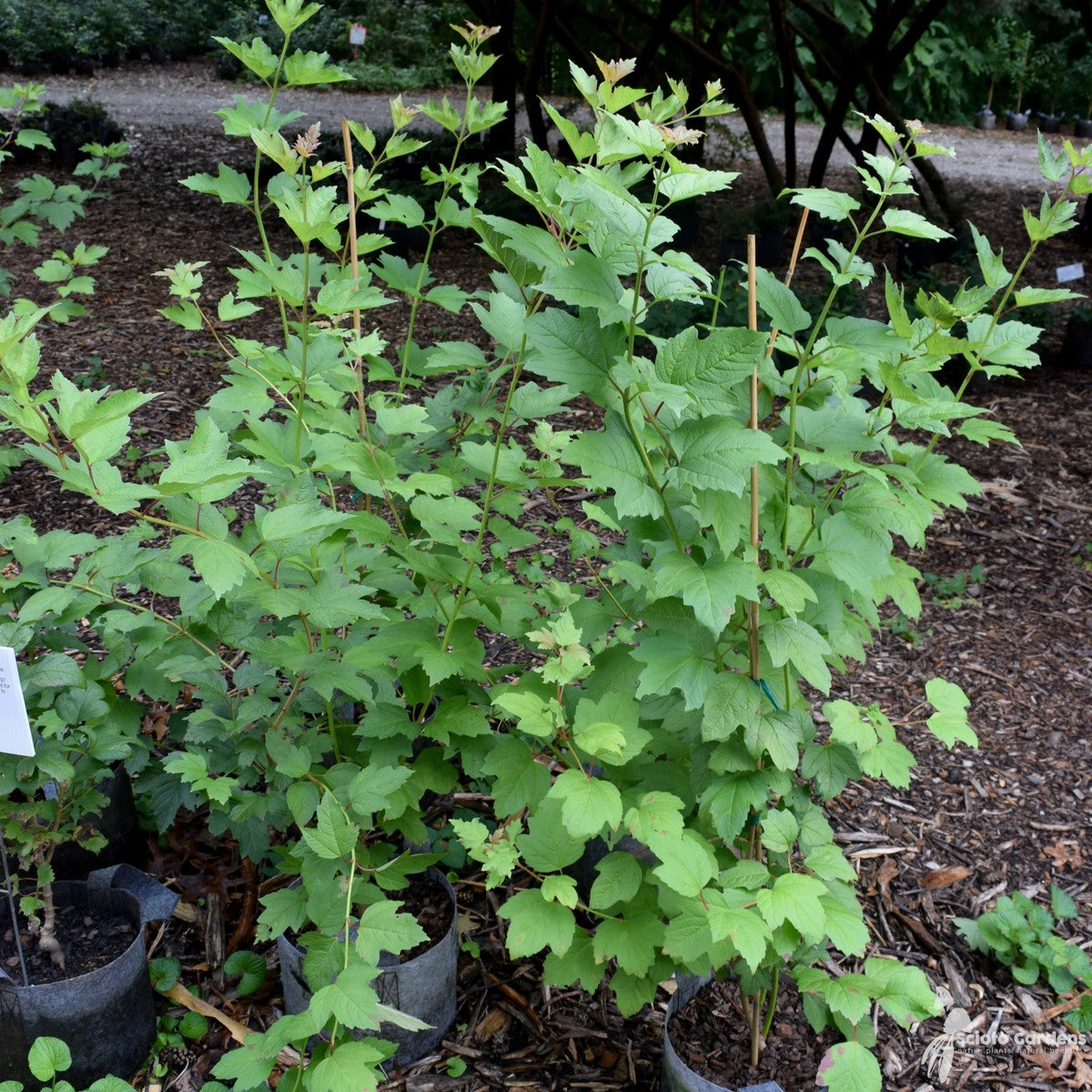
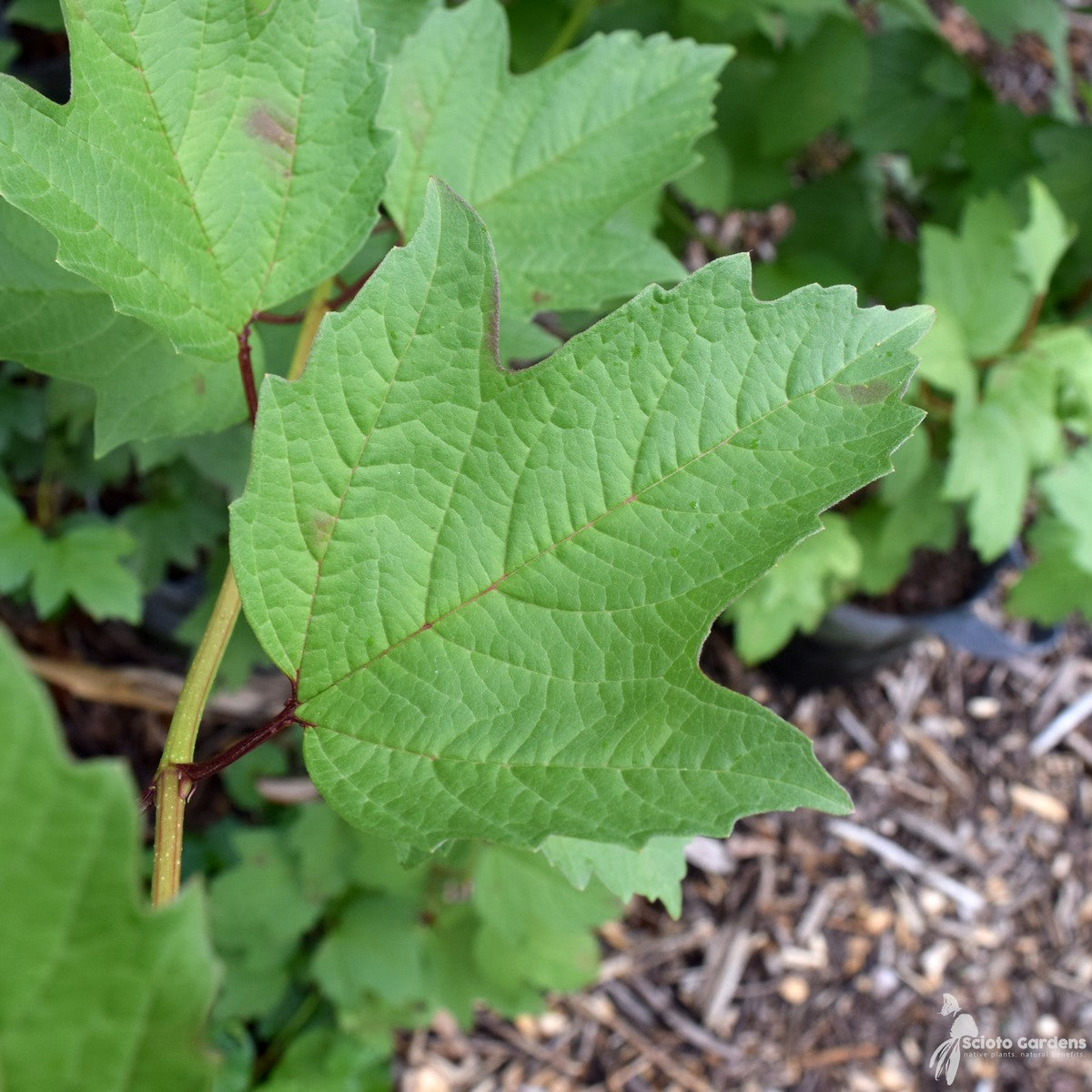
American Cranberrybush, or sometimes called Highbush Cranberry, is a native shrub with a dense, rounded, spreading habit. It has broad, maple-like, 3-lobed leaves and beautiful white lace-cap flowers in May. The flowers turn to brilliantly red berries by September in dripping clusters that remain through winter, until eaten. A great many bird species eat the berries including Cedar Waxwings, Gray Catbirds, and Eastern Bluebirds. The Spring Azure uses this plant as a larval host.
American Cranberrybush is a good choice for a large rain garden planting. It prefers moist, rich soils in sunny to partially sunny situations. It can be pruned heavily after flowering to keep it shapely. This is a very fast-growing shrub, and the suckers which form from the base can grow 6' in one season. This Viburnum makes a good choice for privacy screening, hedges, foundation and border plantings, woodland edges and as a large specimen shrub. Deer browse often occurs, so protection is recommended until well-established.
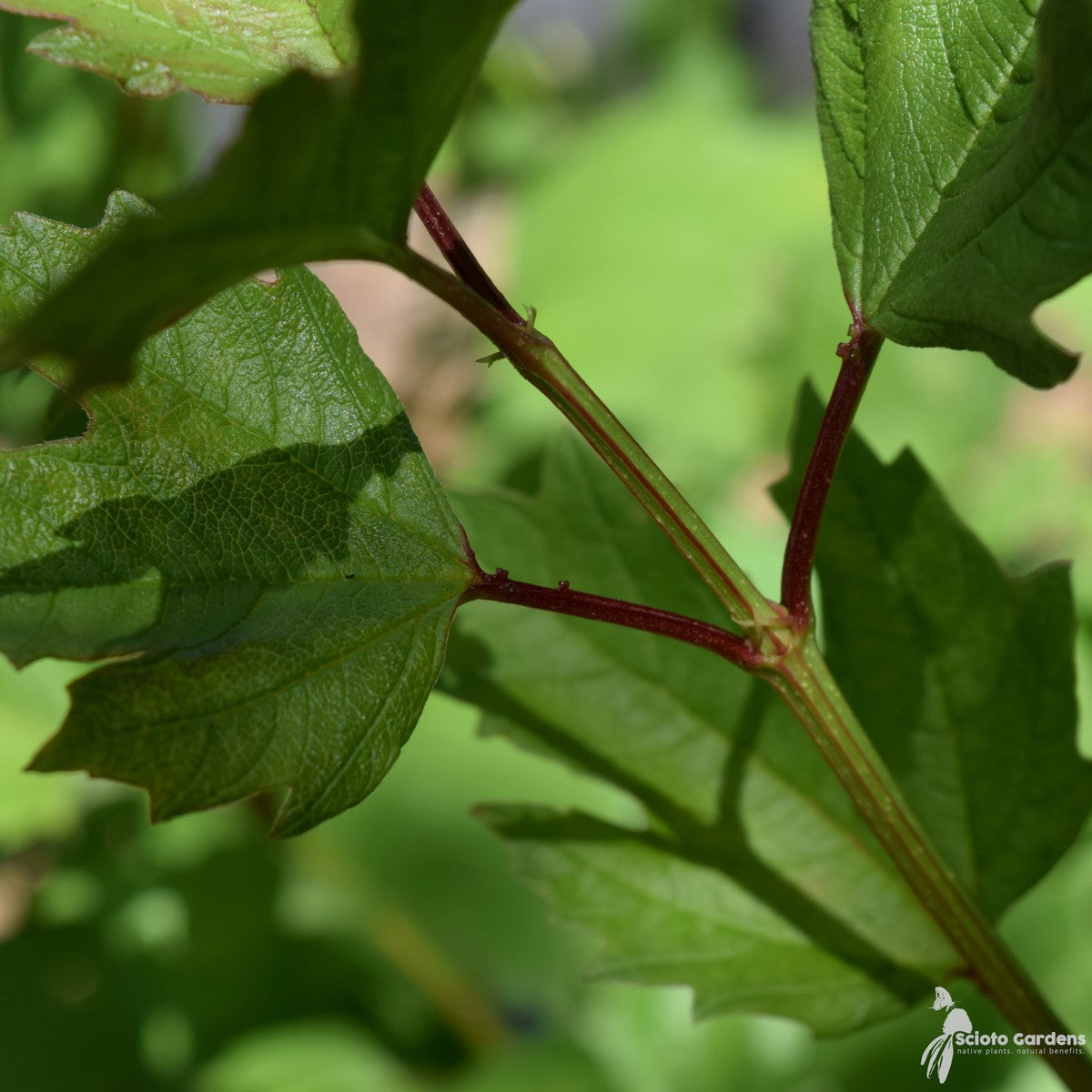
There is a very similar, non-native version of this plant that has escaped cultivation and is commonly found in moist woodlands. The European Cranberrybush Viburnum (Viburnum opulus var. opulus) can be distinguished from our native Viburnum by the glands at base of the petiole. The glands of the non-native have concave tops and are stalkless, while the glands of the native have convex tops and are on short stalks.
Sources:
Native Trees, Shrubs, & Vines by William Cullina
Manual of Woody Landscape Plants by Michael A. Dirr
Gardening for the Birds by George Adams
Lady Bird Johnson Wildflower Center
Missouri Botanical Garden


Limited Time Offer:
0
days
0
hours
0
mins
0
secs
Viburnum trilobum (American Cranberrybush Viburnum) - 3 gal
American Cranberrybush Viburnum

Plant Care & Installation Quick-Guide
Proper acclimation and installation are key to your plant's success. Please cross-reference these tips with your plant's specific ID tags:
·
Pre-Planting: Store plants in a light-appropriate area on soil or grass (avoid hot concrete or asphalt) and water daily until the soil is saturated and the pot feels heavy. If temperatures drop below 30°F, move pots to a garage or cover them to prevent root freeze.
·
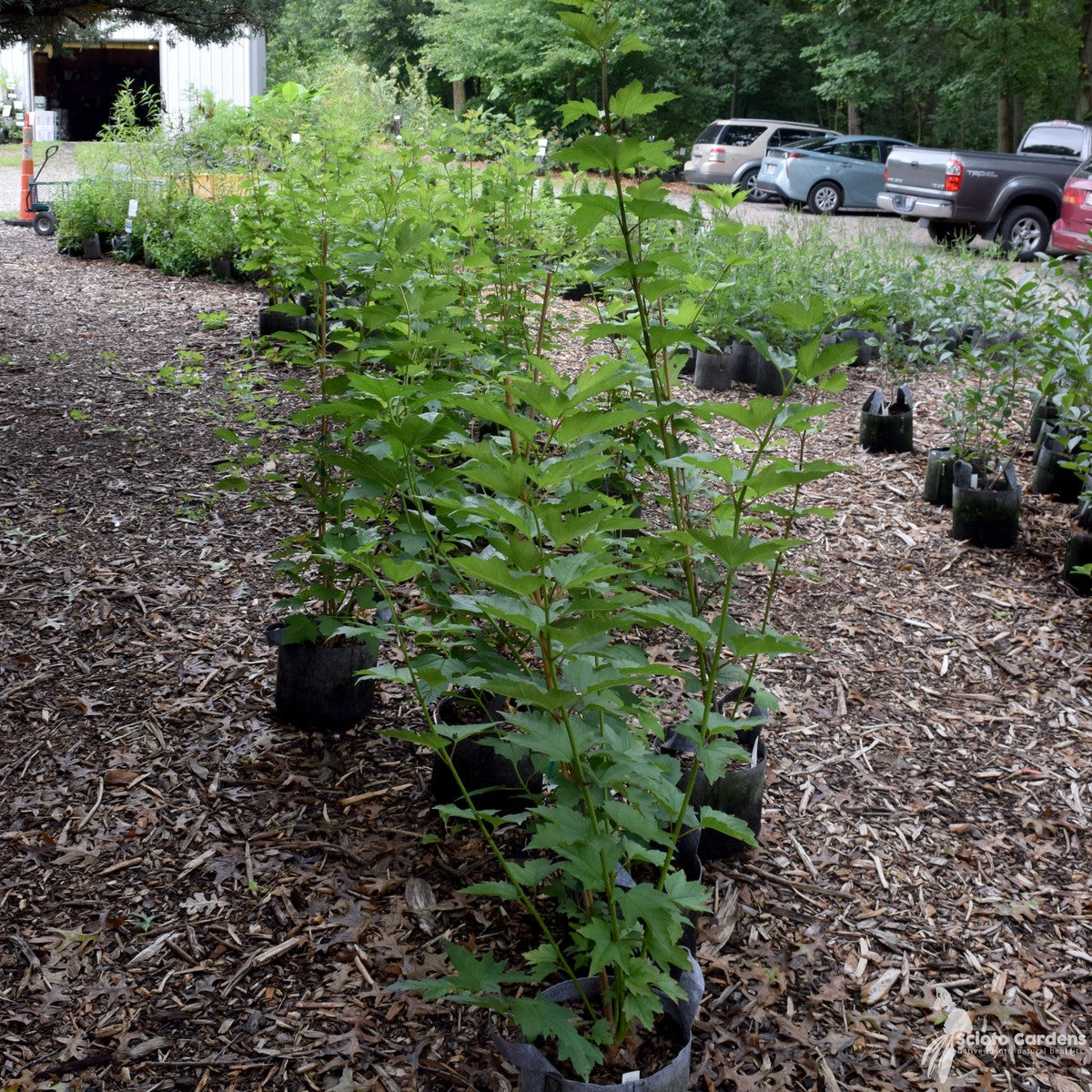
Installation: Dig a hole matching the depth of the pot, remove the fabric container, and ensure the plant’s crown or root flare is level with the ground. Fill gaps with soil, water heavily, and apply 2 inches of mulch—keeping it clear of the stem.
·
Ongoing Care: Check moisture daily by feeling 1–2 inches into the soil; water deeply at the base if the soil feels dry or warm. Newly installed plants require frequent watering (up to 3–4 times weekly in heat) until fully established, which can take a few months for perennials and up to two years for trees.