
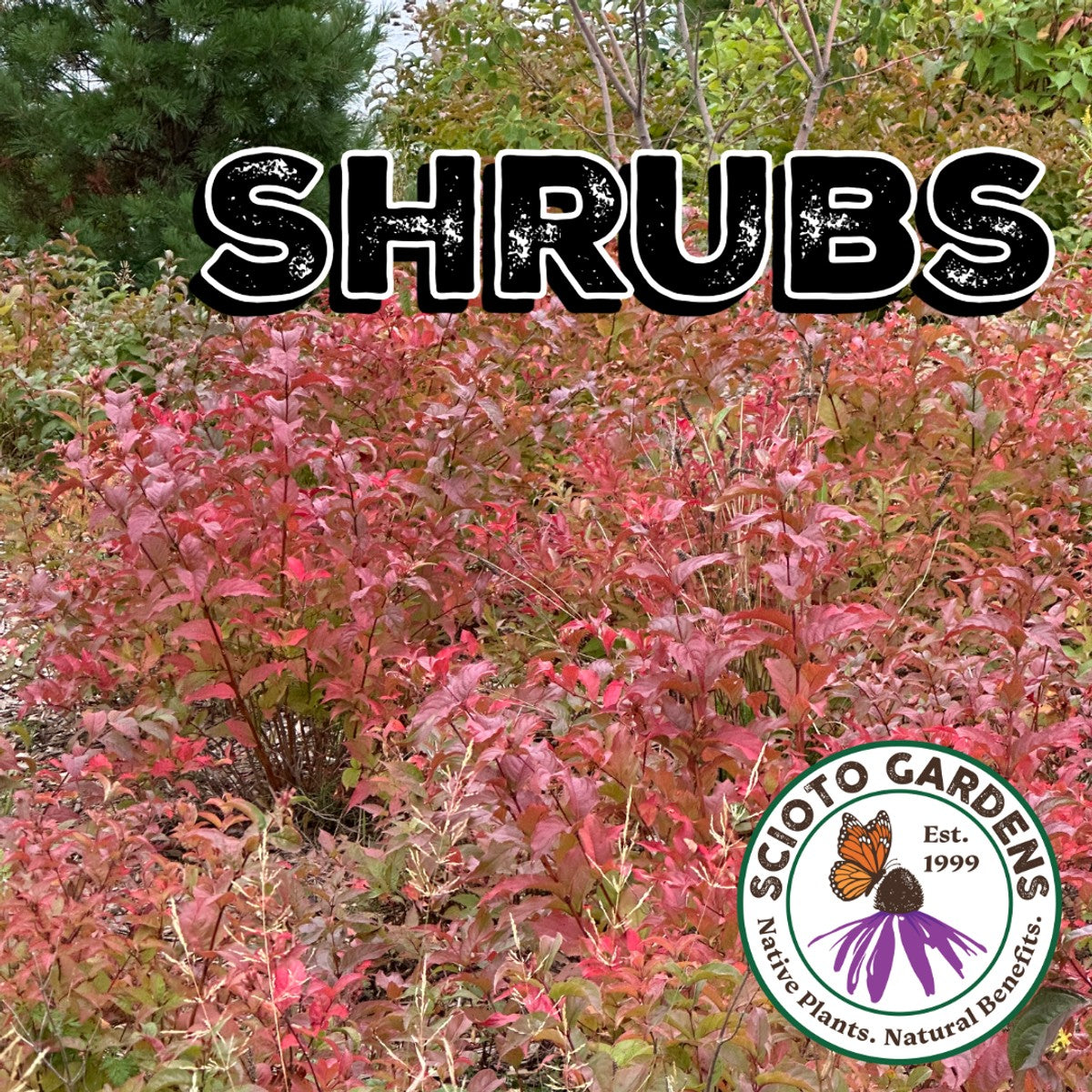
Nannyberry Viburnum is a native, deciduous, multi-stemmed shrub or small tree that offers utility, aesthetics, and adaptability to any landscape. It has the ability to grow in full sun to full shade, in moist or dry soils and is a durable plant unbothered by most pests and diseases. This plant can be pruned and maintained as a small tree with slender, arching branches, reaching heights of over 20'. If left in its wild form, it will sucker from the base to form an upright, shrubby thicket reaching about 18' tall and 12' wide at maturity. The shallow, fibrous root system forms clonal offsets, making it an ideal shrub for naturalizing and screening, or for use as a background plant, and as a living, attractive bird feeder. The fall color is maroon, orange, and purplish.
The showy, creamy white flowers bloom in late spring. Plants will be more floriferous in sunnier conditions. The flat-topped clusters of flowers attract many pollinators which seek their abundant nectar. They mature into blue-black, edible, olive-shaped fruits (drupes) which are commonly made into preserves and delicious jellies, but can also be eaten raw (just spit out the stones). Many birds eat the fruits during fall migration, as well as squirrels and chipmunks. Viburnums are host to at least 104 species* of Lepidoptera, including the Rose Hooktip Moth, Hummingbird Clearwing Moth, Henry’s Elfin, and the adorable Pink Prominent Moth. Nannyberry is also host to the Horrid Zale.
Planting at least two separate individuals of the same species of Viburnum helps with cross-pollination and can result in heavier fruit production.
Sources:
Native Trees, Shrubs, & Vines by William Cullina
Manual of Woody Landscape Plants by Michael A. Dirr
Midwestern Native Shrubs and Trees by Charlotte Adelman & Bernard L. Schwartz
Peterson Field Guide to Edible Wild Plants Eastern/Central North America by Lee Allen Peterson
Missouri Botanical Garden
Illinois Wildflowers
