


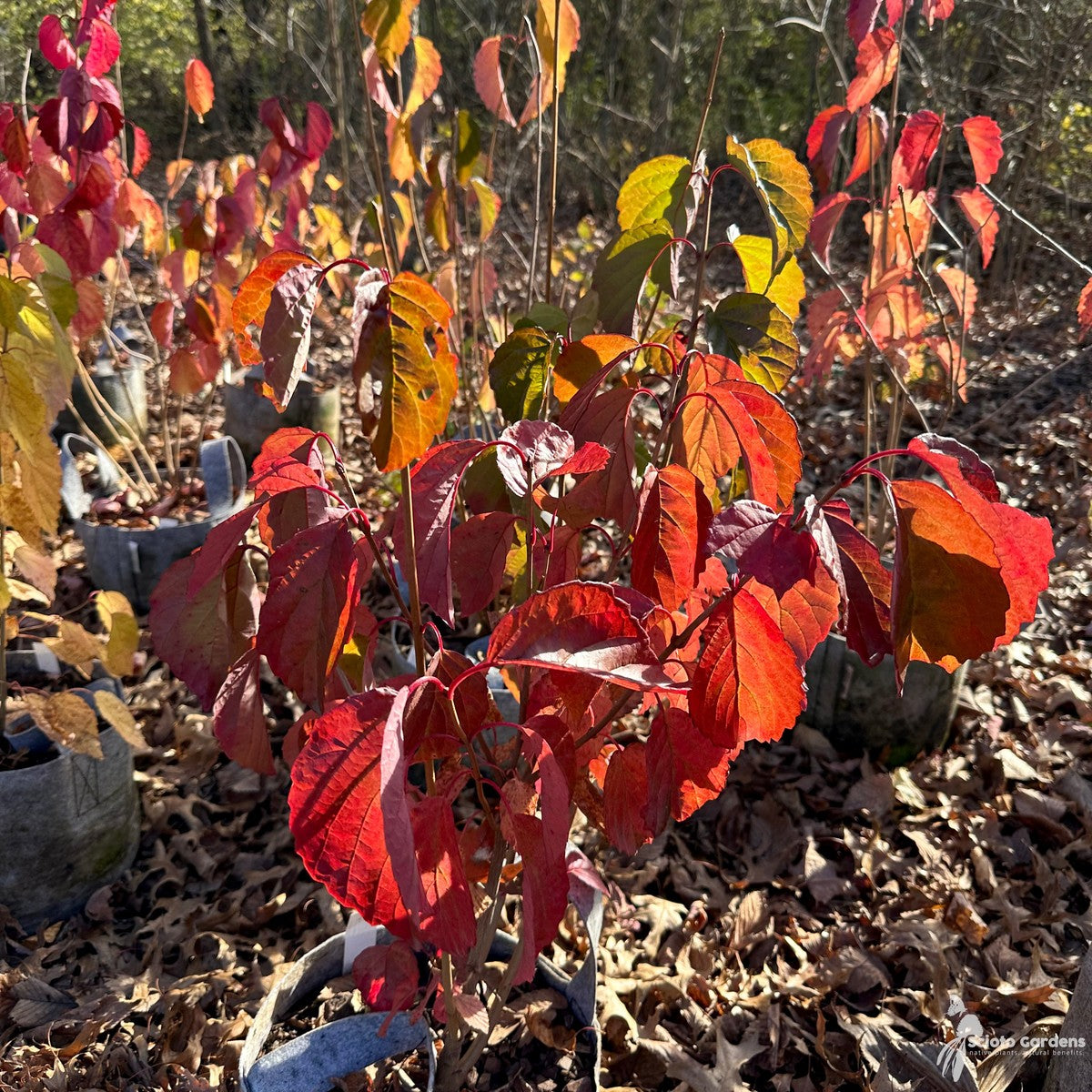
Arrowwood Viburnum is a dependable and ornamental, large, native, deciduous shrub. It has a vase-like, upright habit with a rounded top, typically growing to 10' tall and wide, but its size is variable, based on growing conditions. The common name of this species comes from its use by Native Americans for arrow shafts, as the new shoots grow long and straight. This shrub is pest-free and highly disease-resistant, vigorous and reliable in the landscape. It suckers freely from the base, forming a dense screen for use as a background planting, hedging, and privacy screening, as well as for massing in shrub borders or naturalizing. The lustrous green leaves turn to a range of brilliant, glossy, yellow to red shades in fall, giving it a long season of interest.
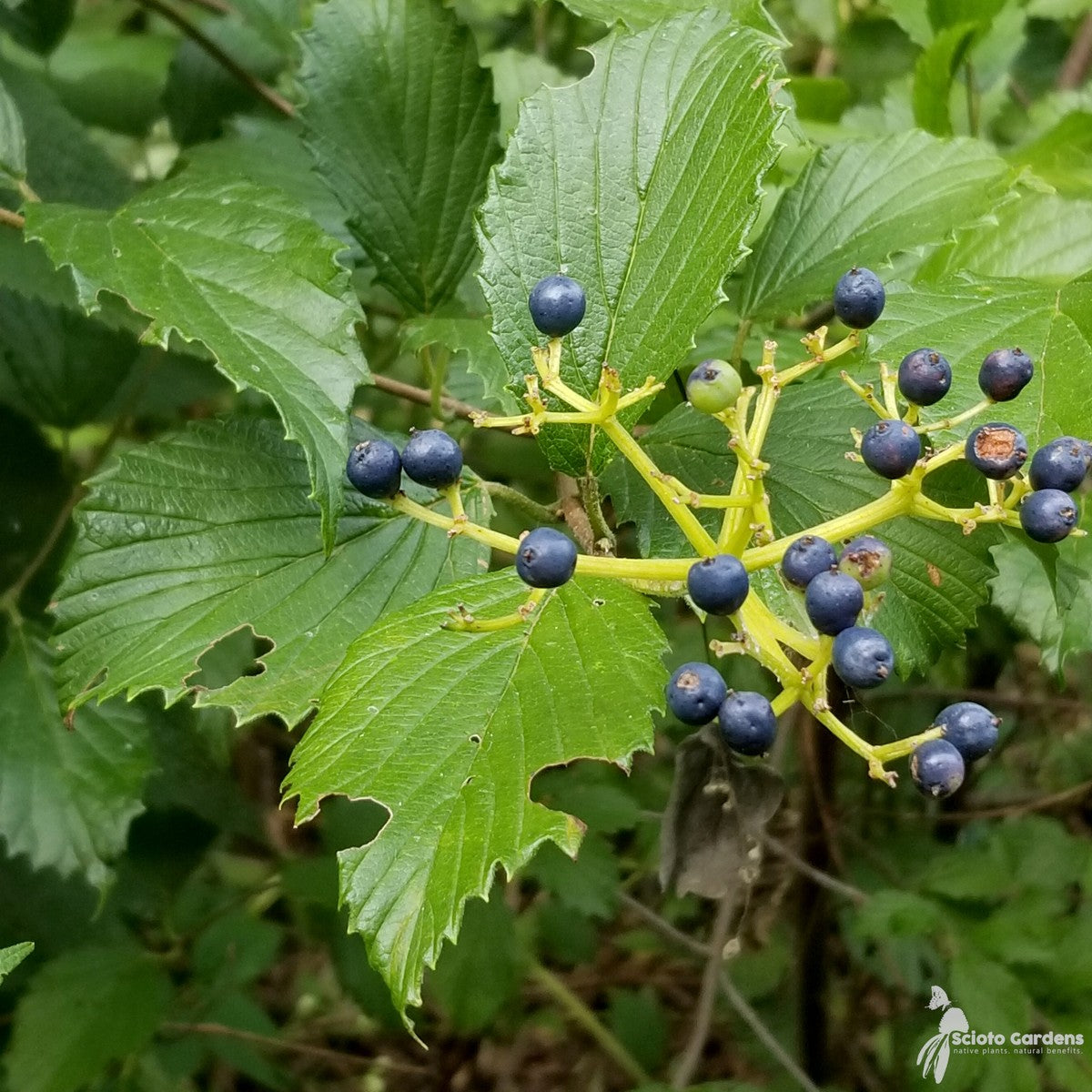
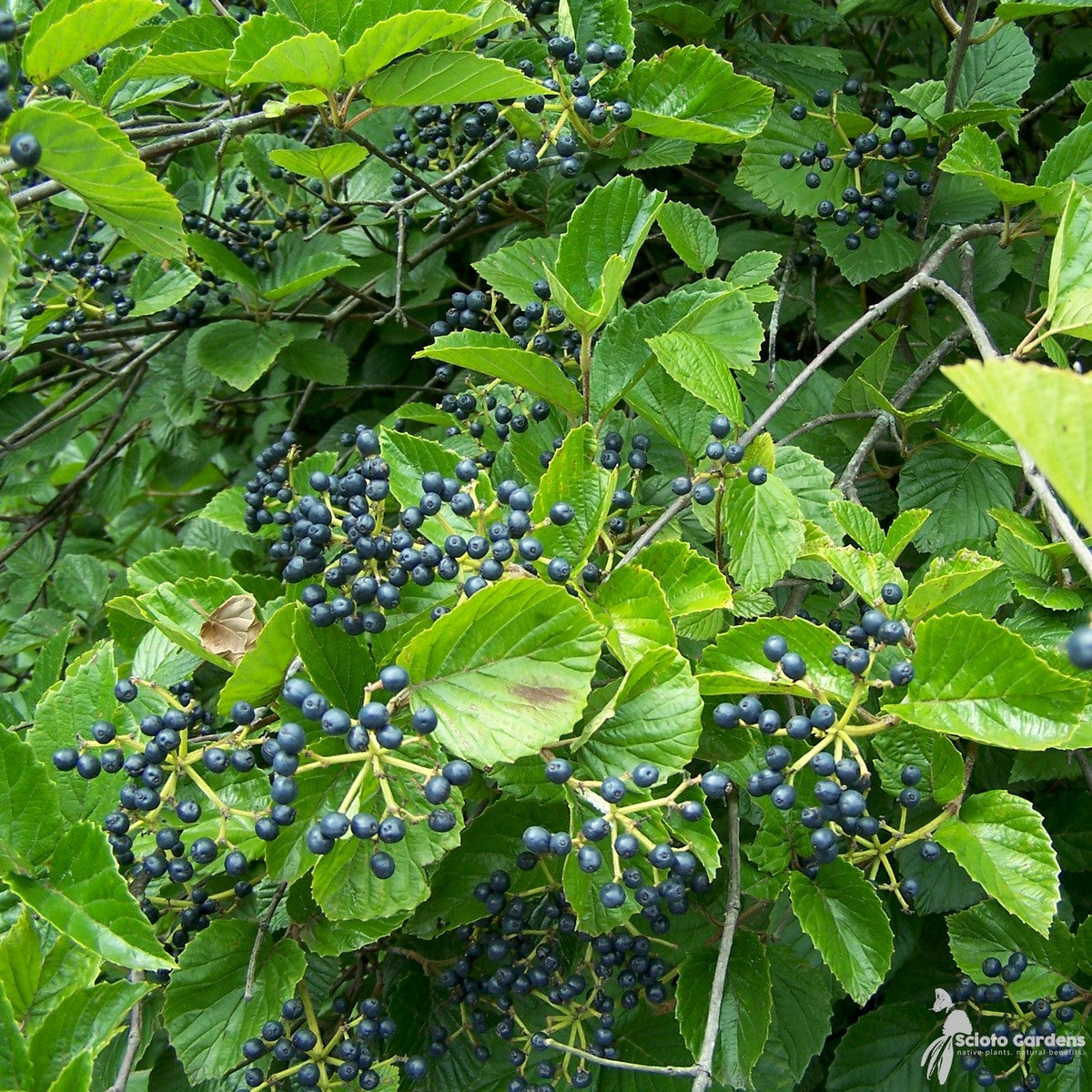
The showy, white, lace-cap flower clusters in late spring attract many pollinators, including fly and beetle species which are drawn to their rather unpleasant fragrance. Beautiful dark blueish-black fruits ripen from September through October. They are a favorite high-fat food for migrating birds and attract Pileated Woodpeckers, Northern Mockingbirds, Brown Thrashers, Cedar Waxwings, Catbirds and so many more! The thick, twiggy interior of this species makes for an unbeatable nesting site and protective cover for birds as well. White-tailed deer may browse the foliage occasionally, but they do not prefer Arrowwood Viburnums and rarely do major damage to them. Viburnums are host to at least 104 species* of Lepidoptera including the Green Marvel, Rose Hooktip Moth, Hummingbird Clearwing Moth, Henry’s Elfin, and the adorable Pink Prominent Moth.
Planting at least two separate individuals of the same species of Viburnum helps with cross-pollination and can result in heavier fruit production.
Sources:
Native Trees, Shrubs, & Vines by William Cullina
Manual of Woody Landscape Plants by Michael A. Dirr
*Midwestern Native Shrubs and Trees by Charlotte Adelman & Bernard L. Schwartz
Missouri Botanical Garden
Lady Bird Johnson Wildflower Center
Illinois Wildflowers
