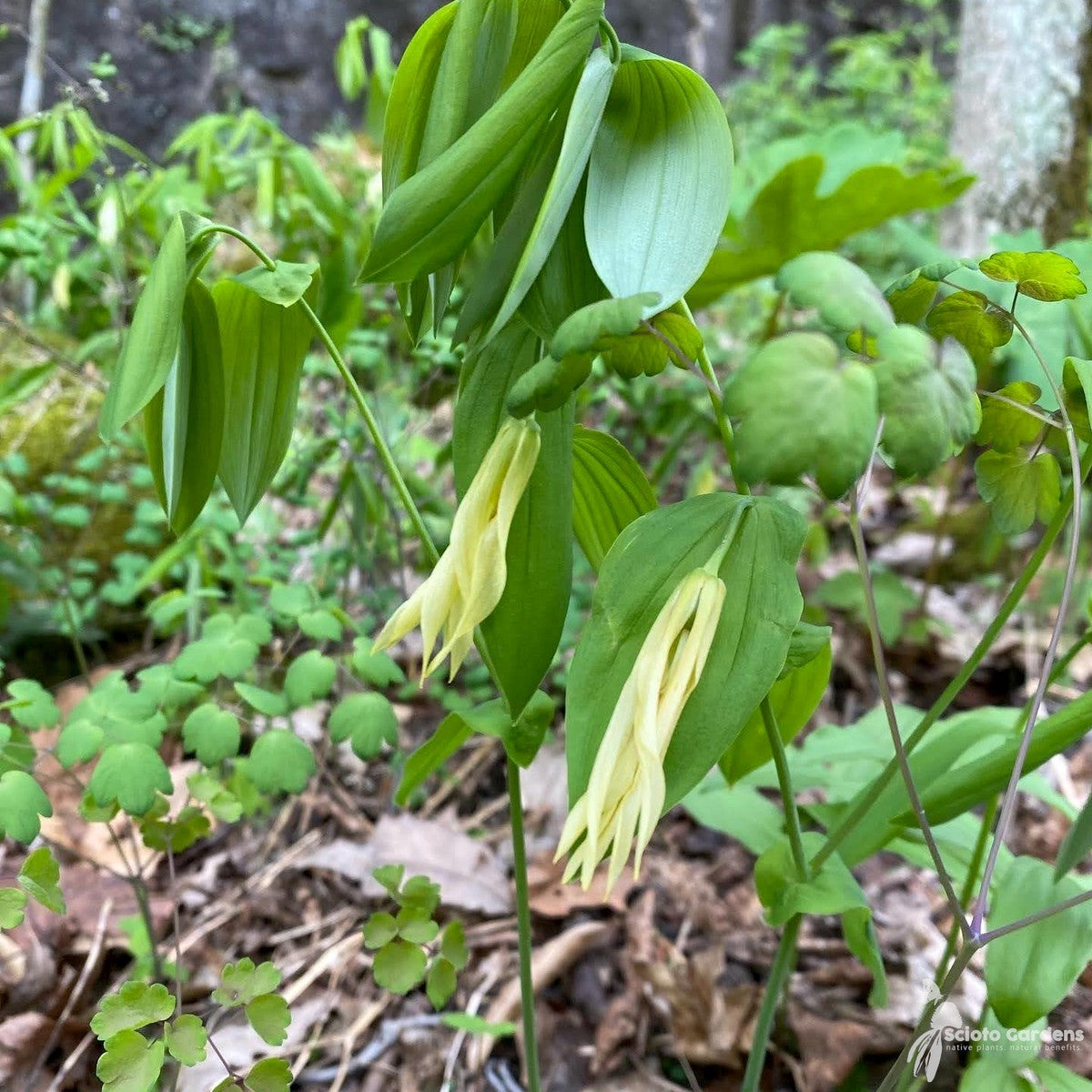
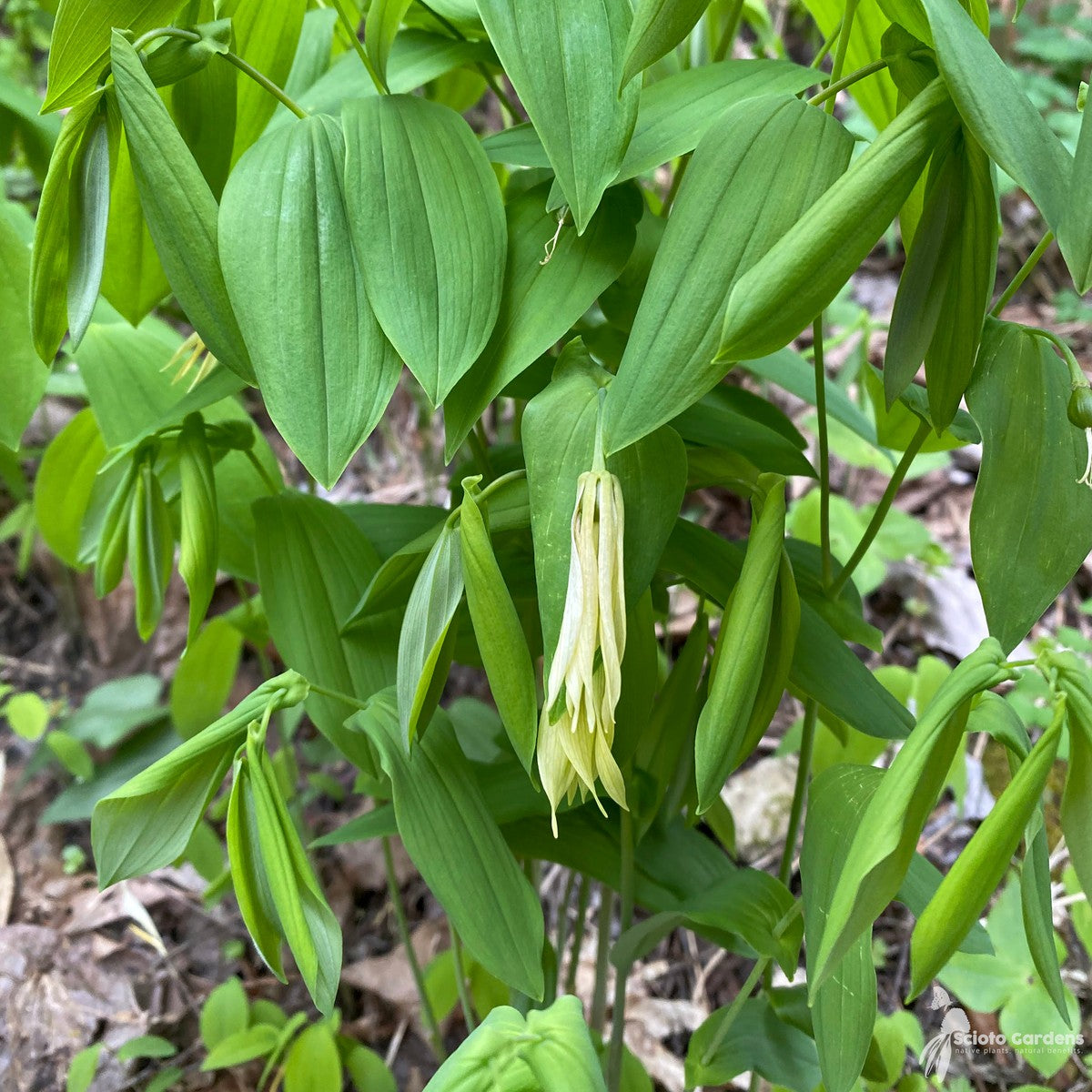
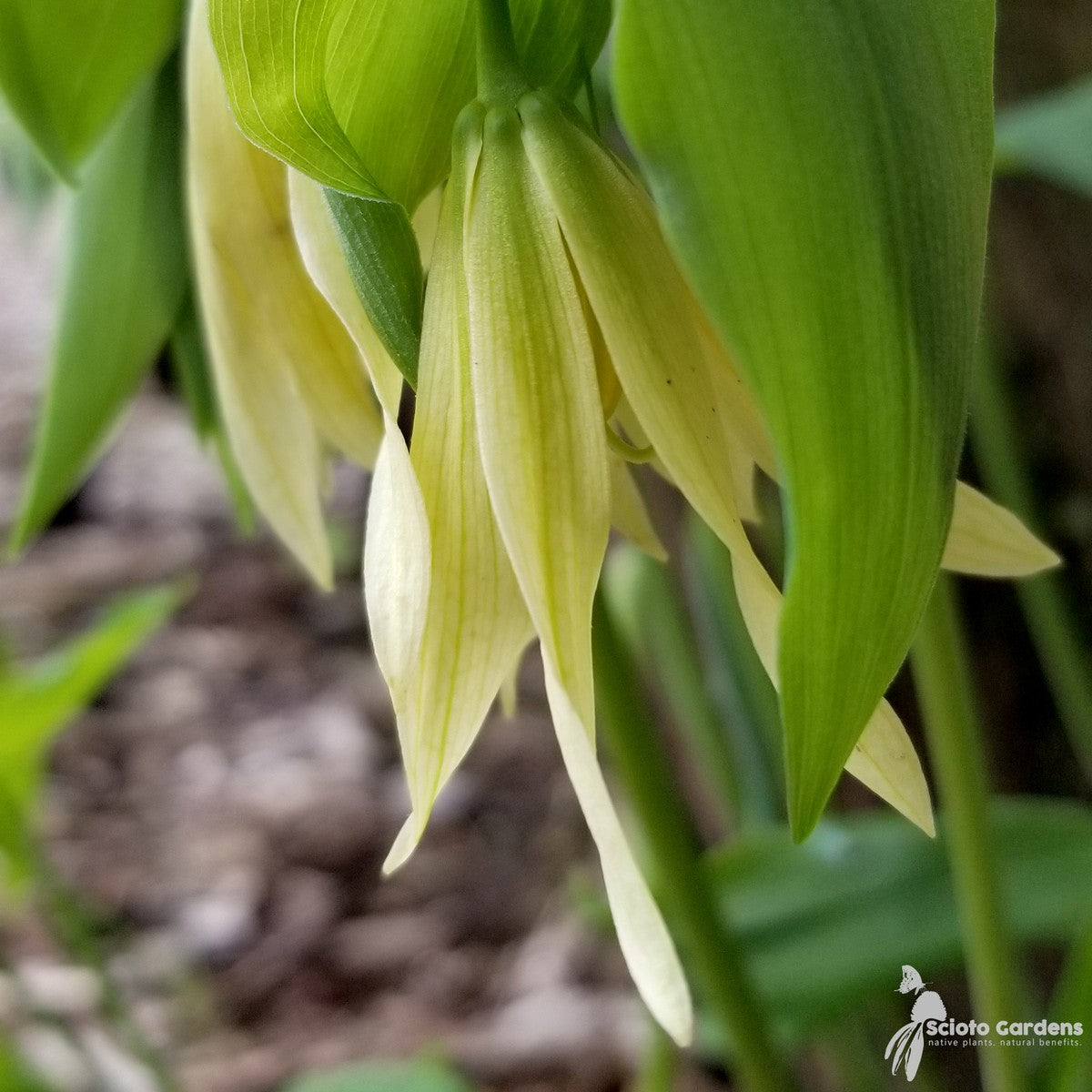
Grand Merrybells, also known as Large-Flowered Bellwort, is an understated native woodland wildflower. The stems seem to poke right up through the leaves (perfoliate) and grow in strong, erect clumps, often around the base of deciduous trees. They prefer rich, moist soils but are somewhat drought-tolerant once established. The large, pendulous, bell-shaped, pale yellow flowers have a sweet fragrance and are in bloom for about two weeks in May. The flowers provide nectar and pollen for insect visitors, and the seeds are dispersed by ants who take them back to their nests to devour the fleshy appendage (elaiosome) and discard them, unharmed, in their midden heaps. This is the perfect place for a seed to germinate, and a common way for spring ephemerals to be spread around to new locations. Grand Merrybells will also spread slowly by rhizomes, eventually forming colonies.Deer love to eat the delicate foliage of this plant, resulting in its decline in the wild. Extra protection may be necessary in the garden if deer are around.Sources:
Growing and Propagating Wildflowers by William Cullina
Herbaceous Perennial Plants by Allan M. Armitage
Eastern/Central Medicinal Plants and Herbs by Steven Foster and James A. Duke
Peterson Field Guide to Edible Wild Plants Eastern/Central North America by Lee Allen Peterson
Missouri Botanical Garden
Lady Bird Johnson Wildflower Center
Illinois Wildflowers
The Morton Arboretum-Black Walnut Tolerance


Limited Time Offer:
0
days
0
hours
0
mins
0
secs
Uvularia grandiflora (Grand Merrybells) - 1 gal
Grand Merrybells

Plant Care & Installation Quick-Guide
Proper acclimation and installation are key to your plant's success. Please cross-reference these tips with your plant's specific ID tags:
·
Pre-Planting: Store plants in a light-appropriate area on soil or grass (avoid hot concrete or asphalt) and water daily until the soil is saturated and the pot feels heavy. If temperatures drop below 30°F, move pots to a garage or cover them to prevent root freeze.
·
Installation: Dig a hole matching the depth of the pot, remove the fabric container, and ensure the plant’s crown or root flare is level with the ground. Fill gaps with soil, water heavily, and apply 2 inches of mulch—keeping it clear of the stem.
·
Ongoing Care: Check moisture daily by feeling 1–2 inches into the soil; water deeply at the base if the soil feels dry or warm. Newly installed plants require frequent watering (up to 3–4 times weekly in heat) until fully established, which can take a few months for perennials and up to two years for trees.