

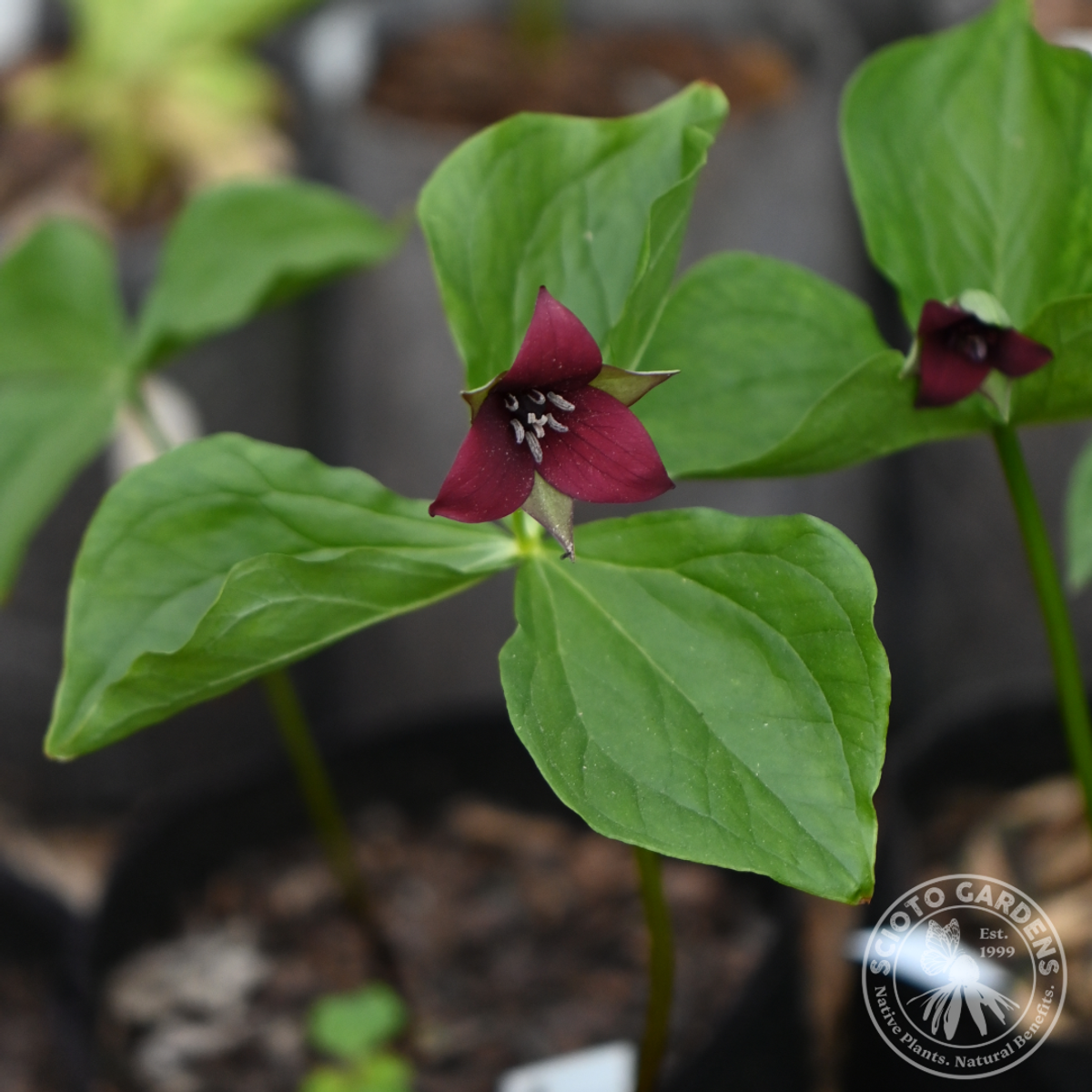
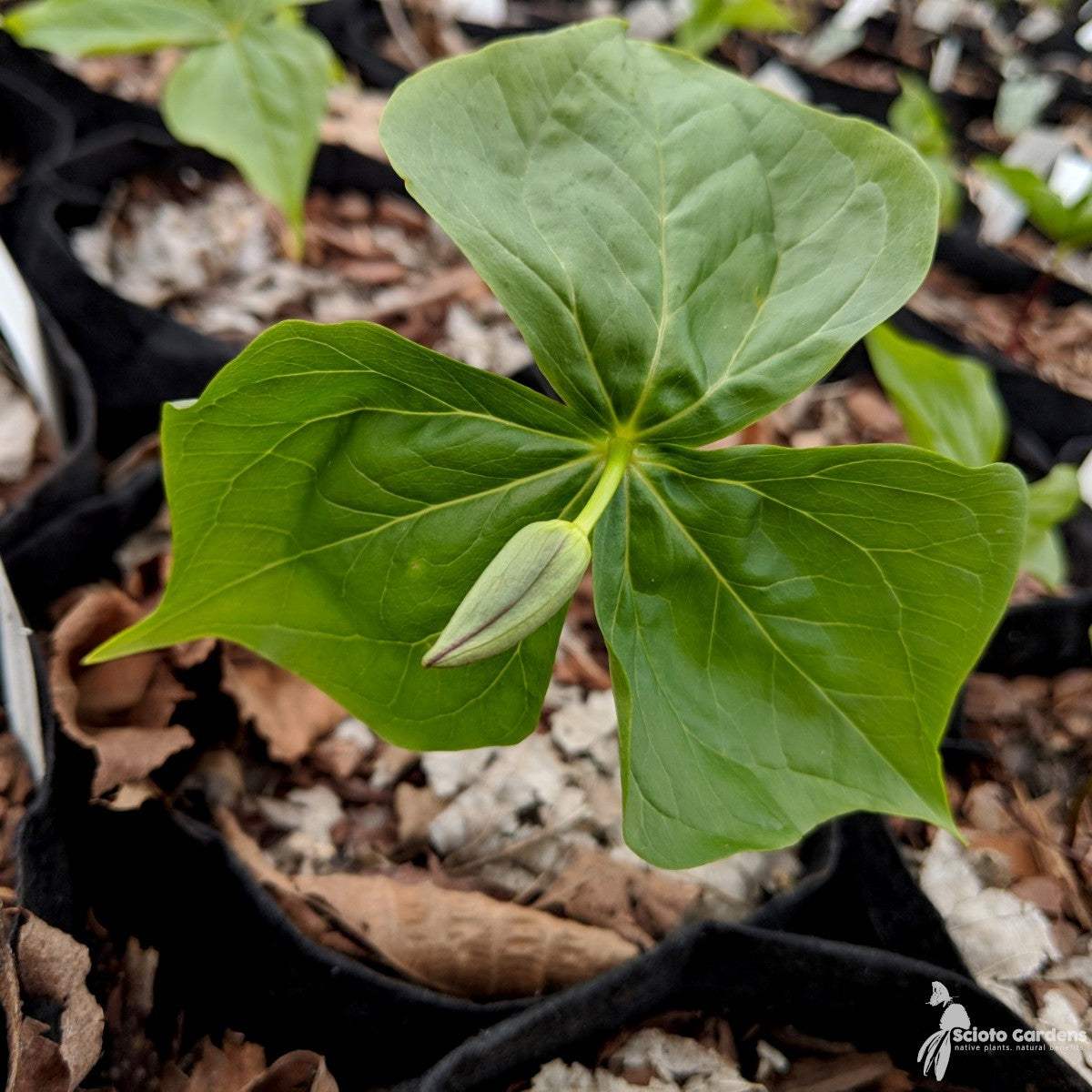
Purple Trillium is a lovely native woodland wildflower that is relatively easy to grow because of its adaptability and vigor. The maroon flowers occur on a pedicel (short stalk) above the distinctive three-parted whorl of green leaves. They need moist, well-draining soils that are rich in organic matter and prefer an acidic pH. Deer relish Trillium spp. and will often eat the entire above-ground portion of the plants, so siting them in a protected area will be helpful in establishing a colony. They will go summer dormant after setting seed. The seeds of Purple Trilliums will spread around, often a good distance from the mother plants, with a lot of help from ants! The ants gather the freshly ejected seeds and carry them back to their nests to eat the fleshy appendage attached to the seed coat (called elaiosomes.) The undamaged seeds are then discarded in their midden heaps, which are a perfectly rich and protected substrate for the seeds to germinate in. This mutualistic interaction helps many spring ephemerals to spread around the landscape, since most of their seeds are too heavy for wind transport and are unviable if they get desiccated.
Sources:
Growing and Propagating Wildflowers by William Cullina
Herbaceous Perennial Plants by Allan M. Armitage
Eastern/Central Medicinal Plants and Herbs by Steven Foster and James A. Duke
Lady Bird Johnson Wildflower Center
Illinois Wildflowers
The Morton Arboretum-Black Walnut Tolerance
