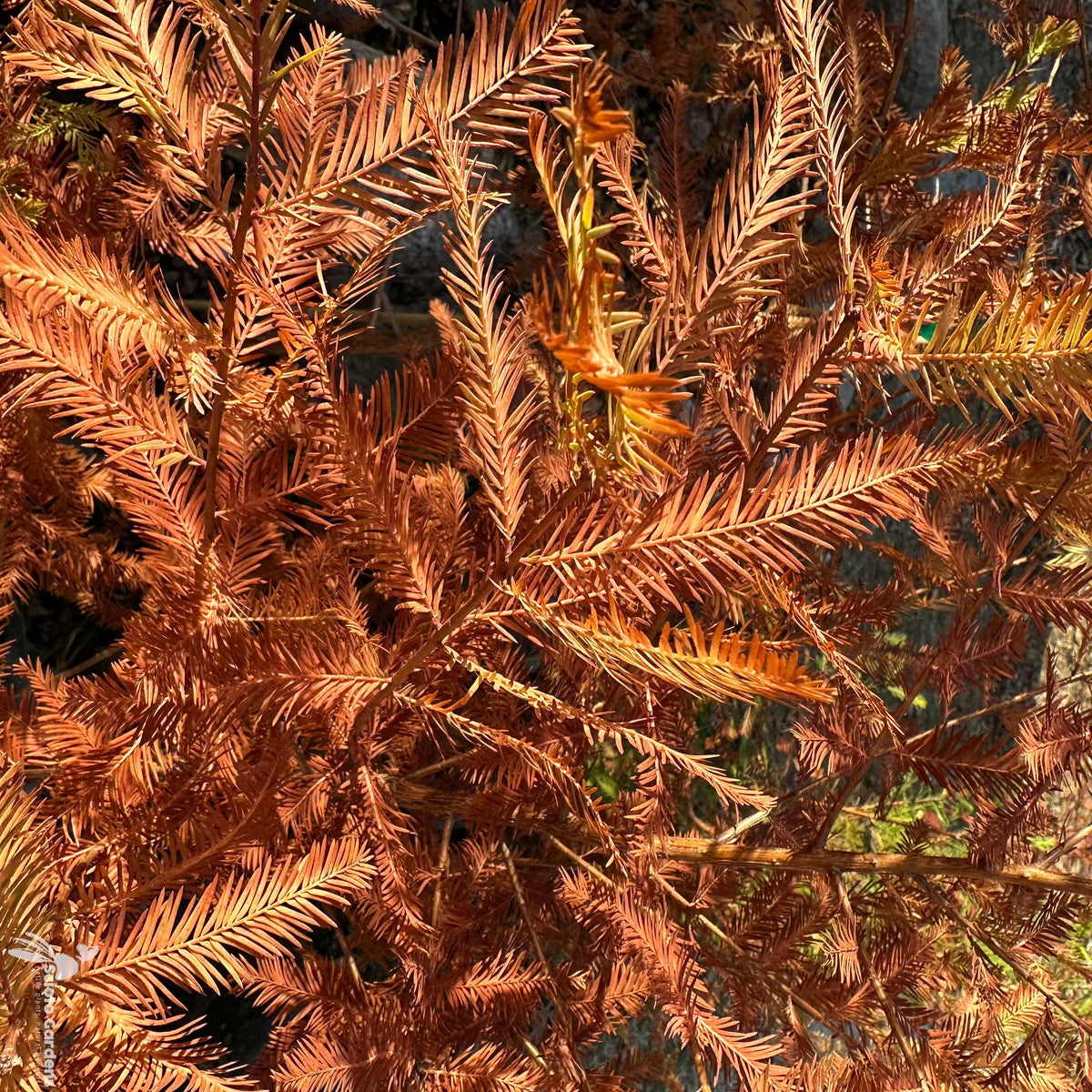
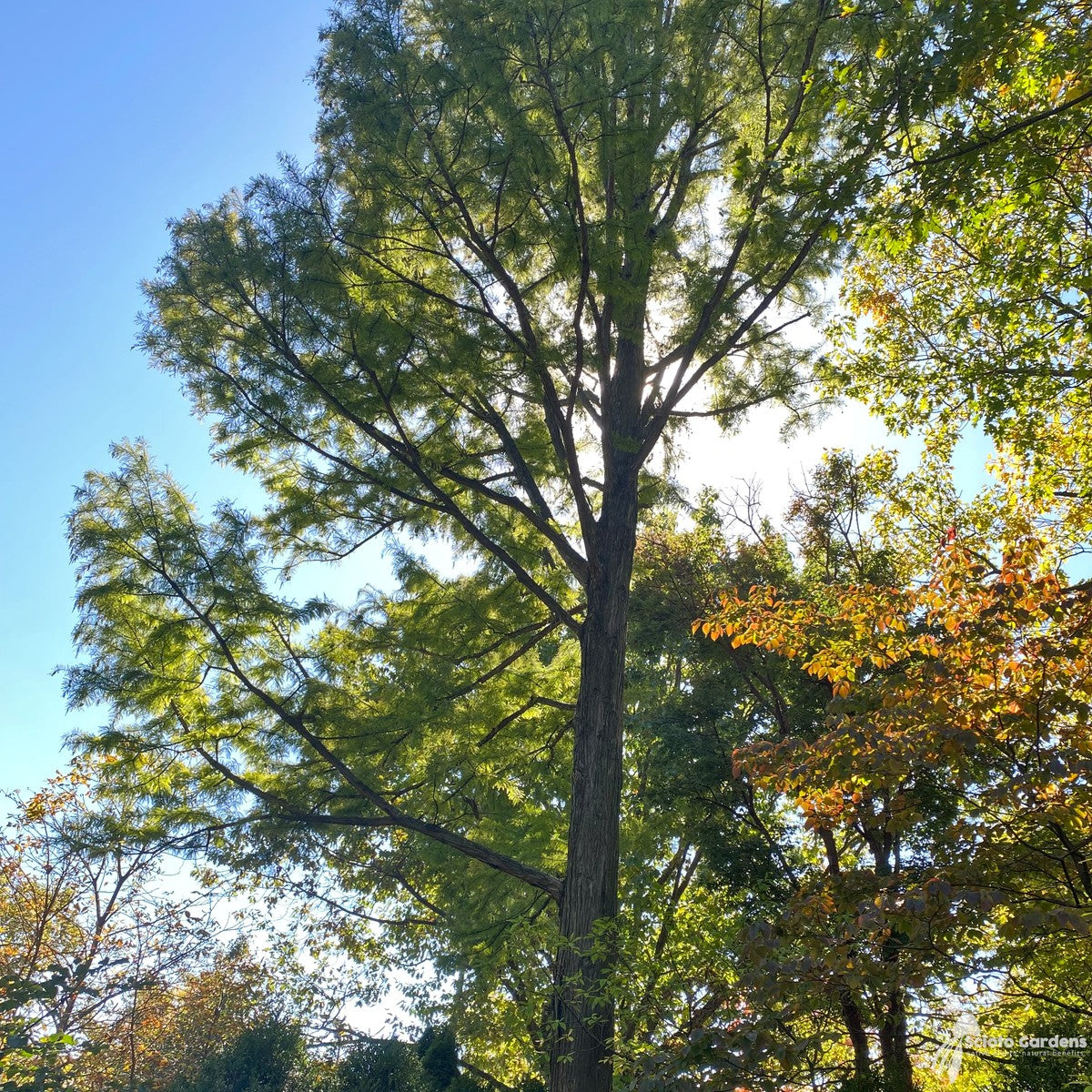
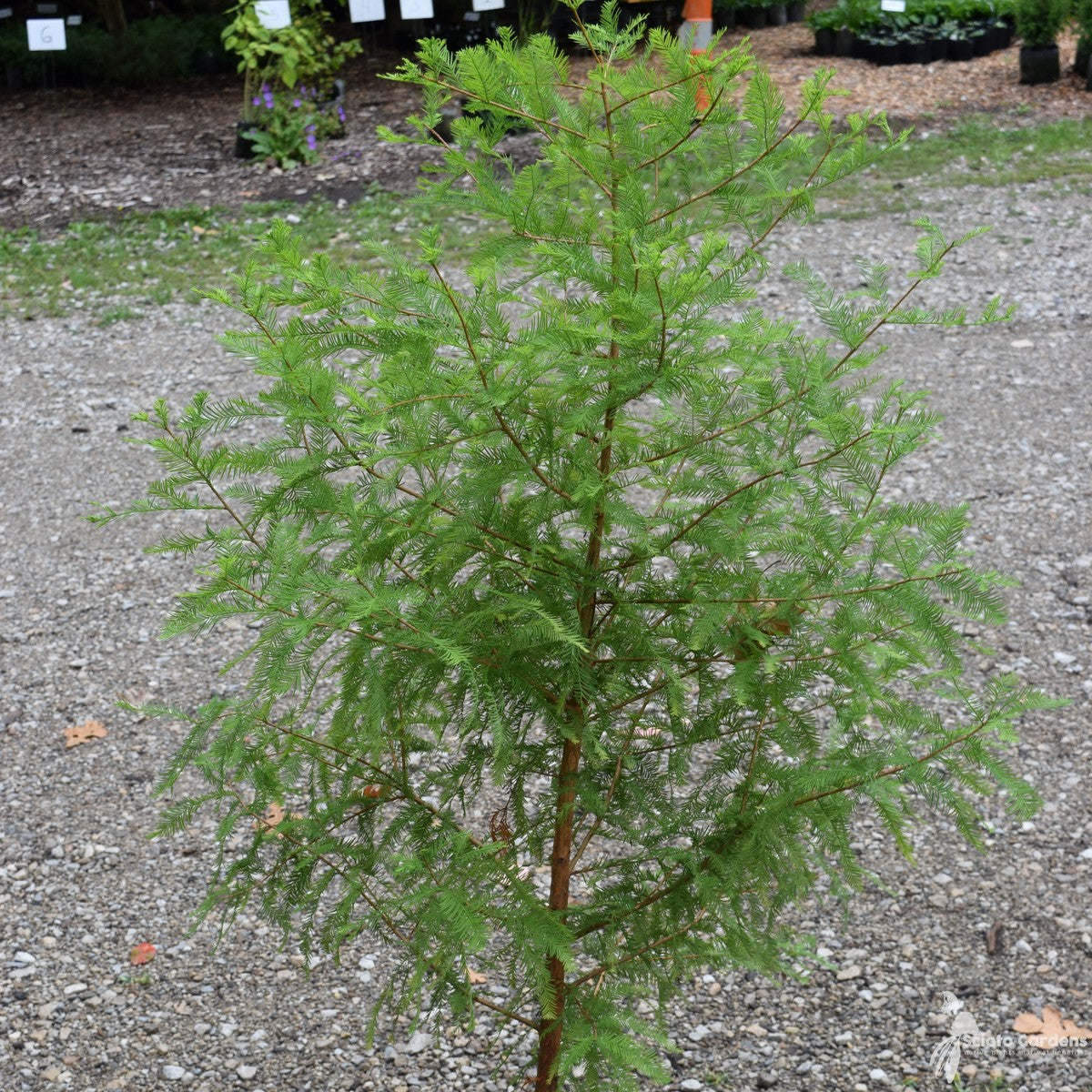
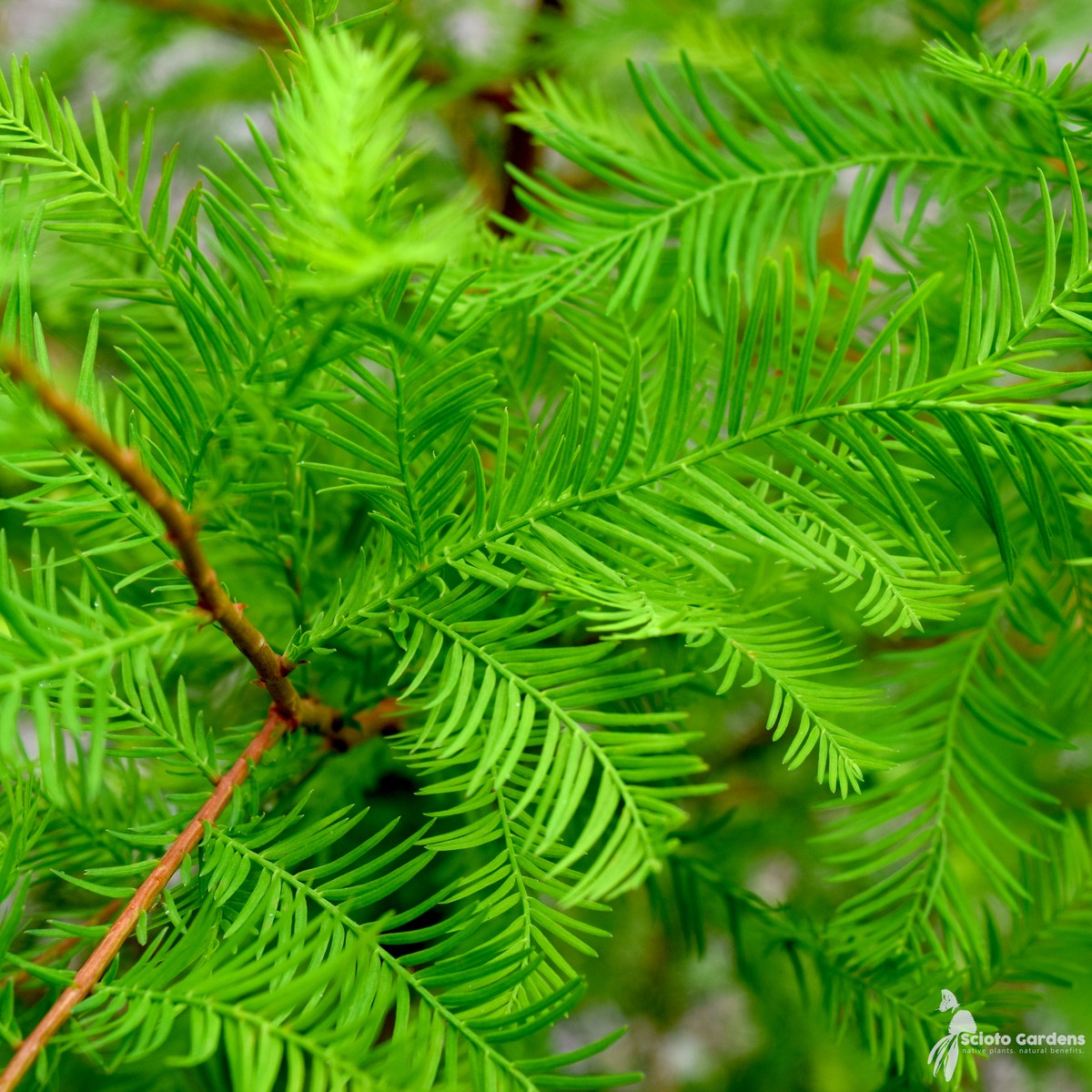
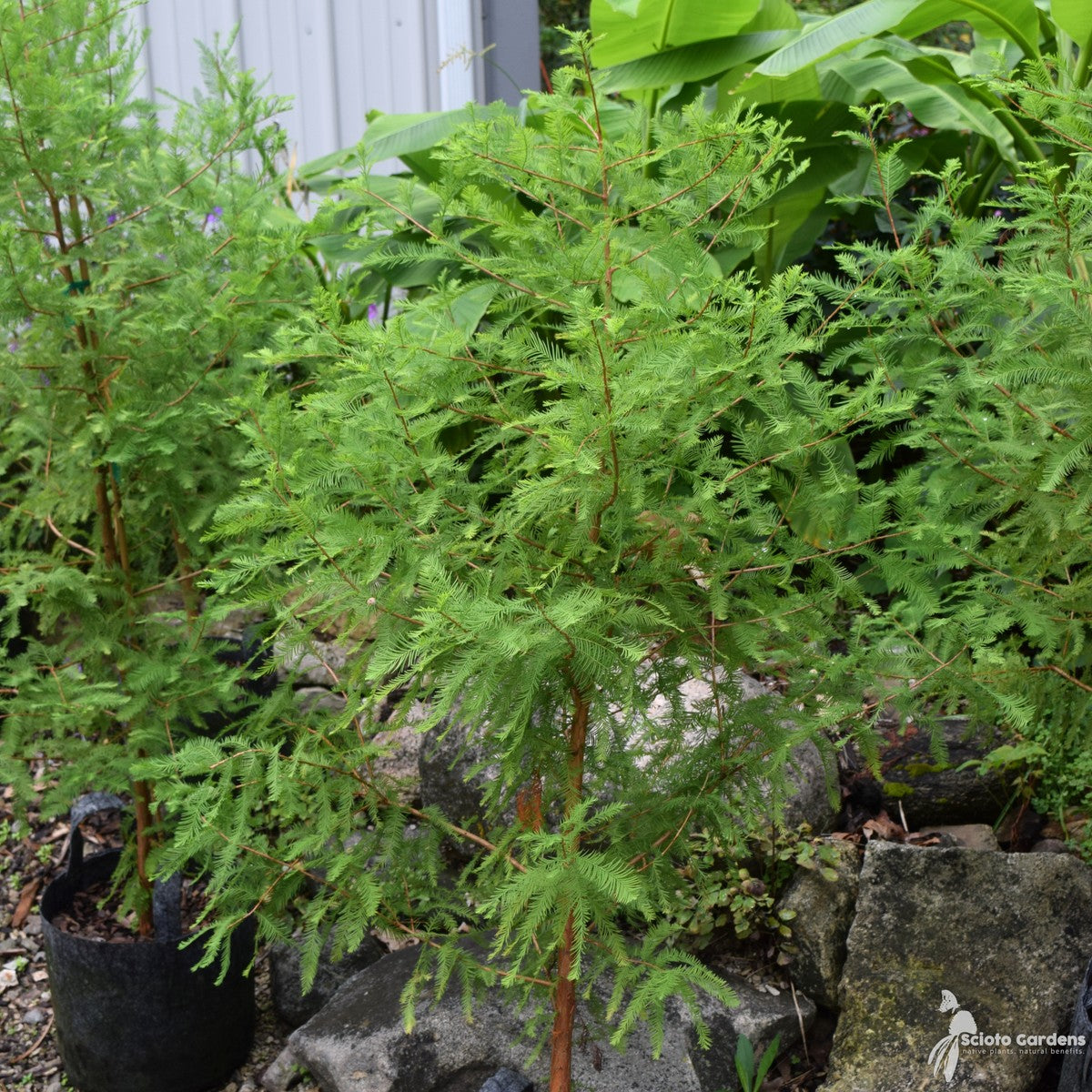
Bald Cypress is a magnificent deciduous conifer native to the eastern and southeastern coastal states and the Mississippi Valley. Their ideal growing conditions are swampy, acidic and humid but they are surprisingly adaptable to drier conditions and Midwestern winters, thanks to their deciduous nature. The trunks are tall, slender and straight. When grown in favorably wet conditions, they are strongly buttressed at the base and grow woody “knees” (pneumatophores) in places with standing water to help with respiration. If they are planted in drier conditions, these distinctive characteristics will rarely occur.
An acidic soil is necessary to avoid chlorosis, but average garden conditions are otherwise tolerated. Bald Cypress has a high tolerance to salinity, making them a good choice for wet areas that deal with sidewalk and road runoff. They have a rapid growth rate, capable of reaching 45' tall in just 20 years! They make very attractive groves when planted in groups, and more formal plantings suit their reliably symmetrical growth habit.
These trees are host to at least 16 species of Lepidoptera, though Ohio lies outside the native range for many of these. The seeds are eaten by Wood Ducks, Mallards, Wild Turkeys, and squirrels. Mature trees can provide nesting habitat for large birds such as Pileated Woodpeckers, Bald Eagles, Osprey, Herons and Egrets.
Sources:
Native Trees, Shrubs, & Vines by William Cullina
Manual of Woody Landscape Plants by Michael A. Dirr
Missouri Botanical Garden
Illinois Wildflowers
NC State Extension
ODNR


Limited Time Offer:
0
days
0
hours
0
mins
0
secs
Taxodium distichum (Bald Cypress) - QT
Bald Cypress

Plant Care & Installation Quick-Guide
Proper acclimation and installation are key to your plant's success. Please cross-reference these tips with your plant's specific ID tags:
·
Pre-Planting: Store plants in a light-appropriate area on soil or grass (avoid hot concrete or asphalt) and water daily until the soil is saturated and the pot feels heavy. If temperatures drop below 30°F, move pots to a garage or cover them to prevent root freeze.
·
Installation: Dig a hole matching the depth of the pot, remove the fabric container, and ensure the plant’s crown or root flare is level with the ground. Fill gaps with soil, water heavily, and apply 2 inches of mulch—keeping it clear of the stem.
·
Ongoing Care: Check moisture daily by feeling 1–2 inches into the soil; water deeply at the base if the soil feels dry or warm. Newly installed plants require frequent watering (up to 3–4 times weekly in heat) until fully established, which can take a few months for perennials and up to two years for trees.