
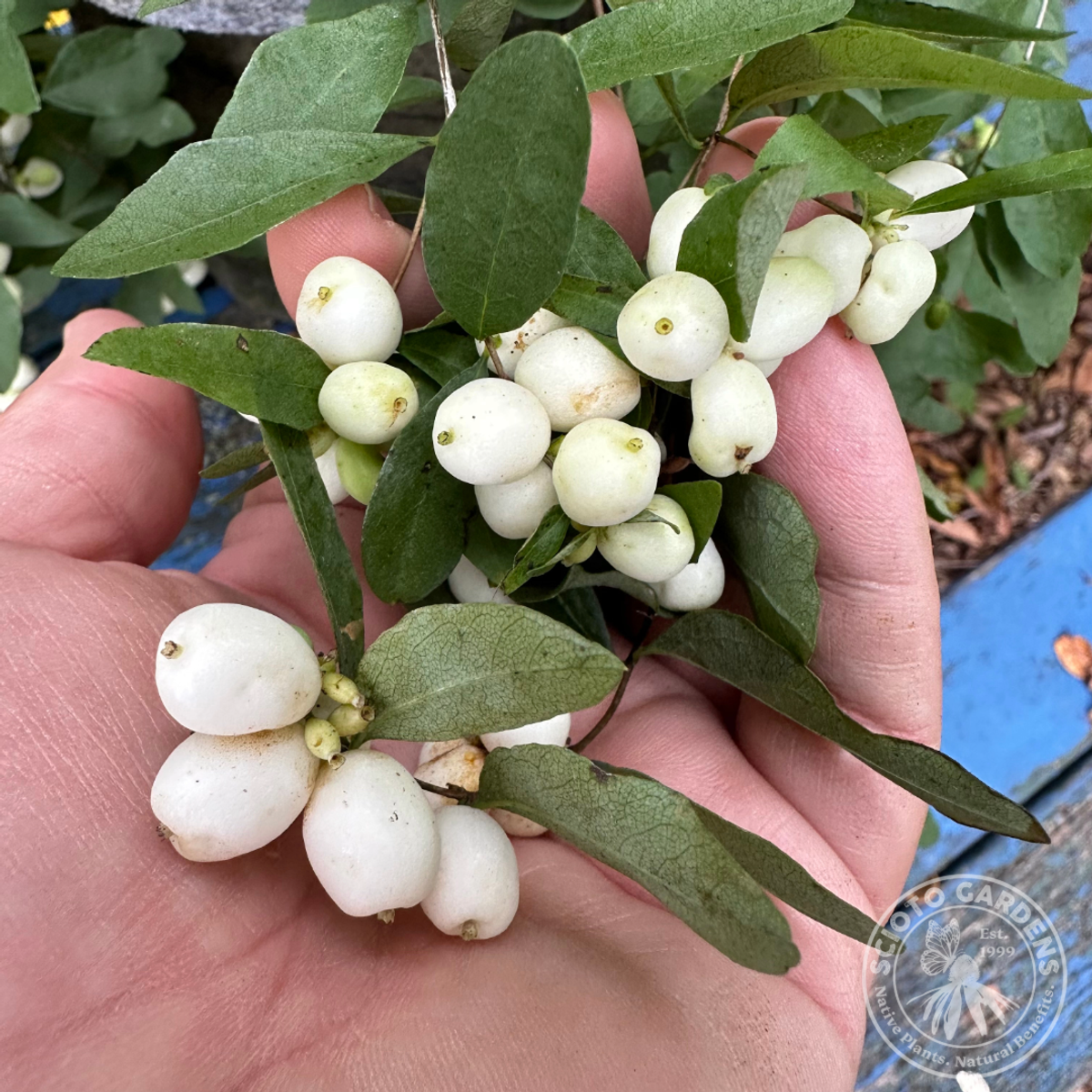
Common Snowberry is a tough, low-growing, deciduous native shrub. It has small, oval, blue-green leaves on long, arching, twiggy stems which grow densely to form a broad, rounded shape. This is a useful and durable plant that is closely related to honeysuckle, and it can tolerate poor soils in full sun to full shade. It is a good choice for most challenging situations in the garden, except for wet sites. They have a suckering habit that helps with controlling erosion and can occupy space to prevent the establishment of non-native, invasive species such as the bush honeysuckles. They excel at soil stabilization on slopes and can be used for naturalizing in wooded areas. When growing in shady conditions, however, they will produce fewer flowers/fruit and can become susceptible to powdery mildew.
Common Snowberries have a long blooming period, typically a month and a half or longer under favorable conditions, where they become covered in tiny pinkish-white, bell-shaped flowers. They provide nectar and pollen to numerous insect visitors, including butterflies, moths, Syrphid flies, Tachinid flies, and several species of bee which are the primary pollinators. They also attract Ruby-throated Hummingbirds! They are host to at least 25 species* of Lepidoptera, including the Snowberry Clearwing Moth and the Hummingbird Clearwing Moth.
The common name of this species comes from the snow-white, berry-like fruits (drupes) which are produced in clusters at the tips of the twigs. They are an interesting characteristic that provides visual interest long into the winter months. Birds such as the American Robin, Cedar Waxwing, Evening Grosbeak, Bobwhite Quail, and other fruit and seed-eating species will eventually pick off all of the berries, leaving the stems bare for the remaining weeks of winter. Deer will occasionally browse the twigs and leaves, but damage is not extensive, and it can even help with more plentiful flowering and fruiting in the following growing season. These plants can be cut back to 6″ every couple of years to keep them tidy and promote better fruit set.
Sources:
Native Trees, Shrubs, & Vines by William Cullina
Manual of Woody Landscape Plants by Michael A. Dirr
*Midwestern Native Shrubs and Trees by Charlotte Adelman & Bernard L. Schwartz
Missouri Botanical Garden
Lady Bird Johnson Wildflower Center
Illinois Wildflowers
