

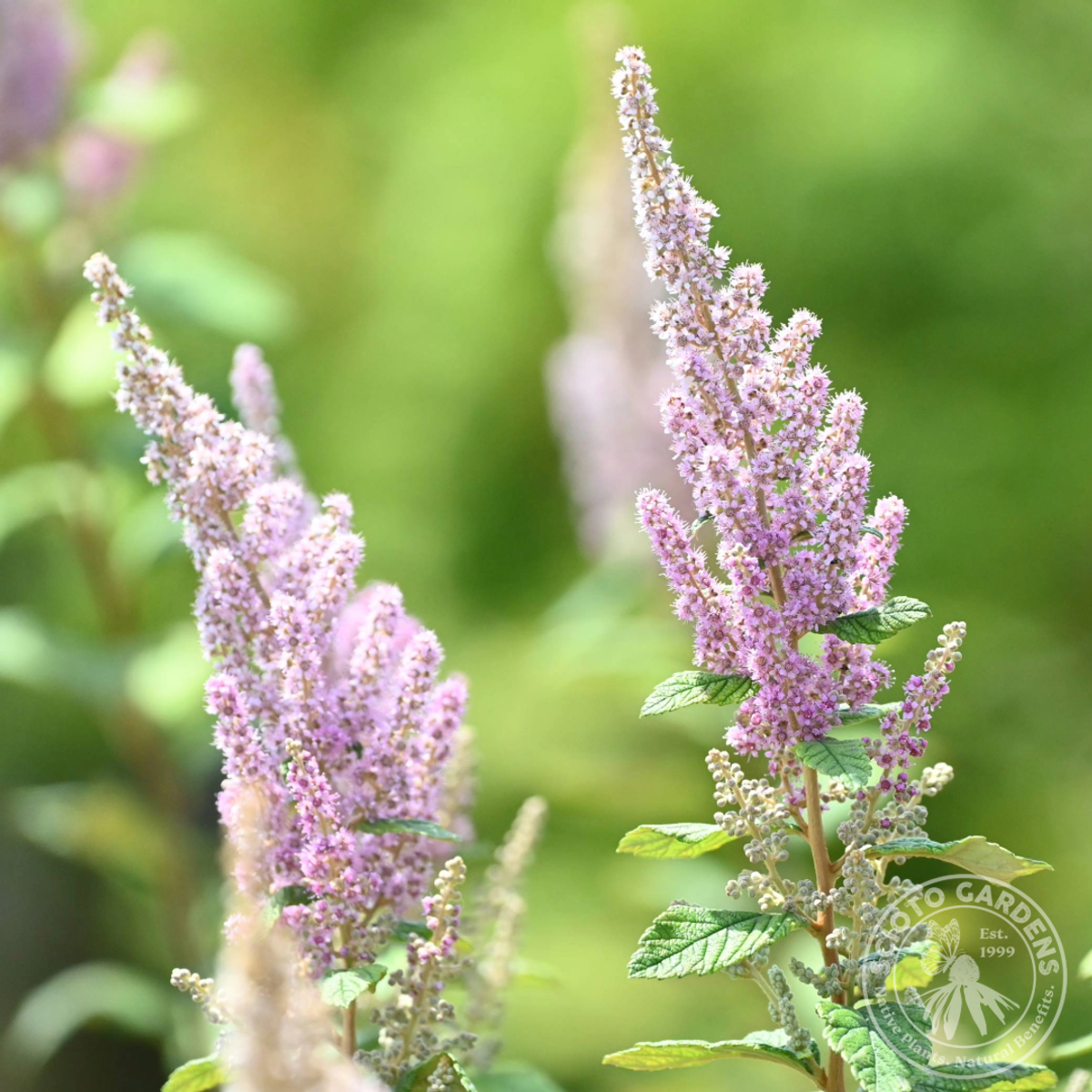
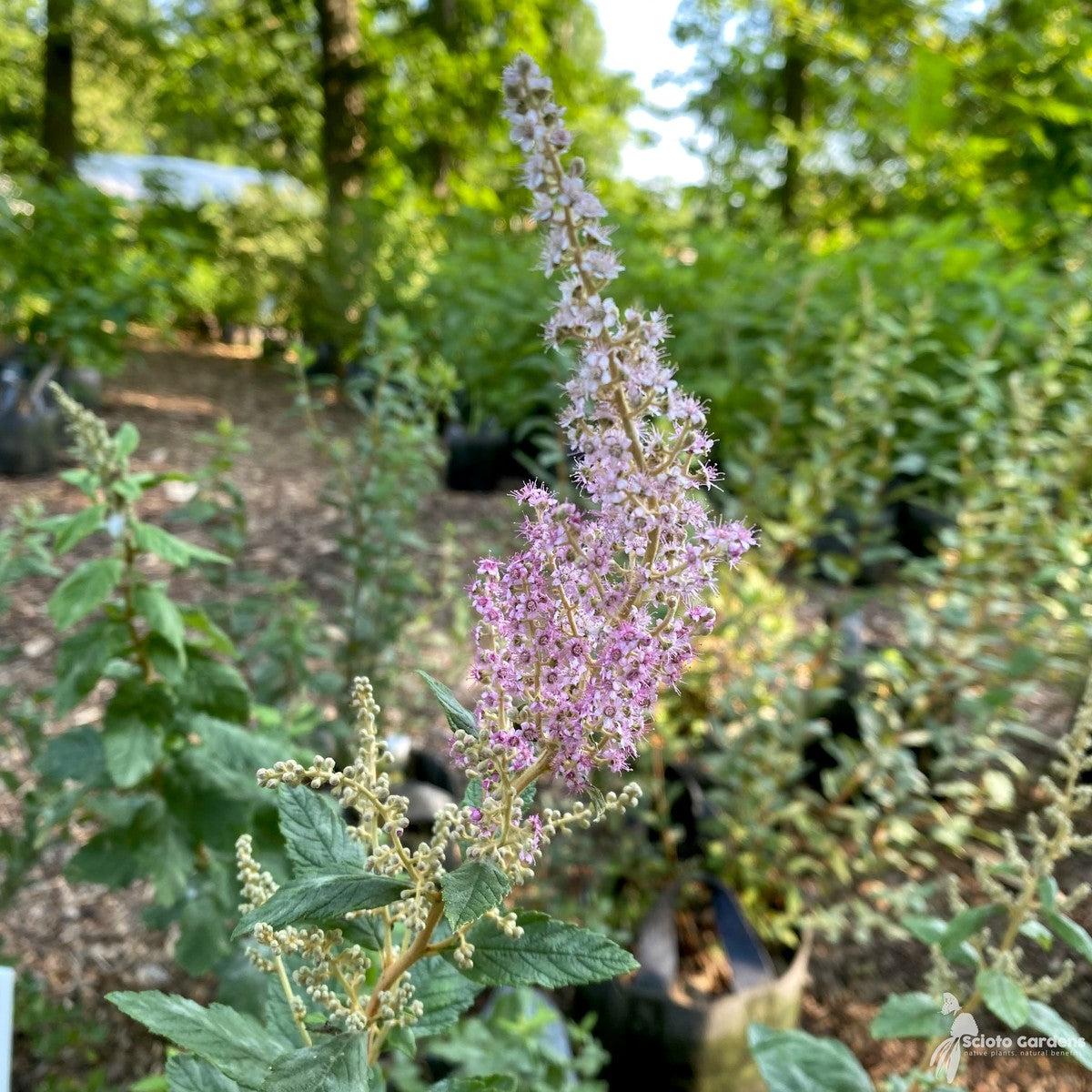
Steeplebush is a mounding, deciduous shrub native to sunny, wet landscapes of eastern North America. It is a tough, resilient, and reliable plant that looks equally at home whether planted with herbaceous companions or with other woody shrubs, such as the closely related White Meadowsweet (Spiraea alba). It can easily disappear into the background early in the season before it blooms, but once the eye-catching, pink-plumed panicles begin to blossom, it will be the star of the show. The steeple-shaped flowers bloom from the top downward, and the blooming period can last for nearly two months. Flowers occur on new wood, so pruning or mowing (where feasible) in late winter or early spring will keep it tidy and floriferous.
This shrub looks its best when allowed to naturalize in a wet meadow situation, around the edges of a pond, and in low, poorly drained areas of the landscape. While it is not bothered by serious pests or diseases, the foliage can be susceptible to powdery mildew and leaf spot (especially in hot, humid summers) and would benefit from being interplanted with other similarly sized plants to help hide the blemishes. It can occasionally show some interesting fall color of apricot, orange, yellow, and pink.
Steeplebush is host to at least 89 species* of Lepidoptera, making it a valuable food source in wet fields and meadows for insectivorous birds and nestlings. The low-growing, suckering, twiggy growth habit is sought out by several bird species, such as Red-winged Blackbirds, Indigo Buntings, American Goldfinches and Willow Flycatchers, for ideal nesting sites. Many bees, flies, beetles, and especially butterflies and moths linger on the flowers for nectar and/or pollen.
Sources:
Native Trees, Shrubs, & Vines by William Cullina
*Midwestern Native Shrubs and Trees by Charlotte Adelman & Bernard L. Schwartz
Eastern/Central Medicinal Plants and Herbs by Steven Foster and James A. Duke
Missouri Botanical Garden
Lady Bird Johnson Wildflower Center
Illinois Wildf
