


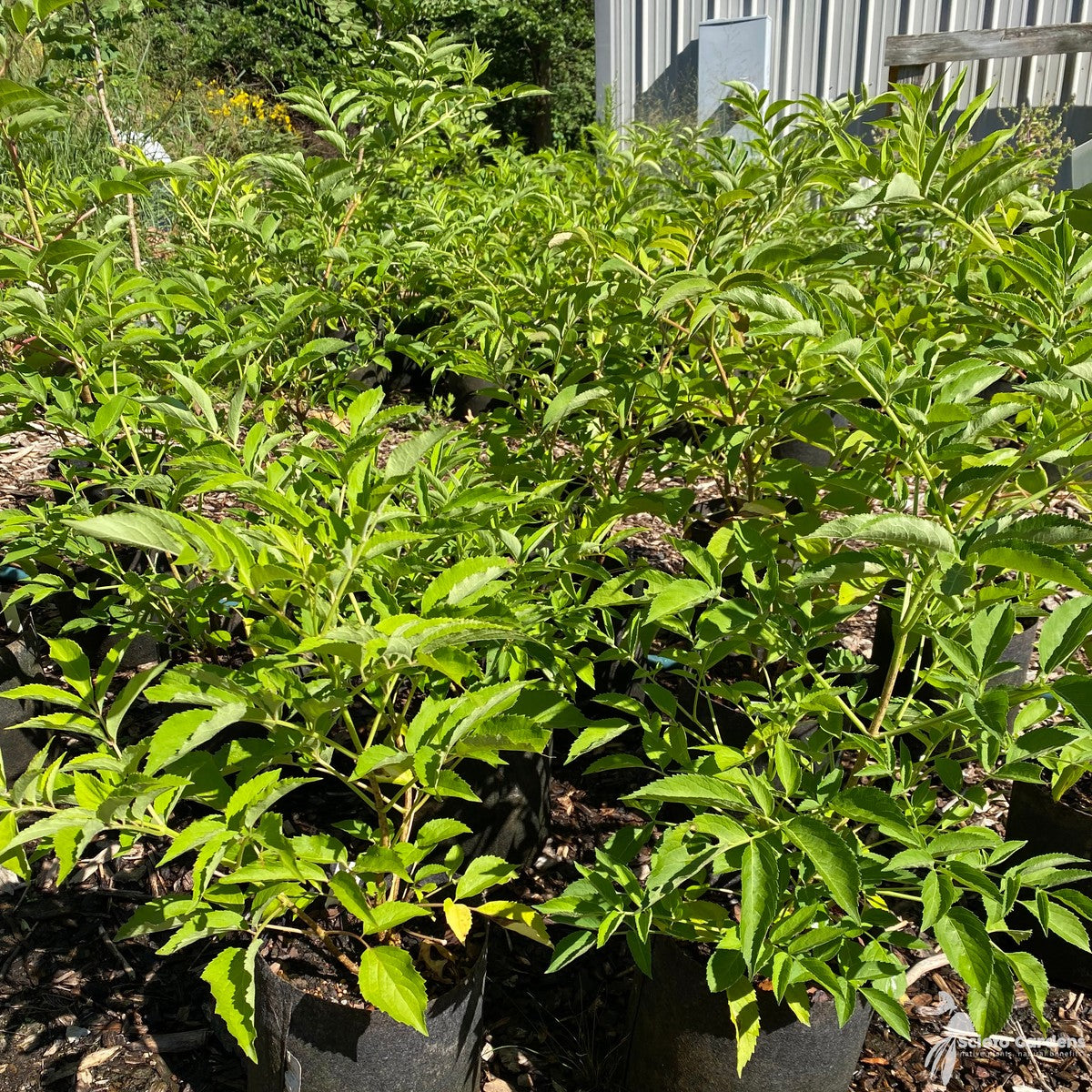
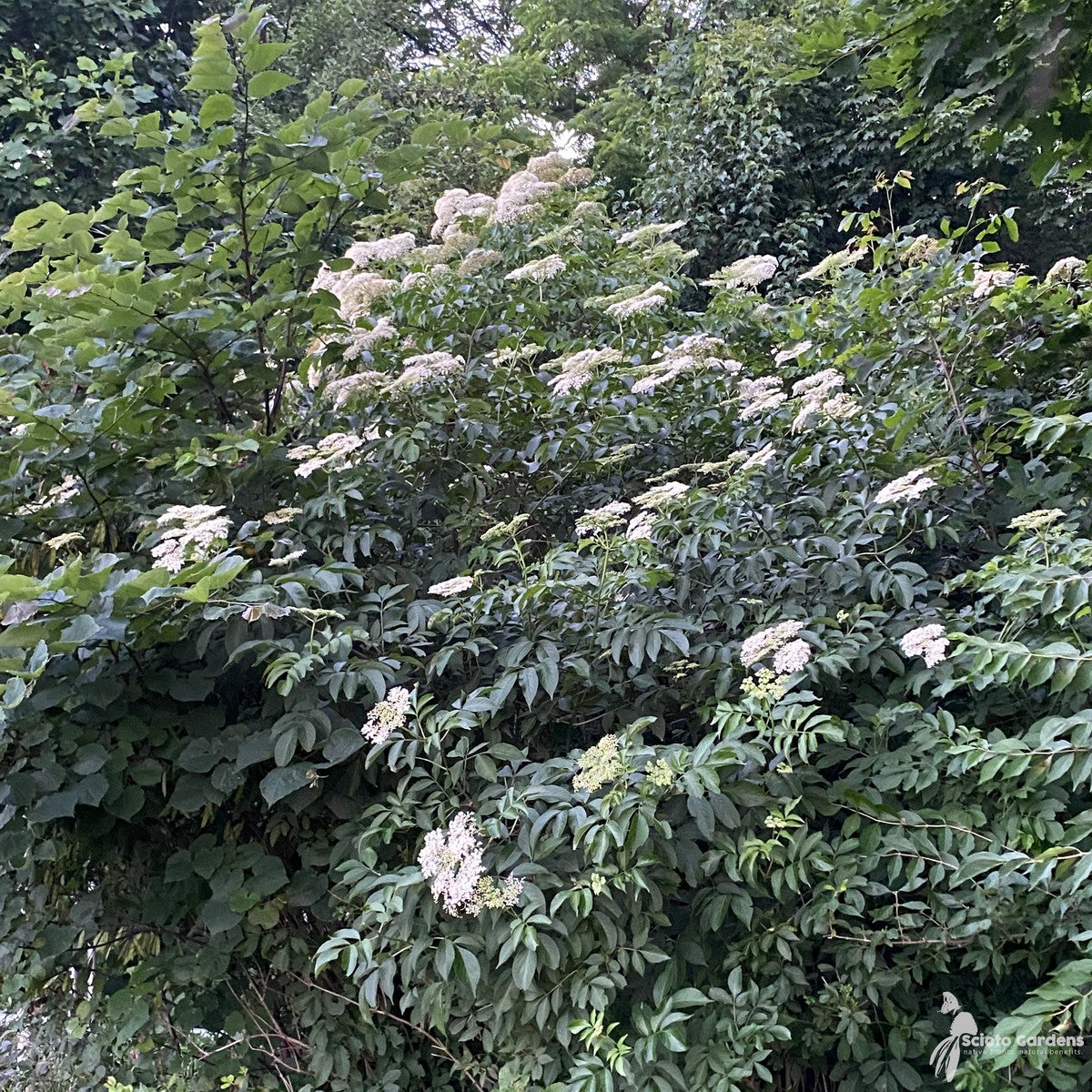
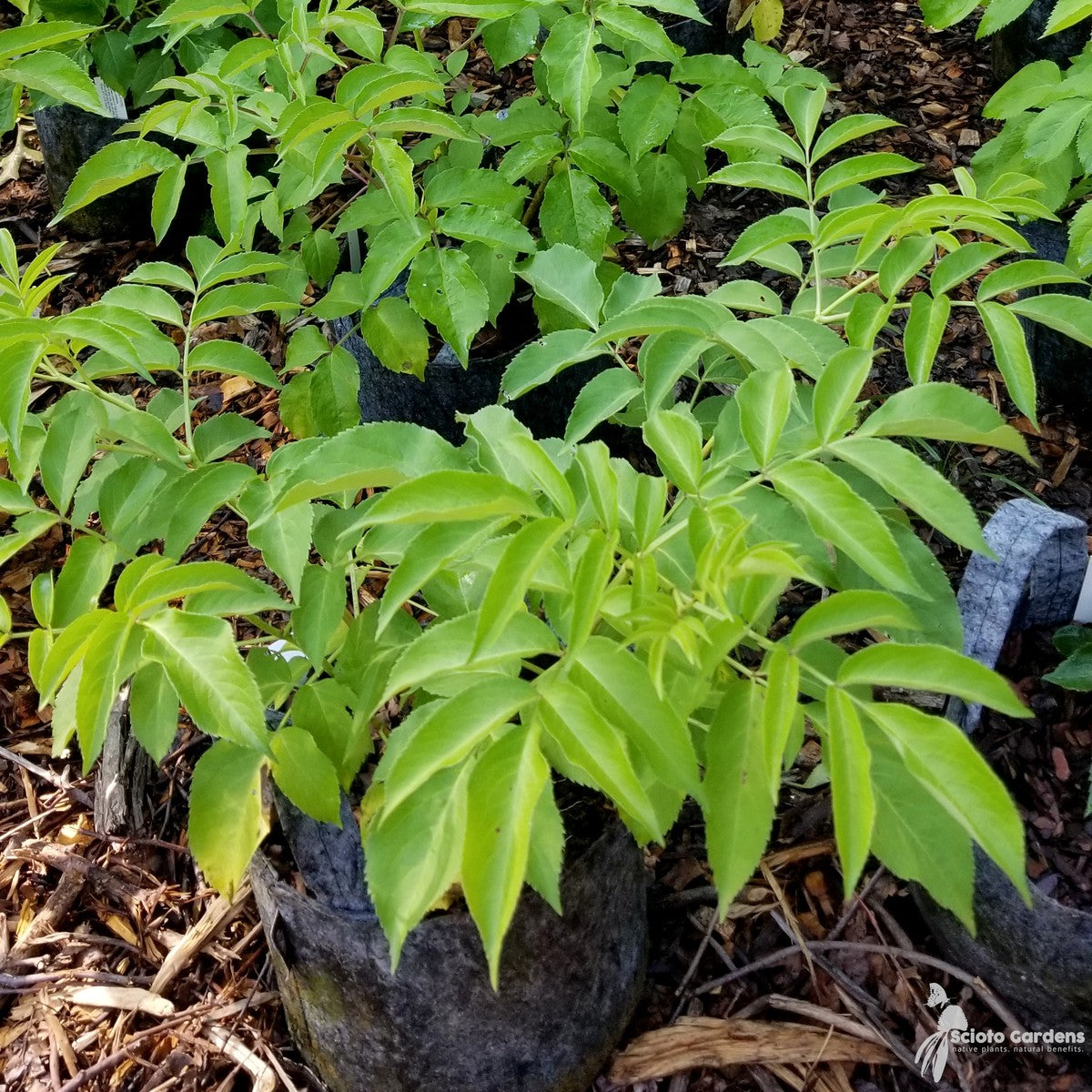
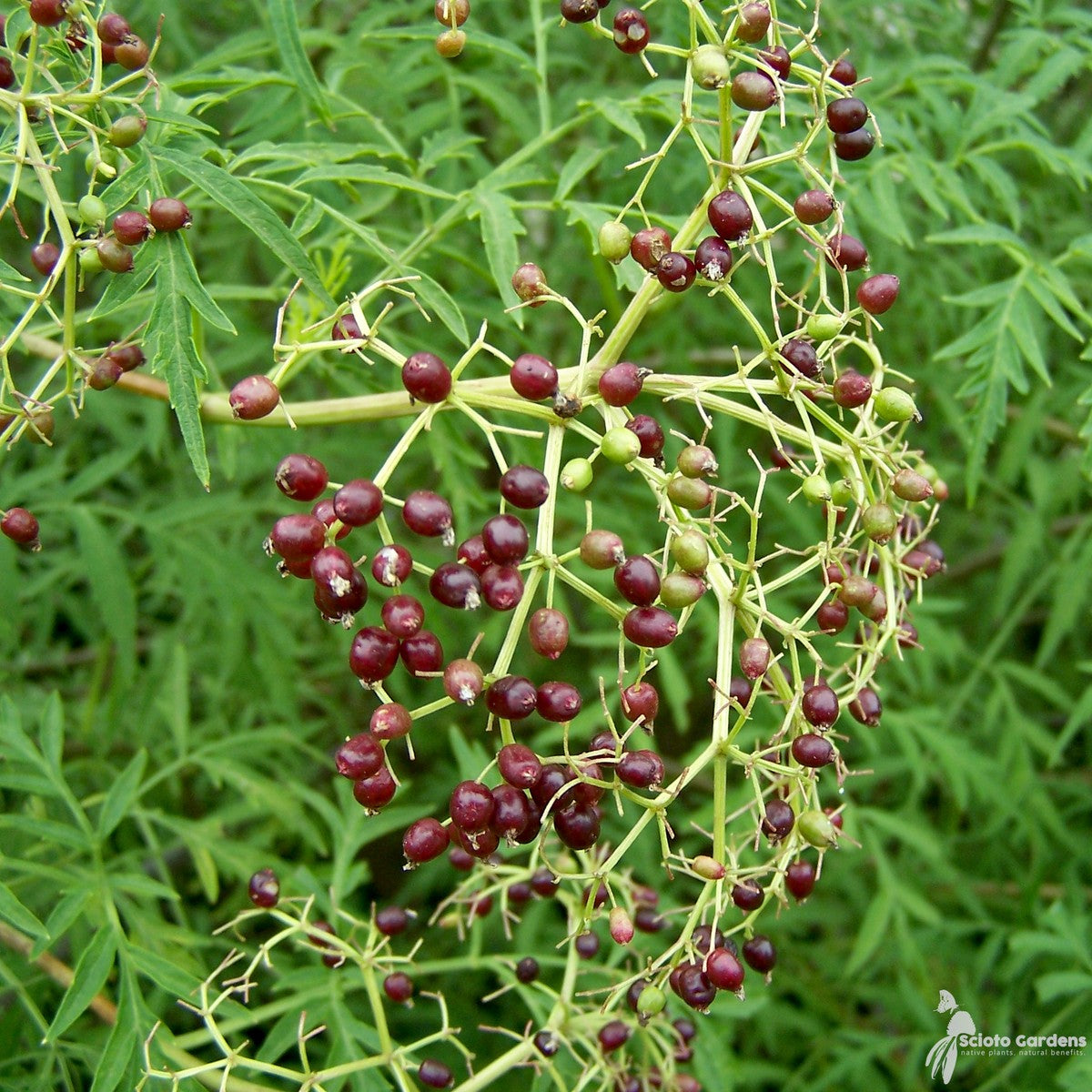
American Elderberry is a large, stoloniferous, multi-stemmed native shrub, quickly growing to a height of 12' with a similar spread. It prefers to grow in moist, rich soil but is adaptable and easy to please. This is a shrub that thrives on neglect if well-sited. It can be used to effectively control erosion on moist sites, as well as to prevent invasive species from getting rooted into open ground. These large, spreading shrubs make great hedges and privacy screens, sprawling shrub borders, and are easy to naturalize in wild areas.
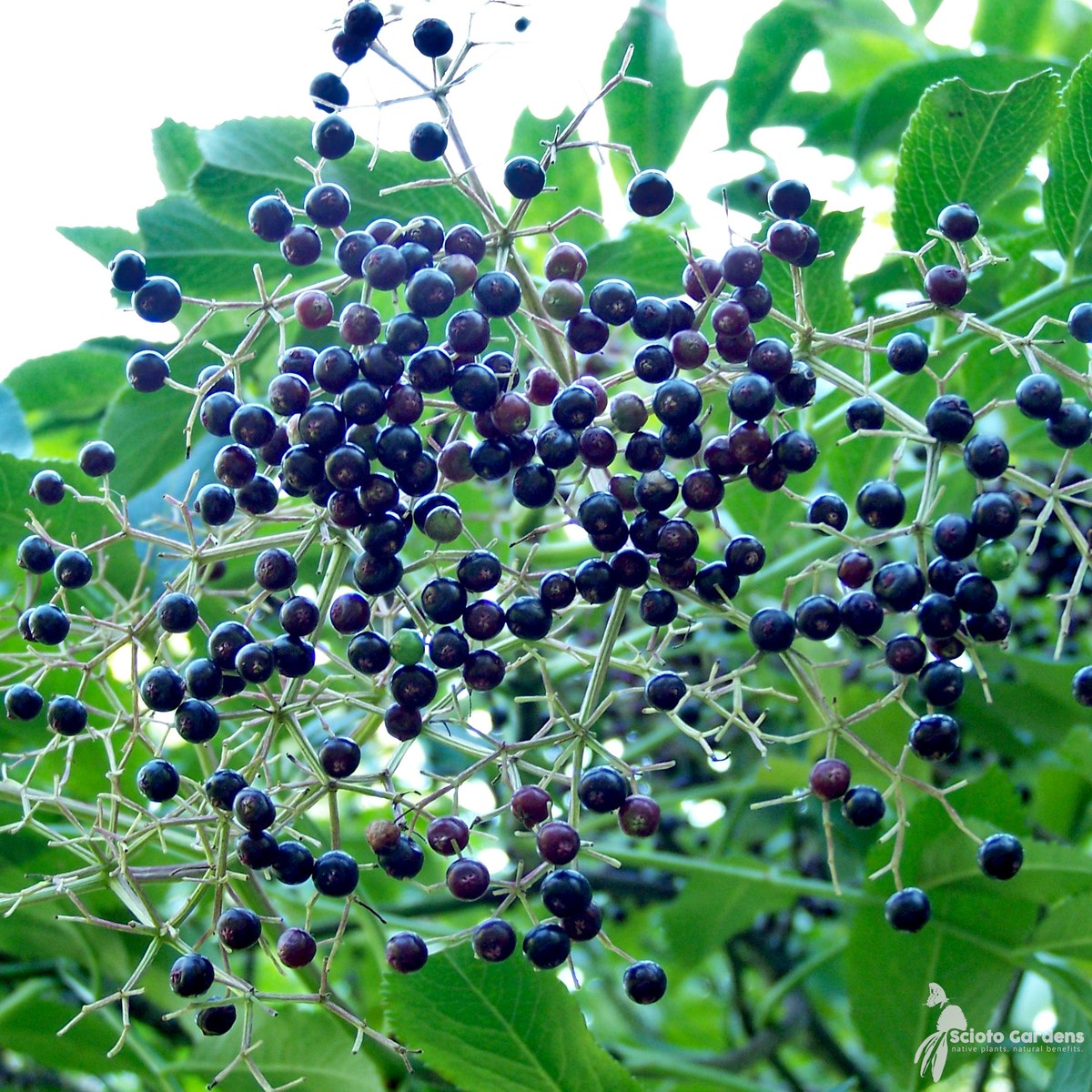
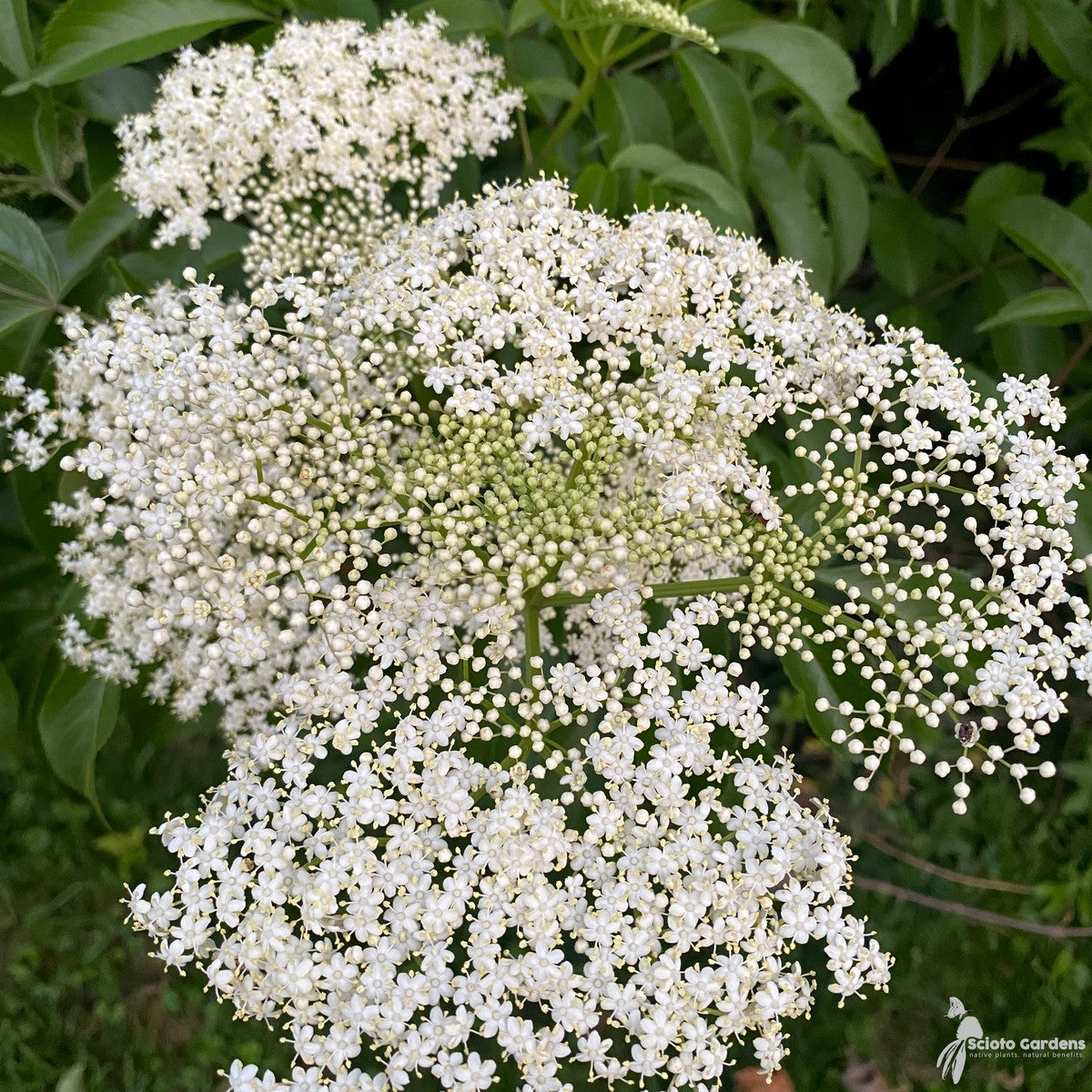
American Elderberries have 6-10" white flower clusters in June that are self-fertile, producing large quantities of sugary berries in late summer. The berries are edible after cooking and have many uses in folk medicine. As with any edible or medicinal plant, proper research should be conducted before ingestion.
Sambucus spp. are incredibly valuable to birds, with as many as 120 species feeding on the fruits, often before they even ripen! The dense foliage of Elderberry thickets provides safe nesting sites for warblers, grosbeaks, goldfinches, and many others.
Sources:
Native Trees, Shrubs, & Vines by William Cullina
Manual of Woody Landscape Plants by Michael A. Dirr
Eastern/Central Medicinal Plants and Herbs by Steven Foster and James A. Duke
Gardening for the Birds by George Adams
Missouri Botanical Garden
Illinois Wildflowers
Grow Native! Salt-Tolerant Native Plants
The Morton Arboretum-Black Walnut Tolerance
