

Pussy Willow is a favorite, old-fashioned harbinger of Spring. It is typically a large, multi-stemmed shrub native to the northern and eastern parts of North America. It is fast-growing and benefits from being cut to the ground for rejuvenation every 3-5 years, which will also keep it to a smaller shrub size and a more uniform shape. With judicious pruning and management, Pussy Willows can be grown as small trees up to 20' or even 25' tall. They can become aggressive in ideal growing conditions (continuously moist soil in full sun) with their shallow, spreading root system forming colonies, as well as with their ability to root and grow a new plant from broken branches. This species can tolerate average garden soils better than most other willows, but will not thrive in dry conditions.
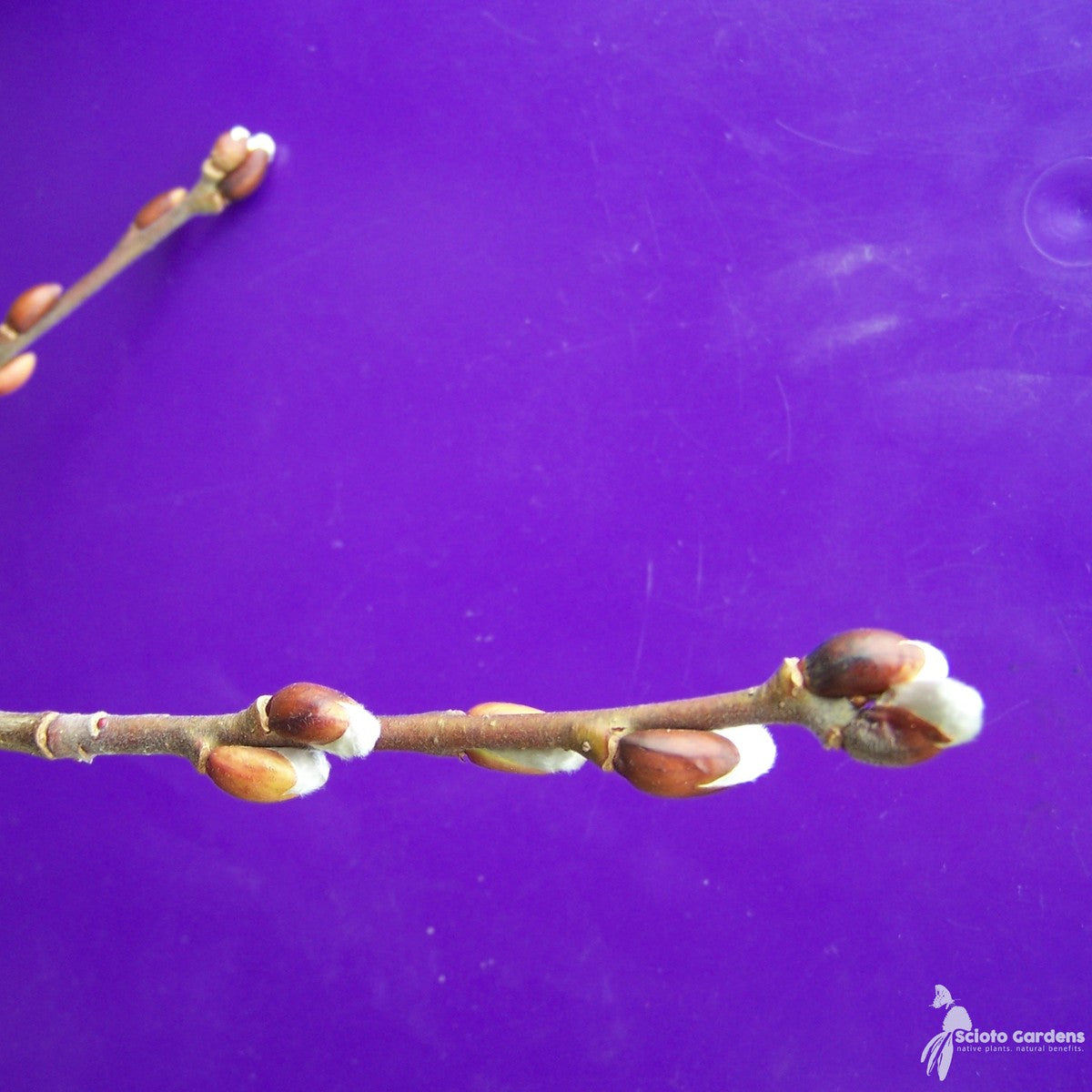
The irresistibly soft and fuzzy, silvery male catkins stretch out along the bare branches before the leaves emerge. These plants are dioecious, meaning male and female flowers occur on different individuals. When Pussy Willow is being planted as an ornamental specimen in the garden, males are usually preferred for their showier catkins. The female catkins are regarded as less ornamental, as they are smaller and greenish rather than pearly silver. When both sexes are present, and pollination is successful, they give way to interesting seed capsules which remain until mid-summer, when they burst open and release the cottony seeds to the wind.
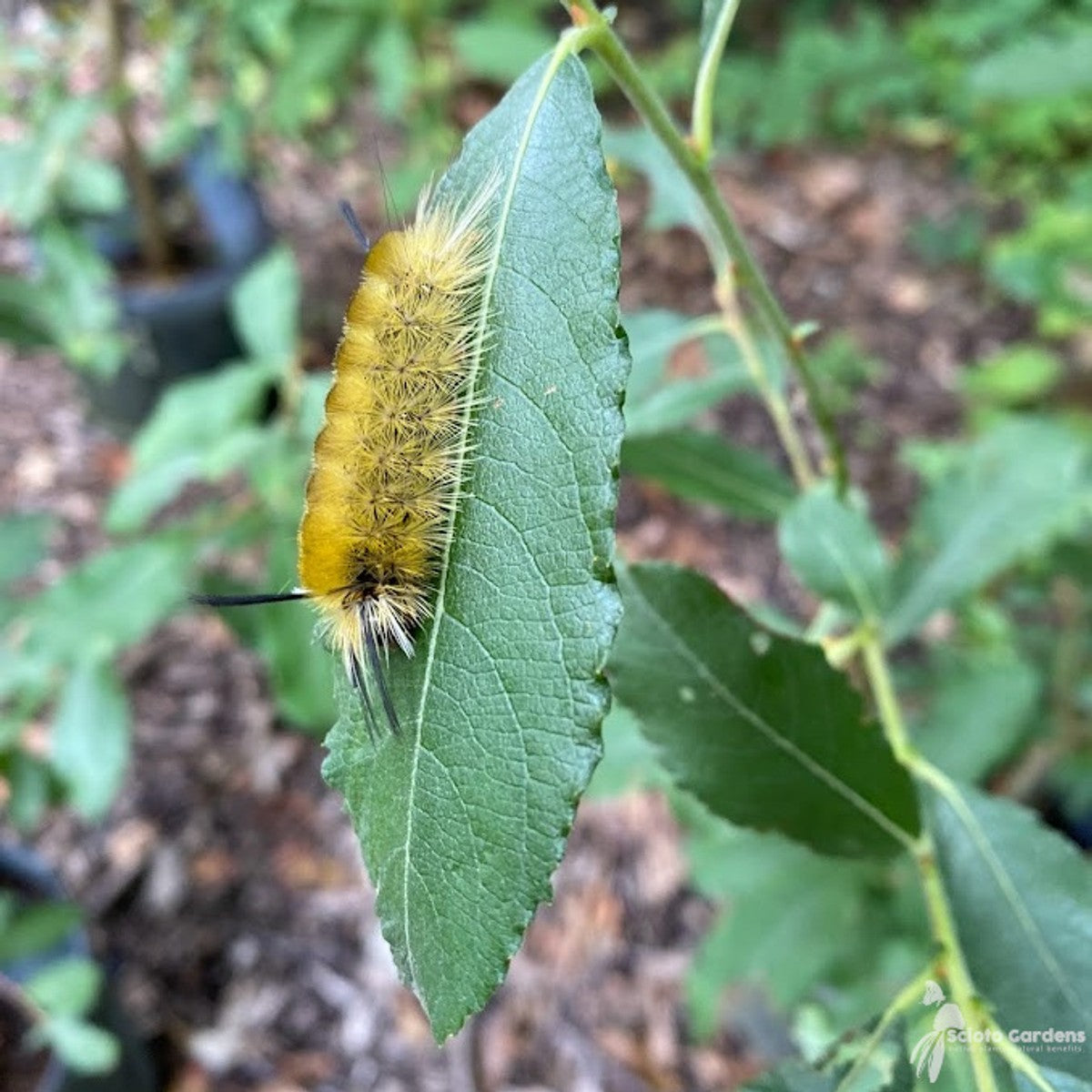
The wildlife value of native willows cannot be overstated. They are host to at least 289 species of Lepidoptera, just behind Prunus spp. and Quercus spp. in terms of the ecological importance to the interconnected food web. Cherished and admired butterflies such as the Viceroy, Red-spotted Purple, Mourning Cloak, Eastern Tiger Swallowtail, and several hairstreaks are supported by willows, as well as the majestic Luna, Io, and Cecropia moths.
The flowers of Pussy Willow are not wind-pollinated and instead rely on attracting large numbers of native bees and honeybees. Both flower sexes provide an early source of nectar, but only the male flowers sparkle with bright yellow pollen. There are at least 14 specialist bee species that depend on the pollen from Salix spp. almost exclusively. Some wood-boring beetles use willows to overwinter, and in turn, many insectivorous birds, such as woodpeckers, depend on them to provide food through the frigid winter months.
Sources:
Manual of Woody Landscape Plants by Michael A. Dirr
Midwestern Native Shrubs and Trees by Charlotte Adelman & Bernard L. Schwartz
Missouri Botanical Garden
Lady Bird Johnson Wildflower Center
Illinois Wildflowers
Photo Credits:
Mature Individual: Famartin, CC BY-SA 4.0, via Wikimedia Commons
Male Flower Detail: Famartin, CC BY-SA 4.0, via Wikimedia Commons
Female Flower Detail: Aammell, CC0, via Wikimedia Commons
