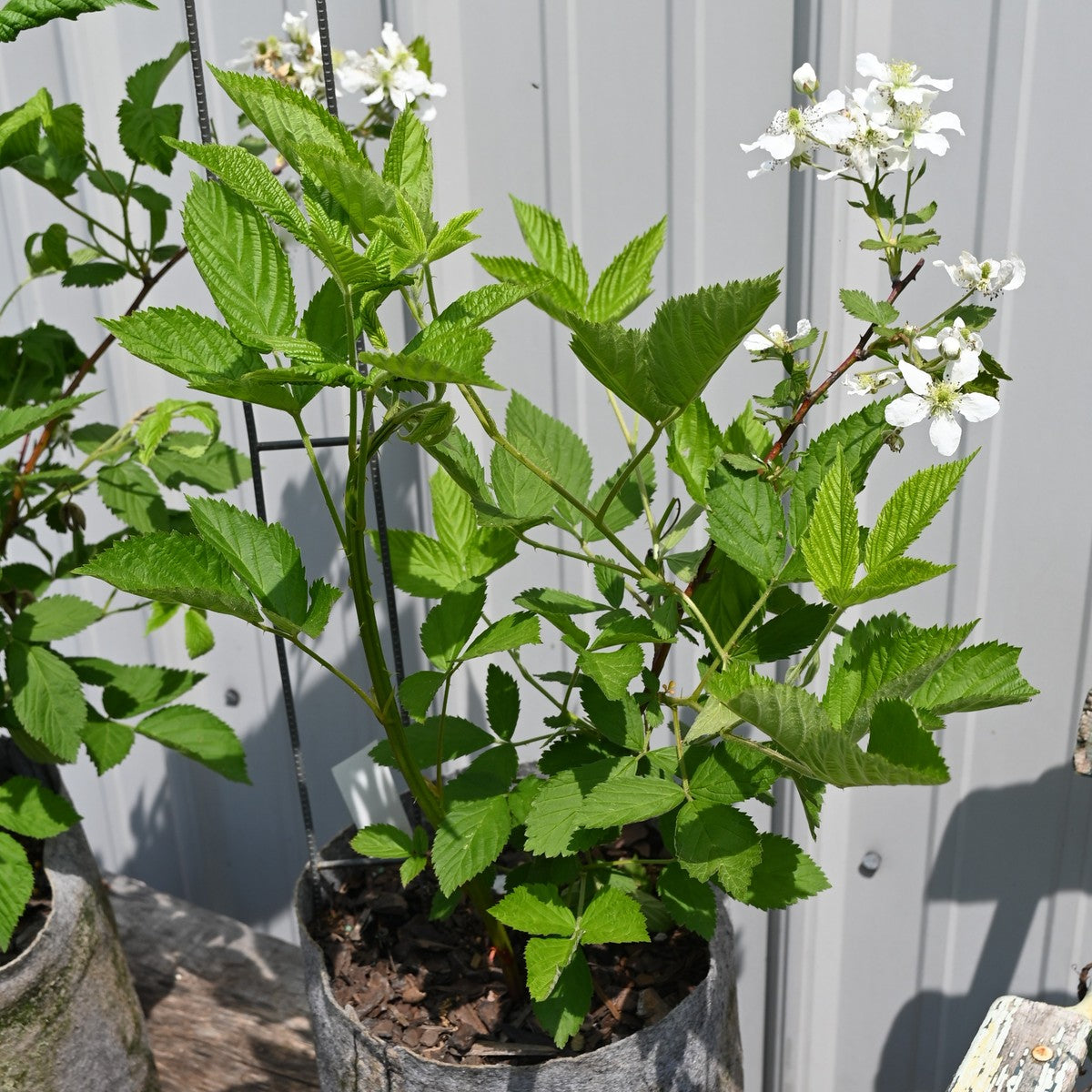
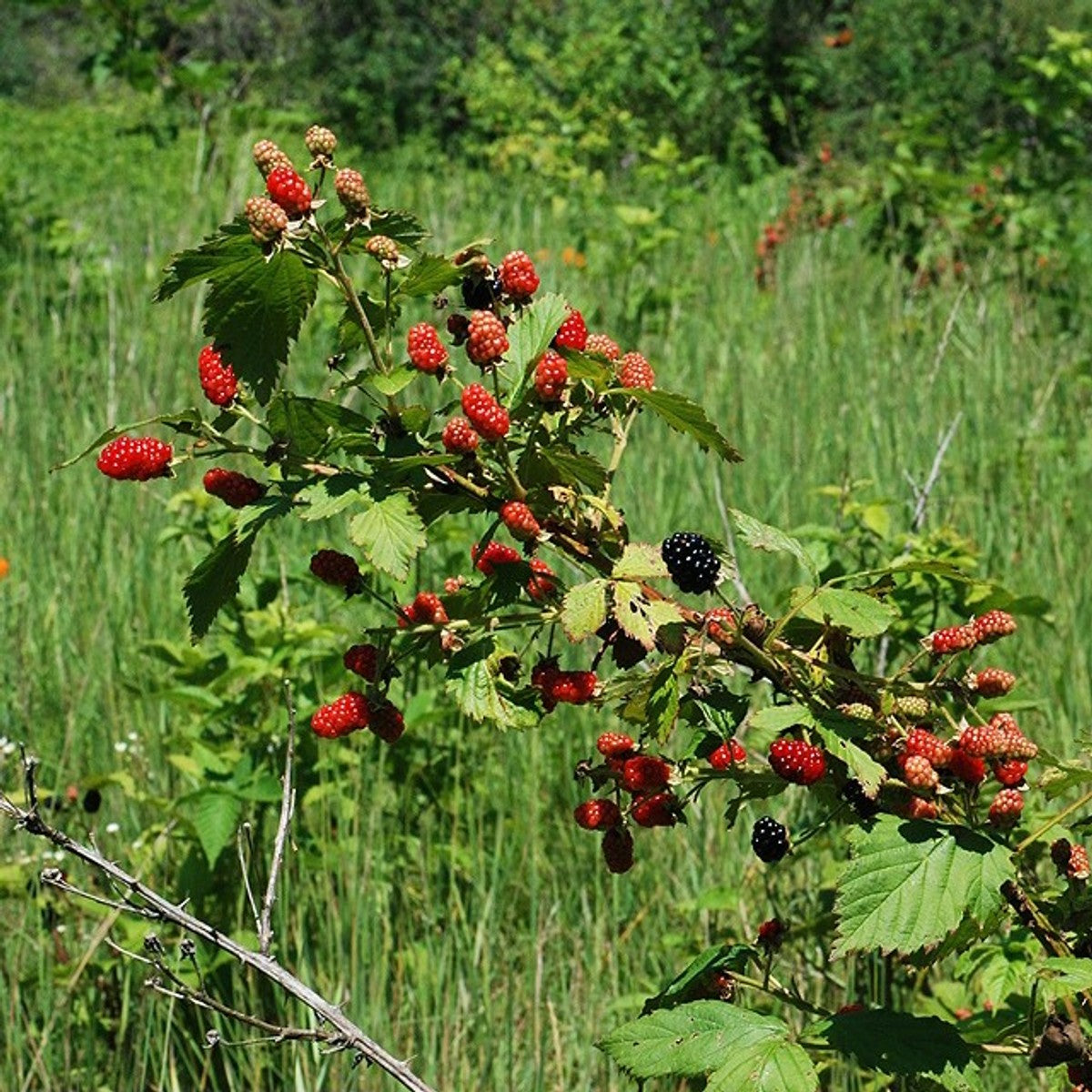
Allegheny Blackberries are native primocane brambles that produce fruit at the tip of new canes in their first summer. If allowed to overwinter, they will crop again early in the following summer on the same wood. This plant is truly invaluable to wildlife, with its wickedly thorny stems that are quick to colonize open ground in favorable conditions. It provides much needed protection during nesting season for many birds, including the northern cardinal, yellow warbler, buntings and towhees.
Favorite backyard birds such as cedar waxwings, rose-breasted grosbeaks, and tufted titmice are among the nearly 150 species that depend on the fruits. The insect visitors of this plant are at least as numerous as the birds. Their presence will in turn attract many insectivorous bird species, promoting a cycle of life centered on the patch of Allegheny Blackberries. The nectar and pollen of the flowers attract several fascinating bee species in late spring to summer. The Striped Hairstreak uses the foliage as a larval host.
Consider using Allegheny Blackberries in a corner of your property where it has room to ramble and exist mostly undisturbed to support your own wildlife haven. If it needs rejuvenated, cutting it down in very late winter (no more than every two years) should be sufficient to keep it fruiting and producing healthy new canes.
Sources:
Native Trees, Shrubs, & Vines by William Cullina
Gardening for the Birds by George Adams
Illinois Wildflowers


Limited Time Offer:
0
days
0
hours
0
mins
0
secs
Rubus allegheniensis (Allegheny Blackberry) - QT
Allegheny Blackberry

Plant Care & Installation Quick-Guide
Proper acclimation and installation are key to your plant's success. Please cross-reference these tips with your plant's specific ID tags:
·
Pre-Planting: Store plants in a light-appropriate area on soil or grass (avoid hot concrete or asphalt) and water daily until the soil is saturated and the pot feels heavy. If temperatures drop below 30°F, move pots to a garage or cover them to prevent root freeze.
·
Installation: Dig a hole matching the depth of the pot, remove the fabric container, and ensure the plant’s crown or root flare is level with the ground. Fill gaps with soil, water heavily, and apply 2 inches of mulch—keeping it clear of the stem.
·
Ongoing Care: Check moisture daily by feeling 1–2 inches into the soil; water deeply at the base if the soil feels dry or warm. Newly installed plants require frequent watering (up to 3–4 times weekly in heat) until fully established, which can take a few months for perennials and up to two years for trees.