
Virginia Rose is a wild rose native to the southeastern United States and north to Newfoundland. It is an attractive, hardy, low-maintenance, and disease-resistant species that will grow in a variety of soil types, as long as it is well-draining. It is perhaps the best of the native roses to adjust to garden conditions. It grows in a mounded, suckering habit with upright, red, arching canes equipped with stout, hooked, infrastipular (at the base of the petiole) thorns. This rose needs a large space as it will grow into a thicket. It is well suited to marginal areas of the landscape, up against structures or as a barrier planting or low hedge. It can be kept to its allotted space and looking tidy by being cut to the ground every couple of years in late winter. This will help it to develop into an attractive, dense, rounded form.
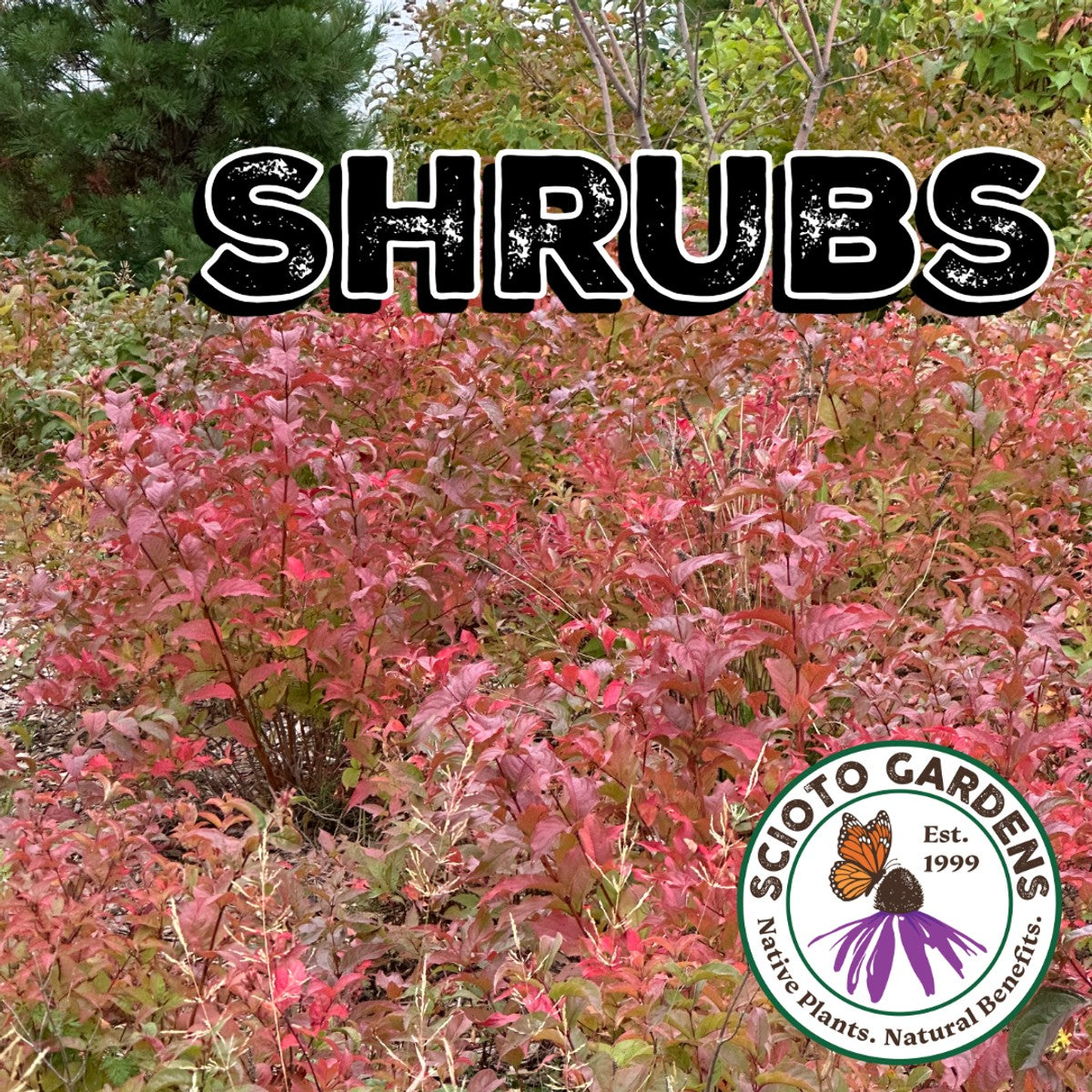
Wild roses are much more resistant to the foliar diseases that affect most of the cultivated varieties, and they require no fertilizers or pesticides to thrive. The clean, dark green foliage is leathery and lustrous, which turns to a gorgeous mixture of oranges, reds, and maroons that match the young canes once autumn approaches. Flowers are single, open, fragrant and medium pink. They come in a flush in early to mid-summer, then with a trickle of blooms sporadically over the next 8 weeks. Bright scarlet rose hips follow the flowers and give the shrub the appearance of being covered in berries throughout the fall and winter. These rose hips are rich in Vitamin C and can be made into jams, jellies, teas, and other delicious concoctions.
Many bee species (especially bumblebees which are the most important pollinators of wild roses) are attracted to the flowers to collect pollen. They also provide nesting materials for native bees and birds. At least 38 species* of birds use the rose hips for winter food, including the American Robin, Northern Cardinal, Eastern Bluebird, Cedar Waxwing, and Brown Thrasher. The thorny rose thicket is an excellent place to call home for small mammals and birds, offering dense cover and protected nesting sites. It is also full of food throughout the spring and summer, hosting around 102 species of Lepidoptera, which feed a multitude of insectivorous birds and nestlings.
Sources:
Native Trees, Shrubs, & Vines by William Cullina
Manual of Woody Landscape Plants by Michael A. Dirr
*Midwestern Native Shrubs and Trees by Charlotte Adelman & Bernard L. Schwartz
Lady Bird Johnson Wildflower Center
The Morton Arboretum
Photo Credits:
Flower Detail: Benny Mazur from Toledo, OH, CC BY 2.0, via Wikimedia Commons
