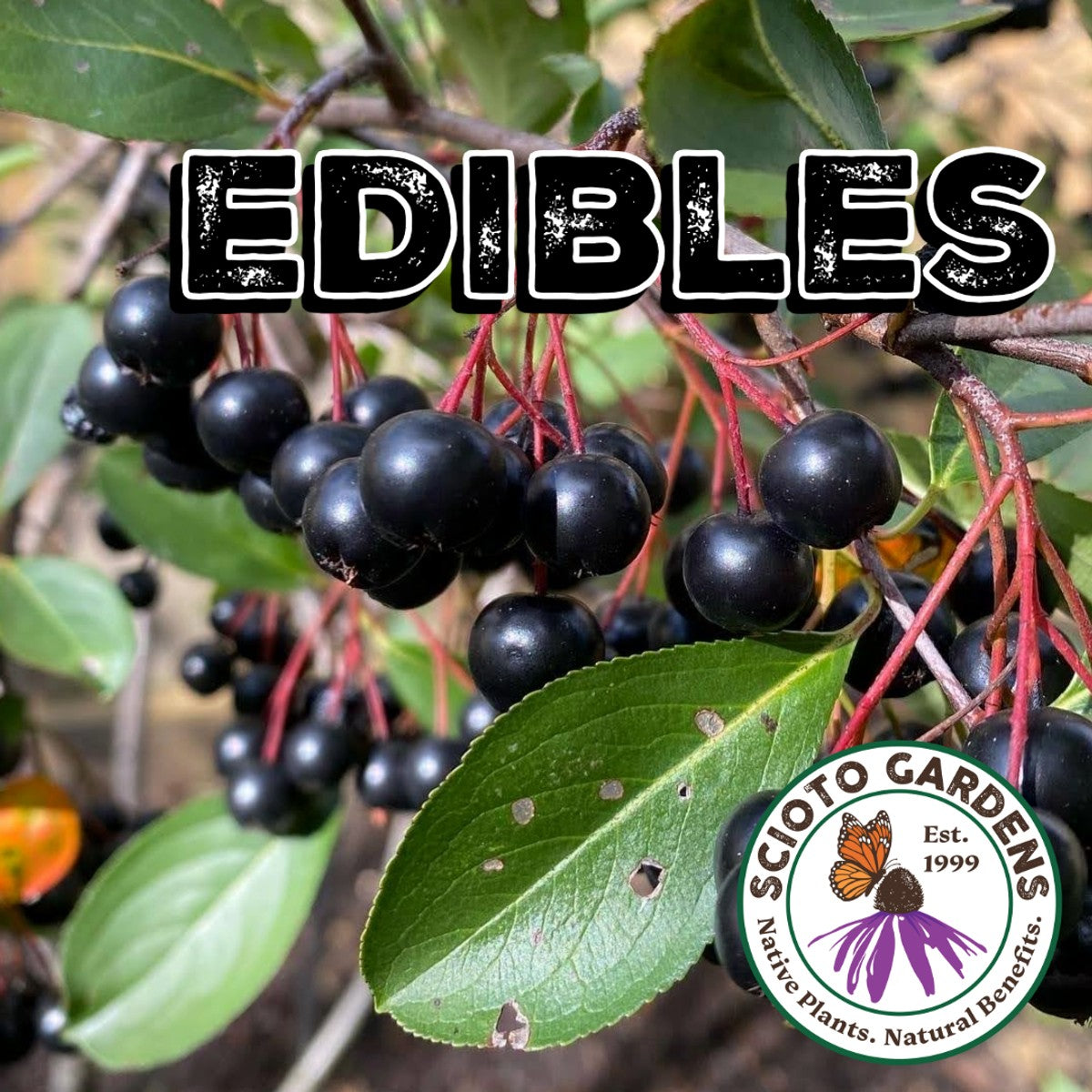
American Gooseberry is a native multi-stem shrub that thrives in moist soils in sun or shade. The low, twiggy stems become covered in bristles as they mature. Sparrows, bluebirds, northern flickers and thrushes eat the berries, and many others take shelter in the dense spiny mass of stems. The tubular flowers also attract hummingbirds.
The gooseberry flesh is greenish with a pink to purple translucent skin. The berries are ready for harvest from July to mid-August and have a sweet, floral taste.
Ribes species are an alternate host for White Pine Blister Rust. The White Pine Blister Rust became a problem starting in 1910 when a careless, or clueless, plantsman imported thousands of infected Pinus strobus (our native Eastern White Pine) from Europe, where they were grown as ornamentals, and used them for reforestation throughout the continent. The pathogen was spread far and wide, efficiently and forever. In the 20’s and 30’s, the government hired armies of people to eradicate cultivated and wild Ribes and banned importation and cultivation. The ban lasted until 1966. Both measures were unsuccessful. Therefore, it would be a good idea to do some further research before deciding to plant them. The rust spores from the Pines can spread hundreds of miles to the Ribes, but only a few hundred feet from the Ribes to the Pines.
Sources:
Native Trees, Shrubs, & Vines by William Cullina
Gardening for the Birds by George Adams
Lady Bird Johnson Wildflower Center
University of Minnesota


Limited Time Offer:
0
days
0
hours
0
mins
0
secs
Ribes hirtellum (Gooseberry) - QT
Gooseberry

Plant Care & Installation Quick-Guide
Proper acclimation and installation are key to your plant's success. Please cross-reference these tips with your plant's specific ID tags:
·
Pre-Planting: Store plants in a light-appropriate area on soil or grass (avoid hot concrete or asphalt) and water daily until the soil is saturated and the pot feels heavy. If temperatures drop below 30°F, move pots to a garage or cover them to prevent root freeze.
·
Installation: Dig a hole matching the depth of the pot, remove the fabric container, and ensure the plant’s crown or root flare is level with the ground. Fill gaps with soil, water heavily, and apply 2 inches of mulch—keeping it clear of the stem.
·
Ongoing Care: Check moisture daily by feeling 1–2 inches into the soil; water deeply at the base if the soil feels dry or warm. Newly installed plants require frequent watering (up to 3–4 times weekly in heat) until fully established, which can take a few months for perennials and up to two years for trees.