


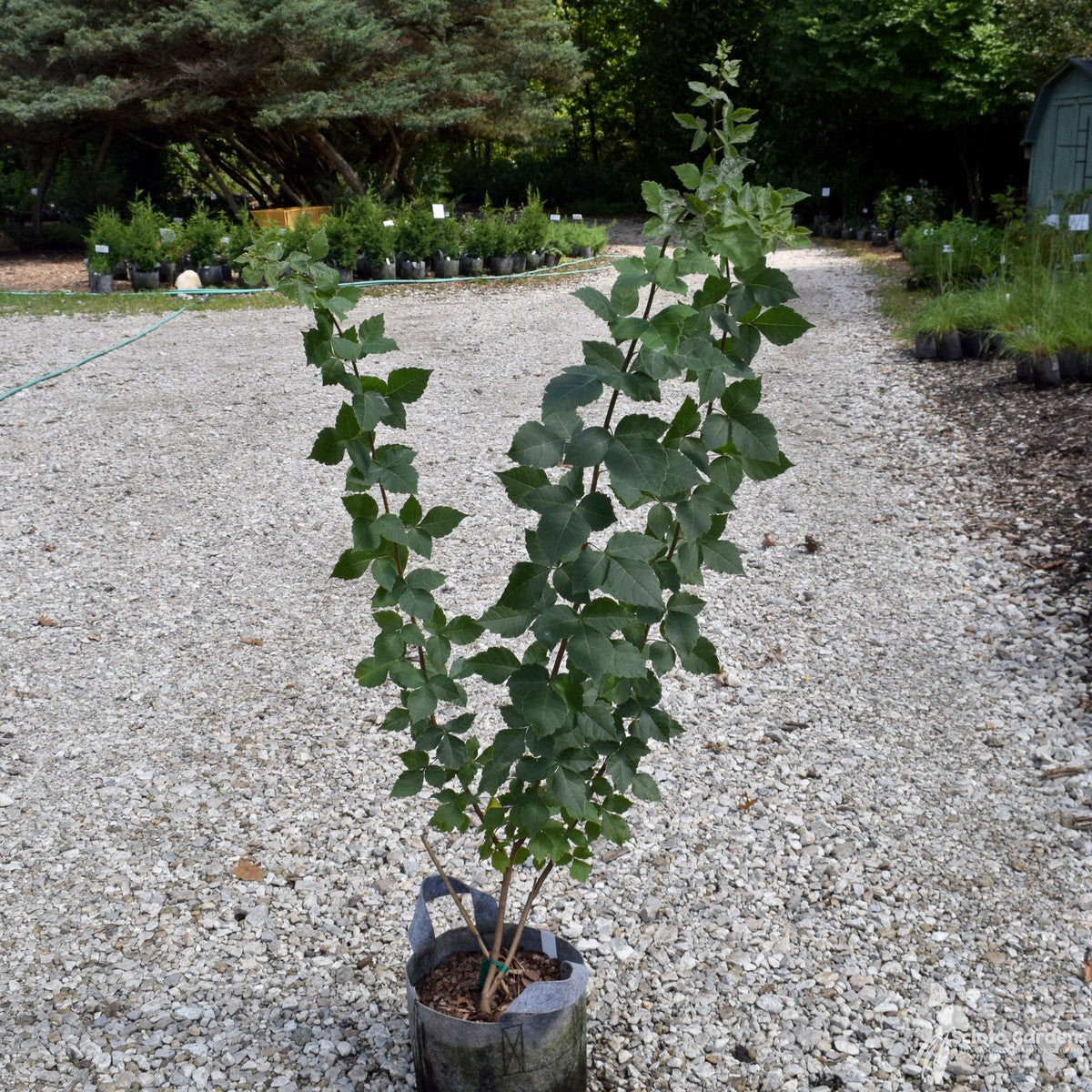
Fragrant Sumac is a dense, low-growing, spreading shrub native to the eastern half of North America. It is a trouble-free, low-maintenance plant that is very easy to grow and can thrive on poor, dry, hot sites. It excels at stabilizing slopes and embankments and can grow where little else takes root, which makes it an excellent choice for combatting non-native, invasive plants such as the bush honeysuckles. This species is much shorter and less aggressive than the other native sumacs, usually around 6' in height, but able to take significant pruning to keep it within its bounds. It grows much wider than tall and has the ability to root from the branch tips that touch the ground, which is an asset for erosion control on uneven ground.
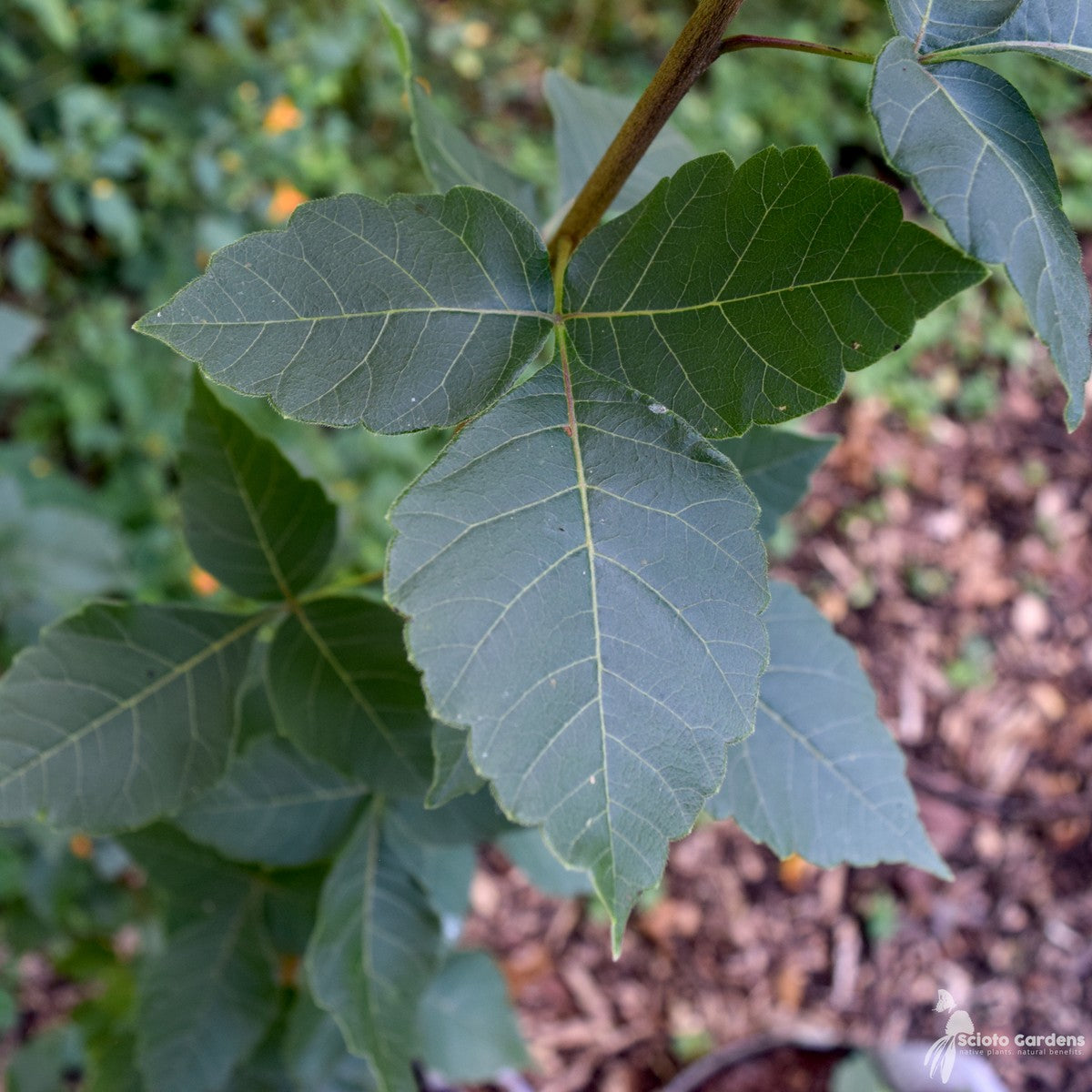
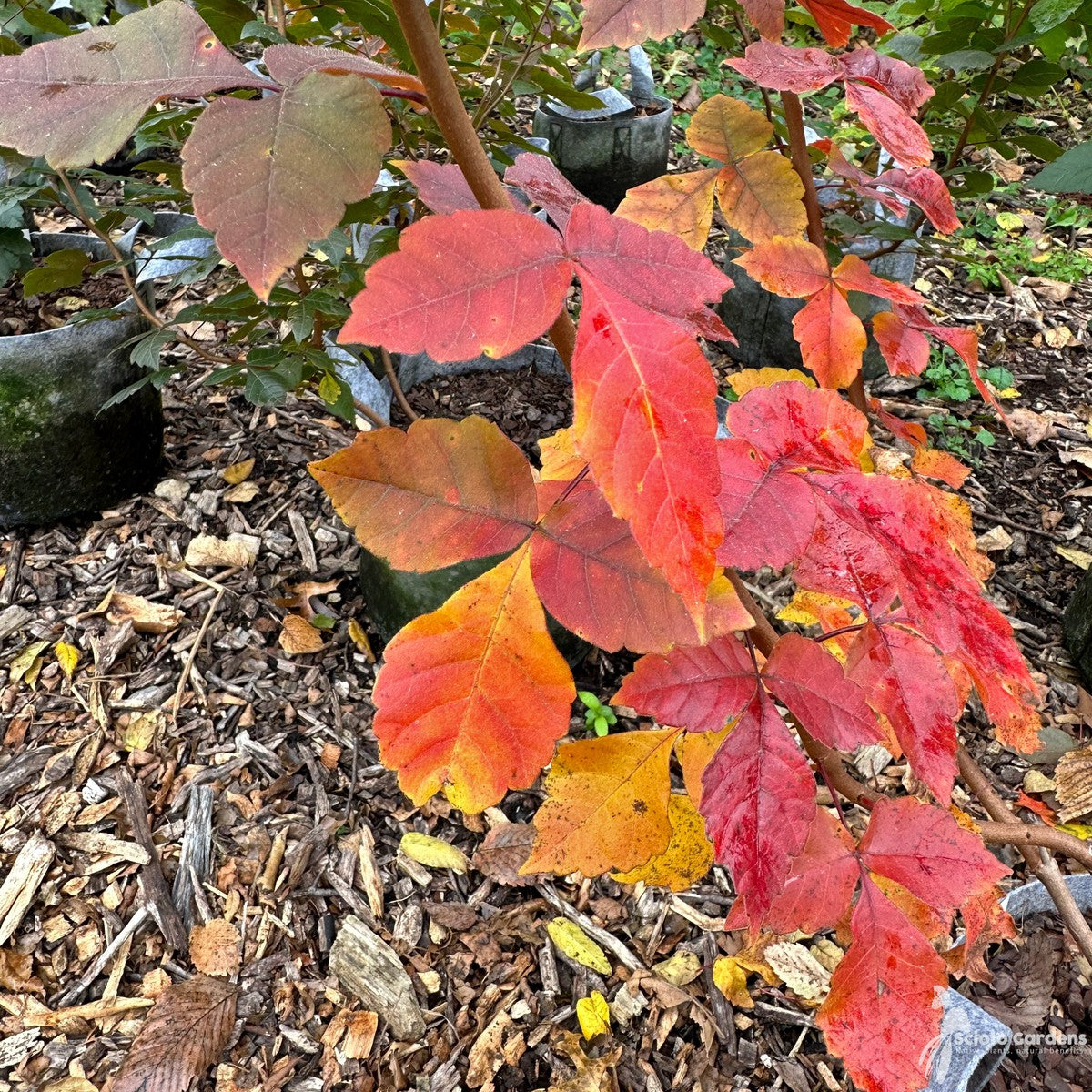
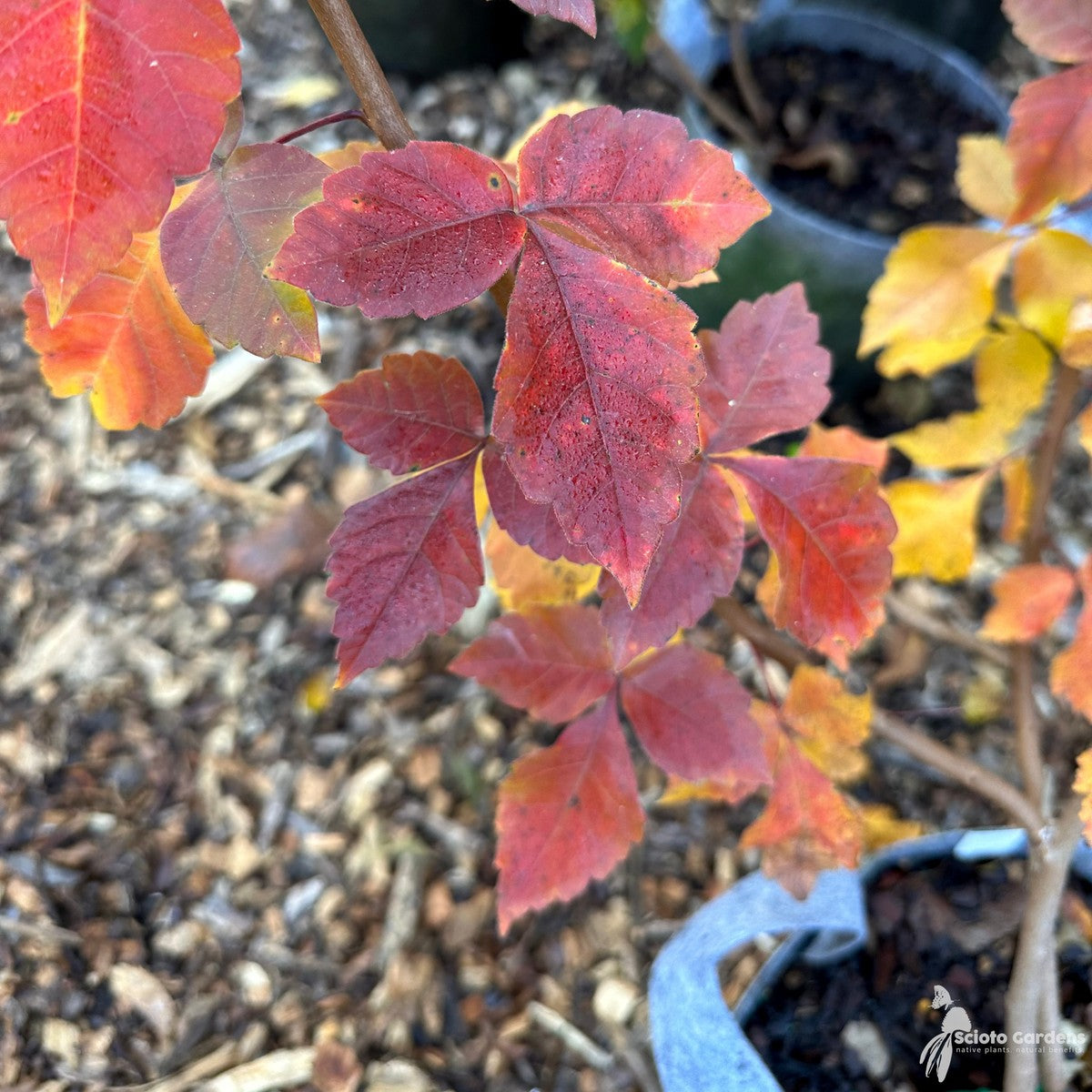
Flowering occurs in spring with the emerging foliage. The plants are typically dioecious, but uncommonly they will possess perfect and unisexual flowers. Pollinated female flowers develop into fuzzy red fruits (drupes). The trifoliate leaves are leathery, glossy, and almost blue-green during the summer but turn several shades of orange, red, maroon, and burgundy in fall. The common name refers to the bittersweet (some say skunky) aroma of fresh, crushed leaves. Fragrant Sumac has occasionally been confused with Poison Ivy because of its three-parted leaves, but there are distinctive characteristics to look for to tell them apart such as the leaf morphology, growth habit, and fruit color: Poison Ivy’s central leaflet has a long stem, it is usually a vine and often climbing, and the fruit color is ivory white.
Sumacs have a high ecological importance for wildlife through the interconnected food web. 98 species* of migrating and overwintering birds rely on the fruits as a high-fat food source. They are host to at least 58 species* of Lepidoptera, including the Red-banded Hairstreak, Luna Moth and Regal Moth. The flowers provide a rich source of mid-summer nectar for pollinators, and the slender stems act as tunnel nesting sites for small carpenter bees, but cause no significant damage to the shrub.
Sources:
Native Trees, Shrubs, & Vines by William Cullina
Manual of Woody Landscape Plants by Michael A. Dirr
*Midwestern Native Shrubs and Trees by Charlotte Adelman & Bernard L. Schwartz
Eastern/Central Medicinal Plants and Herbs by Steven Foster and James A. Duke
Missouri Botanical Garden
Lady Bird Johnson Wildflower Center
Illinois Wildflowers
Photo Credits:
Mature Individual: David J. Stang, CC BY-SA 4.0, via Wikimedia Commons
