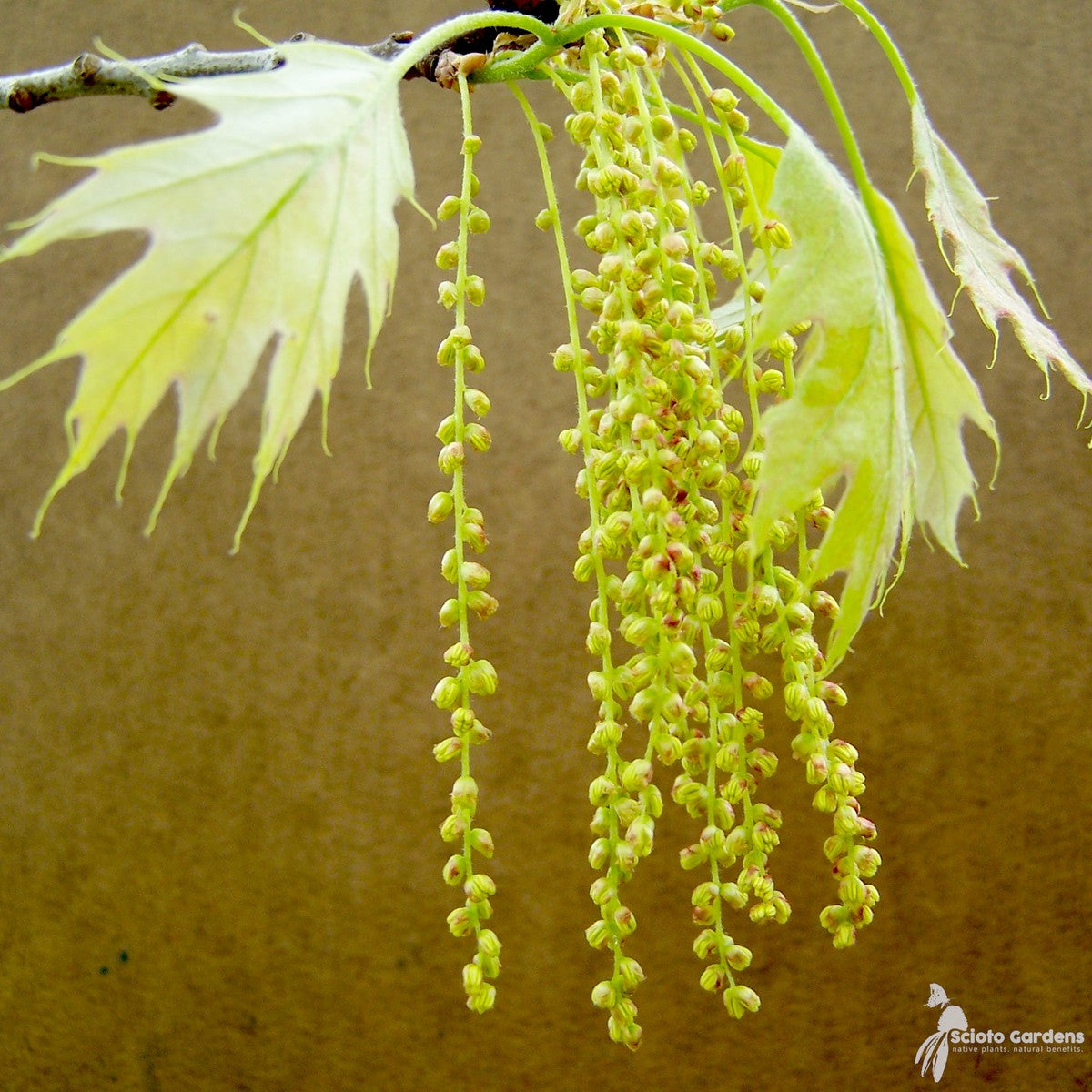
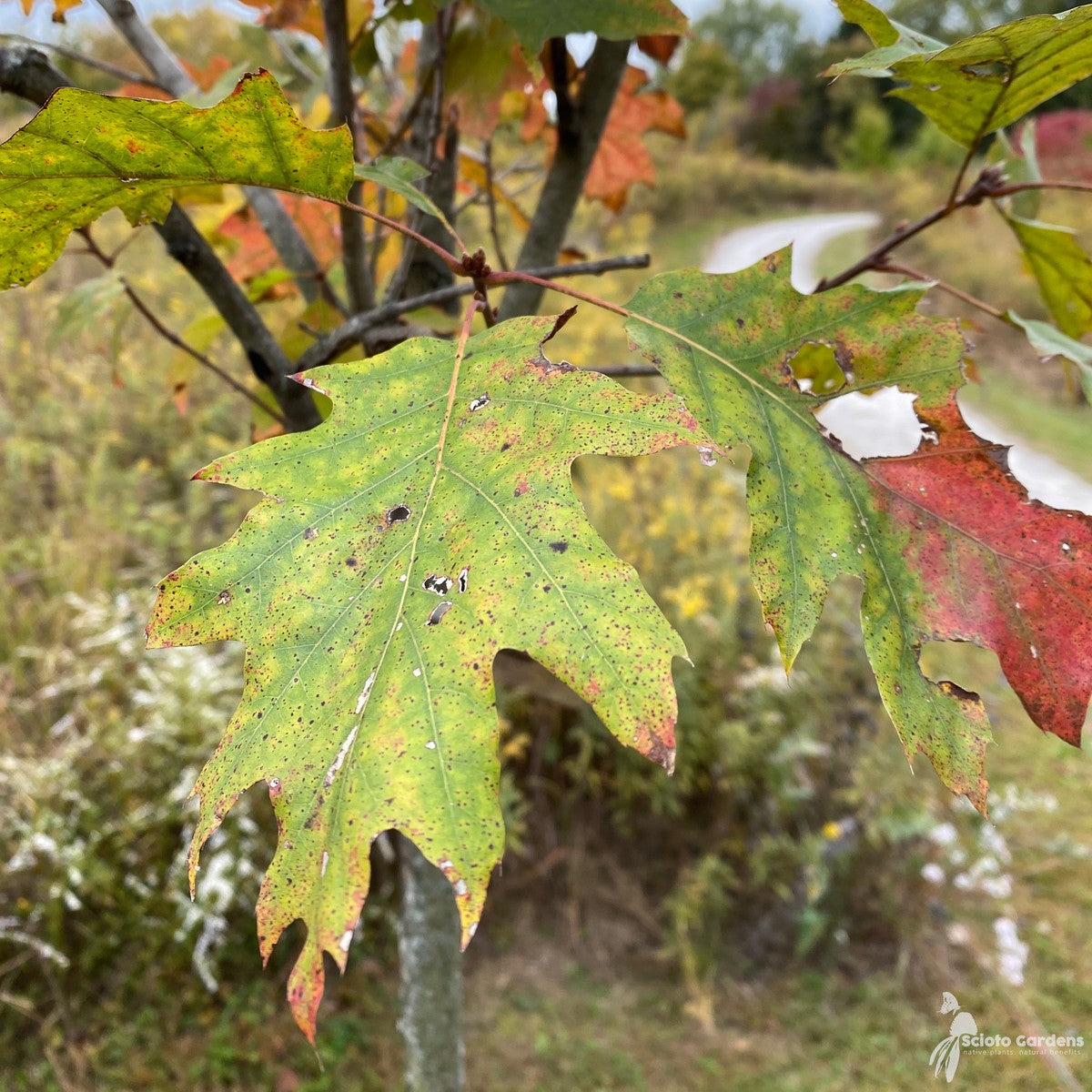
Northern Red Oak is an adaptable, attractive, medium-sized native shade tree. Of the oaks grown in the northeast, this species has the fastest growth rate at about 2' per year for the first ten or so years if it has moderately moist, well-draining soil. It prefers a slightly acidic pH and can become chlorotic in high pH situations. When grown in the open, Northern Red Oaks tend to be round and symmetrical with a dense canopy which provides excellent shade for residential lawns and parks. They are reliably tolerant of urban conditions (air pollution, road salt runoff, etc.) which has made them a popular choice for street tree plantings. The deep red fall foliage can rival that of Red Maple but occurs later in the season, extending autumn’s beauty and often hanging on into late winter. It takes between 25-50 years for this oak to begin producing acorns, but it can live up to 500 years!
Species in the Red Oak group, such as Northern Red Oak, are unfortunately susceptible to Oak Wilt disease which is a fungal pathogen that is spread by bark beetles. Trees in the Red Oak group should not be pruned or otherwise wounded between April and October, and only clean, sterilized tools should be used. By spreading awareness, taking appropriate measures, and planting for succession, we can help to preserve these incredibly important trees.
Oaks are an ecological keystone genus which is invaluable to the food web and life cycles of insects, birds and other wild creatures. They are host to some 436 species of Lepidoptera, at the very top of the list for our ecoregion. Innumerable bird species rely on Oaks for their bounty of caterpillars and other insects, making them living birdfeeders. Oaks also provide cover, cavities for dens, roosts, and nesting sites. The acorns are a necessary food supply for birds and mammals alike. Deer and rabbits do tend to browse or strip the bark of young oaks, so protection (especially through winter) is highly advised.
Sources:
Native Trees, Shrubs,


Limited Time Offer:
0
days
0
hours
0
mins
0
secs
Quercus rubra (Northern Red Oak) - 5 gal
Northern Red Oak

Plant Care & Installation Quick-Guide
Proper acclimation and installation are key to your plant's success. Please cross-reference these tips with your plant's specific ID tags:
·
Pre-Planting: Store plants in a light-appropriate area on soil or grass (avoid hot concrete or asphalt) and water daily until the soil is saturated and the pot feels heavy. If temperatures drop below 30°F, move pots to a garage or cover them to prevent root freeze.
·
Installation: Dig a hole matching the depth of the pot, remove the fabric container, and ensure the plant’s crown or root flare is level with the ground. Fill gaps with soil, water heavily, and apply 2 inches of mulch—keeping it clear of the stem.
·
Ongoing Care: Check moisture daily by feeling 1–2 inches into the soil; water deeply at the base if the soil feels dry or warm. Newly installed plants require frequent watering (up to 3–4 times weekly in heat) until fully established, which can take a few months for perennials and up to two years for trees.