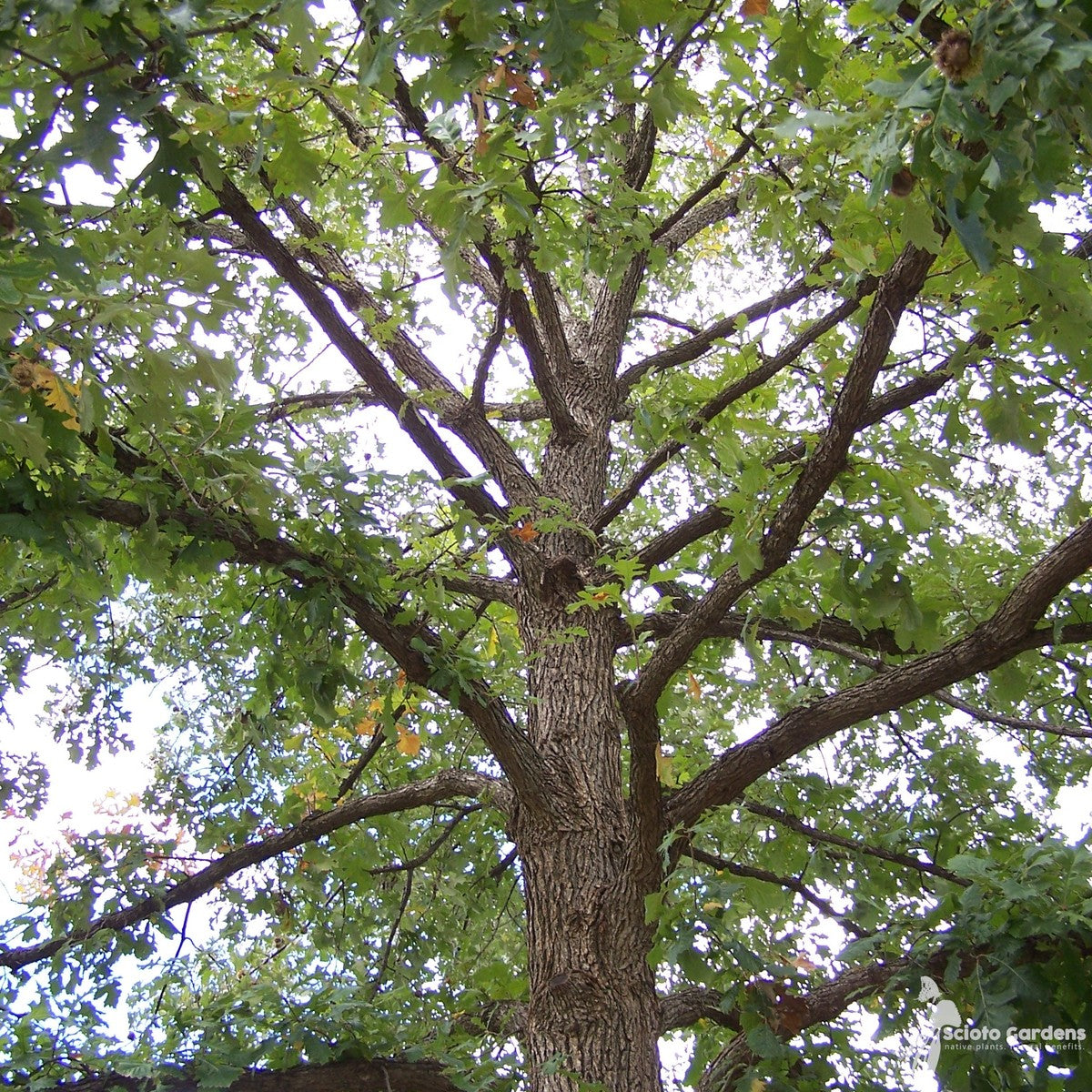
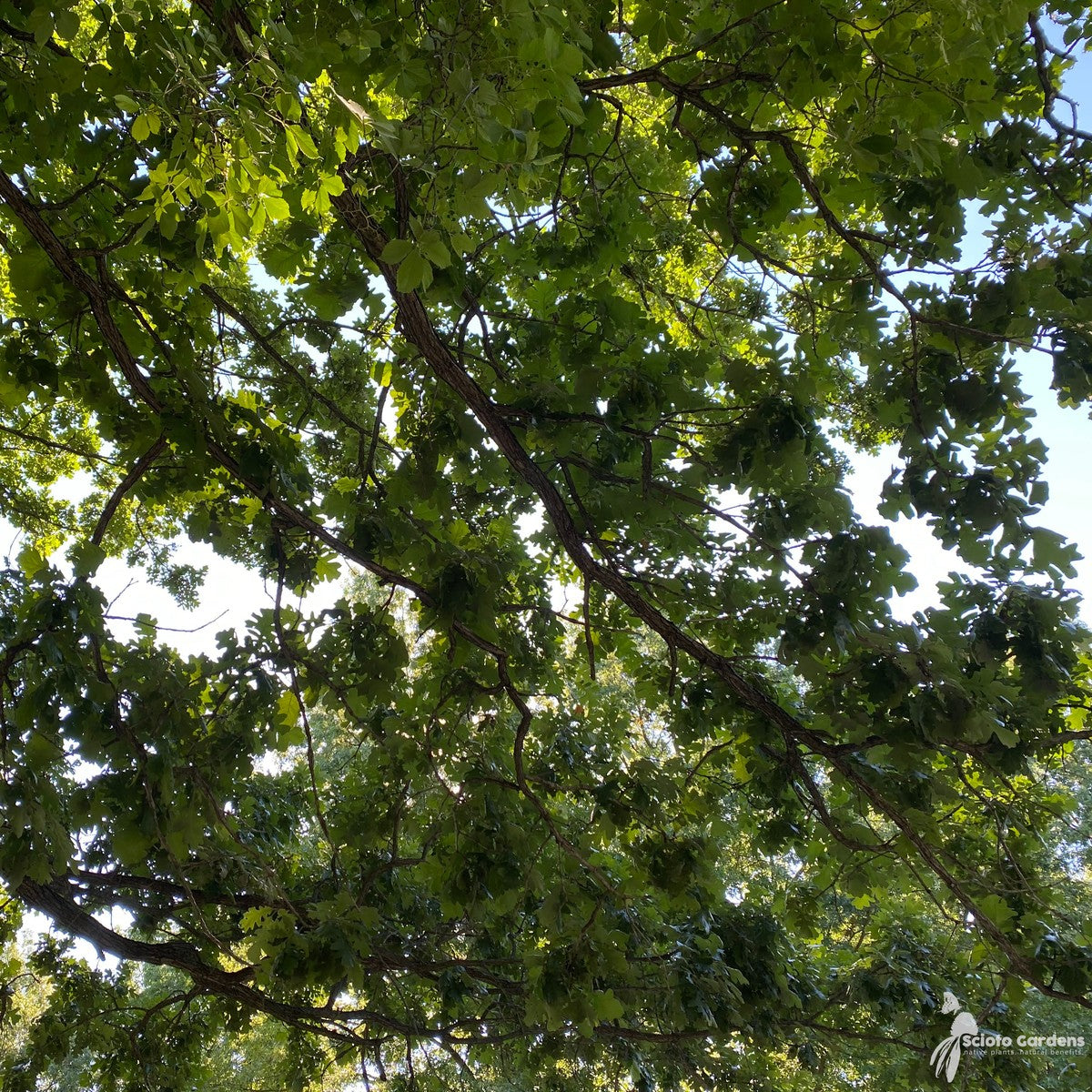
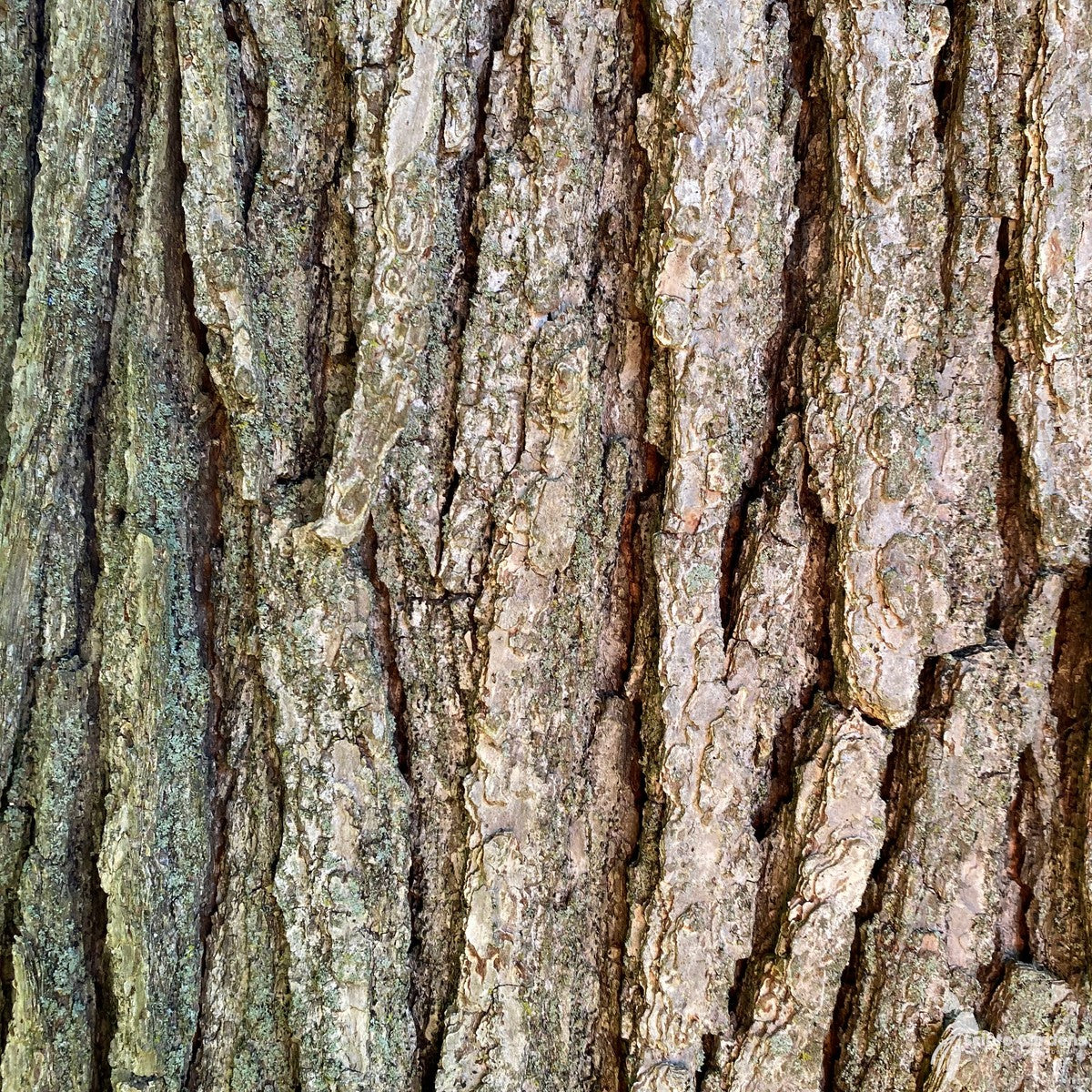
Bur Oak is the rugged, picturesque, preeminent tree of the North American tallgrass prairies. The root structure is nearly a mirror image of the aboveground growth which allows it to effectively compete with the deeply rooted native grasses. It is more tolerant of urban conditions than many other oaks and is resistant to drought, salt, fire, wind and ice damage. It is adapted to grow in limestone soils and matures into a very broad, open, rounded specimen in full sun.
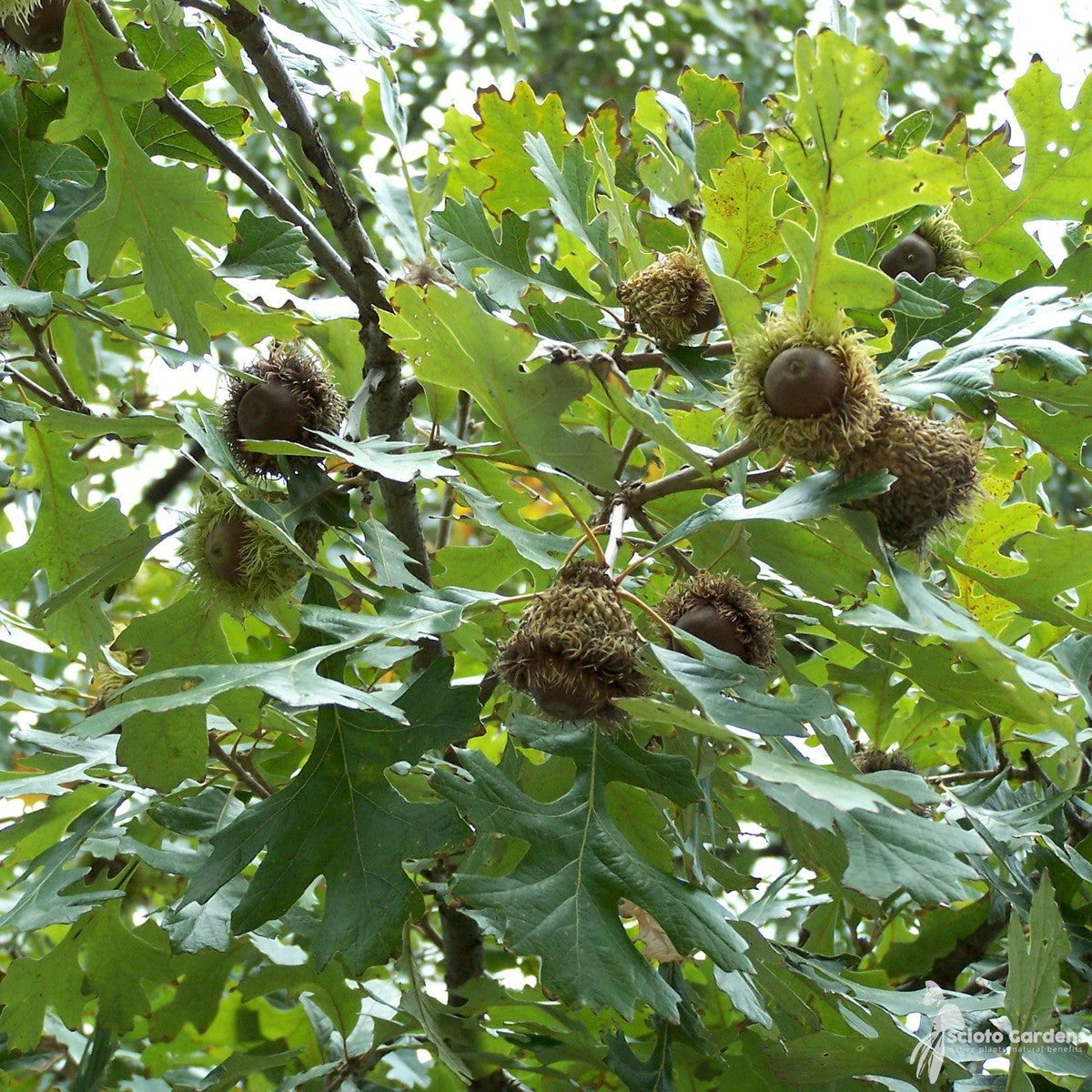
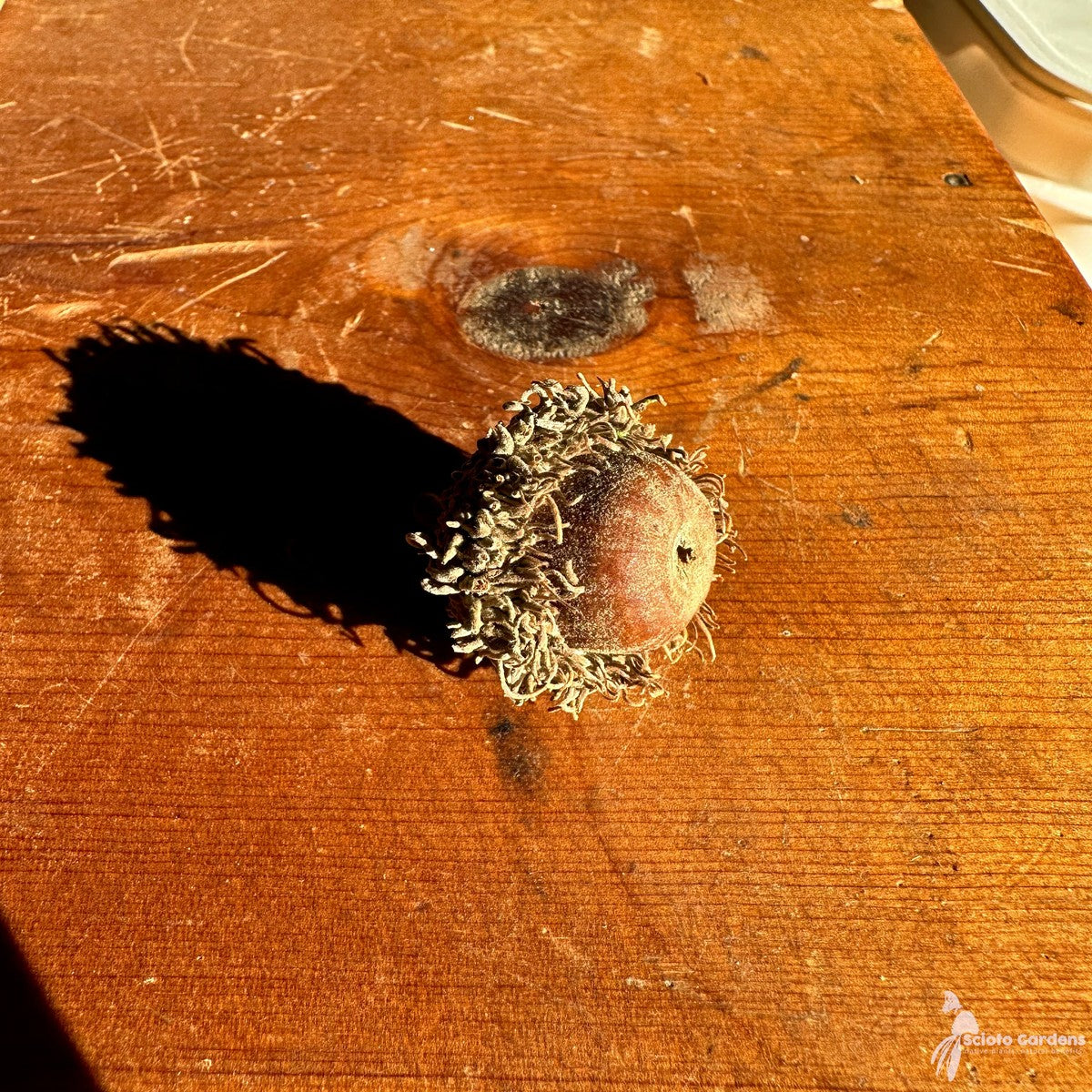
This species is in the White Oak group and gets its Latin and common names from its distinctive acorns-the largest acorns of all oaks, and their fringed caps which resemble chestnut burs. Bur Oaks have a relatively quick growth rate for an oak tree, reaching heights of 20' in 20 years and they can live for centuries. Old, mature oaks are being lost at a faster rate than they’re being planted, so dedicating a large, open area to a Bur Oak is a worthy, long-lasting legacy.
Oaks are an ecological keystone genus which is invaluable to the food web and life cycles of insects, birds and other wild creatures. They are host to some 436 species of Lepidoptera, at the very top of the list for our ecoregion. Innumerable bird species rely on Oaks for their bounty of caterpillars and other insects, making them living birdfeeders. Oaks also provide cover, cavities for dens, roosts, and nesting sites. The acorns, especially those of the White Oak group, are a necessary food supply for birds and mammals alike. Deer and rabbits do tend to browse or strip the bark of young oaks, so protection (especially through winter) is highly advised.
Sources:
Native Trees, Shrubs, & Vines by William Cullina
Manual of Woody Landscape Plants by Michael A. Dirr
Midwestern Native Shrubs and Trees by Charlotte Adelman & Bernard L. Schwartz
Missouri Botanical Garden
Lady Bird Johnson Wildflower Center
Illinois Wildflowers


Limited Time Offer:
0
days
0
hours
0
mins
0
secs
Quercus macrocarpa (Bur Oak) - 5 gal
Bur Oak

Plant Care & Installation Quick-Guide
Proper acclimation and installation are key to your plant's success. Please cross-reference these tips with your plant's specific ID tags:
·
Pre-Planting: Store plants in a light-appropriate area on soil or grass (avoid hot concrete or asphalt) and water daily until the soil is saturated and the pot feels heavy. If temperatures drop below 30°F, move pots to a garage or cover them to prevent root freeze.
·
Installation: Dig a hole matching the depth of the pot, remove the fabric container, and ensure the plant’s crown or root flare is level with the ground. Fill gaps with soil, water heavily, and apply 2 inches of mulch—keeping it clear of the stem.
·
Ongoing Care: Check moisture daily by feeling 1–2 inches into the soil; water deeply at the base if the soil feels dry or warm. Newly installed plants require frequent watering (up to 3–4 times weekly in heat) until fully established, which can take a few months for perennials and up to two years for trees.