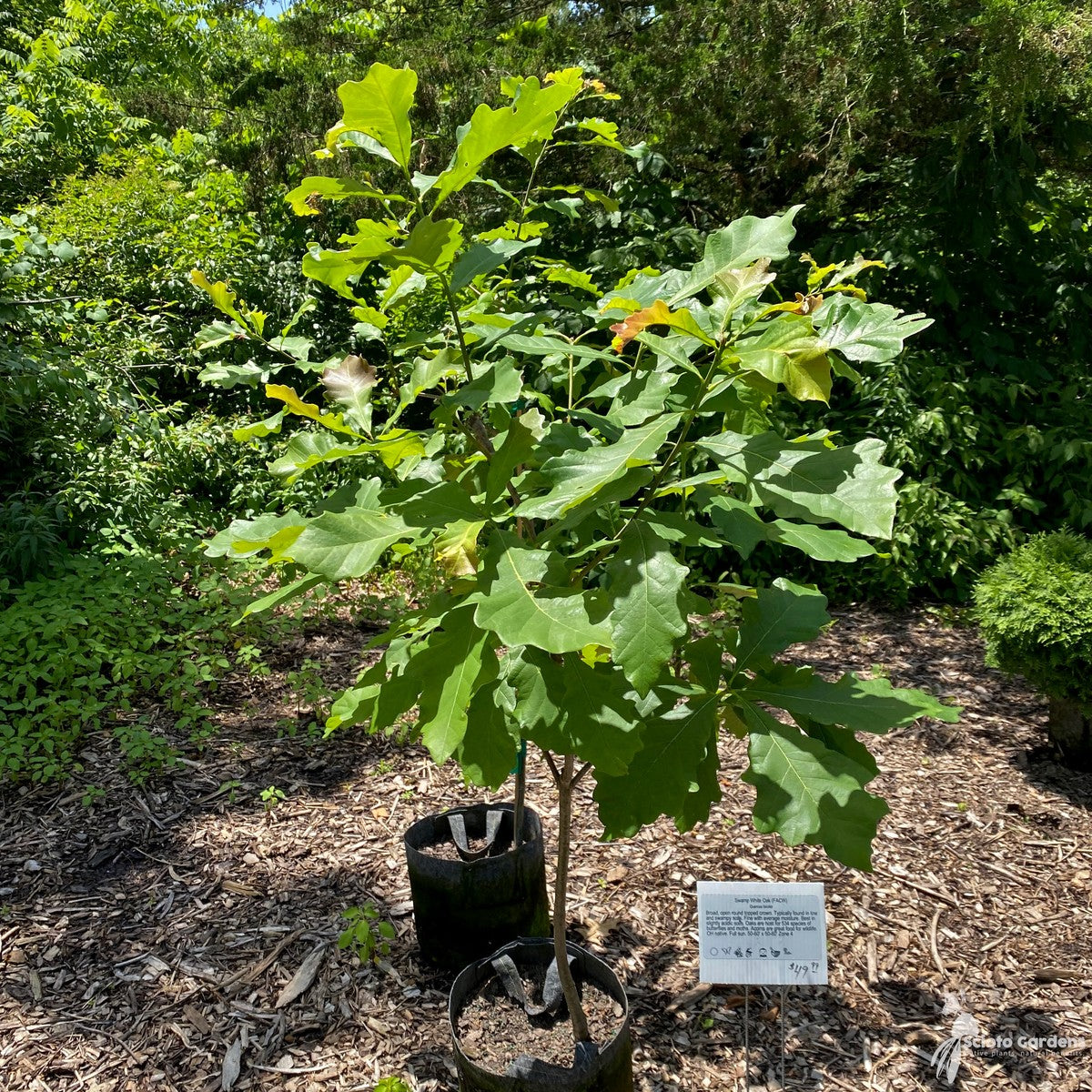
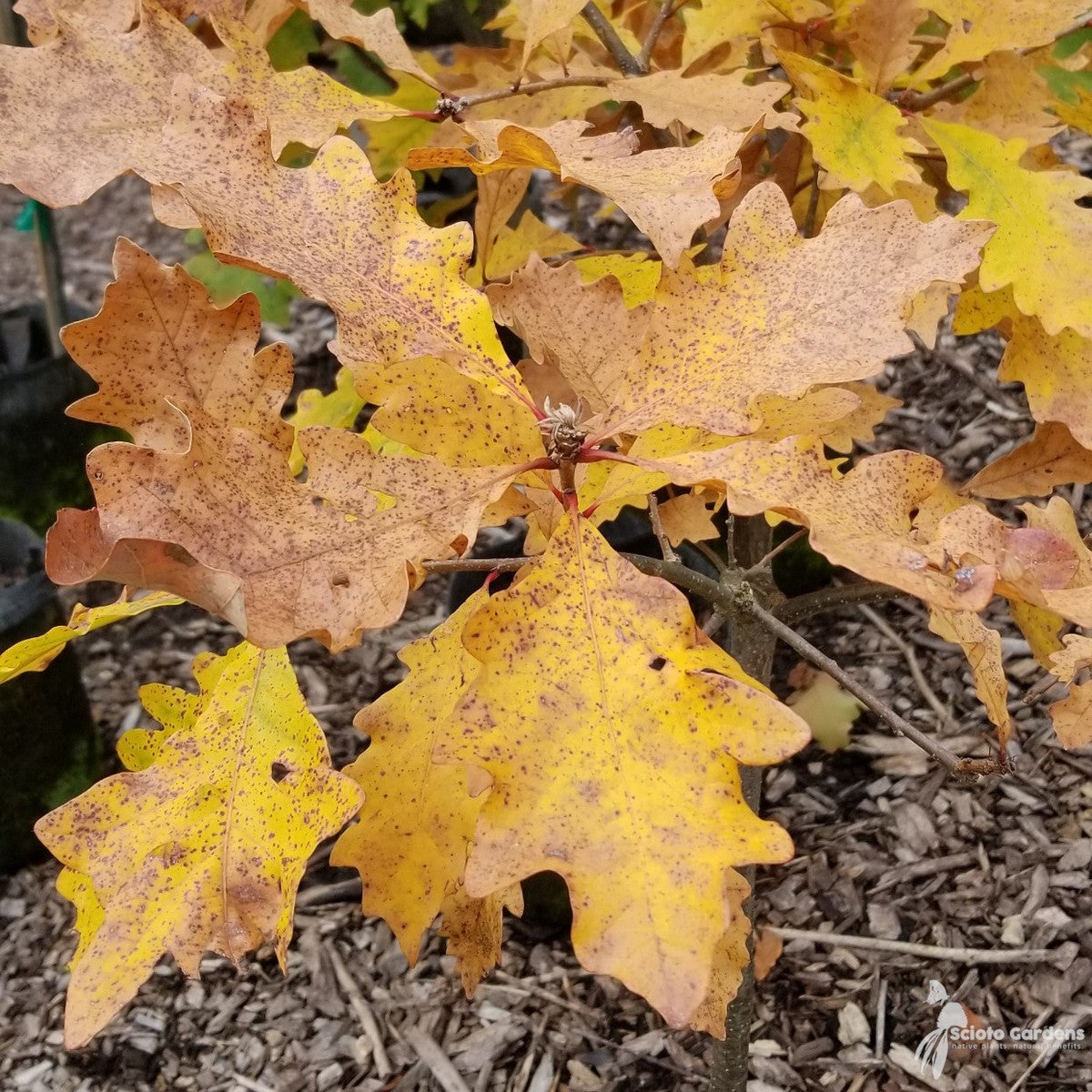
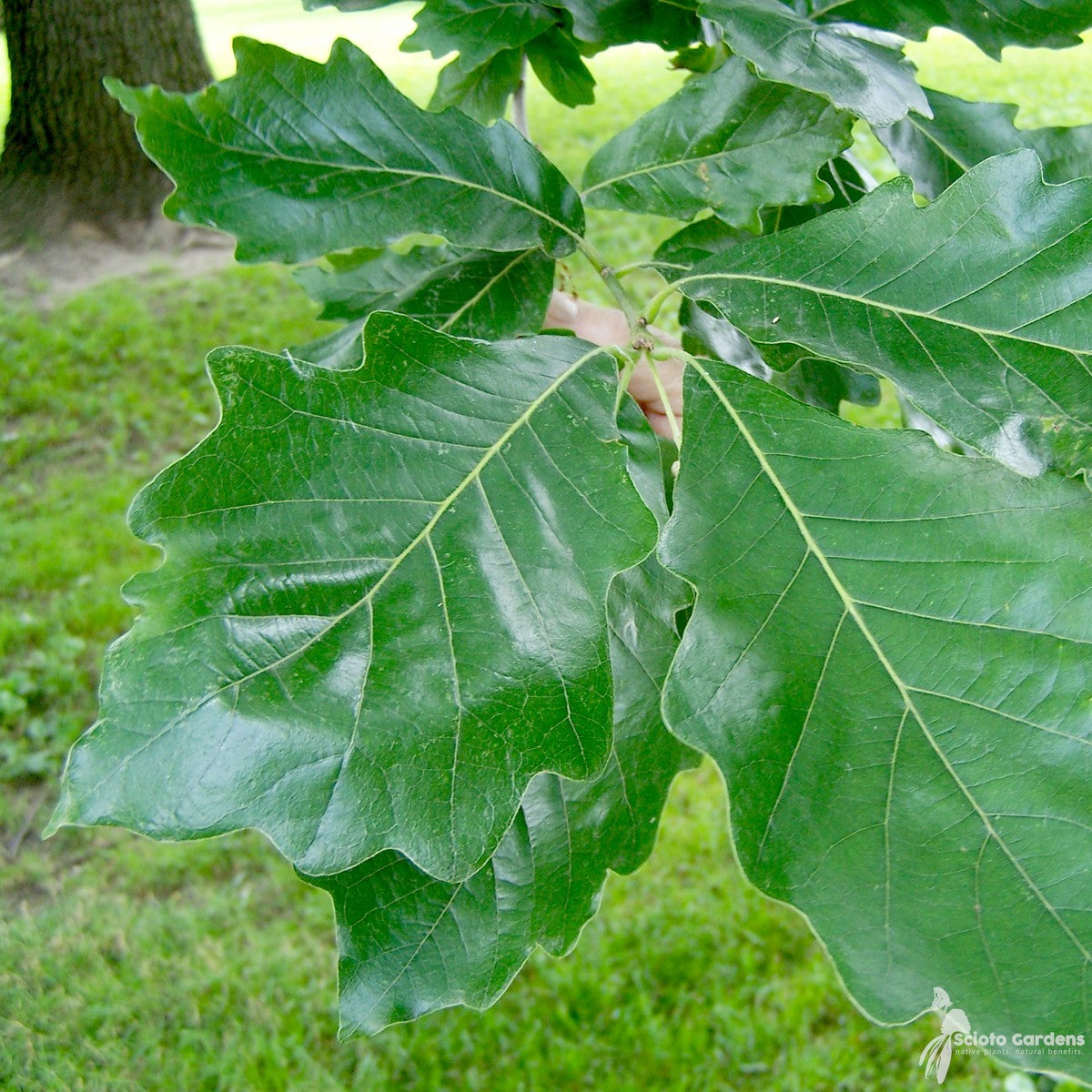
Swamp White Oak is a medium-sized native shade tree with a broad, open and round-topped crown. It typically grows in low, swampy bottomlands and can tolerate heavy soils that are poorly oxygenated. This species is sensitive to drought and requires an acidic pH to avoid chlorosis. The Latin name bicolor refers to the two-tone leaves: the upper is a lustrous, dark green and the underside is a much lighter grayish-green and velvety. This is a helpful identifying feature of the tree which is noticeable from afar on windy days when the leaves are fluttering and the tree has a silvery cast. Fall color tends to be bronzy-yellow and young trees will hold onto their leaves into the winter months.
This is one of the faster growing Oak species, but it does not get as large as White Oak. It is easier to transplant since it lacks the massive taproot of White Oak and instead has a fibrous and more shallow root system.
Oaks are an ecological keystone genus which is invaluable to the food web and life cycles of insects, birds and other wild creatures. They are host to some 436 species of Lepidoptera, at the very top of the list for our ecoregion. Innumerable bird species rely on Oaks for their bounty of caterpillars and other insects, making them living birdfeeders. Oaks also provide cover, cavities for dens, roosts, and nesting sites. The acorns, especially those of the White Oak group, are a necessary food supply for birds and mammals alike. Deer and rabbits do tend to browse or strip the bark of young oaks, so protection (especially through winter) is highly advised.
Sources:
Native Trees, Shrubs, & Vines by William Cullina
Manual of Woody Landscape Plants by Michael A. Dirr
Missouri Botanical Garden
Lady Bird Johnson Wildflower Center
Illinois Wildflowers


Limited Time Offer:
0
days
0
hours
0
mins
0
secs
Quercus bicolor (Swamp White Oak) - 5 gal
Swamp White Oak

Plant Care & Installation Quick-Guide
Proper acclimation and installation are key to your plant's success. Please cross-reference these tips with your plant's specific ID tags:
·
Pre-Planting: Store plants in a light-appropriate area on soil or grass (avoid hot concrete or asphalt) and water daily until the soil is saturated and the pot feels heavy. If temperatures drop below 30°F, move pots to a garage or cover them to prevent root freeze.
·
Installation: Dig a hole matching the depth of the pot, remove the fabric container, and ensure the plant’s crown or root flare is level with the ground. Fill gaps with soil, water heavily, and apply 2 inches of mulch—keeping it clear of the stem.
·
Ongoing Care: Check moisture daily by feeling 1–2 inches into the soil; water deeply at the base if the soil feels dry or warm. Newly installed plants require frequent watering (up to 3–4 times weekly in heat) until fully established, which can take a few months for perennials and up to two years for trees.