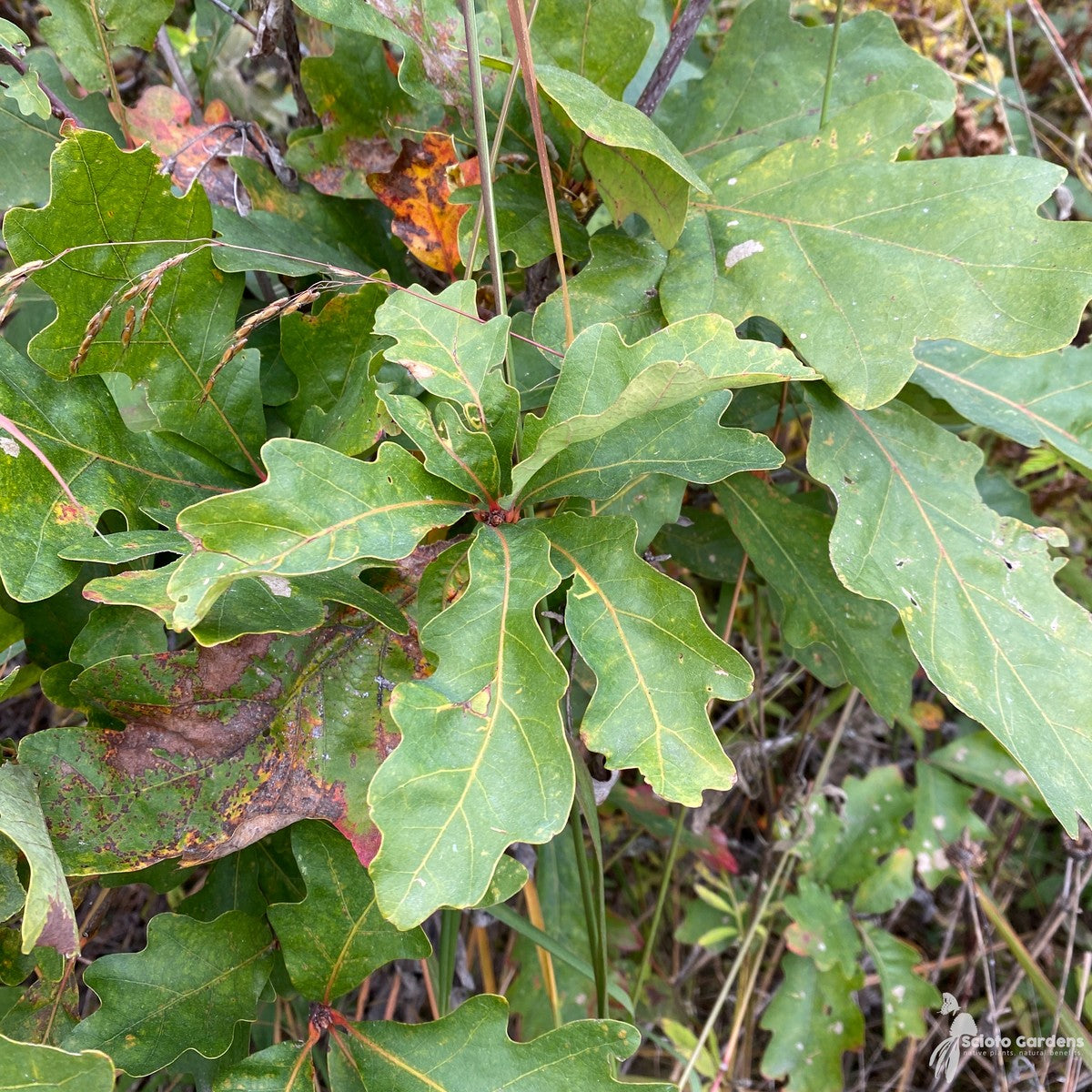
White Oak is easily one of the most picturesque and majestic shade trees native to eastern North America. It is a long-lived, slow-growing species with an average rate of 12-15' over ten years, but slowing down after the first 20-30 years to take its time in developing its deep taproot and massive, spreading root system. “So deep is the taproot of such a tree, so wide the thrust of the innumerable horizontal roots, that if one could see its whole underground system this would look like a reflection, somewhat foreshortened, of the giant above ground.” (Peattie, pg. 197) It is because of this taproot that Quercus alba is notoriously difficult to transplant in large sizes. The root zone is also very sensitive to compaction, especially from construction and vehicles, which often result in the slow death of the tree. White Oaks need a very large and relatively undisturbed area to lay down their roots and spread horizontal branches as widely as they are tall.
White Oaks are rather adaptable, but prefer a deep, fertile, well-drained site with an acidic pH. They can become chlorotic in high pH situations. In full sun, they will grow faster with a more open, spreading habit. They are very patient and will live in partial shade as well, waiting for a gap of sunshine to spur growth.
Oaks are an ecological keystone genus which is invaluable to the food web and life cycles of insects, birds and other wild creatures. They are host to some 436 species of Lepidoptera, at the very top of the list for our ecoregion. Innumerable bird species rely on Oaks for their bounty of caterpillars and other insects, making them living birdfeeders. Oaks also provide cover, cavities for dens, roosts, and nesting sites. Mating pairs of Cerulean Warblers seek out White Oaks in particular for their nesting locations. The acorns, especially those of the White Oak group, are a necessary food supply for birds and mammals alike. Deer and rabbits do tend to browse or strip the bark of young oaks, so prot

Limited Time Offer:
0
days
0
hours
0
mins
0
secs
Quercus alba (White Oak) - 5 gal
White Oak

Plant Care & Installation Quick-Guide
Proper acclimation and installation are key to your plant's success. Please cross-reference these tips with your plant's specific ID tags:
·
Pre-Planting: Store plants in a light-appropriate area on soil or grass (avoid hot concrete or asphalt) and water daily until the soil is saturated and the pot feels heavy. If temperatures drop below 30°F, move pots to a garage or cover them to prevent root freeze.
·
Installation: Dig a hole matching the depth of the pot, remove the fabric container, and ensure the plant’s crown or root flare is level with the ground. Fill gaps with soil, water heavily, and apply 2 inches of mulch—keeping it clear of the stem.
·
Ongoing Care: Check moisture daily by feeling 1–2 inches into the soil; water deeply at the base if the soil feels dry or warm. Newly installed plants require frequent watering (up to 3–4 times weekly in heat) until fully established, which can take a few months for perennials and up to two years for trees.