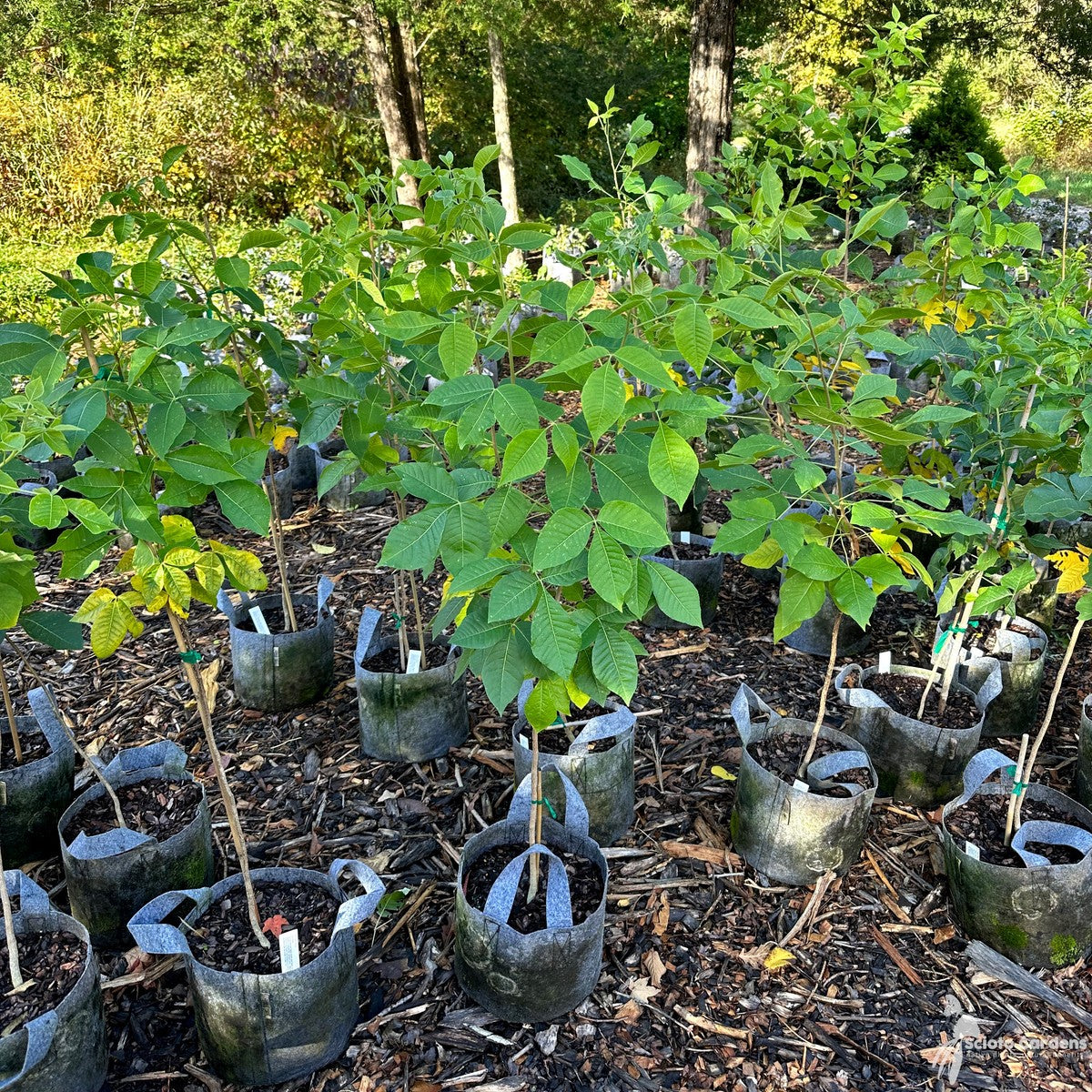
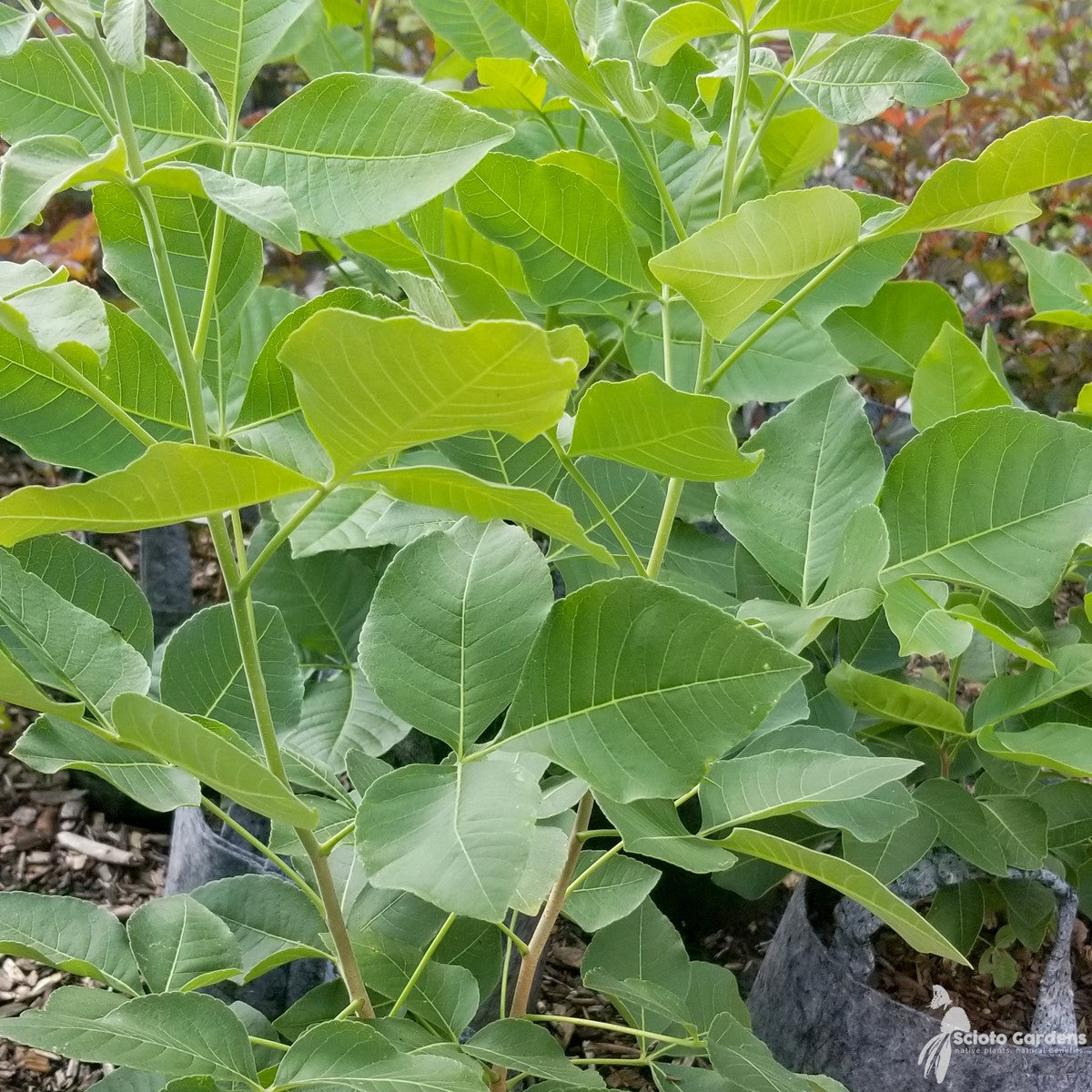
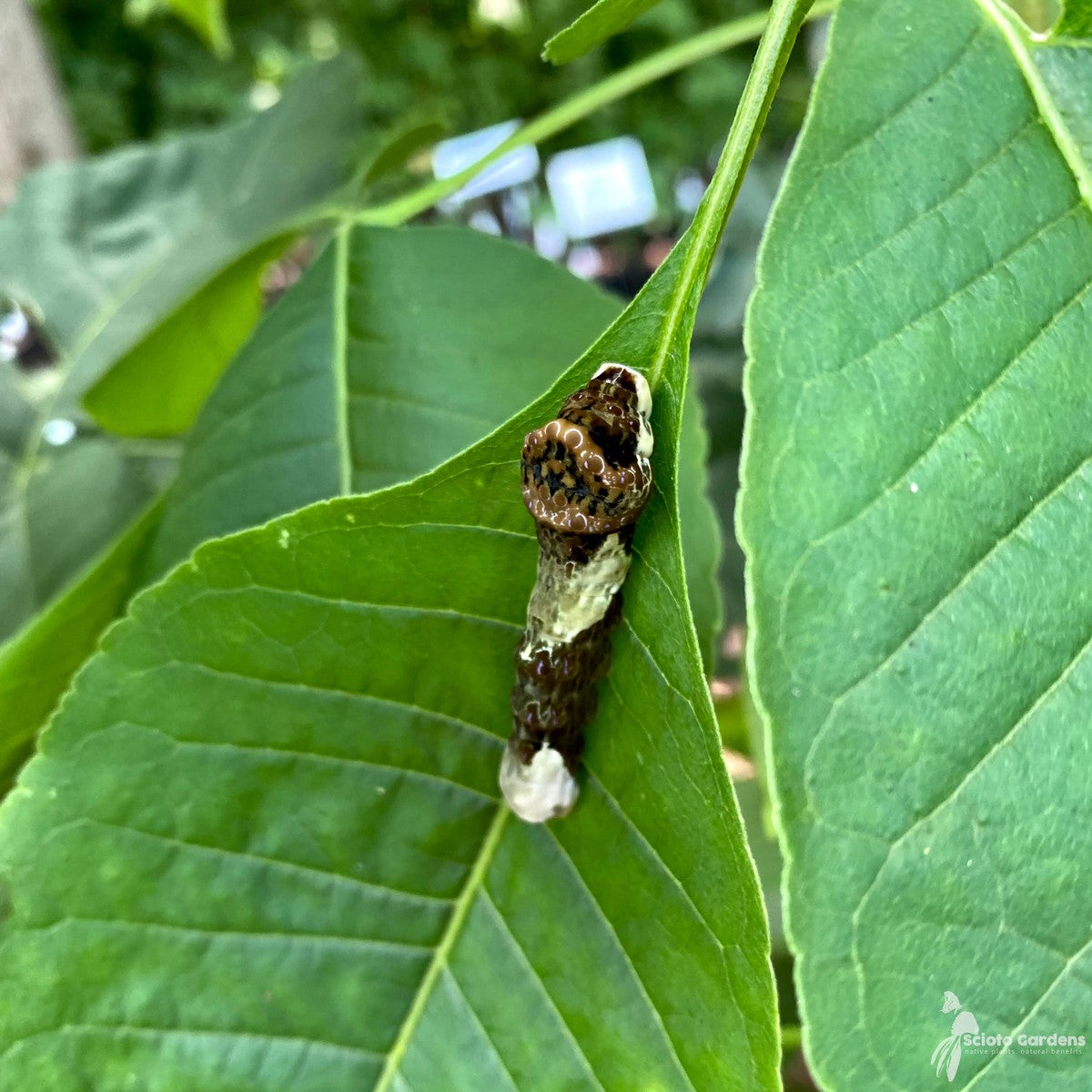
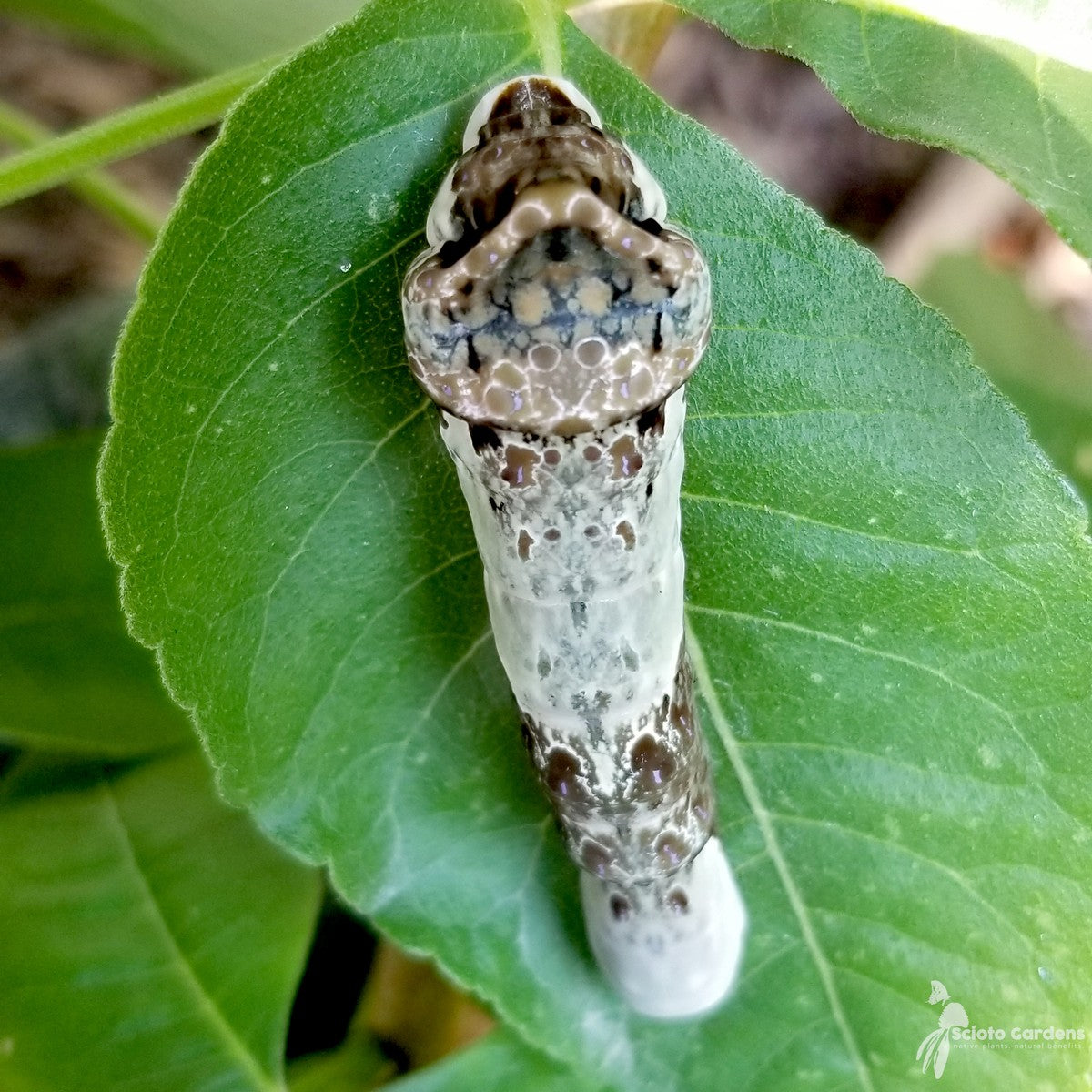
Hop Tree, also known as Wafer Ash (though not an Ash), is an uncommon native small tree or shrub. It has interesting trifoliate leaves (divided into three leaflets) which are host to the fascinating caterpillars of North America’s largest butterfly, the Giant Swallowtail. The caterpillars mimic wet bird droppings to avoid being eaten, and have bright red osmeterium that emerge and emit a foul odor when it feels threatened, to deter predators. They are very fun to observe, and the Giant Swallowtail butterflies are a wonderful reward for planting this worthy specimen.
The greenish-white flowers in late spring are slightly fragrant but not particularly showy. However, the sweet nectar attracts many butterflies and other insect pollinators. The common name of “Hop” tree comes from the flattened, papery, hop-like samaras that follow the flowers and can persist into winter. They also have been used as a substitute for hops in beer-making.
Hop Trees are adaptable to many growing conditions. They grow in full sun to full shade, moist or dry soil and need a well-draining site to thrive. The root system is woody and spreading, but does not tend to sucker. They are useful and handsome understory shrubs or trees, with a thick and rounded crown. They work well in shrub borders or planted in groupings to form a dense screen, or singly as a unique specimen that will call the mesmerizing, exotic-looking Giant Swallowtail butterfly to your yard.
Sources:
Manual of Woody Landscape Plants by Michael A. Dirr
Midwestern Native Shrubs and Trees by Charlotte Adelman & Bernard L. Schwartz
Eastern/Central Medicinal Plants and Herbs by Steven Foster and James A. Duke
Missouri Botanical Garden
Lady Bird Johnson Wildflower Center
Illinois Wildflowers
USDA Plants Database


Limited Time Offer:
0
days
0
hours
0
mins
0
secs
Ptelea trifoliata (Hop Tree) - 3 gal
Hop Tree

Plant Care & Installation Quick-Guide
Proper acclimation and installation are key to your plant's success. Please cross-reference these tips with your plant's specific ID tags:
·
Pre-Planting: Store plants in a light-appropriate area on soil or grass (avoid hot concrete or asphalt) and water daily until the soil is saturated and the pot feels heavy. If temperatures drop below 30°F, move pots to a garage or cover them to prevent root freeze.
·
Installation: Dig a hole matching the depth of the pot, remove the fabric container, and ensure the plant’s crown or root flare is level with the ground. Fill gaps with soil, water heavily, and apply 2 inches of mulch—keeping it clear of the stem.
·
Ongoing Care: Check moisture daily by feeling 1–2 inches into the soil; water deeply at the base if the soil feels dry or warm. Newly installed plants require frequent watering (up to 3–4 times weekly in heat) until fully established, which can take a few months for perennials and up to two years for trees.