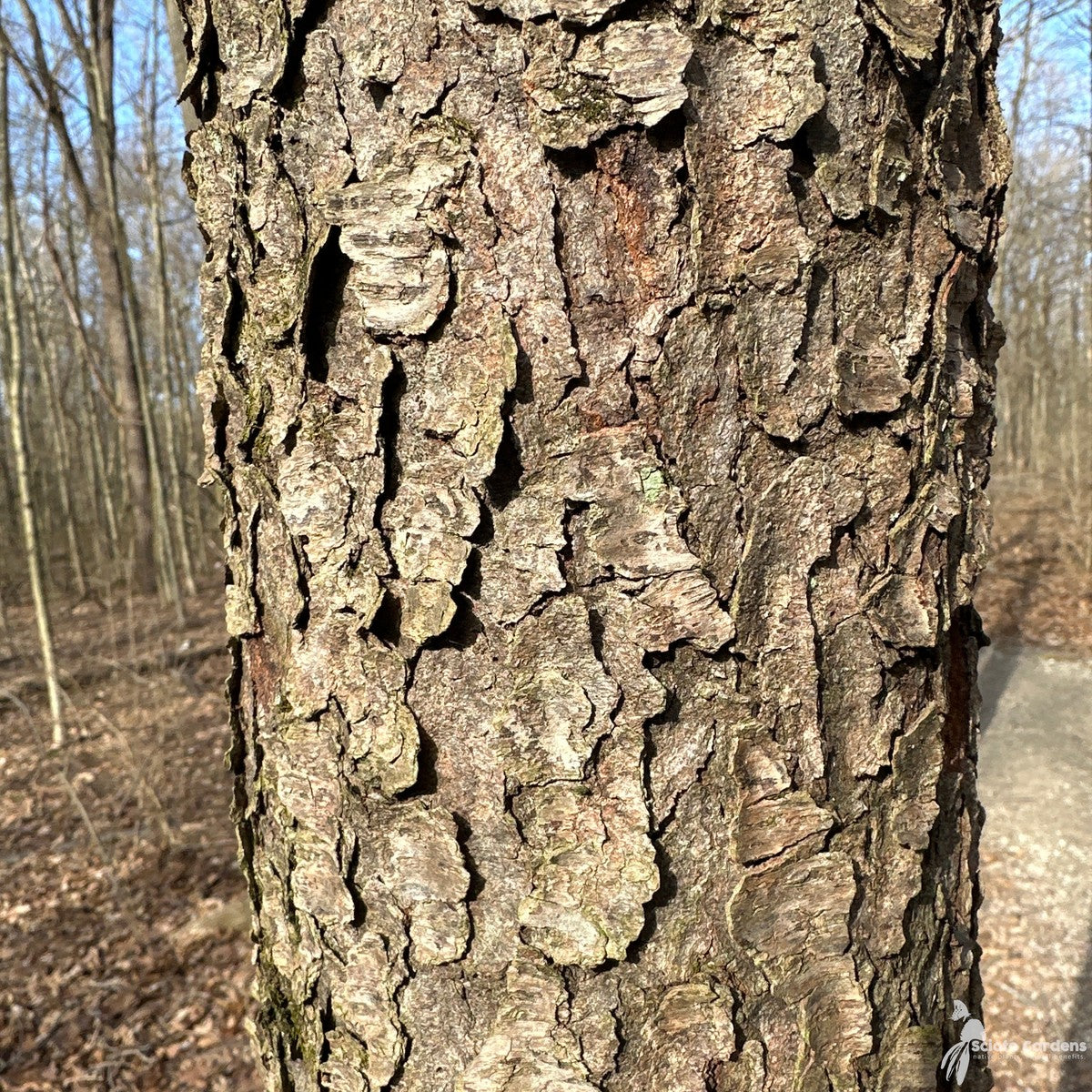
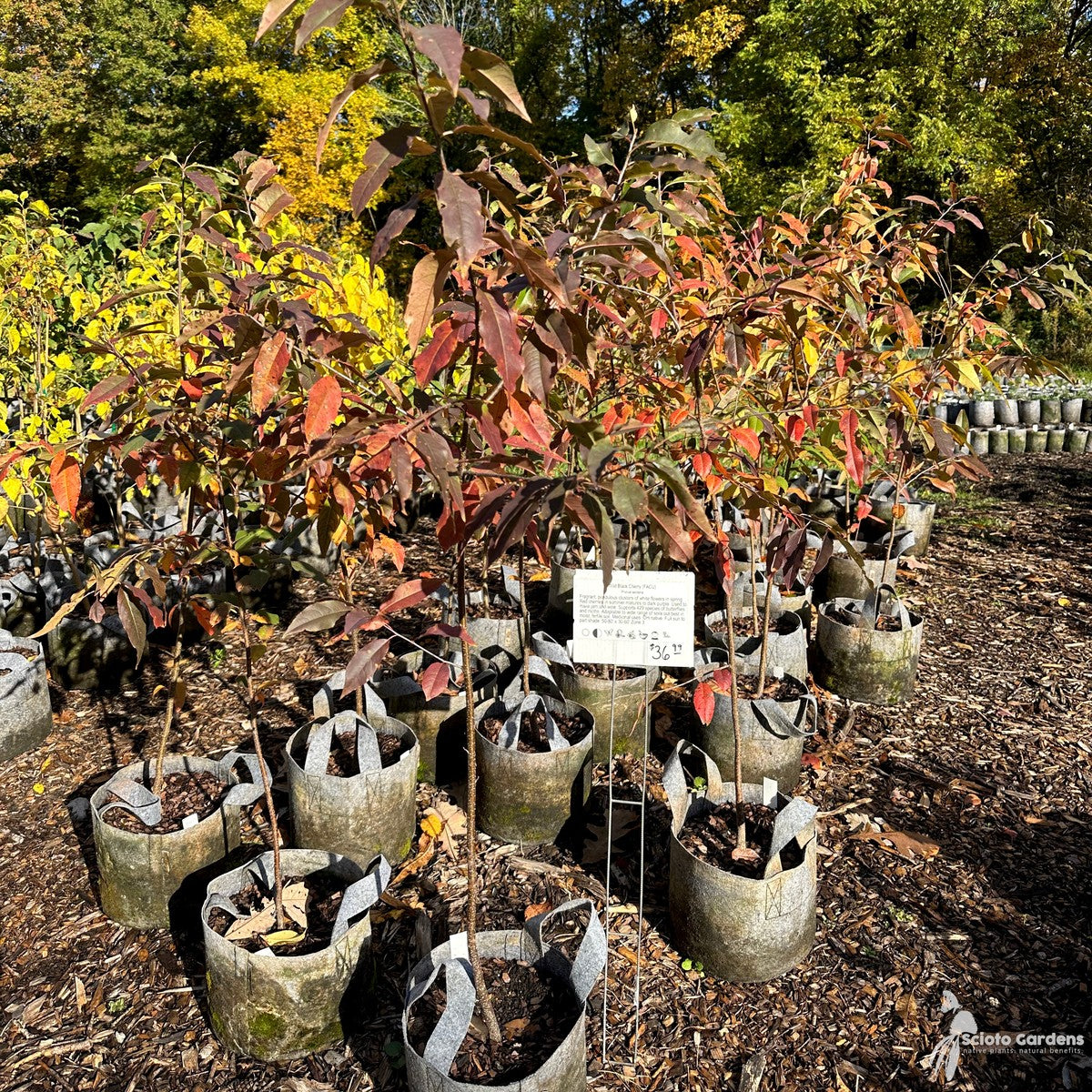
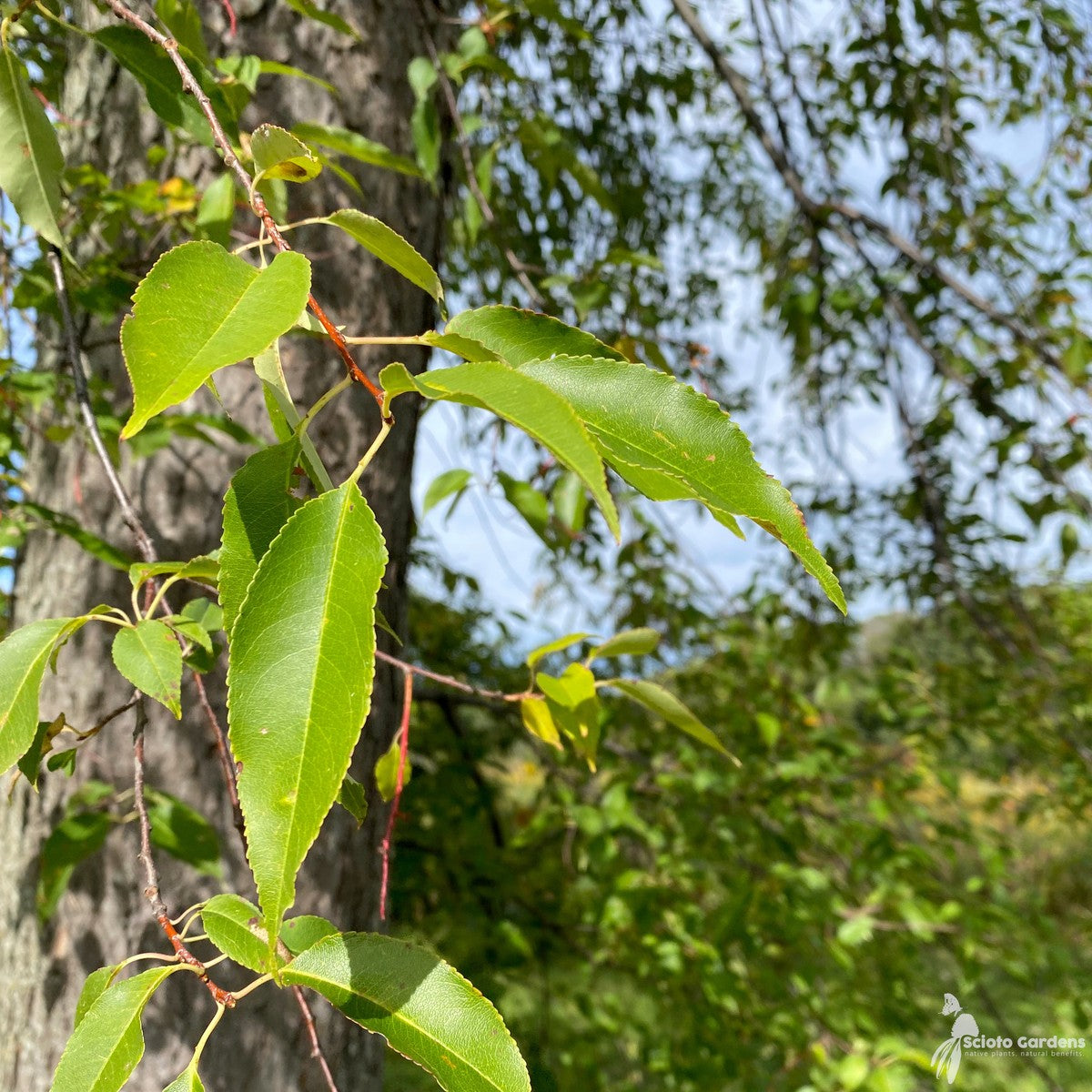
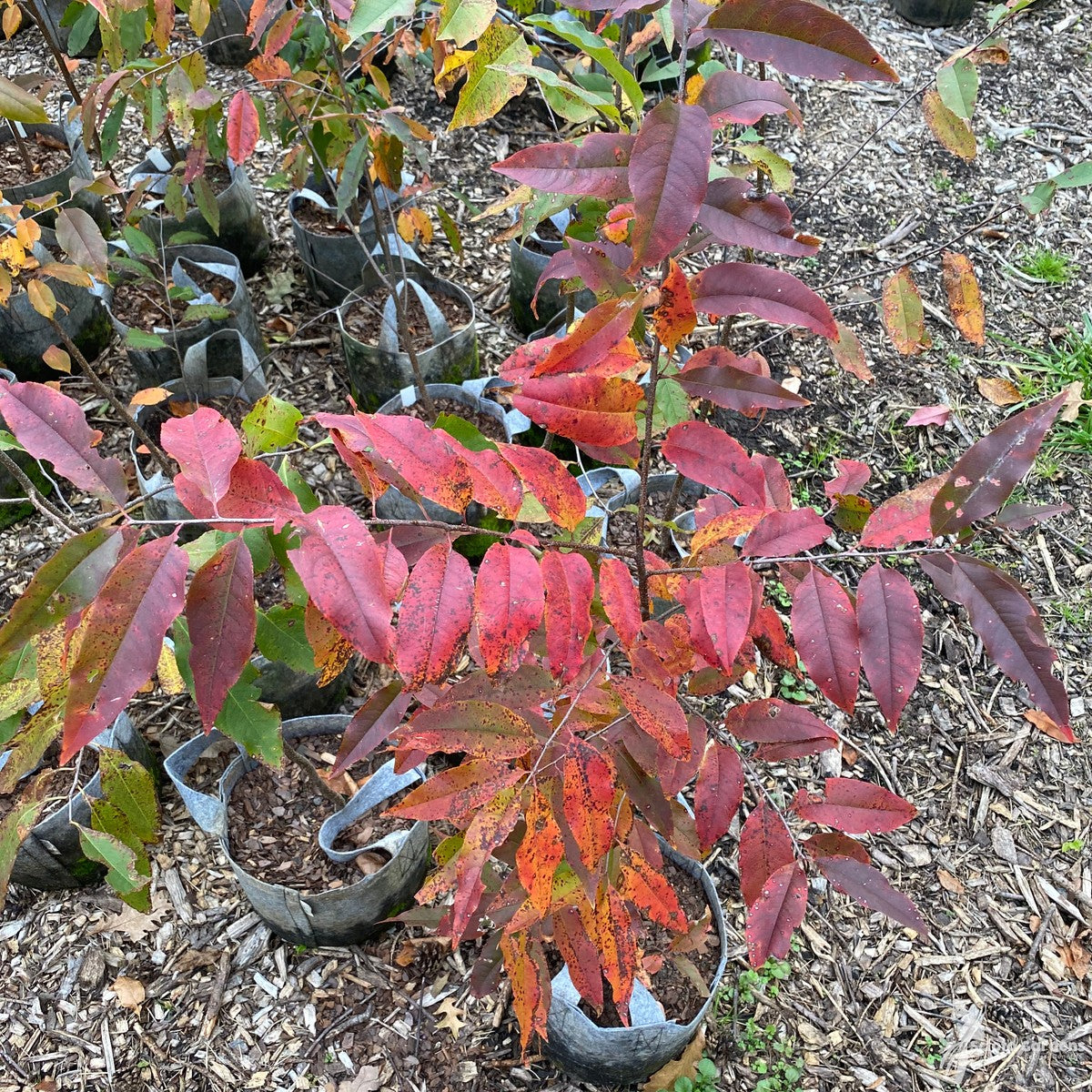
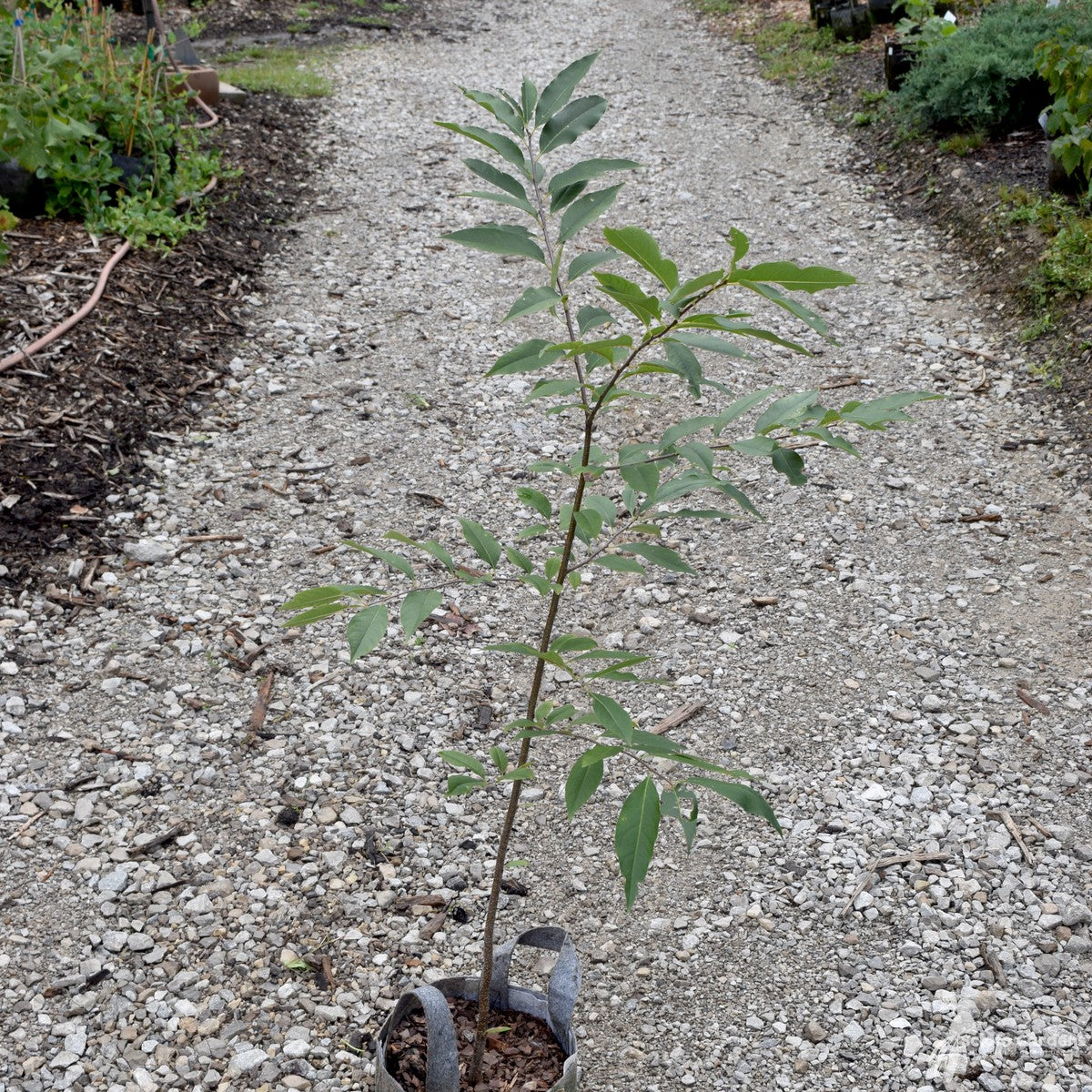
Wild Black Cherry is a large, upright, oval-crowned, native tree that can grow to heights of 80' and half as wide. It often has a straight trunk with almost no root flare. It can be a rather difficult tree to control in small gardens, and nearly impossible to have a tidy garden underneath because of its self-sowing tendencies. It is a very ornamental tree, especially in bloom and in fall with its burgundy red and yellow coloration. Its wood has long been prized for woodworking, and the cherries have been used to flavor brandy and whiskey. Its inner bark has been used in traditional medicine for cough and cold remedies.
This cherry is an immensely valuable species for wildlife. The flowers provide nectar and pollen to numerous bee species. Eastern Tiger Swallowtail, Coral Hairstreak, and Red-spotted Purple butterflies are but three of the 340 species of Lepidoptera that use Prunus species as larval host plants. The fruits are eaten by at least 84 bird species, including Northern Mockingbirds, Cedar Waxwings, Gray Catbirds, woodpeckers, sparrows and thrushes. These birds disperse the seeds which sprout readily, but the seedlings will likely die off if they end up in shady locations. Fruits that are not consumed by birds are eaten by a variety of mammals, and will sprout where they’ve dispersed them. Many less desirable insects prey on the foliage and wood of this tree as well, including tent caterpillars, aphids and borers. It is susceptible to Black Knot, an indigenous fungal disease which is windborne, but cosmetic more than lethal.
It is important to note that Prunus species contain toxic compounds. Appropriate research is highly recommended before using this or any plant as an edible or medicinal. It can be deadly to dogs, children and livestock if large quantities of the seeds are consumed.
Sources:
Native Trees, Shrubs, & Vines by William Cullina
Eastern/Central Medicinal Plants and Herbs by Steven Foster and James A. Duke
Gardening for the Birds by George Adams


Limited Time Offer:
0
days
0
hours
0
mins
0
secs
Prunus serotina (Wild Black Cherry) - QT
Wild Black Cherry

Plant Care & Installation Quick-Guide
Proper acclimation and installation are key to your plant's success. Please cross-reference these tips with your plant's specific ID tags:
·
Pre-Planting: Store plants in a light-appropriate area on soil or grass (avoid hot concrete or asphalt) and water daily until the soil is saturated and the pot feels heavy. If temperatures drop below 30°F, move pots to a garage or cover them to prevent root freeze.
·
Installation: Dig a hole matching the depth of the pot, remove the fabric container, and ensure the plant’s crown or root flare is level with the ground. Fill gaps with soil, water heavily, and apply 2 inches of mulch—keeping it clear of the stem.
·
Ongoing Care: Check moisture daily by feeling 1–2 inches into the soil; water deeply at the base if the soil feels dry or warm. Newly installed plants require frequent watering (up to 3–4 times weekly in heat) until fully established, which can take a few months for perennials and up to two years for trees.