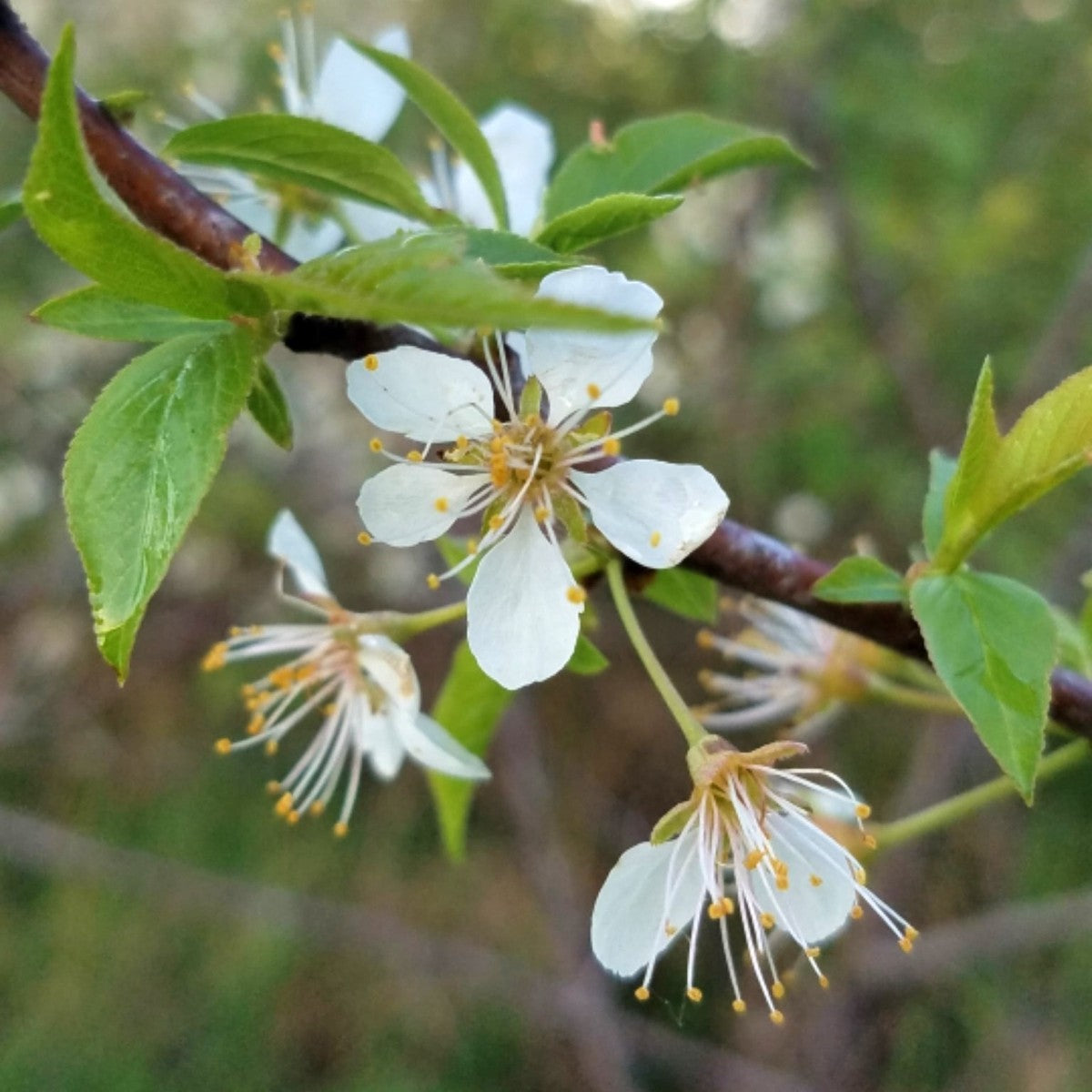
American Red Plum, or Wild Plum, is a small tree or multi-stemmed shrub, depending on how it is maintained. The woody, branching root system tends to sucker and form colonies, but this growth habit can be controlled by mowing or pruning to restrict the size and shape. The branches are armed with thorn-like spurs. The fruits of Wild Plums are highly variable in their flavor profile, some tart and others sweet. They are more energy-dense than any of the domesticated fruits available in the grocery store. Jams, jellies, pies, prunes and fruit leathers are all great ways to utilize the bounty of these fruits.
While it is possible to grow an American Red Plum as a single specimen, it is most commonly allowed to grow as a colonizing thicket. The thicket is more dense when it is young, maturing to a more open habit that makes harvesting the fruits much easier. The shrubby thickets provide excellent cover for many bird species, and many mammals favor the fruits. Numerous bee species are attracted to the flowers for nectar and pollen, and some 340 Lepidoptera use Prunus spp. as a host plant. Wild Plum colonies are highly useful to wildlife and humans alike.
It is important to note that Prunus species contain toxic compounds. Appropriate research is highly recommended before using this or any plant as an edible or medicinal. It can be deadly to dogs and children if large quantities of the seeds are consumed.
Sources:
Native Trees, Shrubs, & Vines by William Cullina
Native Plant Agriculture by Indigenous Landscapes
Missouri Botanical Garden
Lady Bird Johnson Wildflower Center
Illinois Wildflowers
The Morton Arboretum-Black Walnut Tolerance

Limited Time Offer:
0
days
0
hours
0
mins
0
secs
Prunus americana (American Red Plum) - QT
American Red Plum

Plant Care & Installation Quick-Guide
Proper acclimation and installation are key to your plant's success. Please cross-reference these tips with your plant's specific ID tags:
·
Pre-Planting: Store plants in a light-appropriate area on soil or grass (avoid hot concrete or asphalt) and water daily until the soil is saturated and the pot feels heavy. If temperatures drop below 30°F, move pots to a garage or cover them to prevent root freeze.
·
Installation: Dig a hole matching the depth of the pot, remove the fabric container, and ensure the plant’s crown or root flare is level with the ground. Fill gaps with soil, water heavily, and apply 2 inches of mulch—keeping it clear of the stem.
·
Ongoing Care: Check moisture daily by feeling 1–2 inches into the soil; water deeply at the base if the soil feels dry or warm. Newly installed plants require frequent watering (up to 3–4 times weekly in heat) until fully established, which can take a few months for perennials and up to two years for trees.