


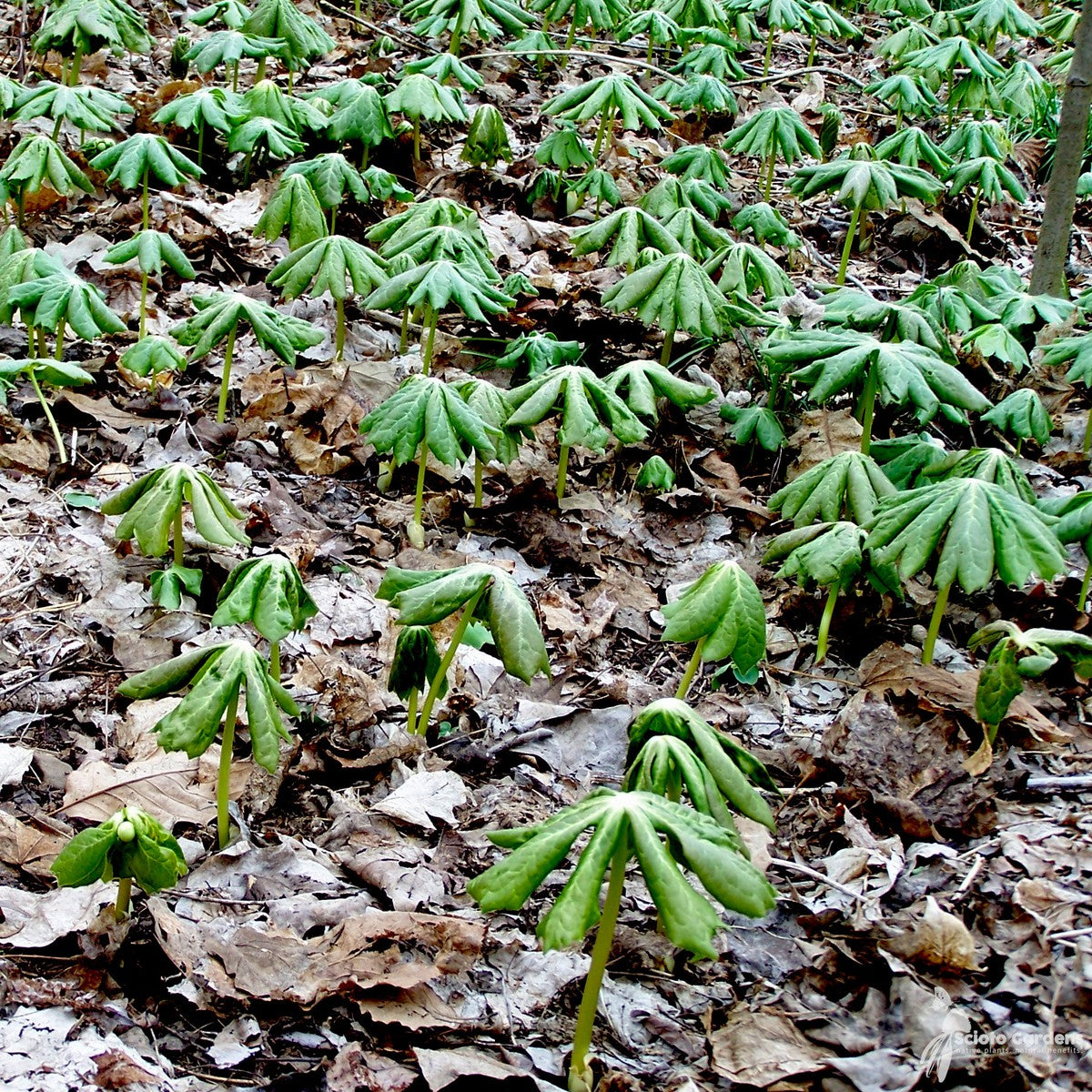
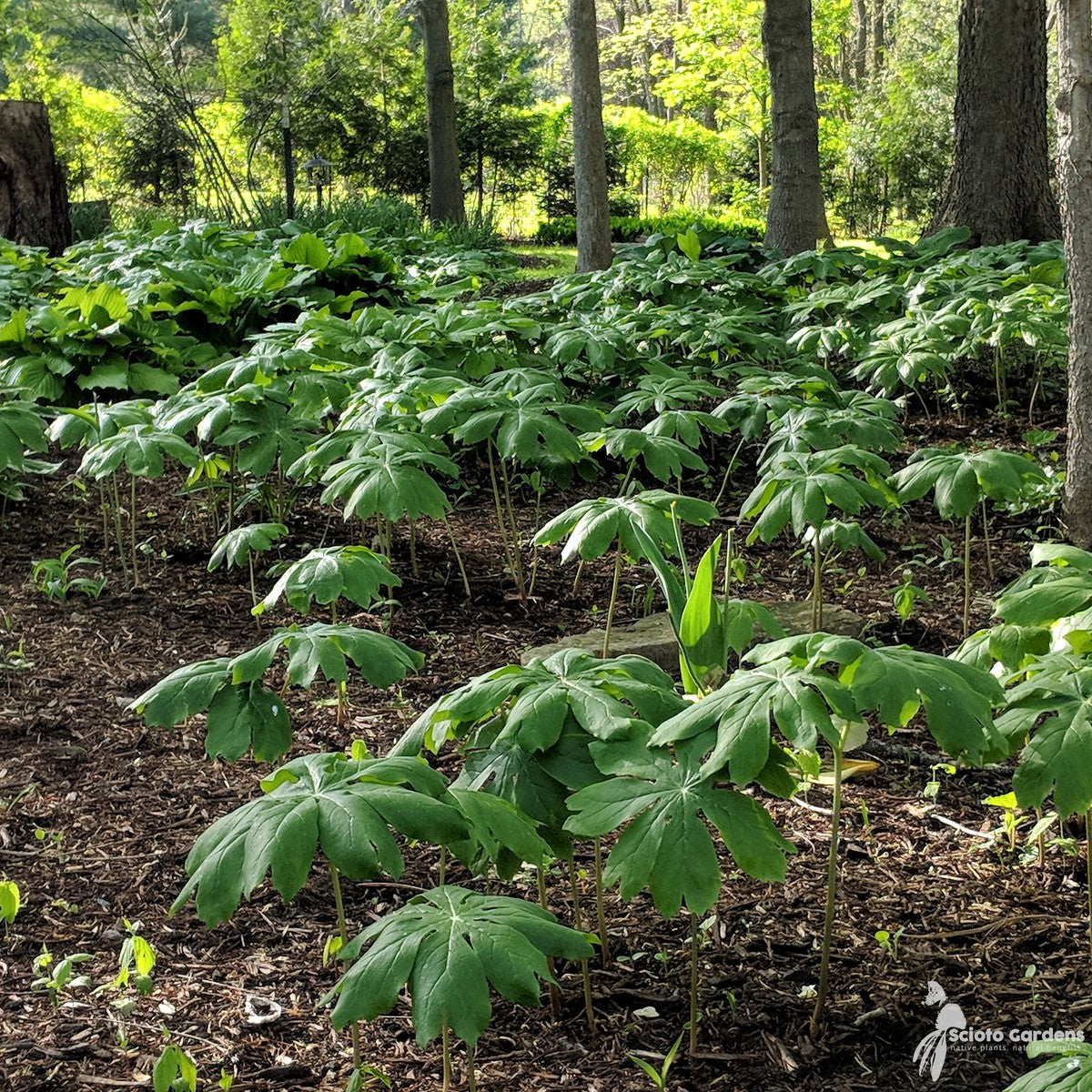
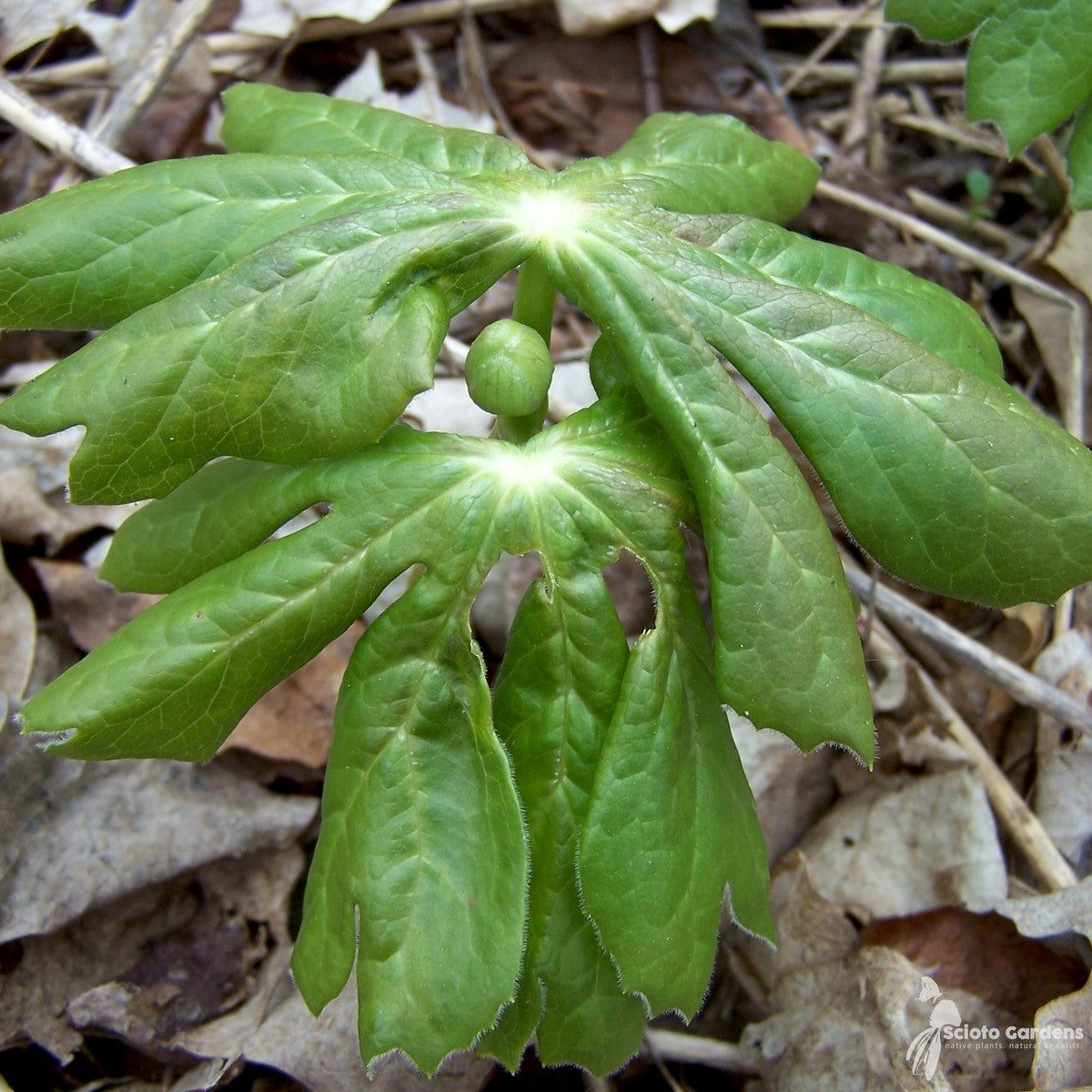
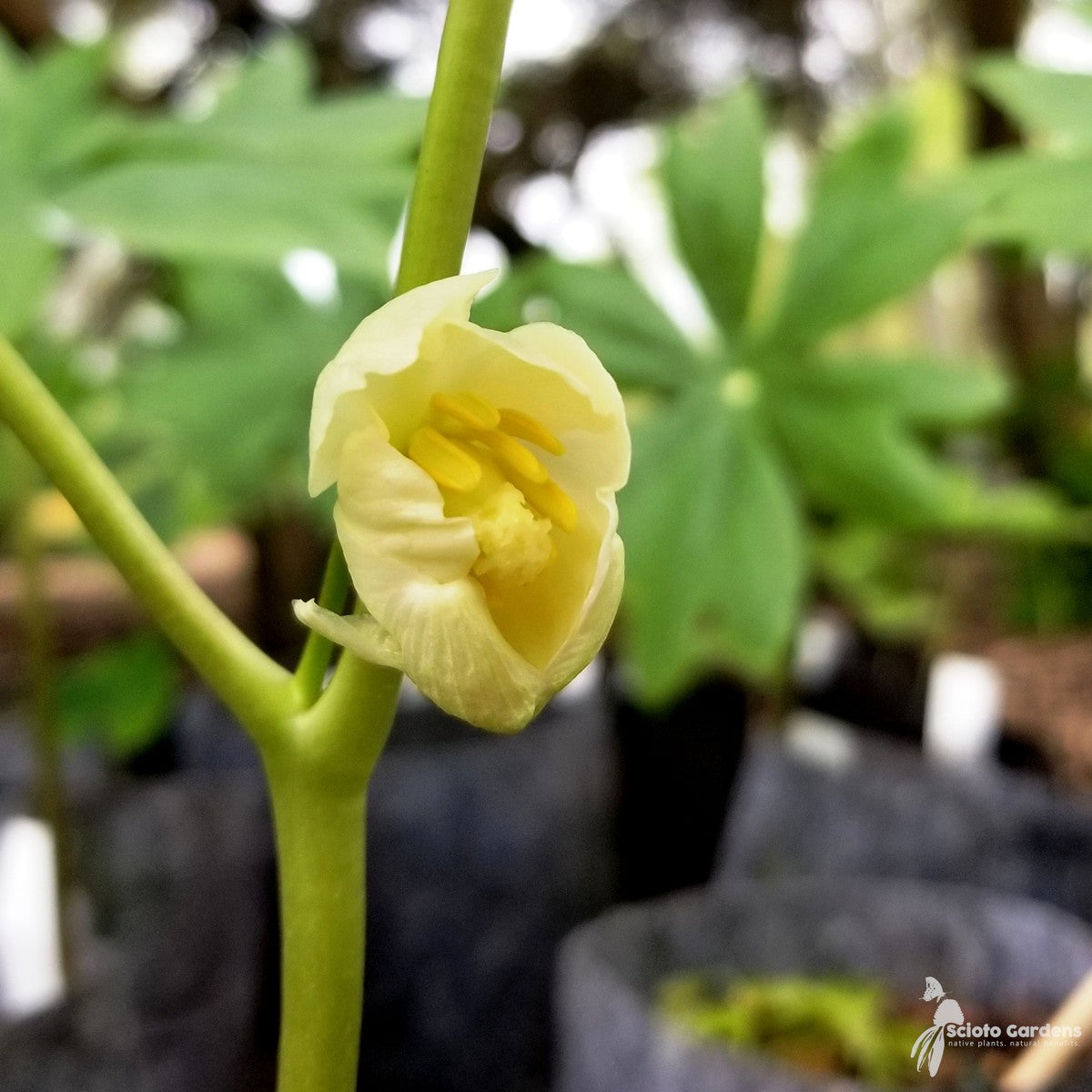
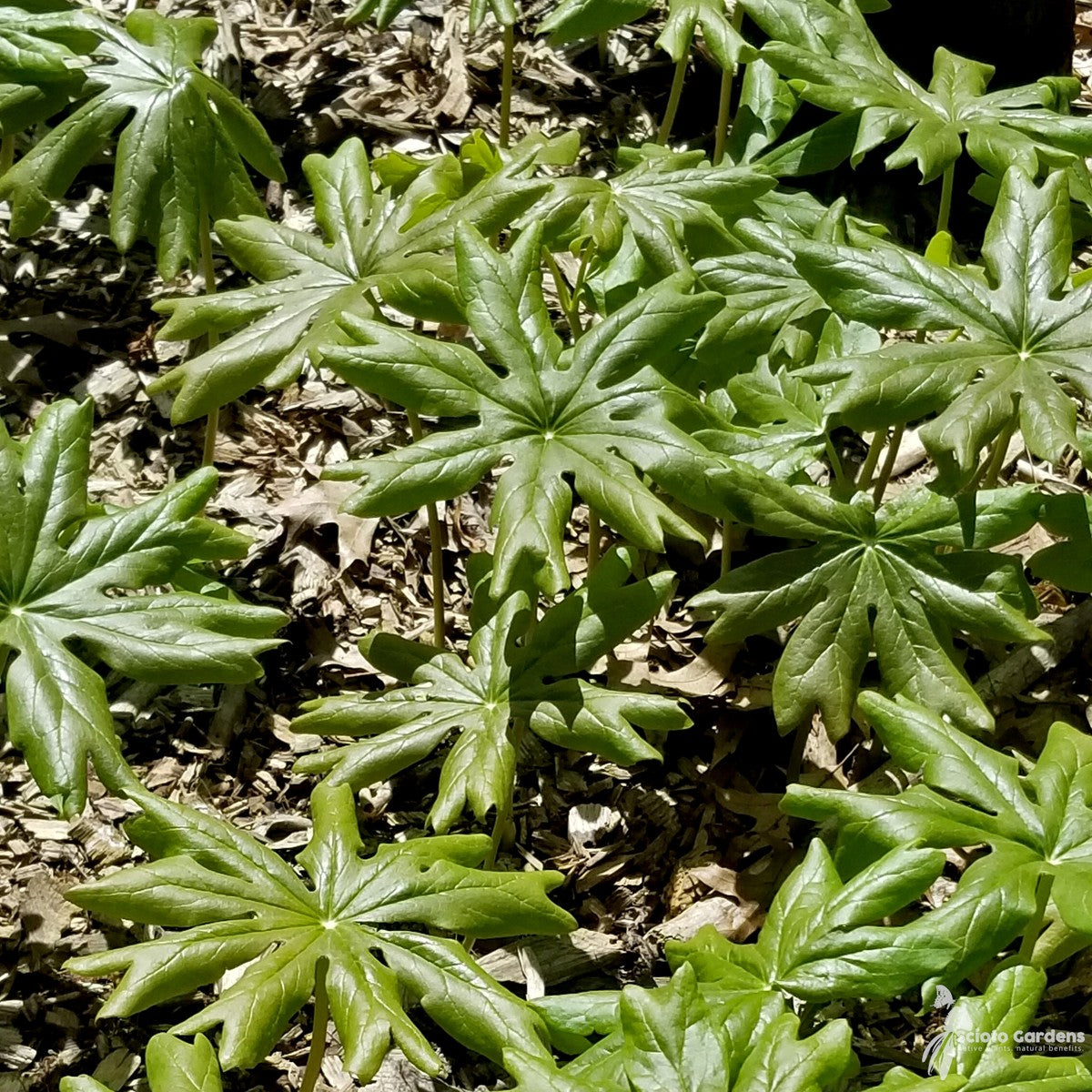
Mayapple is one of the most distinctive and easily recognized native woodland wildflowers in our area. The large, umbrella-like leaves form extensive colonies in high-quality, moist woodlands as well as in disturbed wooded locations. The bold-textured foliage makes a quick and carefree groundcover, but it can shade out smaller plants and outgrow its space in smaller gardens. Only stems with paired leaves will bloom, with the waxy, cream-colored 3" flower forming in the leaf axil under the protection of the leaves. It is common for clonal colonies of Mayapple to be unable to produce fruit because they are self-sterile. On the occasion that a flower gets cross-pollinated, usually by bumblebees or other long-tongued bees, it will form a yellow plum-like berry. The fruits are edible when soft and fully ripe, but before then they are poisonous like all other parts of the plant. As with any edible or medicinal plant, proper research must be done before consuming or making use of it. Besides curious humans, Box Turtles and small mammals seek out the fruits to eat and disperse the seeds to far-off locations to establish new colonies.
Sources:
Growing and Propagating Wildflowers by William Cullina
Herbaceous Perennial Plants by Allan M. Armitage
Eastern/Central Medicinal Plants and Herbs by Steven Foster and James A. Duke
Missouri Botanical Garden
Lady Bird Johnson Wildflower Center
Illinois Wildflowers
The Morton Arboretum-Black Walnut Tolerance
