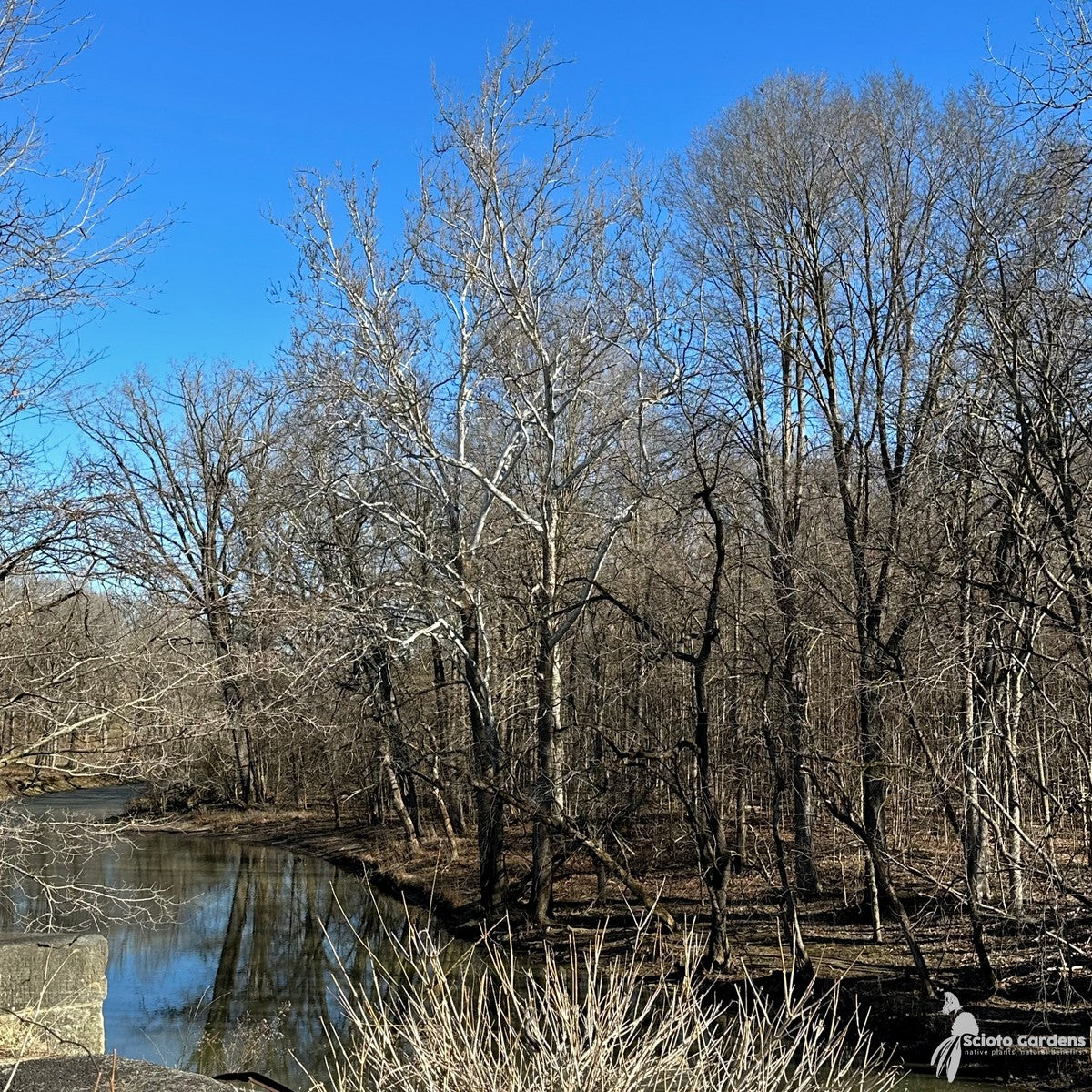
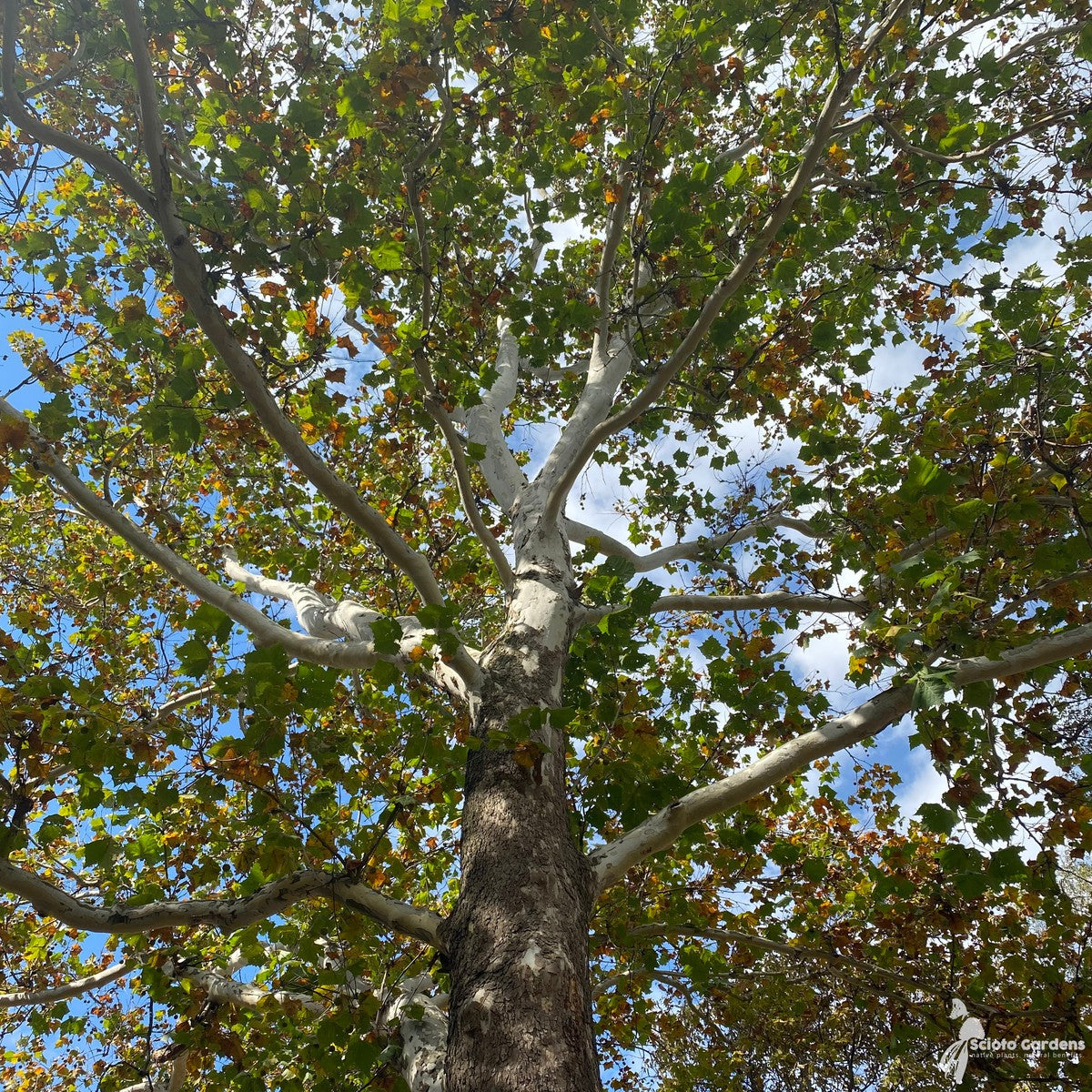
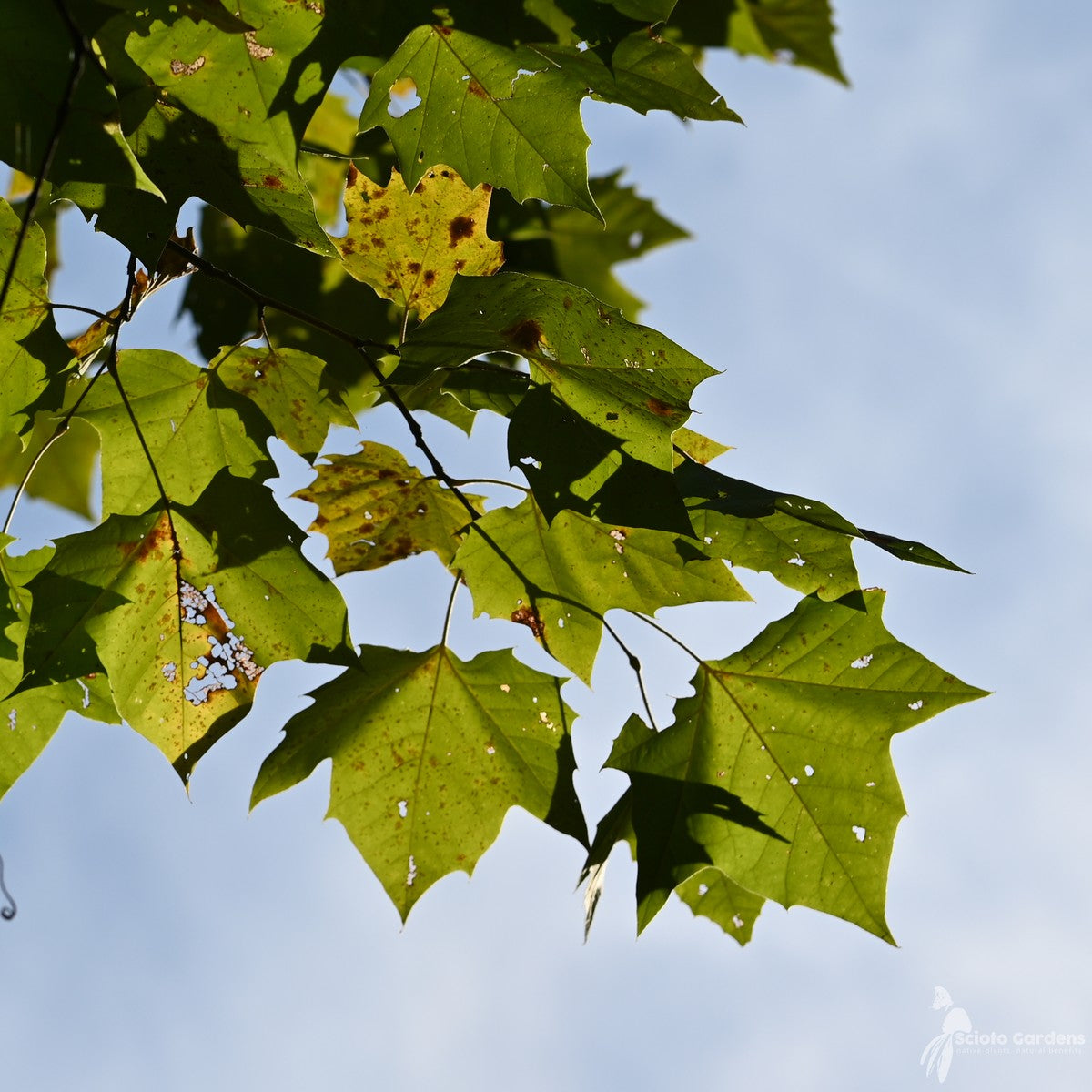
Sycamore trees are majestic, massive and unmistakable. It is one of the tallest deciduous broadleaf trees, and the largest by diameter in the forests of eastern North America. “By the beautiful bright smooth bark, the Sycamore is known as far off as the color can be descried; it shines through the tops of the forest even in the depth of summer when the leafy crowns are heaviest. In winter against a stormy sky it looks wonderfully living, amidst all the appearances of lifelessness in other deciduous trees.” (Peattie, pg. 370)
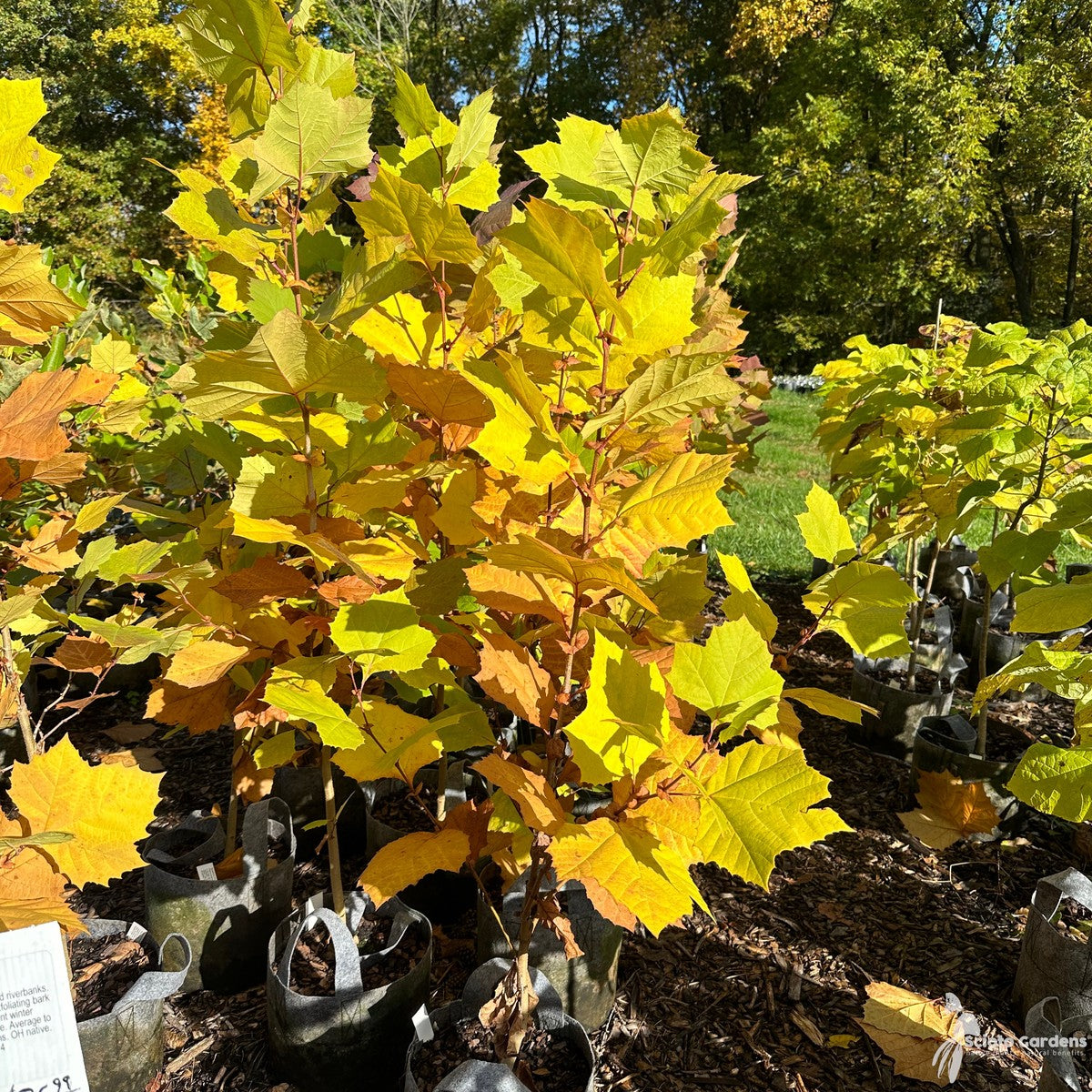
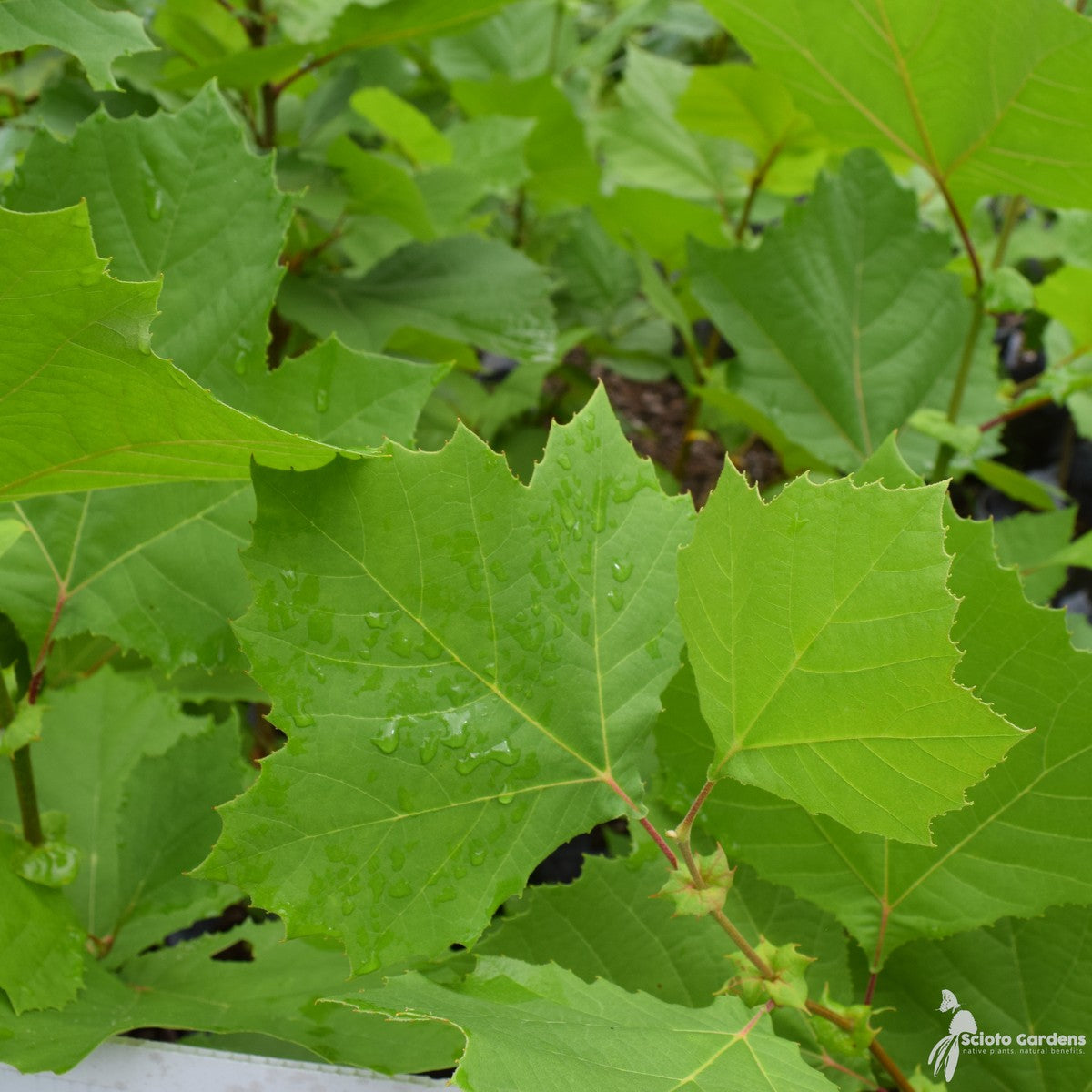
Sycamores are trees of the bottomlands, riverbanks, and floodplain forests with deep, fertile soil. They prefer these conditions in cultivation as well, but are somewhat adaptable. Their growth rate is fast, especially in favorable conditions. The mature height is typically around 75-100' with a similar spread, but many larger specimens have been documented. This is definitely not a tree for small spaces and should only be planted where there is plenty of room to grow and spread. The spherical fruits and large leaves can be messy when they drop in winter, and they have no salt tolerance, so it is best to locate them away from streets, sidewalks, driveways and structures.
The ecological value of Sycamores is very high. In their maturity, they have a tendency to form large hollows. These old hollows and cavities can provide shelter and nesting sites for bats, squirrels, raccoons, owls, woodpeckers, Chimney Swifts, Great Crested Flycatchers, and Wood Ducks. The huge, wide branching habit of older trees also provides the perfect nesting sites for Bald Eagles and Great Blue Heron rookeries! The seeds are a fall and winter food source for Dark-Eyed Juncos, Purple Finches, Gold Finches, Black-capped Chickadees, Cedar Waxwings, and many more. Ruby-Throated Hummingbirds gather the flower down for their nests. At least 45 species* of Lepidoptera host on the foliage of Sycamores, providing a juicy buffet of caterpillars to hungry insectivorous birds and ba


Limited Time Offer:
0
days
0
hours
0
mins
0
secs
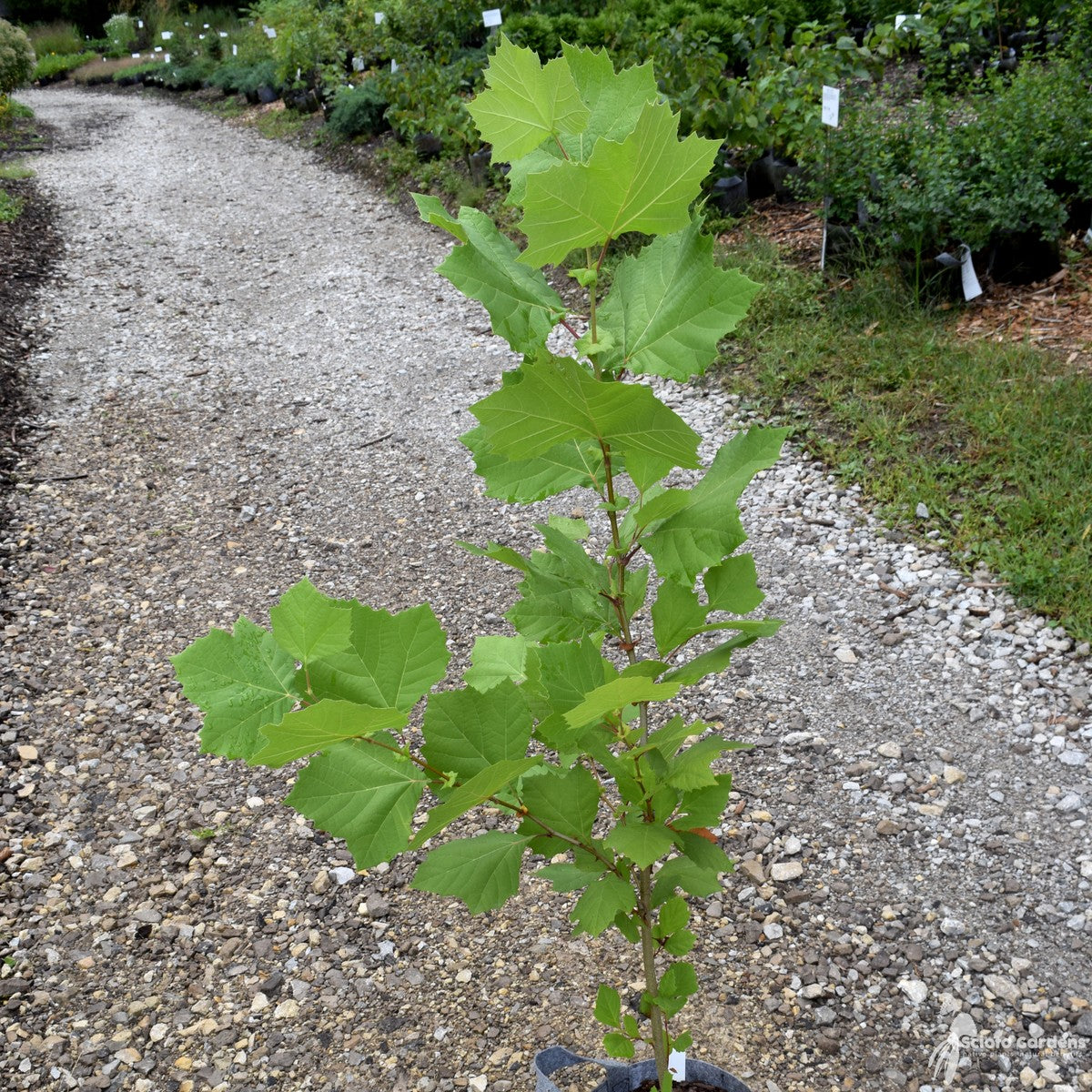
Platanus occidentalis (Sycamore) - 5 gal
Sycamore

Plant Care & Installation Quick-Guide
Proper acclimation and installation are key to your plant's success. Please cross-reference these tips with your plant's specific ID tags:
·
Pre-Planting: Store plants in a light-appropriate area on soil or grass (avoid hot concrete or asphalt) and water daily until the soil is saturated and the pot feels heavy. If temperatures drop below 30°F, move pots to a garage or cover them to prevent root freeze.
·
Installation: Dig a hole matching the depth of the pot, remove the fabric container, and ensure the plant’s crown or root flare is level with the ground. Fill gaps with soil, water heavily, and apply 2 inches of mulch—keeping it clear of the stem.
·
Ongoing Care: Check moisture daily by feeling 1–2 inches into the soil; water deeply at the base if the soil feels dry or warm. Newly installed plants require frequent watering (up to 3–4 times weekly in heat) until fully established, which can take a few months for perennials and up to two years for trees.