
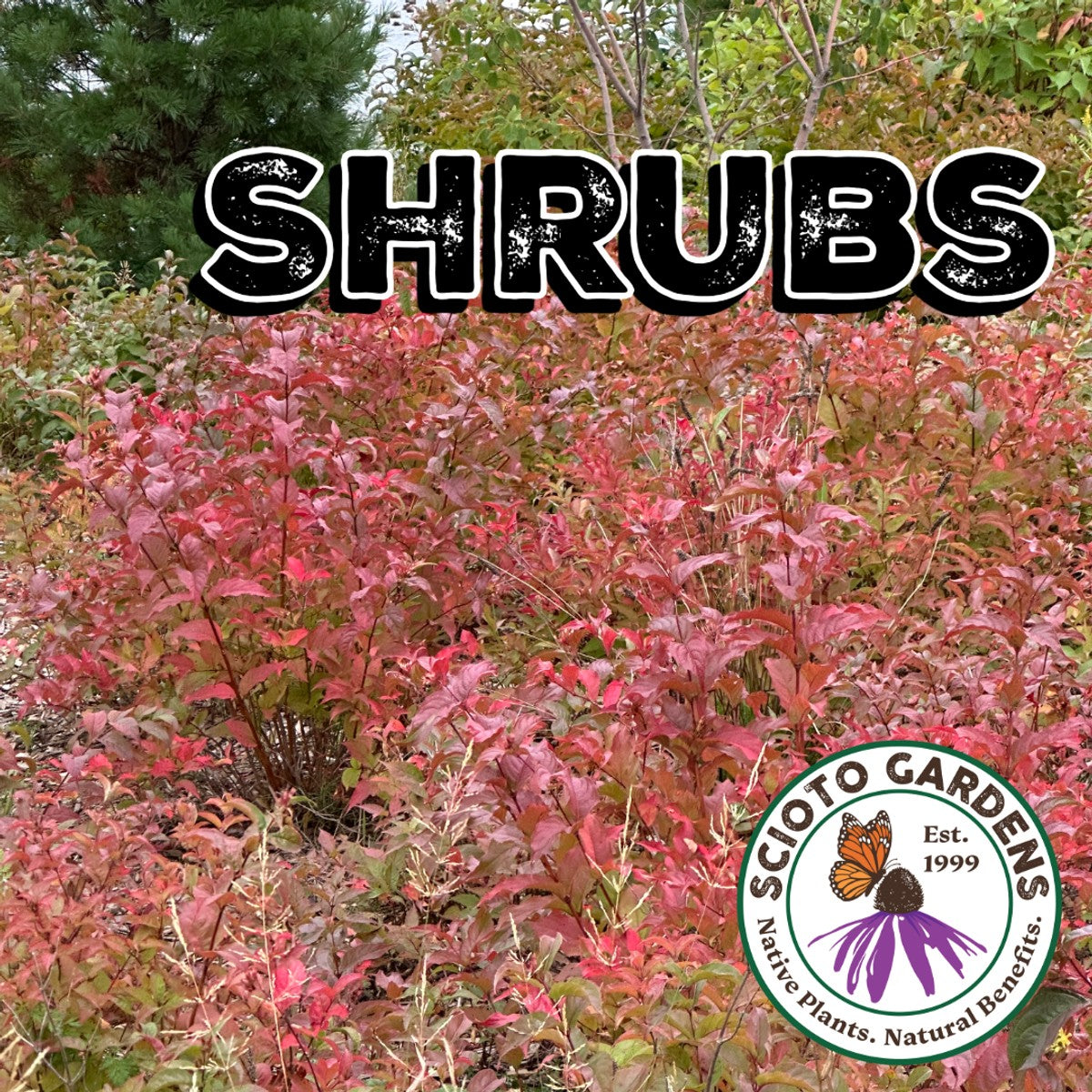
Common Ninebark is a tough, upright, deciduous shrub native to the eastern half of North America. Its dense, rounded, multi-stemmed growth habit is delightfully wild looking with long, caney branches arching out away from its narrow base. Older stems and branches develop attractive exfoliating bark, peeling to reveal several shades of tan and brown inner bark, giving this species its common name. To best appreciate this ornamental feature, judicious pruning is necessary as these shrubs are vigorous and the foliage can block sight lines to the trunks. Pruning should be done after flowering to maintain size, shape and tidiness. A total rejuvenation can be achieved by cutting the shrub to the ground once a decade. This will force new, dense growth and better flowering in the upcoming years.
Blooming occurs for 2-3 weeks in May and June, covering the shrubs with dainty, domed clusters of white flowers. Nectar and pollen are rewards for the many native bees and honeybees, wasps, flies and butterflies that are attracted. Songbirds find rich hunting grounds and protected nesting sites within these shrubs, and will eat the reddish fruits that mature in fall. At least 41 species* of Lepidoptera are host to Common Ninebark. The very decorative specialist beetle, Ninebark Calligraphy Beetle (Calligrapha spiraeae) can sometimes be found munching on the leaves, but not in great numbers and not to the point of being detrimental to the health of the plant. They are a treasure to find!
Common Ninebark can thrive in nearly any location because of its durability and adaptability. It is a very useful plant for erosion control on slopes and embankments, can tolerate exposed locations with wind and blazing sun, or even dry shade (though this will reduce the flowering and density of foliage). This is not the best choice for small, managed gardens, but it is put to great use in larger, more wild landscapes. It is good for naturalizing at the wood’s edge, in informal hedges, naturalistic planting, and to occupy harsh conditions where other plants fail to impress.
Sources:
Native Trees, Shrubs, & Vines by William Cullina
Manual of Woody Landscape Plants by Michael A. Dirr
Midwestern Native Shrubs and Trees by Charlotte Adelman & Bernard L. Schwartz
Missouri Botanical Garden
Lady Bird Johnson Wildflower Center
Illinois Wildflowers
Photo Credits:
Flowers: Eric Hunt, CC BY-SA 4.0, via Wikimedia Commons
