Virginia Creeper, also known as Woodbine, is an extraordinarily useful and beautiful vine. It is a vigorous grower, able to reach heights of 50' or more in deciduous trees. The 5-parted, palmate, deep green leaves crawl up surfaces or scramble around on the ground, making it a useful groundcover for dry shade. In fall, all of the leaves turn brilliant shades of orange, crimson and maroon, a quintessential display of the season. It is tough and adaptable to all but the wettest soils, with good tolerance to salinity and juglone toxin.
Many people confuse young Virginia Creeper leaves with Poison Ivy because they may only have 3 parts before they are fully developed. To avoid this, look at many more sets of leaves to count how many parts there are – Poison Ivy only has three, never five. Virginia Creeper vines are also smooth, not hairy like Poison Ivy vines. Together, these identifying characteristics can save innocent and beneficial Virginia Creeper from being eradicated.
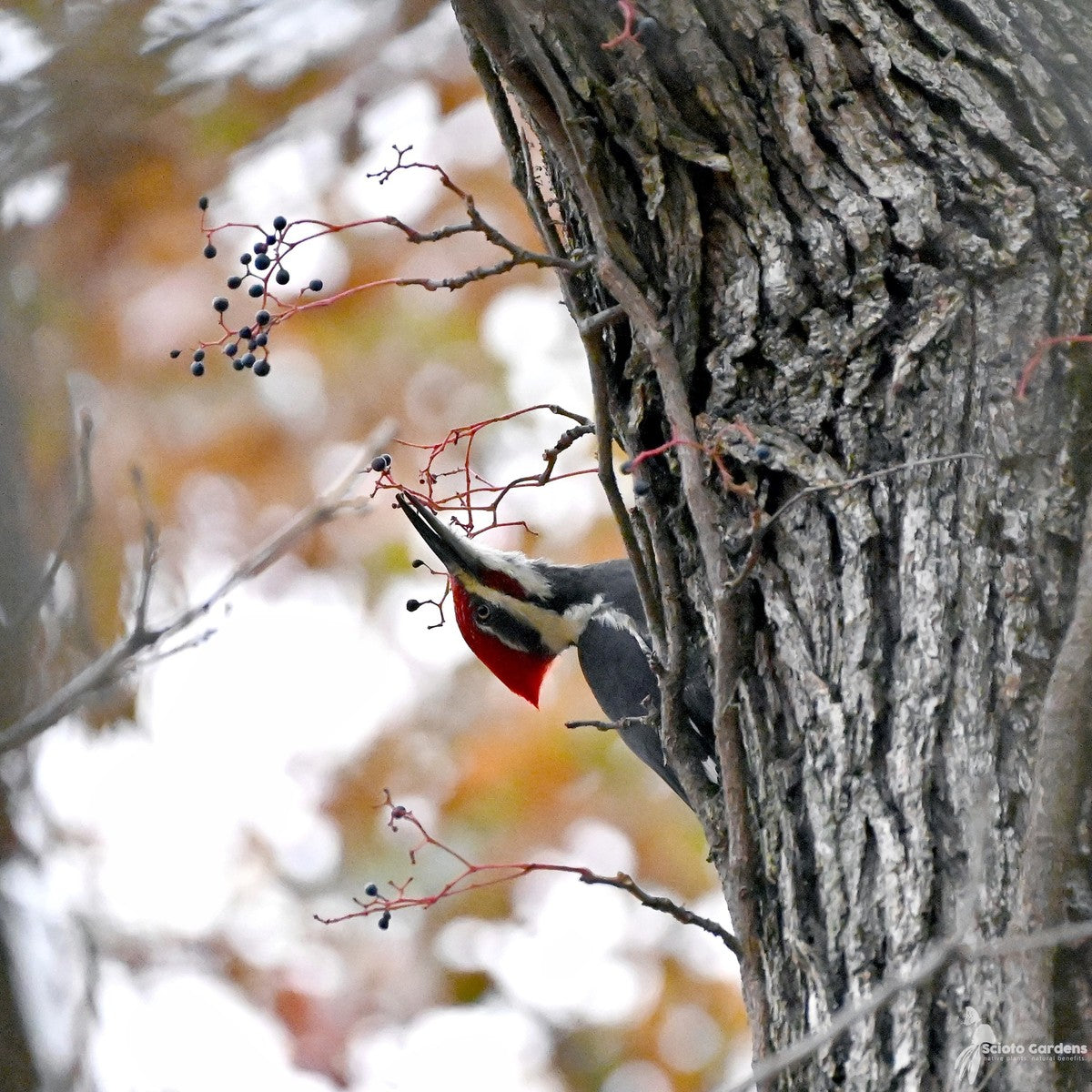
The berries of Virginia Creeper feed at least 39 species of birds, including woodpeckers, tufted titmouse, eastern bluebird, American robin, northern mockingbird, brown thrasher, black-capped chickadee, flicker and thrush. It is the host plant for the fascinating Pandora Sphinx and the Virginia Creeper Sphinx. When berry clusters fall from the vine, they are consumed by foxes and skunks. This vine is endlessly useful to wildlife and always beautiful to look at.
Sources:
Native Trees, Shrubs, & Vines by William Cullina
The Midwestern Native Garden by Charlotte Adelman & Bernard L. Schwartz
Gardening for the Birds by George Adams
Missouri Botanical Garden
Lady Bird Johnson Wildflower Center
Illinois Wildflowers
Grow Native! Salt-Tolerant Native Plants

Limited Time Offer:
0
days
0
hours
0
mins
0
secs
Parthenocissus quinquefolia (OH genome) (Virginia Creeper) - 1 gal
Virginia Creeper

Plant Care & Installation Quick-Guide
Proper acclimation and installation are key to your plant's success. Please cross-reference these tips with your plant's specific ID tags:
·
Pre-Planting: Store plants in a light-appropriate area on soil or grass (avoid hot concrete or asphalt) and water daily until the soil is saturated and the pot feels heavy. If temperatures drop below 30°F, move pots to a garage or cover them to prevent root freeze.
·
Installation: Dig a hole matching the depth of the pot, remove the fabric container, and ensure the plant’s crown or root flare is level with the ground. Fill gaps with soil, water heavily, and apply 2 inches of mulch—keeping it clear of the stem.
·
Ongoing Care: Check moisture daily by feeling 1–2 inches into the soil; water deeply at the base if the soil feels dry or warm. Newly installed plants require frequent watering (up to 3–4 times weekly in heat) until fully established, which can take a few months for perennials and up to two years for trees.