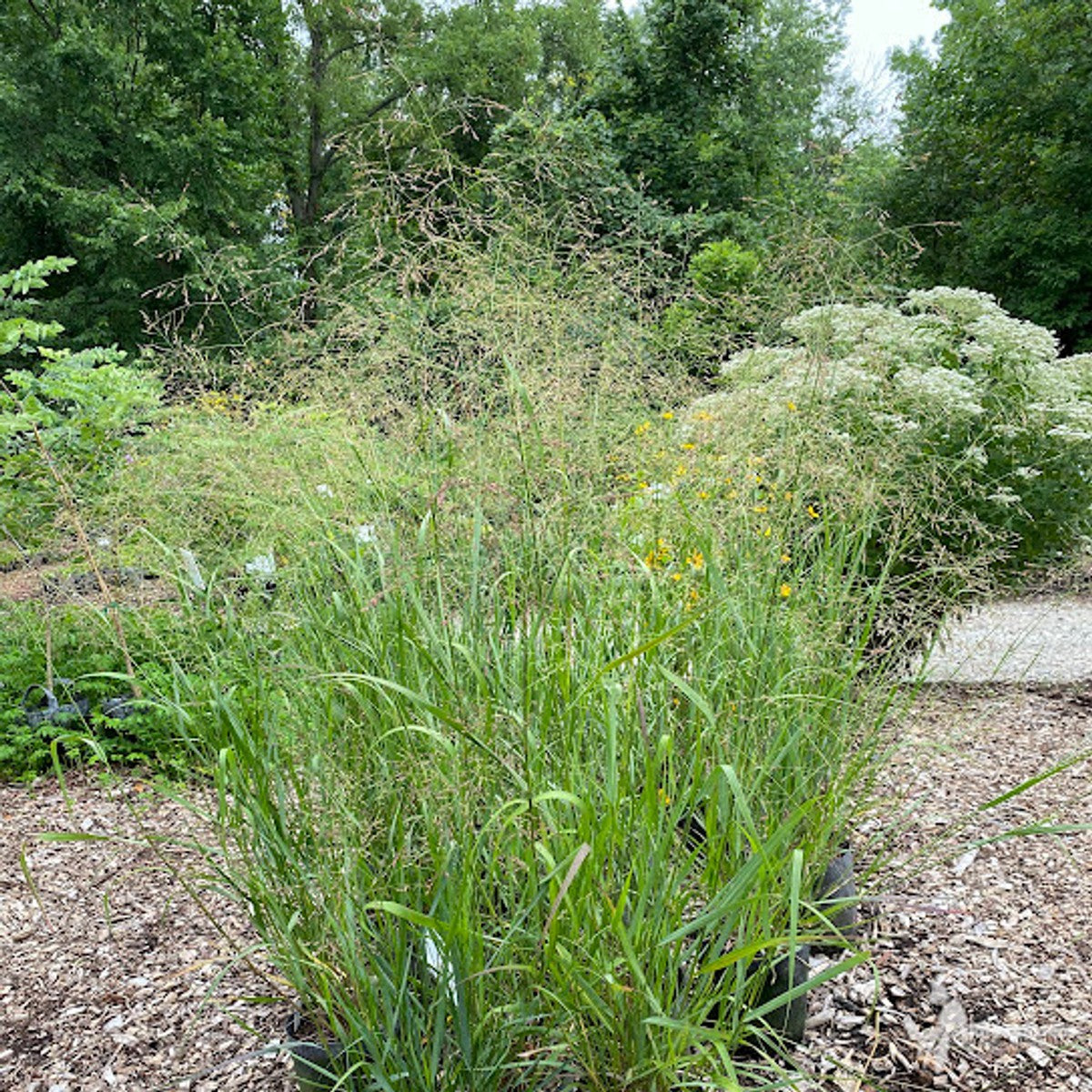
Switchgrass is one of the "Big Four" dominant grasses of the tallgrass prairie ecosystem. It is very deeply rooted, allowing it to find moisture in times of drought, and nutrients in very poor soils. It is one of the most widely planted native ornamental grasses in eastern North America due to its reliability, adaptability and beauty. This grass is very upright, growing 6' tall, and mature clumps can be as wide as 5'! It thrives in full sun, in clay and in sandy soils. If given too much moisture, shade or fertilizer, this grass can have a tendency to flop.Switchgrass can be used as an herbaceous hedge in the garden, used to screen unsightly views, planted as a backdrop to prairie and meadow flowers, or used to control erosion. It will self-seed in favorable conditions, making it a great choice for pocket prairies or full scale prairie restoration. It is a very useful plant for wildlife which use it as cover and for nesting material. Many birds rely on its seeds as a winter food source, and in the summer, the foliage hosts the larval stage of several butterflies such as the Delaware Skipper, Indian Skipper, and Northern Broken-Dash. It provides excellent winter interest as it rustles in the wind and it remains a substantial architectural element in the landscape. It can be cut back in spring before new growth begins, the only maintenance this grass needs to look tidy in the garden.Sources:
Native Ferns, Moss, & Grasses by William Cullina
Gardening with Grasses by Michael King and Piet Oudolf
Missouri Botanical Garden
Lady Bird Johnson Wildflower Center
Illinois Wildflowers
Grow Native! Salt-Tolerant Native Plants

Limited Time Offer:
0
days
0
hours
0
mins
0
secs
Panicum virgatum (Switchgrass) - 2 gal
Switchgrass

Plant Care & Installation Quick-Guide
Proper acclimation and installation are key to your plant's success. Please cross-reference these tips with your plant's specific ID tags:
·
Pre-Planting: Store plants in a light-appropriate area on soil or grass (avoid hot concrete or asphalt) and water daily until the soil is saturated and the pot feels heavy. If temperatures drop below 30°F, move pots to a garage or cover them to prevent root freeze.
·
Installation: Dig a hole matching the depth of the pot, remove the fabric container, and ensure the plant’s crown or root flare is level with the ground. Fill gaps with soil, water heavily, and apply 2 inches of mulch—keeping it clear of the stem.
·
Ongoing Care: Check moisture daily by feeling 1–2 inches into the soil; water deeply at the base if the soil feels dry or warm. Newly installed plants require frequent watering (up to 3–4 times weekly in heat) until fully established, which can take a few months for perennials and up to two years for trees.