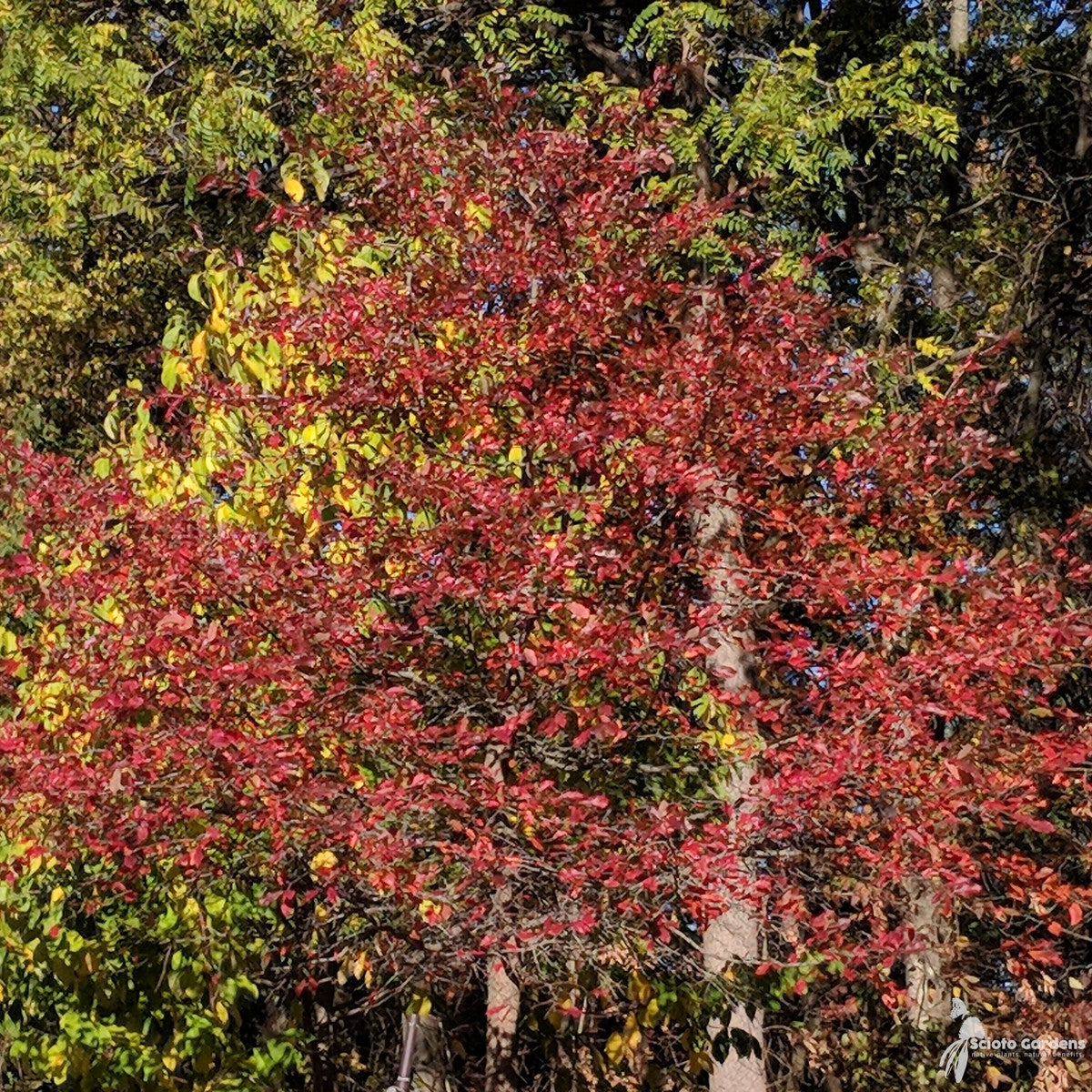
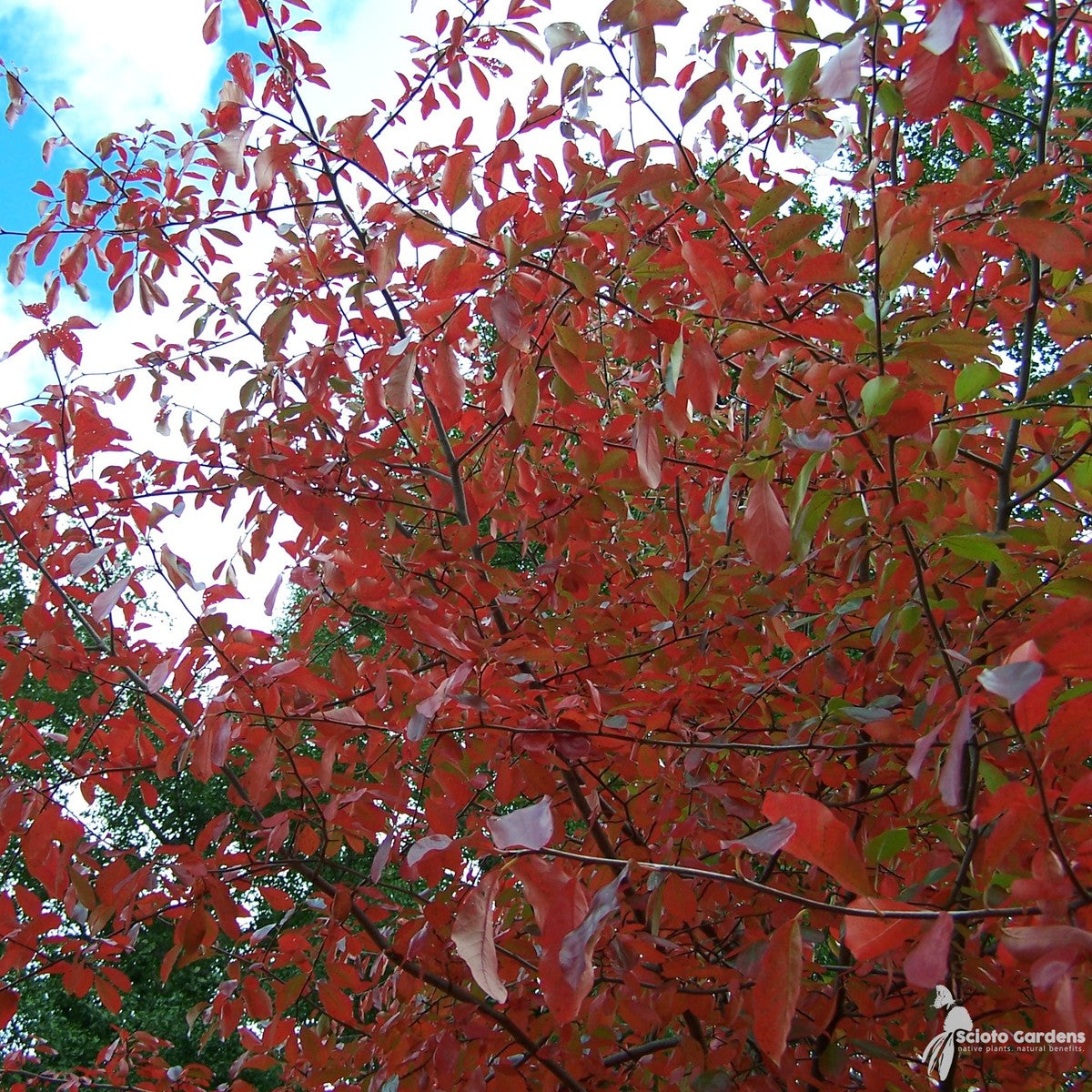
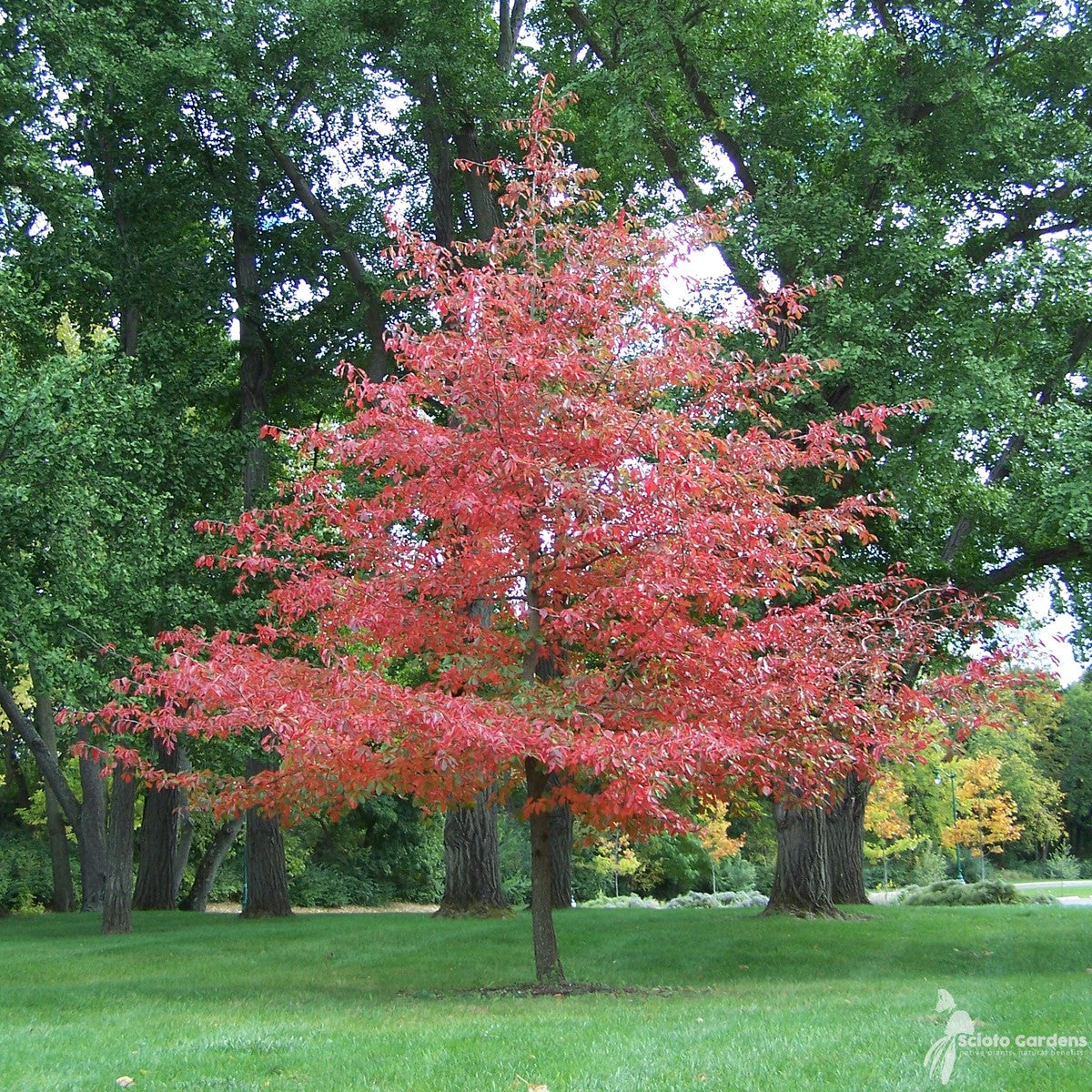
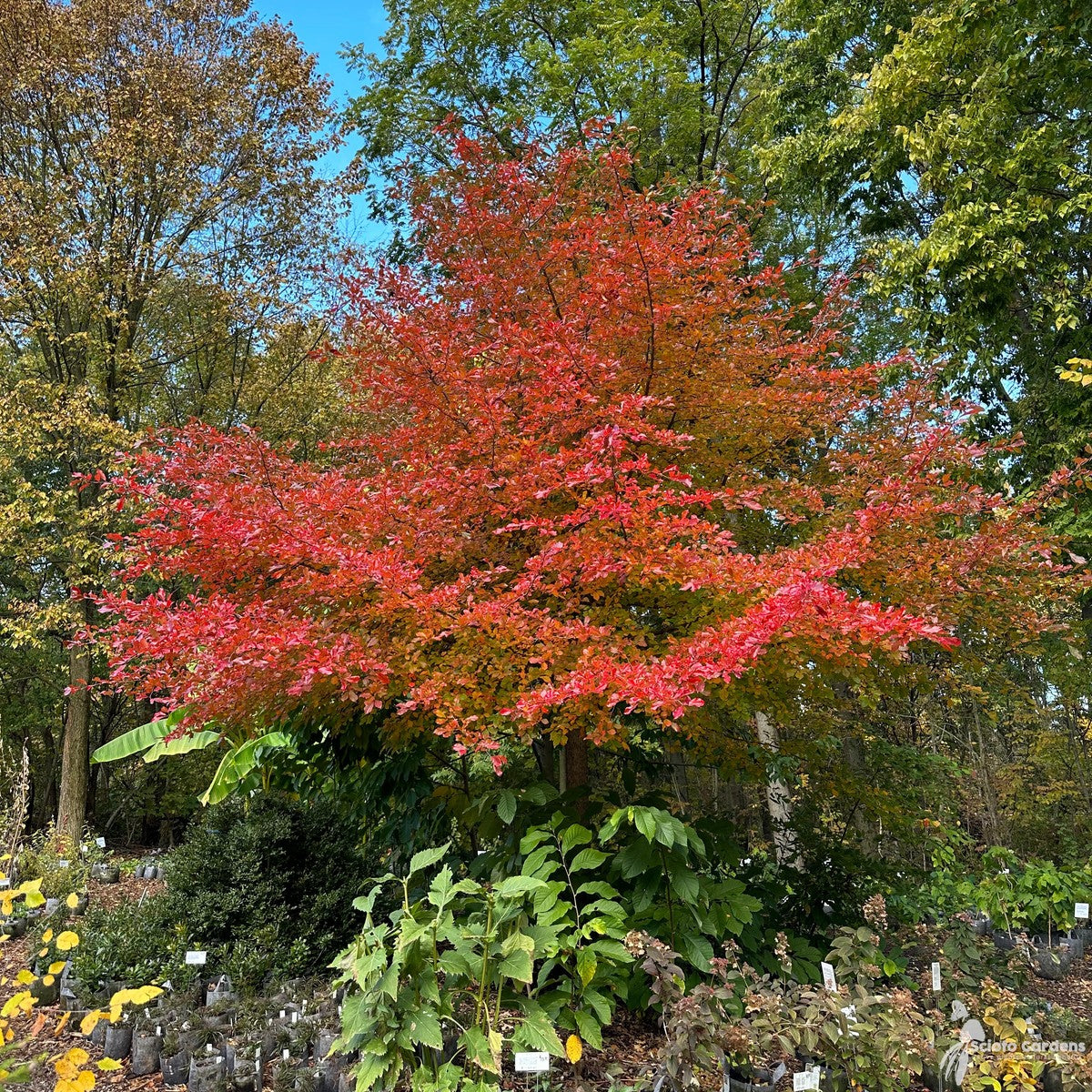
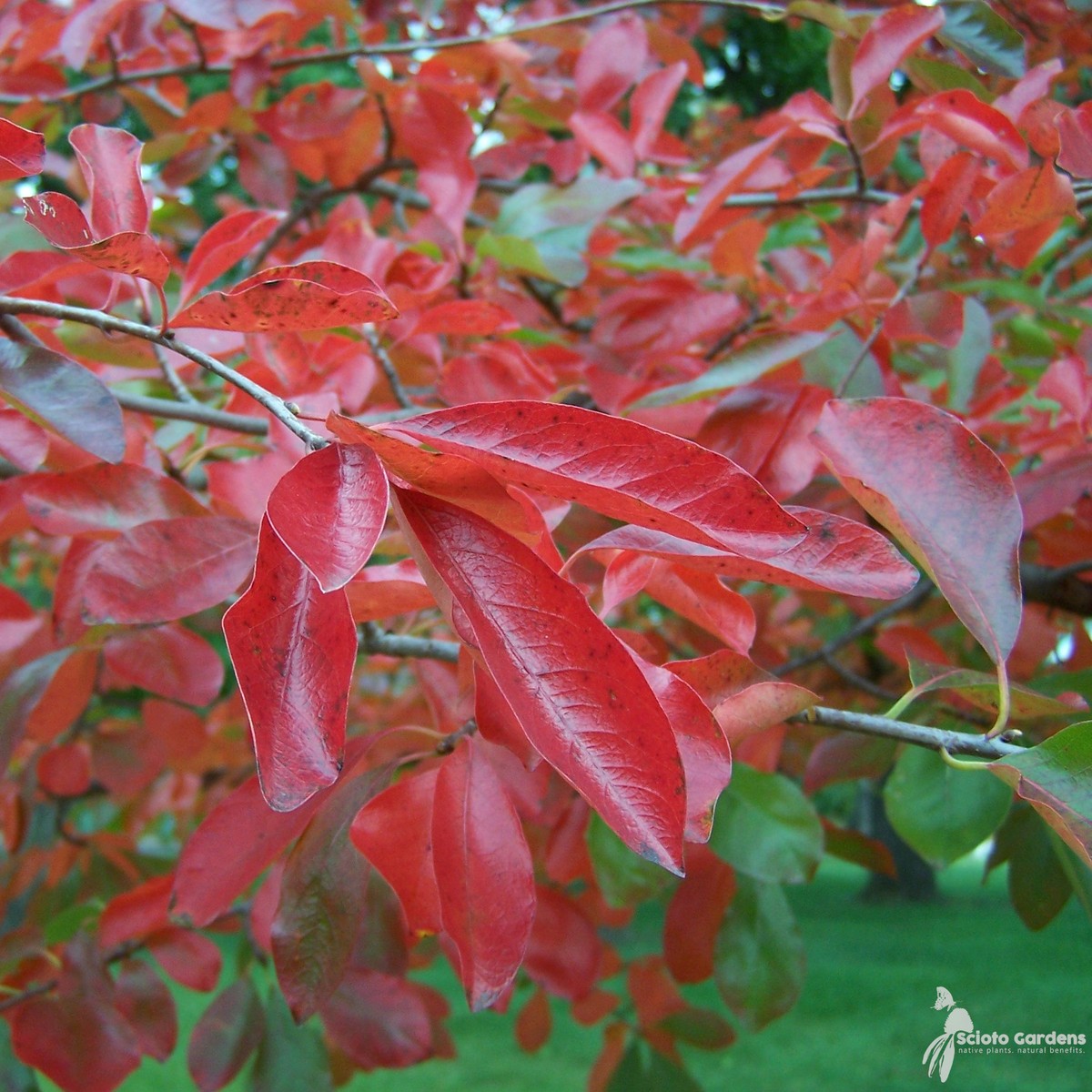
Black Tupelo, also known as Black Gum or Sour Gum, is one of our most beautiful native shade trees. The horizontal branching habit gives it an attractive tiered habit that forms a lovely pyramidal shape in youth but with great variation in its mature form, often irregularly rounded or with a flat-topped crown. The dark green, lustrous leaves in summer turn bright yellow, orange, fiery red, scarlet and purple in fall with some of the very best and most consistent color available in our native flora.
The wildlife value of Black Tupelo is very high. Bees visit the flowers for nectar and are probably the primary pollinators. Beekeepers highly value them for the delicious and prized Tupelo Honey. The flowers are not showy, with male and female flowers occurring on different plants (dioecious) but with the possibility of perfect flowers containing both sexes on the same tree (polygamo-dioecious). This means that limited fruit set on a primarily male tree can occur, though it is better to have both sexes for heavy fruit set. The blueish-black drupes are high in fat and attract over 30 species* of birds including the Scarlet Tanager, Eastern Phoebe, Eastern Bluebird, Northern Flicker, Gray Catbird, Hermit and Wood Thrush and many more! The foliage also supports at least 26 species** of Lepidoptera, providing food for insectivorous birds and nestlings.
Black Tupelo is a lovely tree for all four seasons. It prefers a fertile, moist and deep soil with an acidic pH though it is adaptable and will tolerate less than favorable conditions. It is a slow-growing tree with a deep taproot, making it difficult to transplant from larger sizes. It is not tolerant of urban pollutants or drought stress, but is moderately tolerant of road salt runoff. They make fantastic specimen and shade trees, or for naturalized plantings at the woodland’s edge or for low, boggy situations.
Sources:
Native Trees, Shrubs, & Vines by William Cullina
Manual of Woody Landscape Plants by Michael A. Dirr
**Mid


Limited Time Offer:
0
days
0
hours
0
mins
0
secs
Nyssa sylvatica (Black Tupelo) - 3 gal
Black Tupelo

Plant Care & Installation Quick-Guide
Proper acclimation and installation are key to your plant's success. Please cross-reference these tips with your plant's specific ID tags:
·
Pre-Planting: Store plants in a light-appropriate area on soil or grass (avoid hot concrete or asphalt) and water daily until the soil is saturated and the pot feels heavy. If temperatures drop below 30°F, move pots to a garage or cover them to prevent root freeze.
·
Installation: Dig a hole matching the depth of the pot, remove the fabric container, and ensure the plant’s crown or root flare is level with the ground. Fill gaps with soil, water heavily, and apply 2 inches of mulch—keeping it clear of the stem.
·
Ongoing Care: Check moisture daily by feeling 1–2 inches into the soil; water deeply at the base if the soil feels dry or warm. Newly installed plants require frequent watering (up to 3–4 times weekly in heat) until fully established, which can take a few months for perennials and up to two years for trees.