


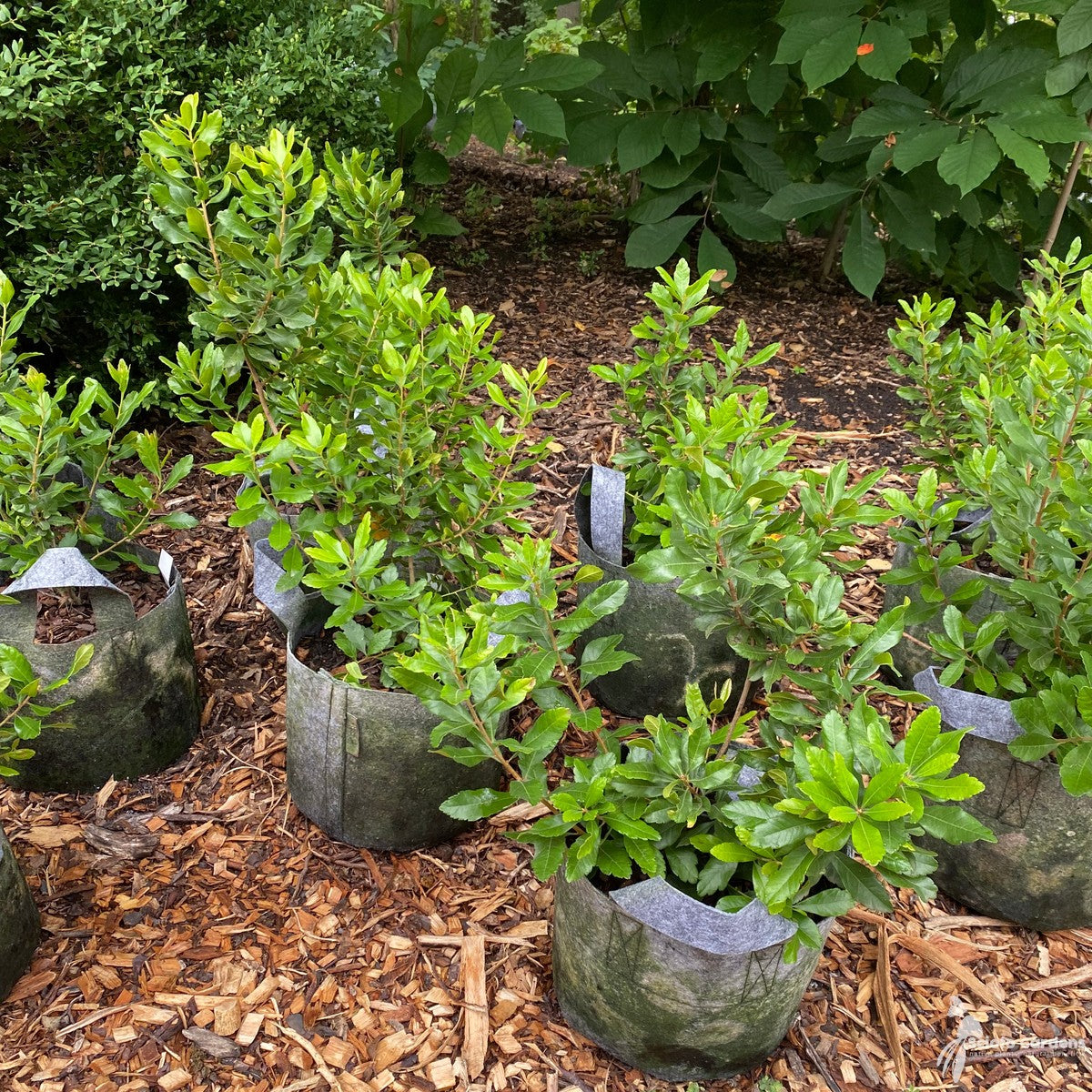
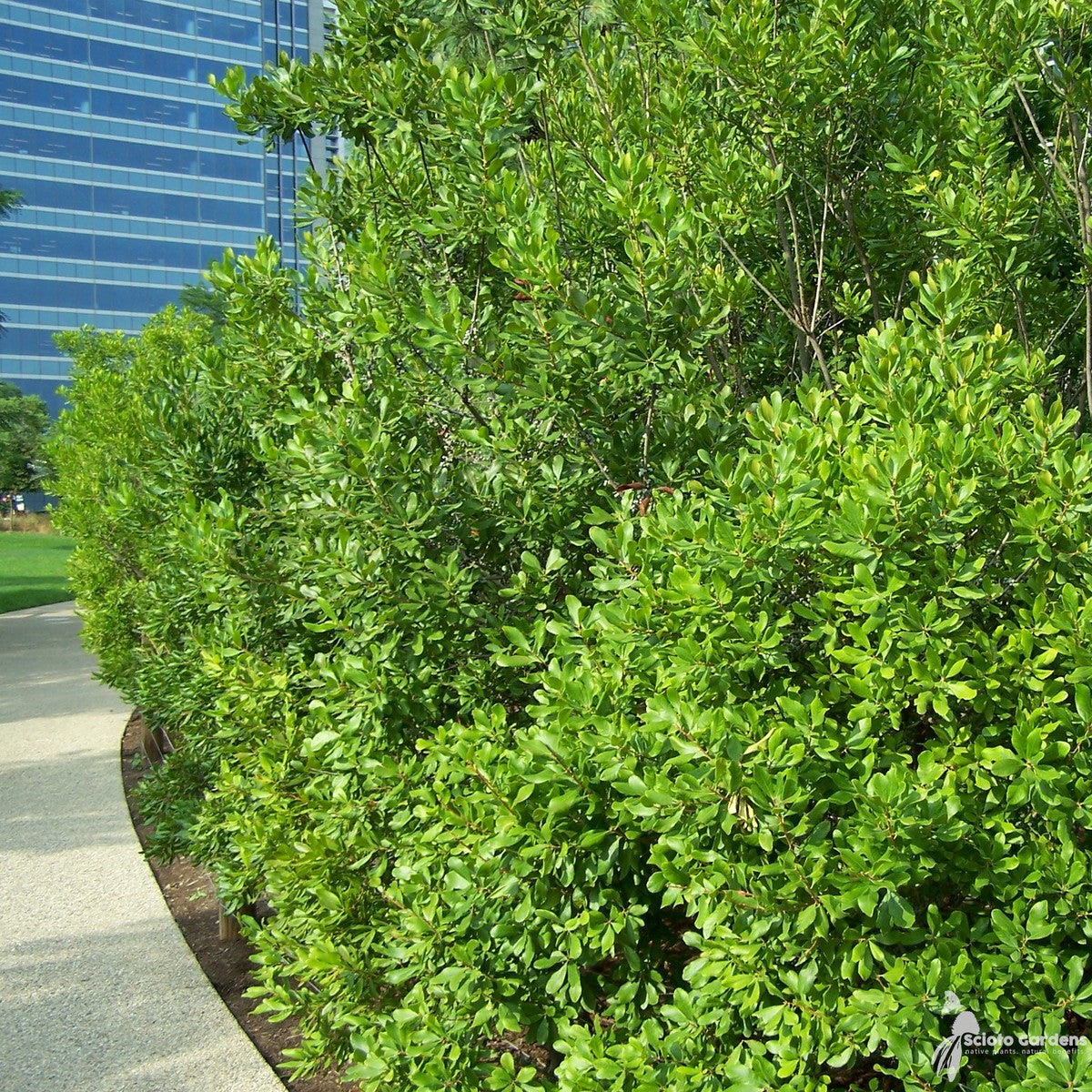
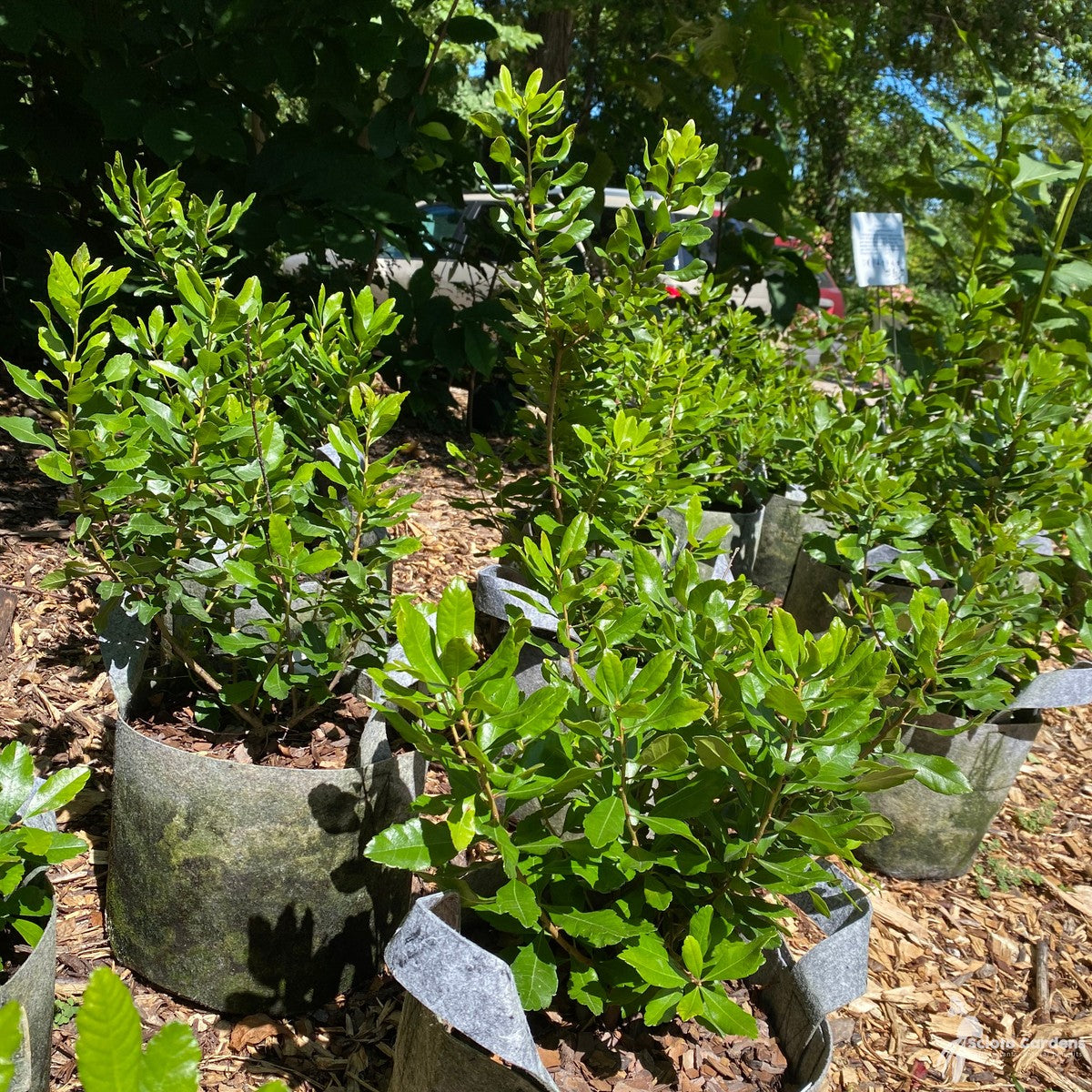
Northern Bayberry is a workhorse of a native shrub! It is a survivor, a provider, and an attractive addition to any landscape. It is an actinorhizal shrub (a nitrogen-fixer) that is adapted to harsh growing conditions and will thrive almost anywhere with enough sunlight. It excels at stabilizing slopes and embankments and can easily be grown to replace and combat non-native, invasive pest plants, such as the bush honeysuckles. Northern Bayberries can be grown as a maintenance-free privacy screen or informal hedge, or if a formal hedge is desired, they can be sheared before mid-July so as not to affect fruit production. They do have a suckering, colonizing tendency, but with a slow growth rate. This versatility makes them useful in managed gardens as well as in naturalized landscapes. Their high tolerance to salt-spray makes them one of the best choices for roadside plantings.
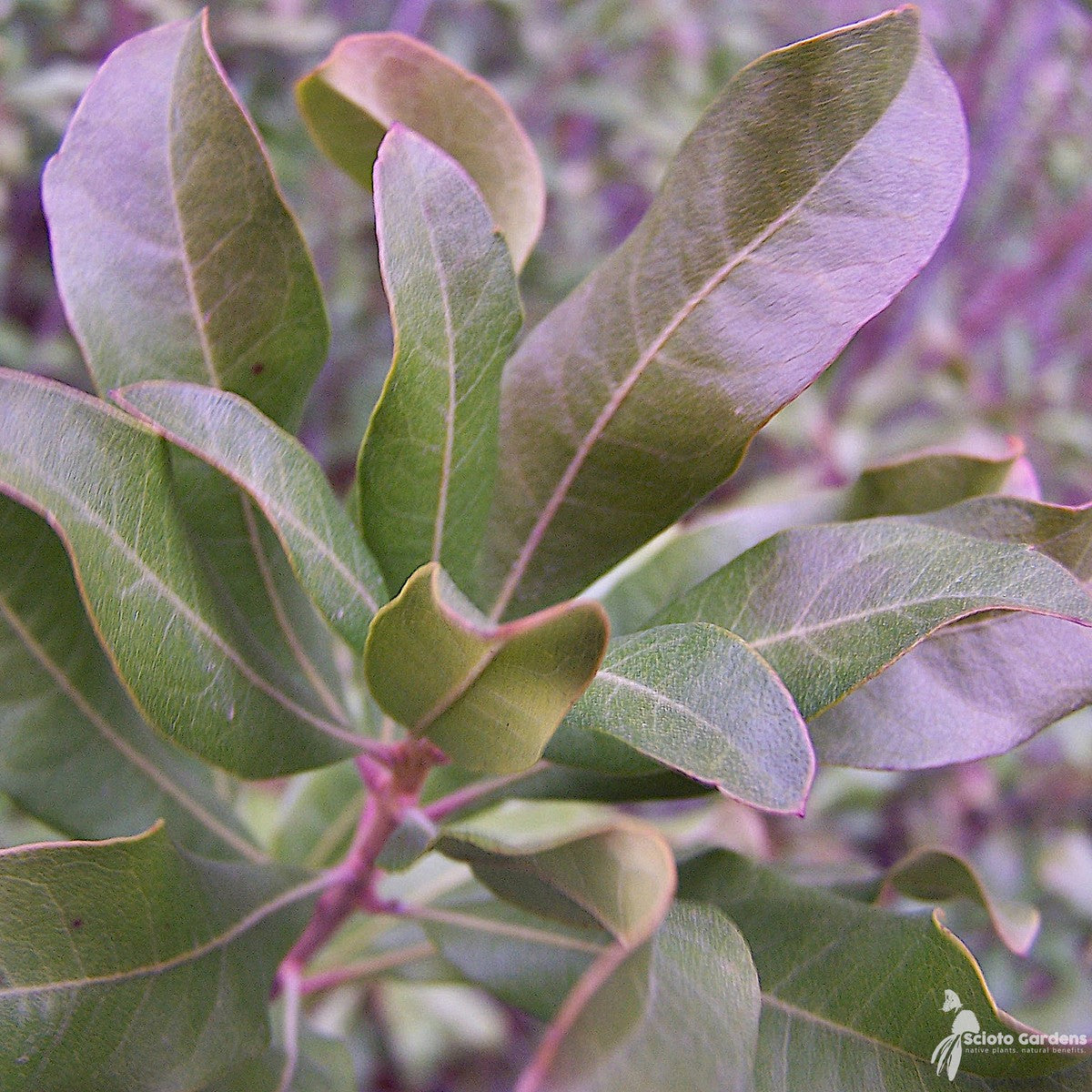
Northern Bayberries are dioecious, with male and female reproductive parts on separate individuals. Both a male and a female plant must be in proximity of each other for fruiting to occur, and cross-pollination is achieved by the wind. The flowers are inconspicuous, and blooming takes place in early spring with the emerging gray-green, lustrous, leathery leaves. The foliage is wonderfully aromatic when crushed, and reluctantly deciduous, often hanging on the plants into the winter. The leaves can be used as a seasoning, just like the culinary Bay Leaves from the store, or as a delicious, aromatic, dry-roasted tea substitute.
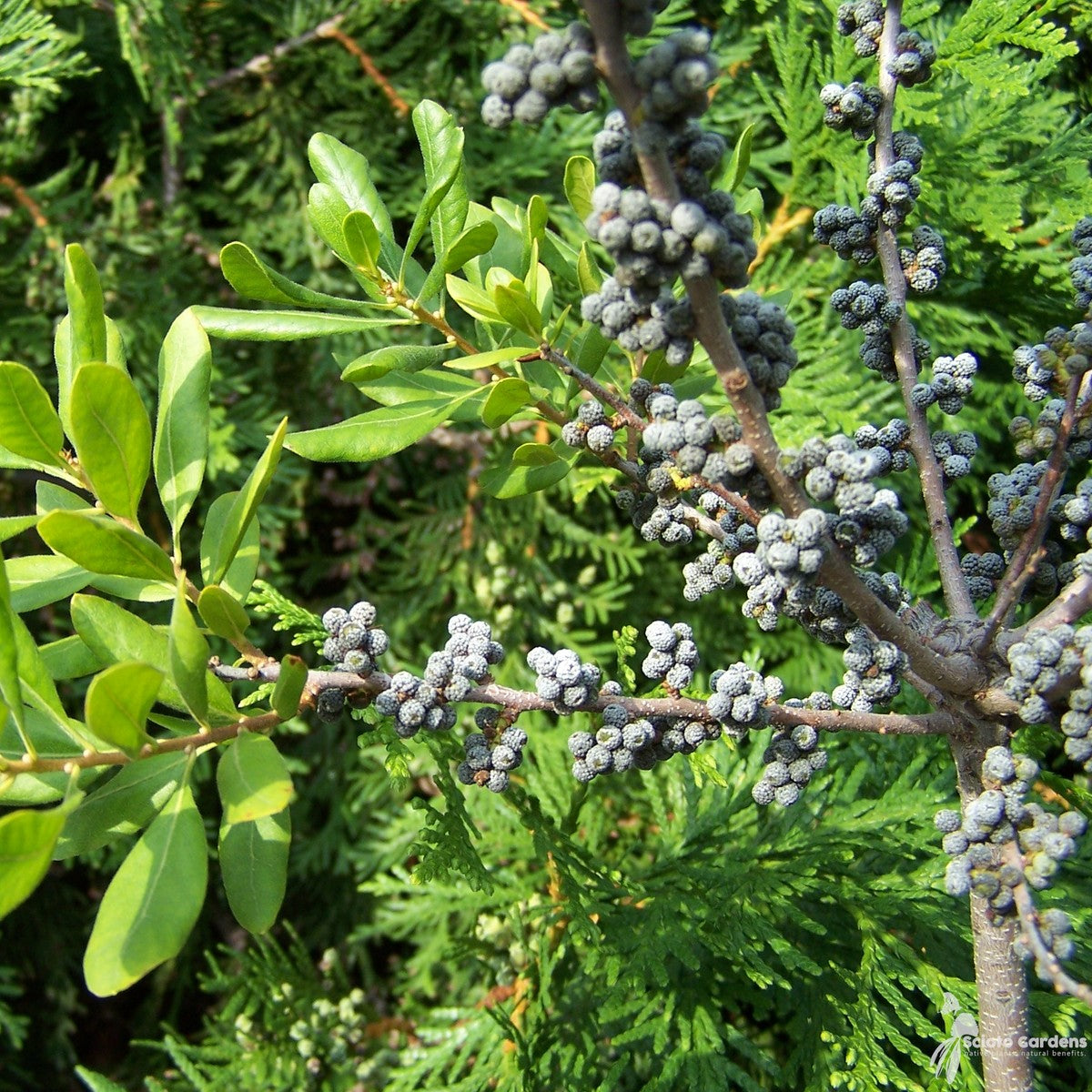
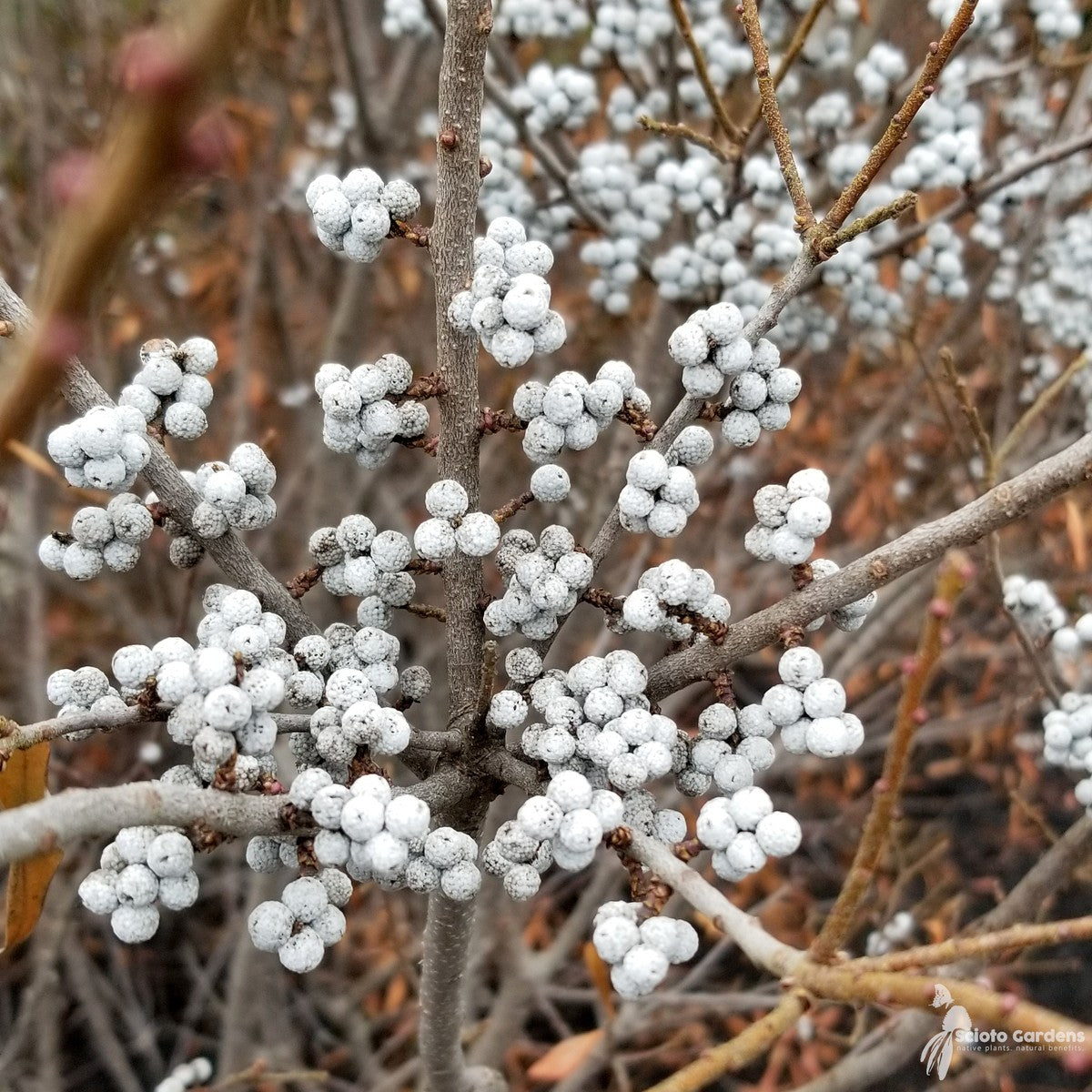
Pollinated female plants will develop waxy, blue-gray fruits (drupes) up and down the previous season’s twigs and persist throughout the winter or until eaten. These fruits are 50.3% fat and are an incredibly important food source for migrating and overwintering birds. More than 85 bird species* eat the berries, especially Yellow-rumped Warblers and Tree Swallows. The resinous, aromatic wax of the fruits has long been used in candle-making.
Sources:
Native Trees, Shrubs, & Vines by William Cullina
Manual of Woody Landscape Plants by Michael A. Dirr
*Midwestern Native Shrubs and Trees by Charlotte Adelman & Bernard L. Schwartz
Eastern/Central Medicinal Plants and Herbs by Steven Foster and James A. Duke
Peterson Field Guide to Edible Wild Plants Eastern/Central North America by Lee Allen Peterson
Missouri Botanical Garden
Lady Bird Johnson Wildflower Center
The Morton Arboretum
