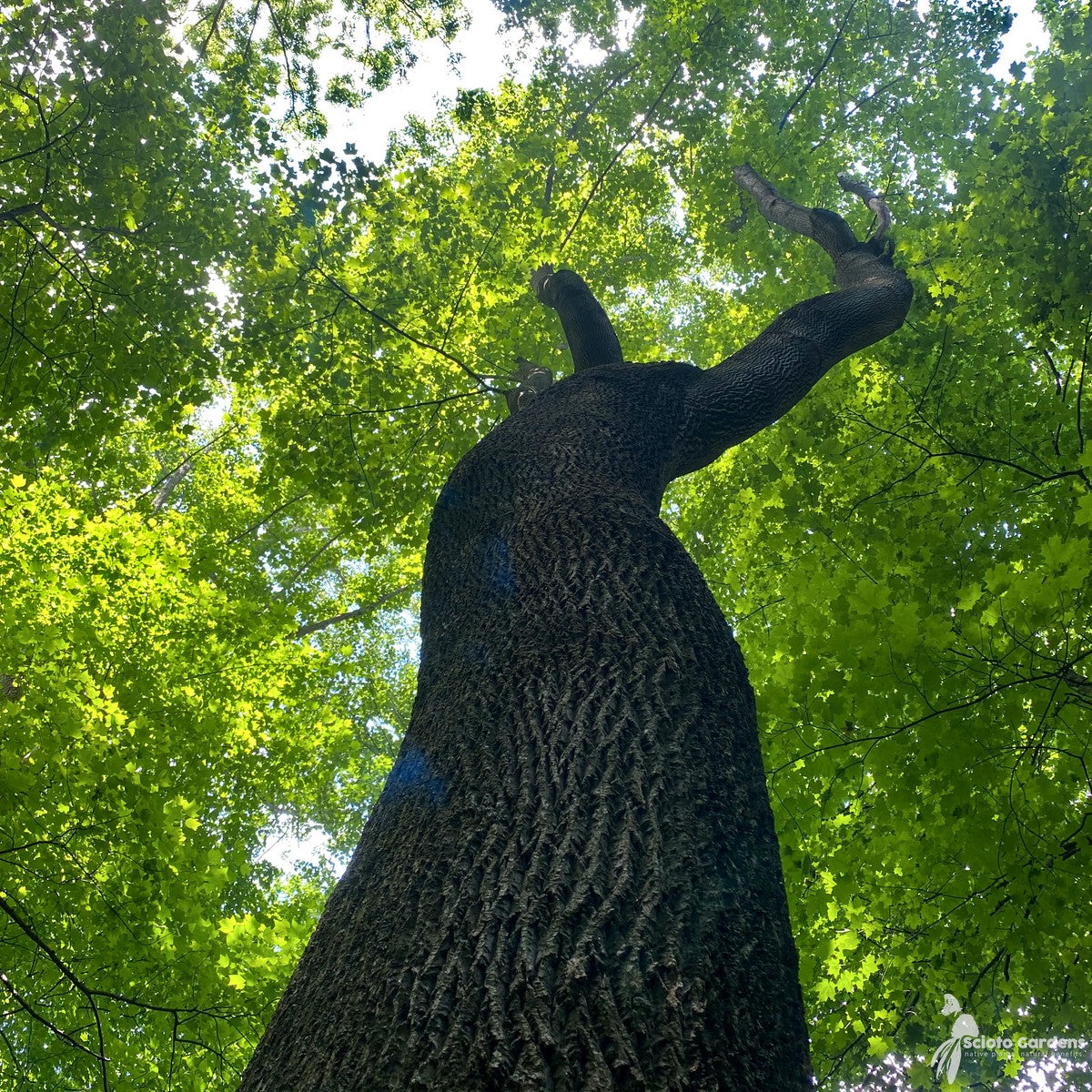
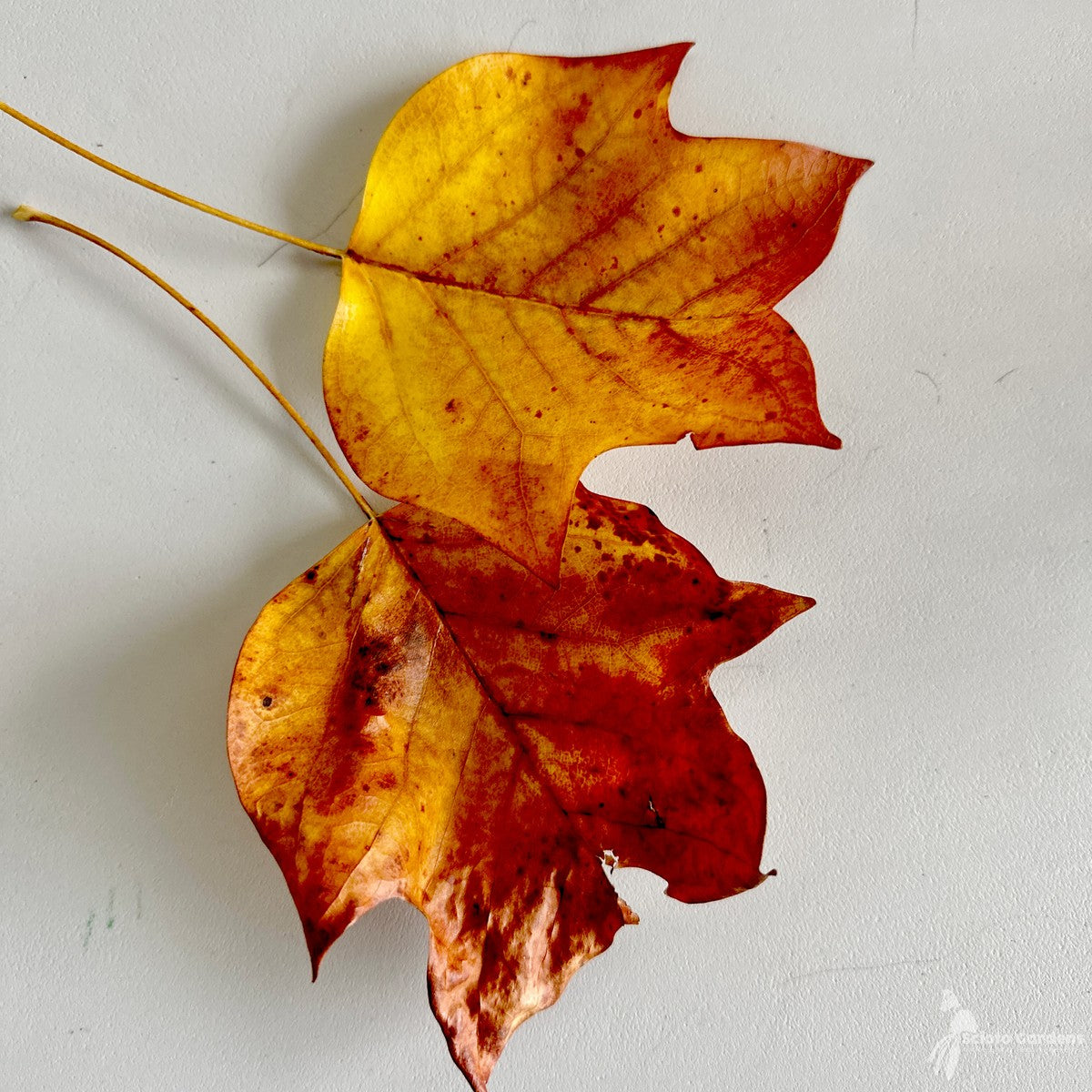
Tulip Tree, also called Tulip Poplar (though it is not a true poplar), is the tallest native hardwood tree in North America. It is also the state tree of Indiana, Kentucky and Tennessee! It is a stately tree indeed, with a fast growth rate of 16-20' in height in only a six to eight year period. It has a densely pyramidal growth habit in youth, often rounding out to a more oval-shaped crown at maturity. These towering giants are not suitable for small yards or near houses, as they tend to have rather brittle wood that can break in wind and ice storms. It is best planted in deep, fertile, moist soil in full sun. Since this is such a large and magnificent tree, it is easy to appreciate when given ample space to grow. The foliage turns a brilliant yellow for several weeks in fall before the leaves drop.
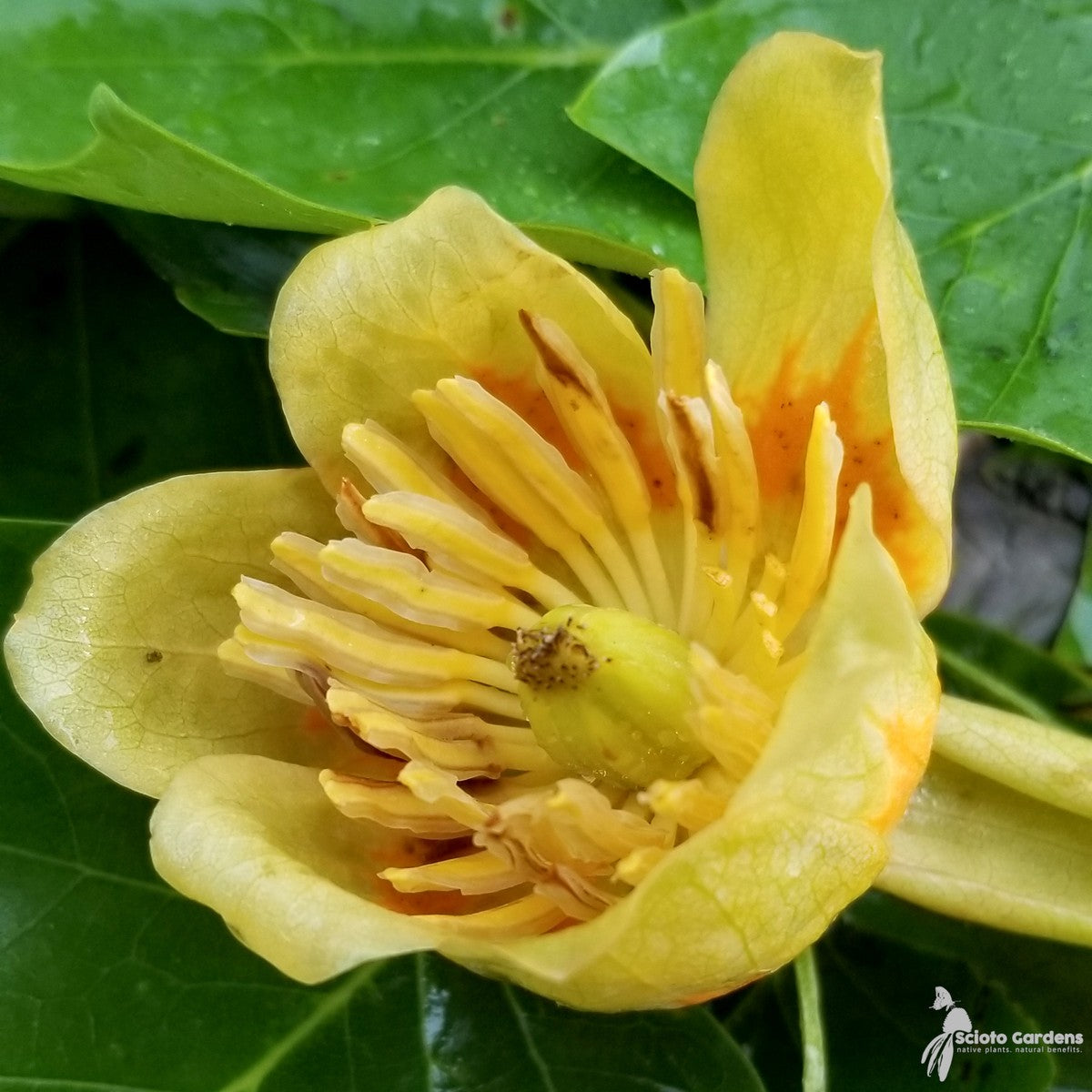
Tulip Tree gets its most commonly used name from the gorgeous 3" wide, tulip-shaped flowers it bears in late spring. They are greenish-yellow with a fiery orange interior, very showy but elusive because they are high up in the trees and easy to miss if you’re not looking for them. Many insects are attracted to the flowers for nectar and pollen, while Baltimore Orioles and Ruby-Throated Hummingbirds have also been known to visit. It is host to 21 species* of Lepidoptera, including the beautiful Tuliptree Silkmoth, Promethea Silkmoth, Tulip-tree Beauty and the Eastern Tiger Swallowtail butterfly. The seeds are eaten by many species of birds, as well as red, gray and fox squirrels.
Sources:
Native Trees, Shrubs, & Vines by William Cullina
Manual of Woody Landscape Plants by Michael A. Dirr
*Midwestern Native Shrubs and Trees by Charlotte Adelman & Bernard L. Schwartz
Missouri Botanical Garden
Lady Bird Johnson Wildflower Center
Illinois Wildflowers
The Morton Arboretum-Black Walnut Tolerance


Limited Time Offer:
0
days
0
hours
0
mins
0
secs
Liriodendron tulipifera (Tulip Tree) - QT
Tulip Tree

Plant Care & Installation Quick-Guide
Proper acclimation and installation are key to your plant's success. Please cross-reference these tips with your plant's specific ID tags:
·
Pre-Planting: Store plants in a light-appropriate area on soil or grass (avoid hot concrete or asphalt) and water daily until the soil is saturated and the pot feels heavy. If temperatures drop below 30°F, move pots to a garage or cover them to prevent root freeze.
·
Installation: Dig a hole matching the depth of the pot, remove the fabric container, and ensure the plant’s crown or root flare is level with the ground. Fill gaps with soil, water heavily, and apply 2 inches of mulch—keeping it clear of the stem.
·
Ongoing Care: Check moisture daily by feeling 1–2 inches into the soil; water deeply at the base if the soil feels dry or warm. Newly installed plants require frequent watering (up to 3–4 times weekly in heat) until fully established, which can take a few months for perennials and up to two years for trees.