


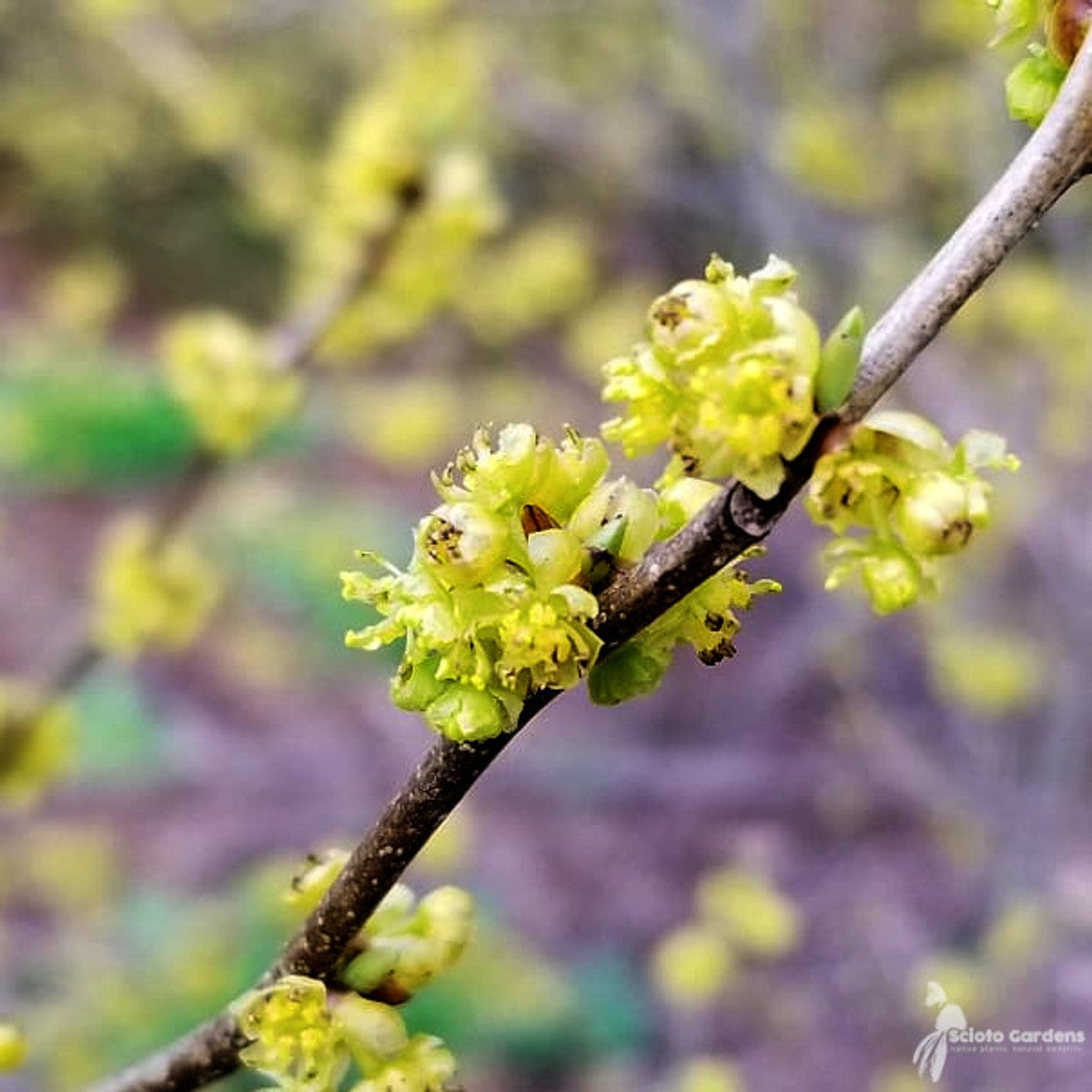
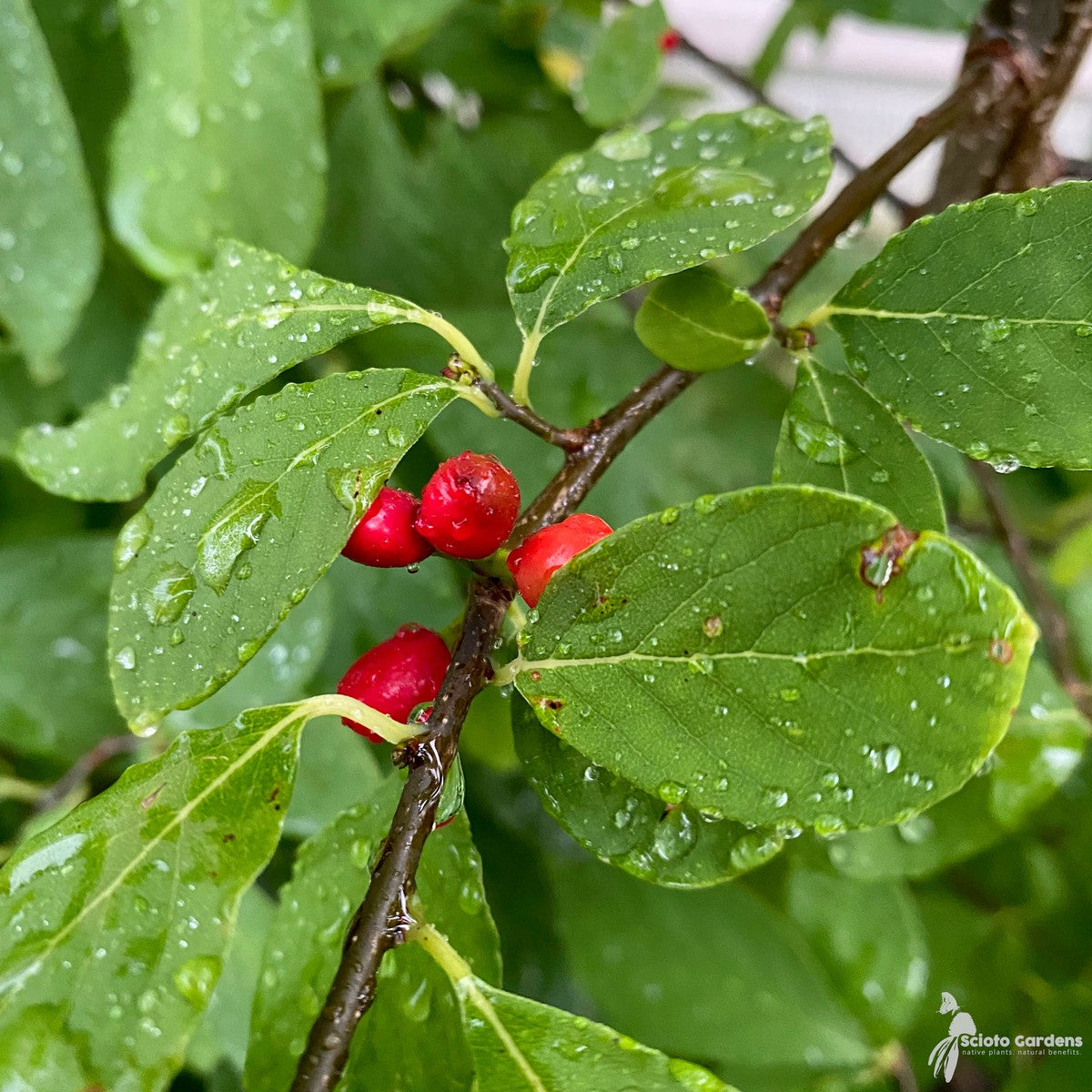
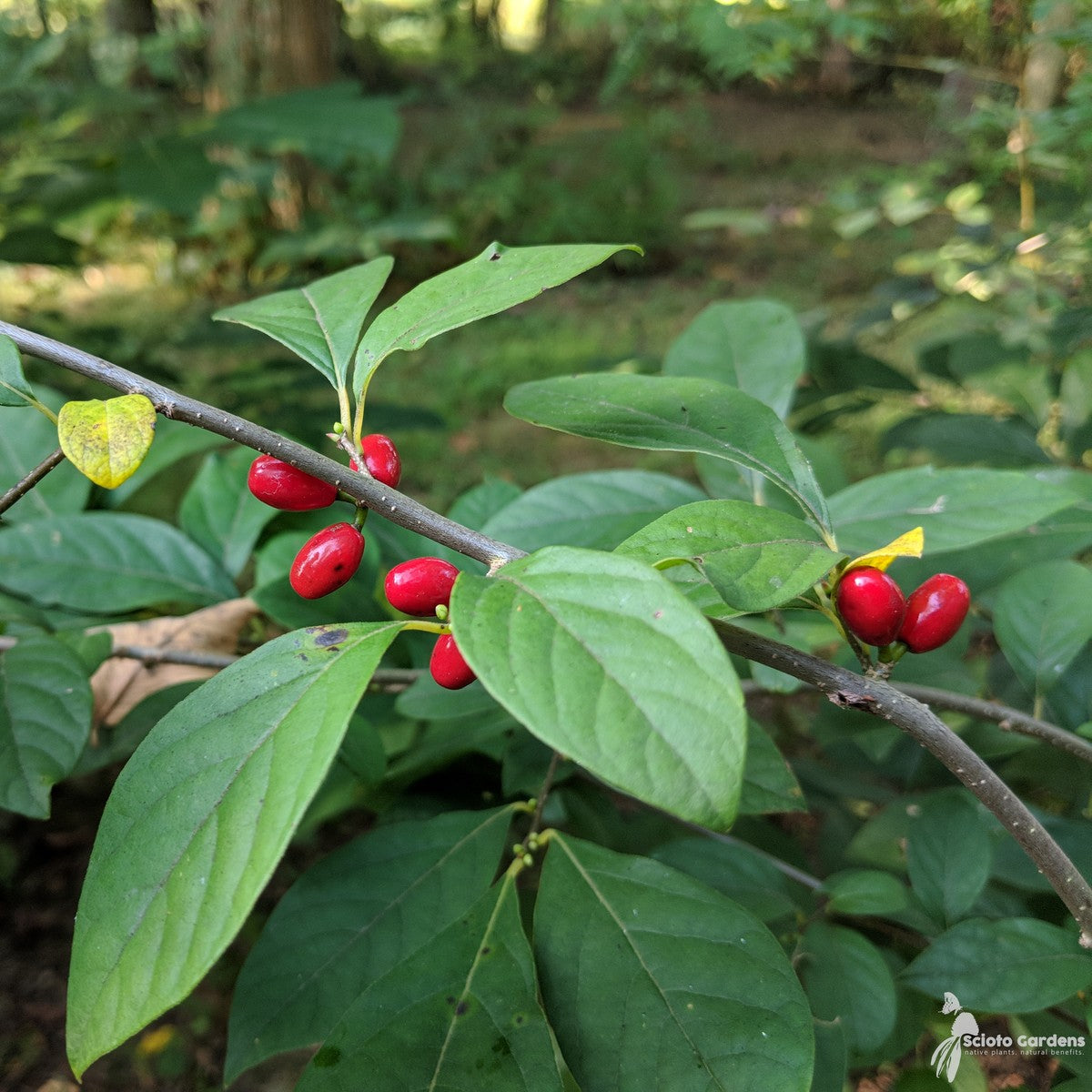
Spicebush is an invaluable, shade-tolerant, deer-resistant understory shrub native to most of the eastern half of North America. It grows in a loose, rounded, and somewhat open multi-stemmed form in shady conditions, but can develop into a densely broad and round shape in sunnier sites. It is quite adaptable to most soil types, but prefers fertile, moist, well-draining loam where it can get a few hours of dappled sunlight each day. It will tolerate drier shade conditions with a reduced growth rate and flowering. Flowering occurs in early spring before the foliage emerges and lasts for about two weeks. The dainty, lightly fragrant flower clusters outline the branches with a soft yellow haze, leading this shrub to be referred to as the “forsythia of the wilds.” The small, oval-shaped, dusky blue-green leaves begin to grow out after flowering and droop attractively from the twigs. The entire shrub turns a brilliant yellow in fall that announces the arrival of the season. The contrast of the gorgeous, golden foliage and the scarlet red berries makes this an unbeatable ornamental for the shade garden.
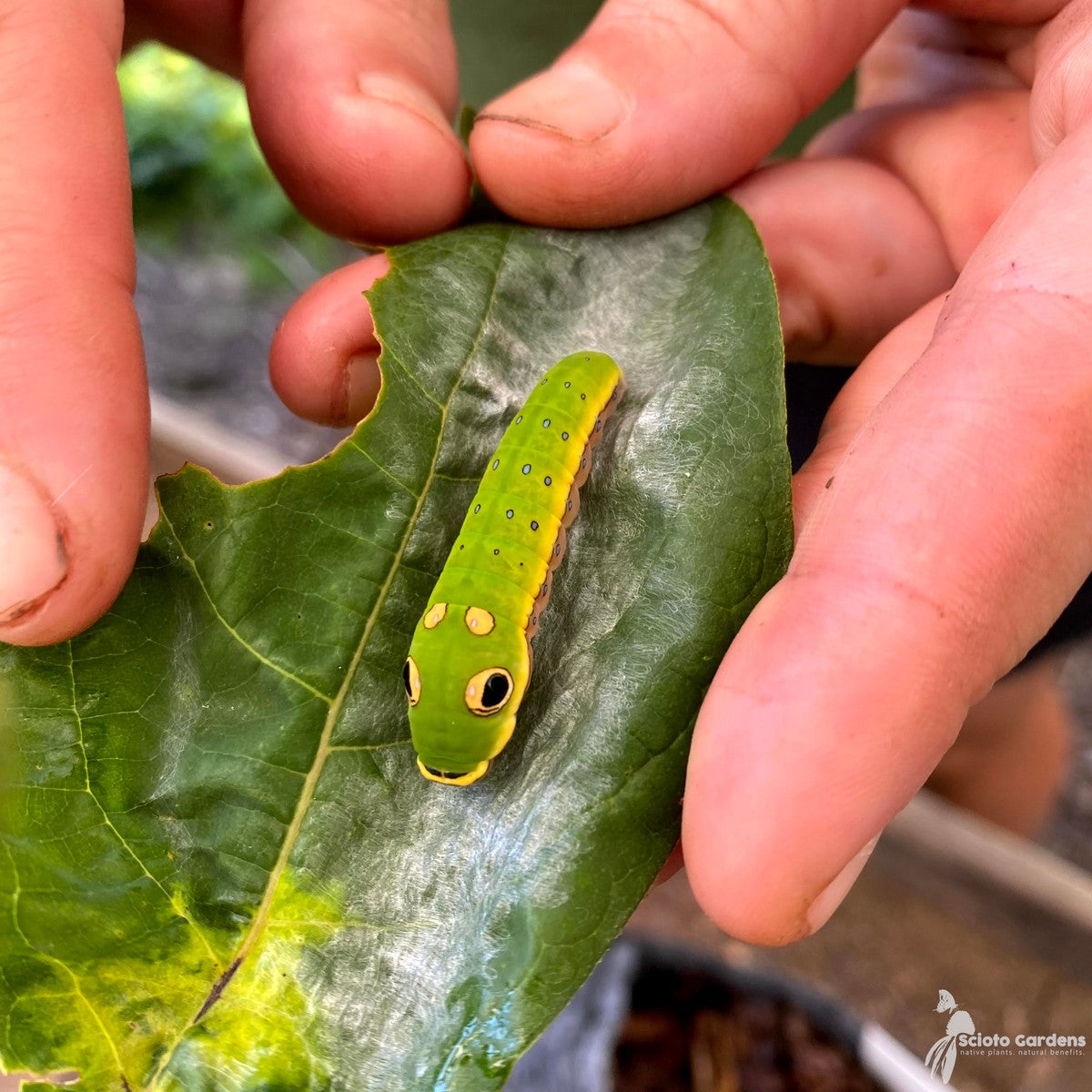
These plants are dioecious, meaning male and female reproductive organs are on separate individuals. Both sexes are required for fruit production. Cross-pollination is accomplished by numerous insects, primarily small bees. Spicebush is host to at least 10 species of Lepidoptera, including the enchanting specialist Spicebush Swallowtail butterfly and the majestic Promethea Silkmoth. The alluring, bright red fruits (drupes) are very quickly devoured by woodland songbirds. They are highly nutritious, protein-rich, and have a 33.2% fat content, making them an important food source for migrating warblers.
Spicebush has long been used for culinary and medicinal purposes. The dried berries make a uniquely delicious local substitute for allspice. A pleasantly aromatic, warming tea can be made from steeping the dried, fragrant leaves and young twigs in hot water for 15 minutes.
Sources:
Native Trees, Shrubs, & Vines by William Cullina
Manual of Woody Landscape Plants by Michael A. Dirr
Midwestern Native Shrubs and Trees by Charlotte Adelman & Bernard L. Schwartz
Eastern/Central Medicinal Plants and Herbs by Steven Foster and James A. Duke
Peterson Field Guide to Edible Wild Plants Eastern/Central North America by Lee Allen Peterson
Missouri Botanical Garden
Lady Bird Johnson Wildflower Center
Illinois Wildflowers
Mt Cuba Center
