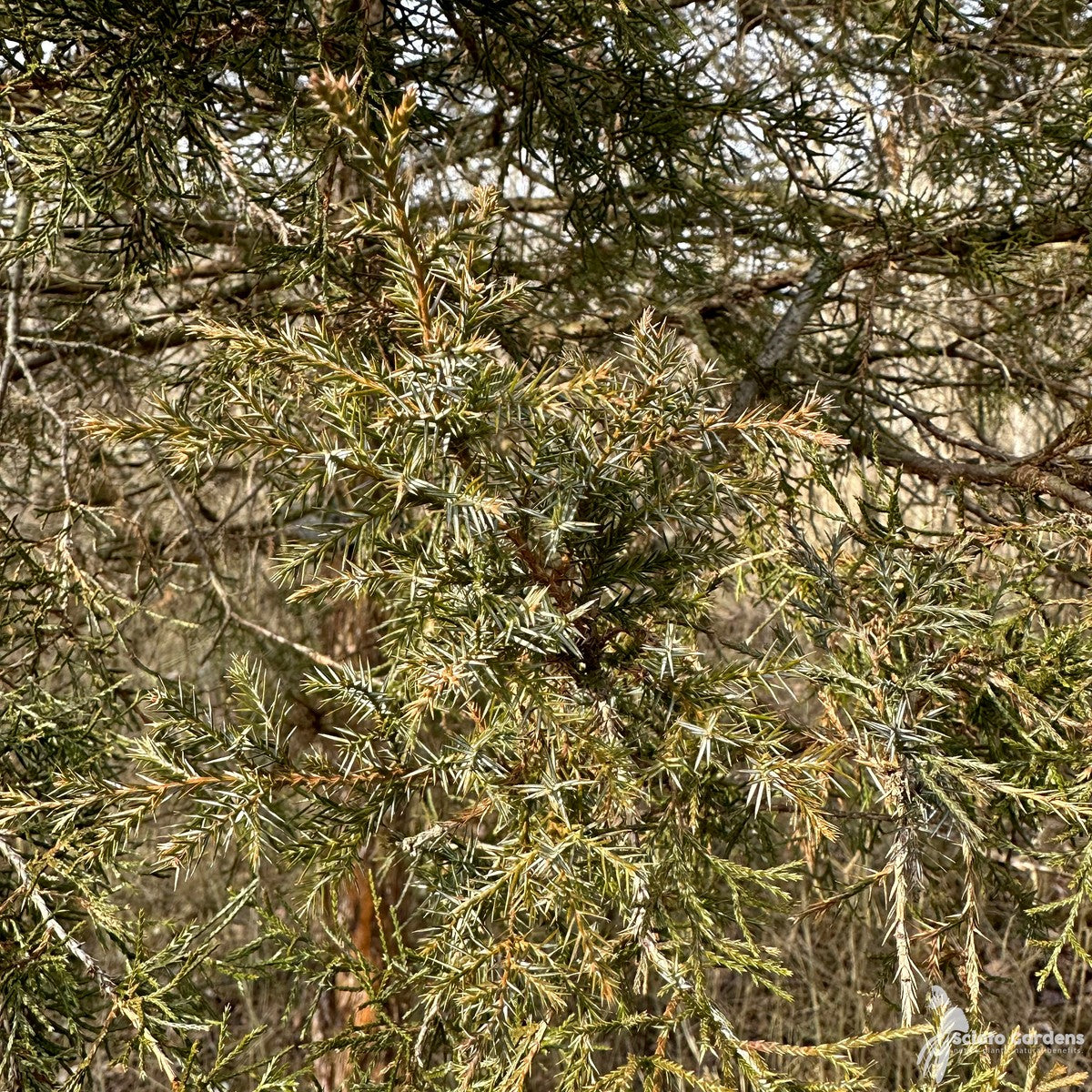
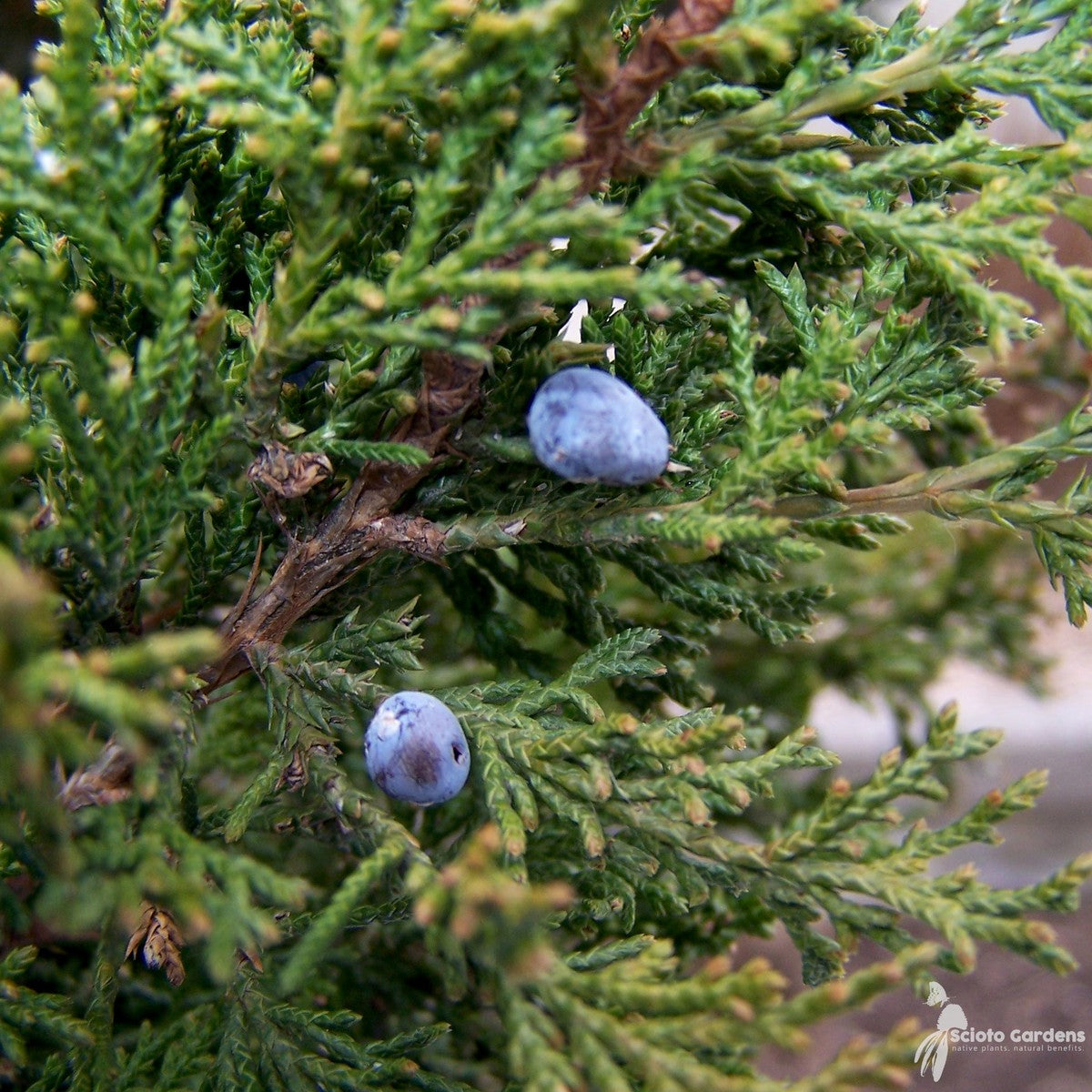
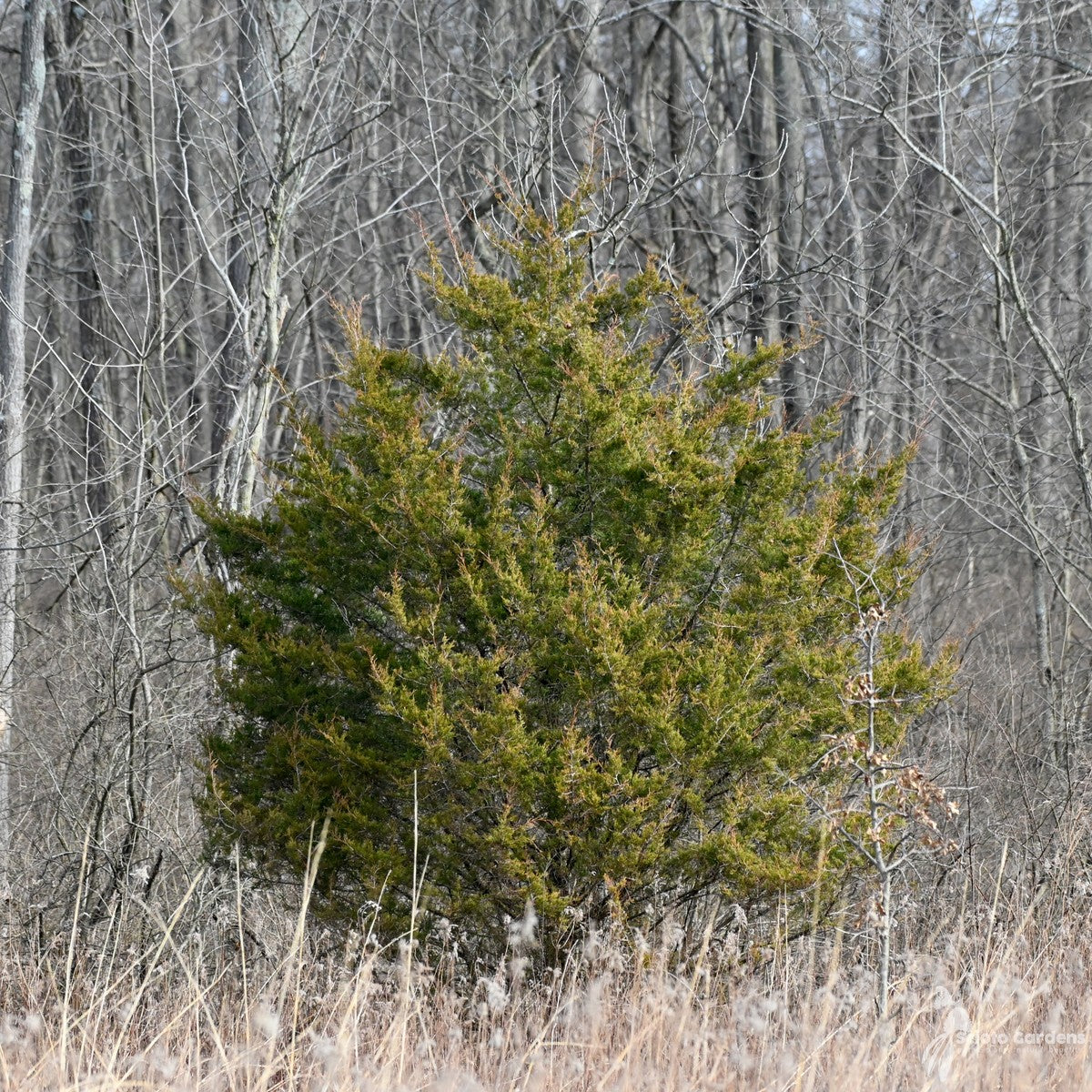
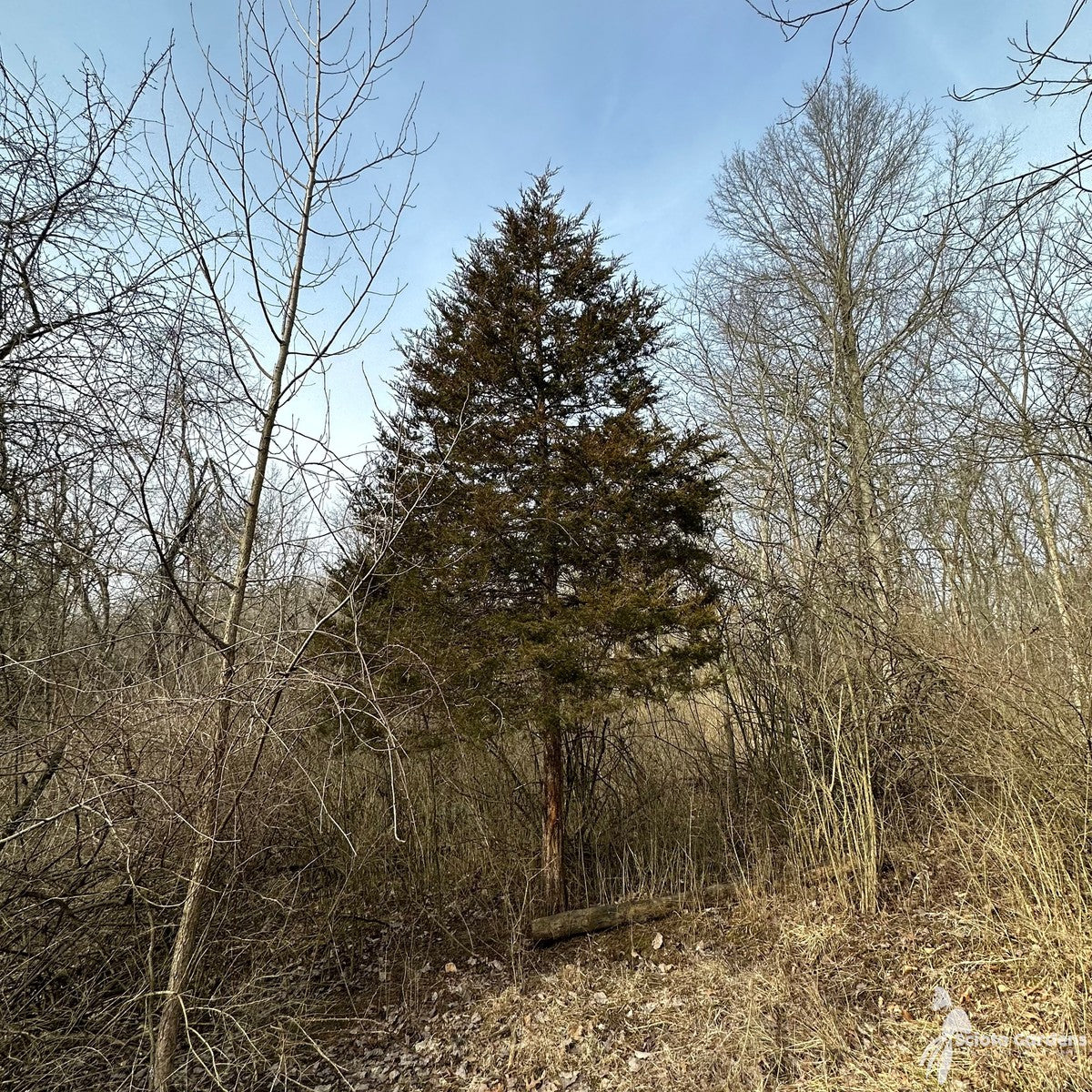
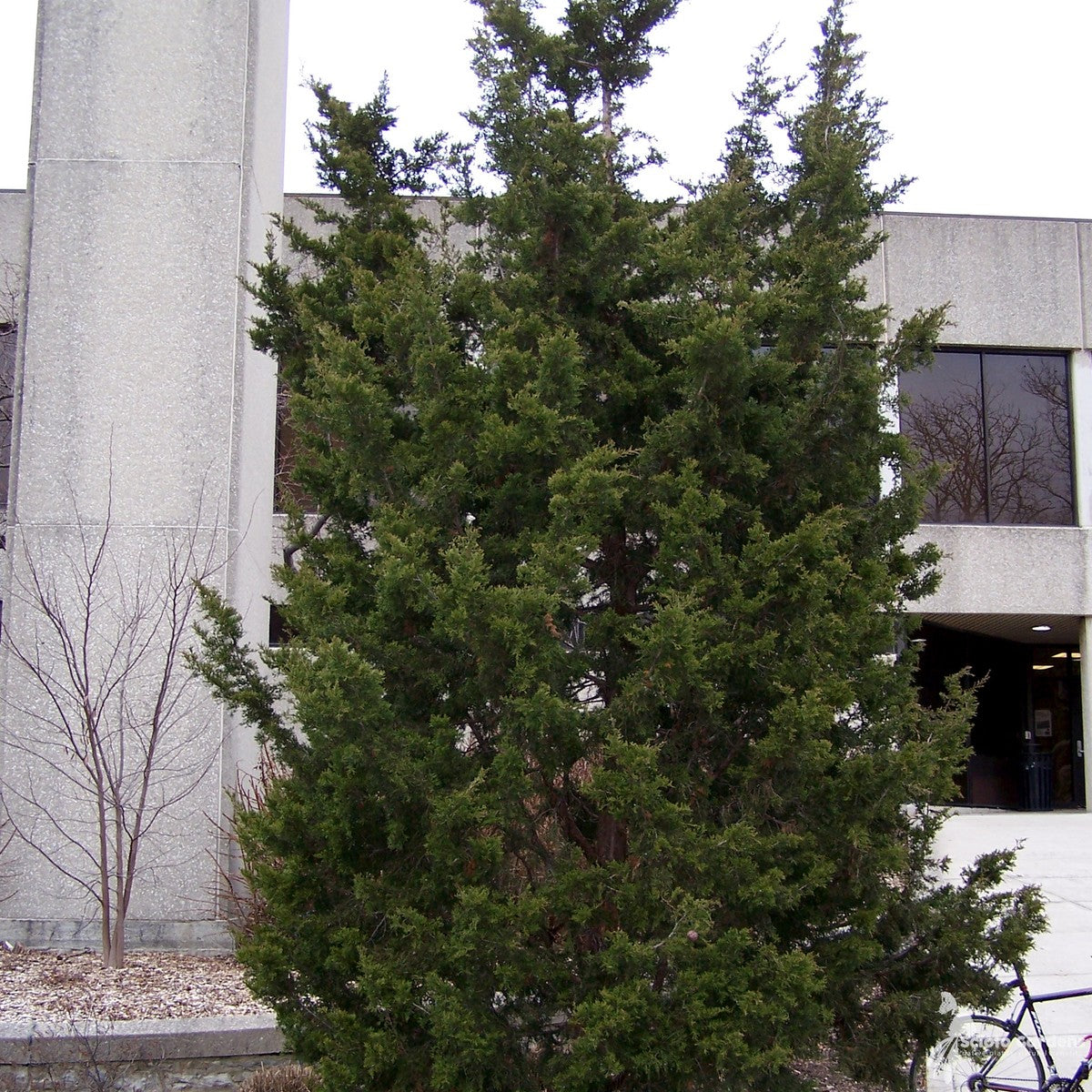
Eastern Red Cedar is a rugged, durable, medium-sized native evergreen tree, usually with a single trunk and a densely pyramidal growth habit. They are dioecious trees, with females producing the “berries” (actually cones) which are an important and popular winter food for at least 54 species* of birds, as well as other small mammals. The cones of Juniperus spp. are so beloved by Cedar Waxwings that they were named for them! The dense cover of the foliage provides much needed shelter and nesting sites for many wild creatures, and is often a preferred roosting spot for Great Horned Owls. It also supports at least 43 species** of Lepidoptera.
This tree is adaptable to most site conditions, thriving on poor, dry soils and tolerating urban air pollution, areas prone to road salt runoff, deer pressure and windy locations. William Cullina writes that this tree is “as close to fool-proof as a living plant can be (just remember “green side up,” and they should be okay).” They are very useful for screening, hedging, windbreaks, shelterbelts, and easy-going specimen plants.
Juniperus spp. are the alternate host for Cedar-Apple Rust and it is best not to plant them near Apple, Crabapple or Hawthorn trees.
Sources:
Native Trees, Shrubs, & Vines by William Cullina
Manual of Woody Landscape Plants by Michael A. Dirr
**Midwestern Native Shrubs and Trees by Charlotte Adelman & Bernard L. Schwartz
*Gardening for the Birds by George Adams
Missouri Botanical Garden
Lady Bird Johnson Wildflower Center
Illinois Wildflowers
Grow Native! Salt-Tolerant Native Plants


Limited Time Offer:
0
days
0
hours
0
mins
0
secs
Juniperus virginiana (Eastern Red Cedar) - 3 gal
Eastern Red Cedar

Plant Care & Installation Quick-Guide
Proper acclimation and installation are key to your plant's success. Please cross-reference these tips with your plant's specific ID tags:
·
Pre-Planting: Store plants in a light-appropriate area on soil or grass (avoid hot concrete or asphalt) and water daily until the soil is saturated and the pot feels heavy. If temperatures drop below 30°F, move pots to a garage or cover them to prevent root freeze.
·
Installation: Dig a hole matching the depth of the pot, remove the fabric container, and ensure the plant’s crown or root flare is level with the ground. Fill gaps with soil, water heavily, and apply 2 inches of mulch—keeping it clear of the stem.
·
Ongoing Care: Check moisture daily by feeling 1–2 inches into the soil; water deeply at the base if the soil feels dry or warm. Newly installed plants require frequent watering (up to 3–4 times weekly in heat) until fully established, which can take a few months for perennials and up to two years for trees.