


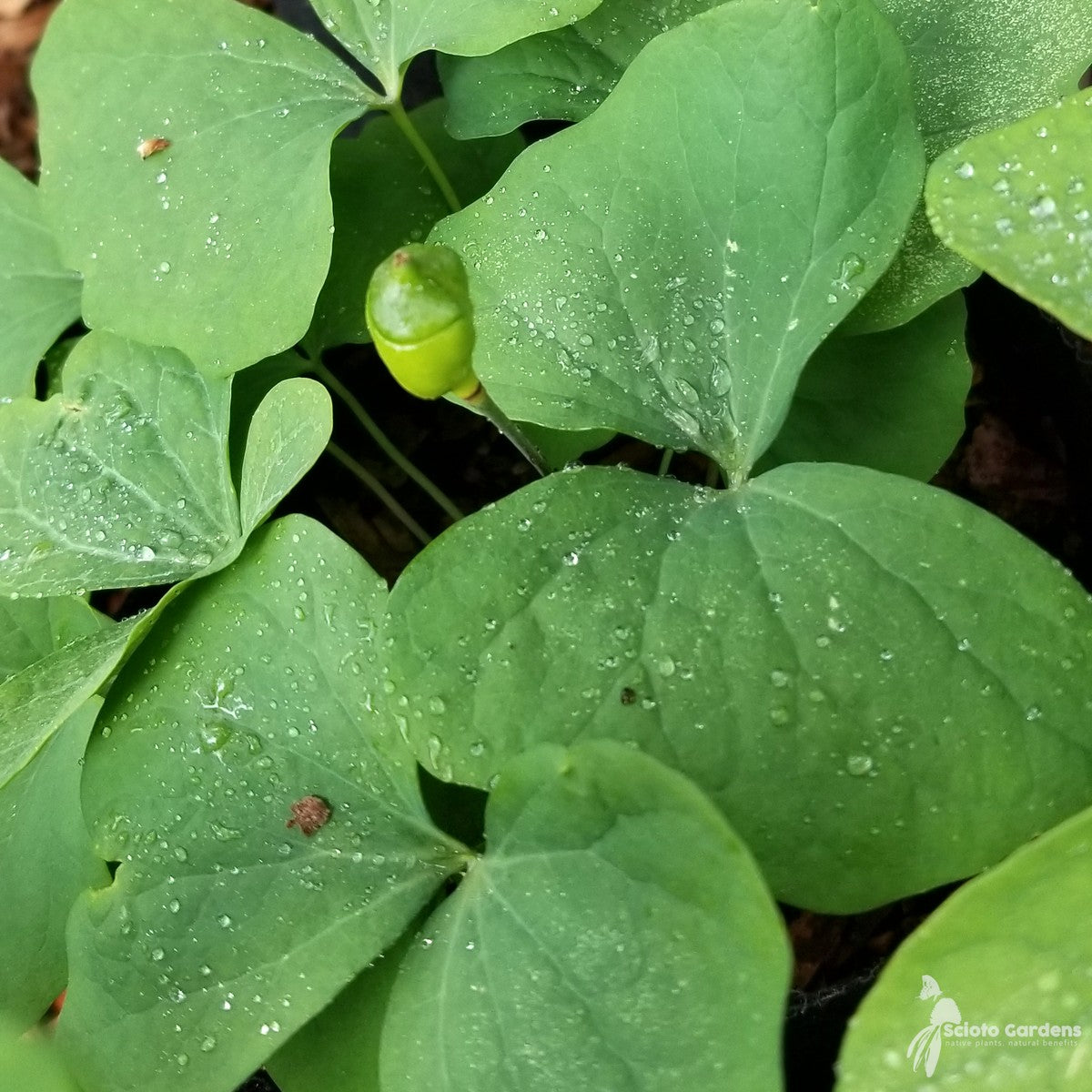
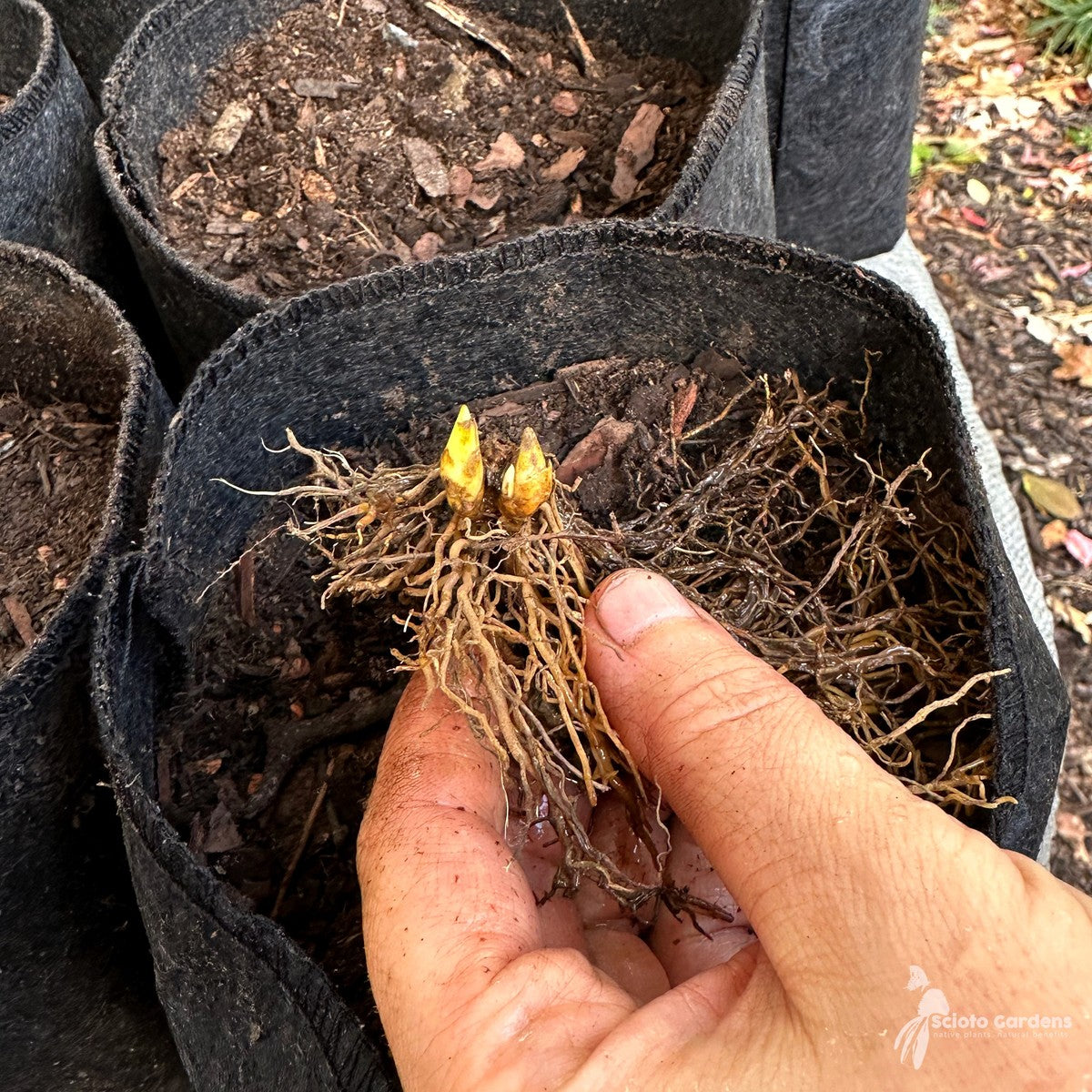
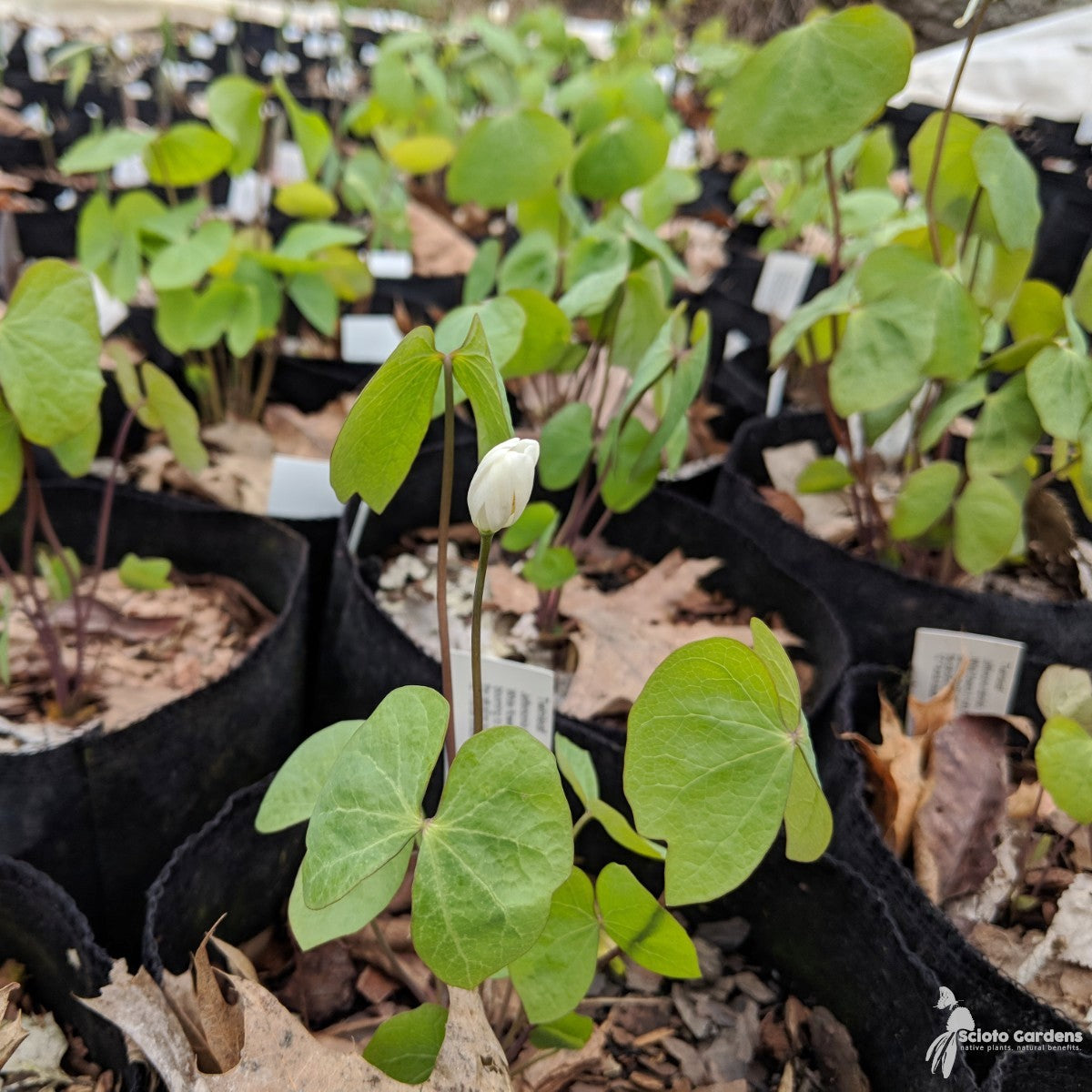
Twinleaf is a distinctive, bold-textured, native woodland wildflower. The twin kidney-shaped leaves emerge in earliest spring a dusky purple color before they unfurl and turn bright green. A single snow-white, star-like flower rises on a leafless stalk before the leaves reach their full size. The flower only lasts a day or two before the petals fall off, but a unique and alluring seed pod develops: an urn-shaped capsule with a hinged lid that holds the seeds until ripe. Once fully ripened, the lid pops open and the seeds spill out, soon to be carried off by ants. They take them back to their nests to eat the fleshy appendage attached to the seed coat (called elaiosomes). The undamaged seeds are then discarded in their midden heaps, which are a perfectly rich and protected substrate for the seeds to germinate in. This mutualistic interaction helps many spring ephemerals to spread around the landscape, since most of their seeds are too heavy for wind transport and are unviable if they get desiccated.In the wild, Twinleaf is most commonly found in limestone soils in moist, rich woodlands. It prefers a bright spot in spring, but with enough shade to protect it from the summer sun. It is somewhat tolerant of drought conditions once established. Twinleaf may need some extra care in its early years, as it can be out-competed by larger plants.
Sources:
Growing and Propagating Wildflowers by William Cullina
Herbaceous Perennial Plants by Allan M. Armitage
Growing and Propagating Wild Flowers by Harry R. Phillips
Eastern/Central Medicinal Plants and Herbs by Steven Foster and James A. Duke
Missouri Botanical Garden
Lady Bird Johnson Wildflower Center
