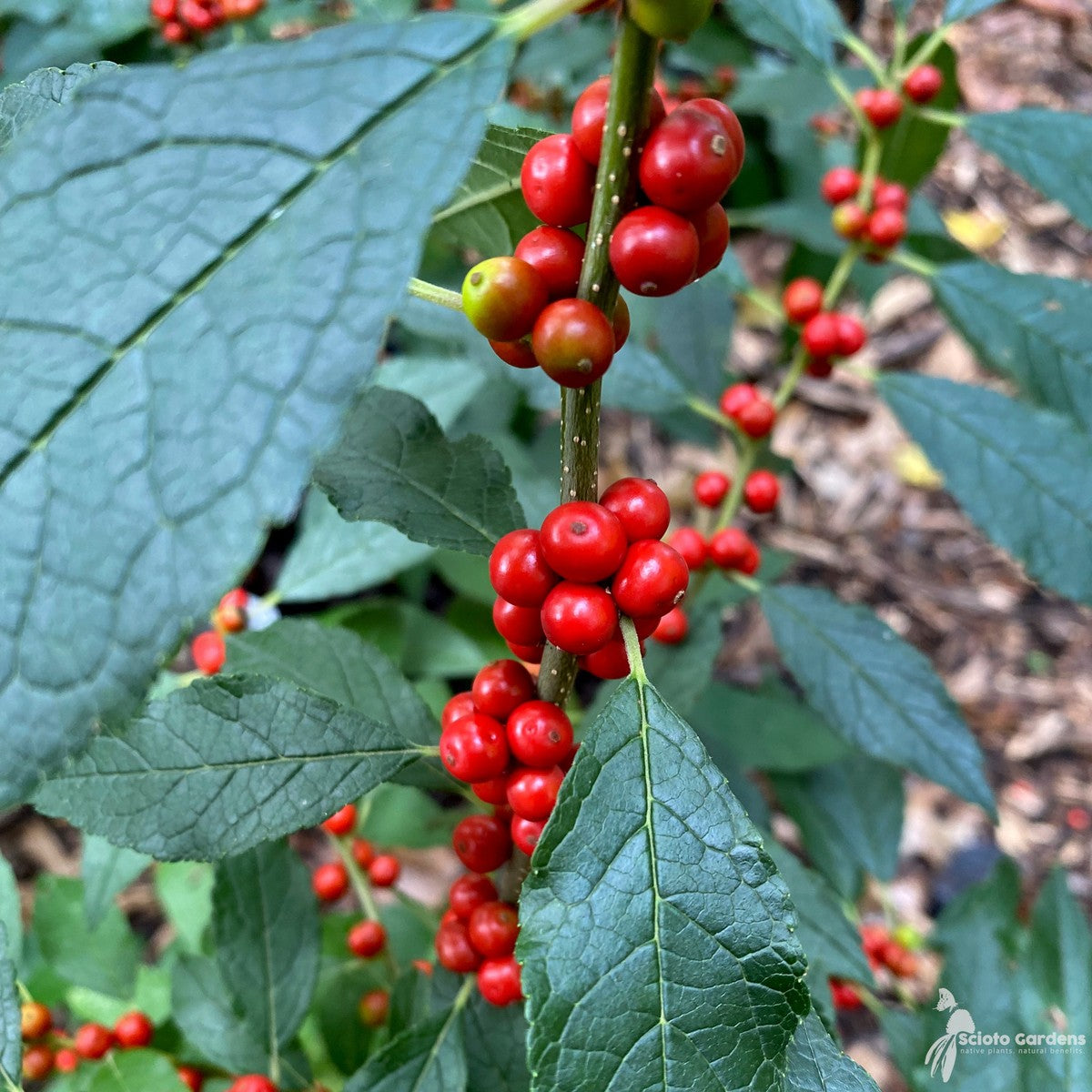
‘Winter Red’ is a cultivated variety of our native female Winterberry Holly (Ilex verticillata). The male pollinator needed for this variety is called ‘Southern Gentlemen’. This selection is more floriferous and fruitful than the straight species, with slightly larger berries (to 3/8") clustered heavily along the twigs. The berries maintain their gorgeous, bright red long into winter, providing a cheerful pop of color in the depths of the season.
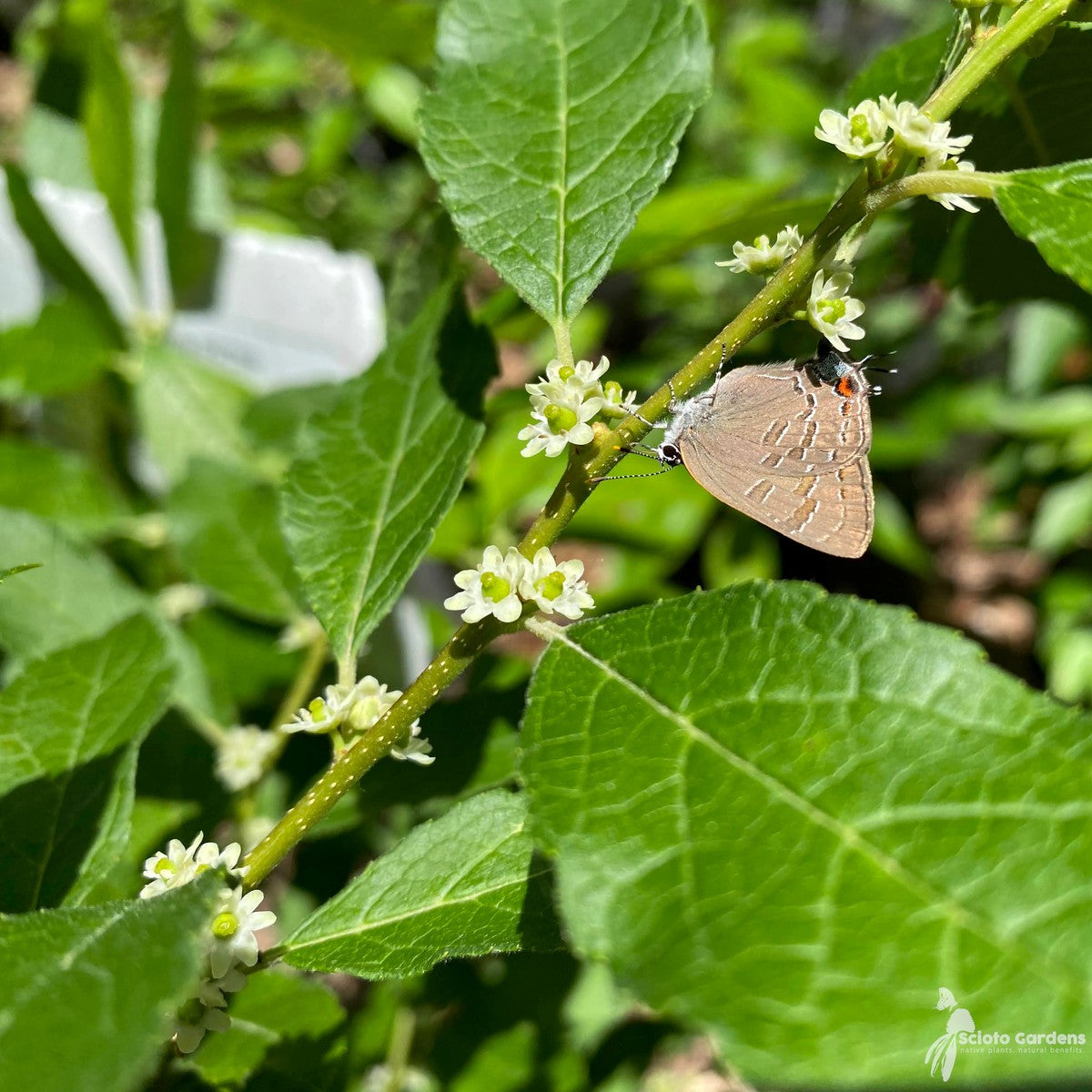
‘Winter Red’ prefers moist, acidic soil in partial to full sun which will produce the best flowering and fruit set. Both sexes are necessary for fruit production, but one male plant will suffice for up to six female plants if they are within reasonable flying distance (50ft) for the bees that cross-pollinate them. They are fairly adaptable to average garden conditions and will perform well in most soils that receive adequate moisture, although chlorosis can be an issue in high pH soils and it will sometimes abort berries in sites that are too dry.
These lovely hollies are a good choice for low or poorly drained areas of the landscape and for planting along damp woodland borders, pond margins and in shrub borders. They are attractive foundation shrubs, and look especially good when planted in groups. The deciduous nature of this species allows the ruby-red berries to shine throughout the winter, adding an unbeatable ornamental effect to any landscape.
*Holly Berries are TOXIC to humans if ingested.
Sources:
Manual of Woody Landscape Plants by Michael A. Dirr
Missouri Botanical Garden
Mt Cuba Center
NC State Extension


Limited Time Offer:
0
days
0
hours
0
mins
0
secs
Ilex verticillata 'Winter Red' (Winter Red' Winterberry Holly) - QT
Winter Red' Winterberry Holly

Plant Care & Installation Quick-Guide
Proper acclimation and installation are key to your plant's success. Please cross-reference these tips with your plant's specific ID tags:
·
Pre-Planting: Store plants in a light-appropriate area on soil or grass (avoid hot concrete or asphalt) and water daily until the soil is saturated and the pot feels heavy. If temperatures drop below 30°F, move pots to a garage or cover them to prevent root freeze.
·
Installation: Dig a hole matching the depth of the pot, remove the fabric container, and ensure the plant’s crown or root flare is level with the ground. Fill gaps with soil, water heavily, and apply 2 inches of mulch—keeping it clear of the stem.
·
Ongoing Care: Check moisture daily by feeling 1–2 inches into the soil; water deeply at the base if the soil feels dry or warm. Newly installed plants require frequent watering (up to 3–4 times weekly in heat) until fully established, which can take a few months for perennials and up to two years for trees.