


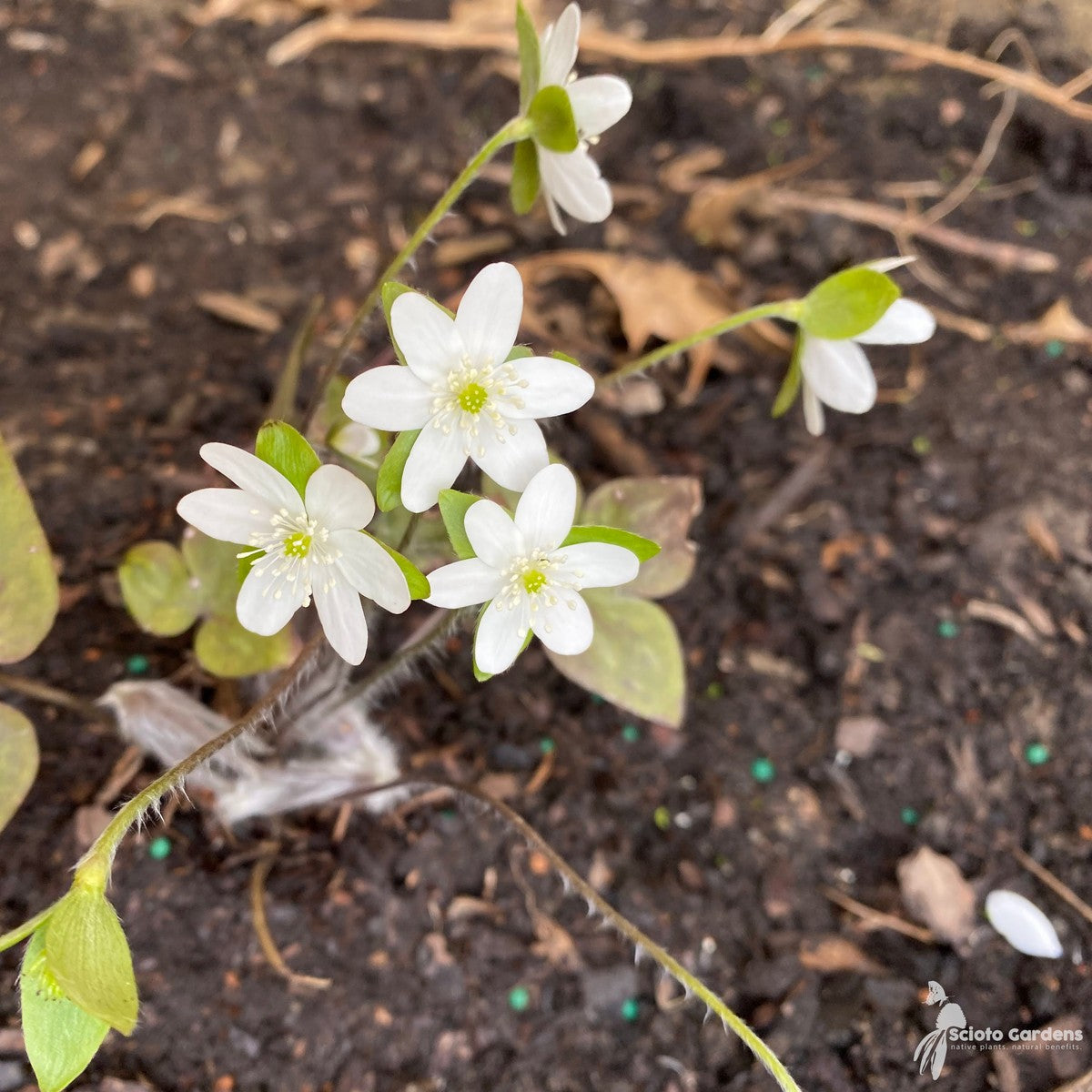
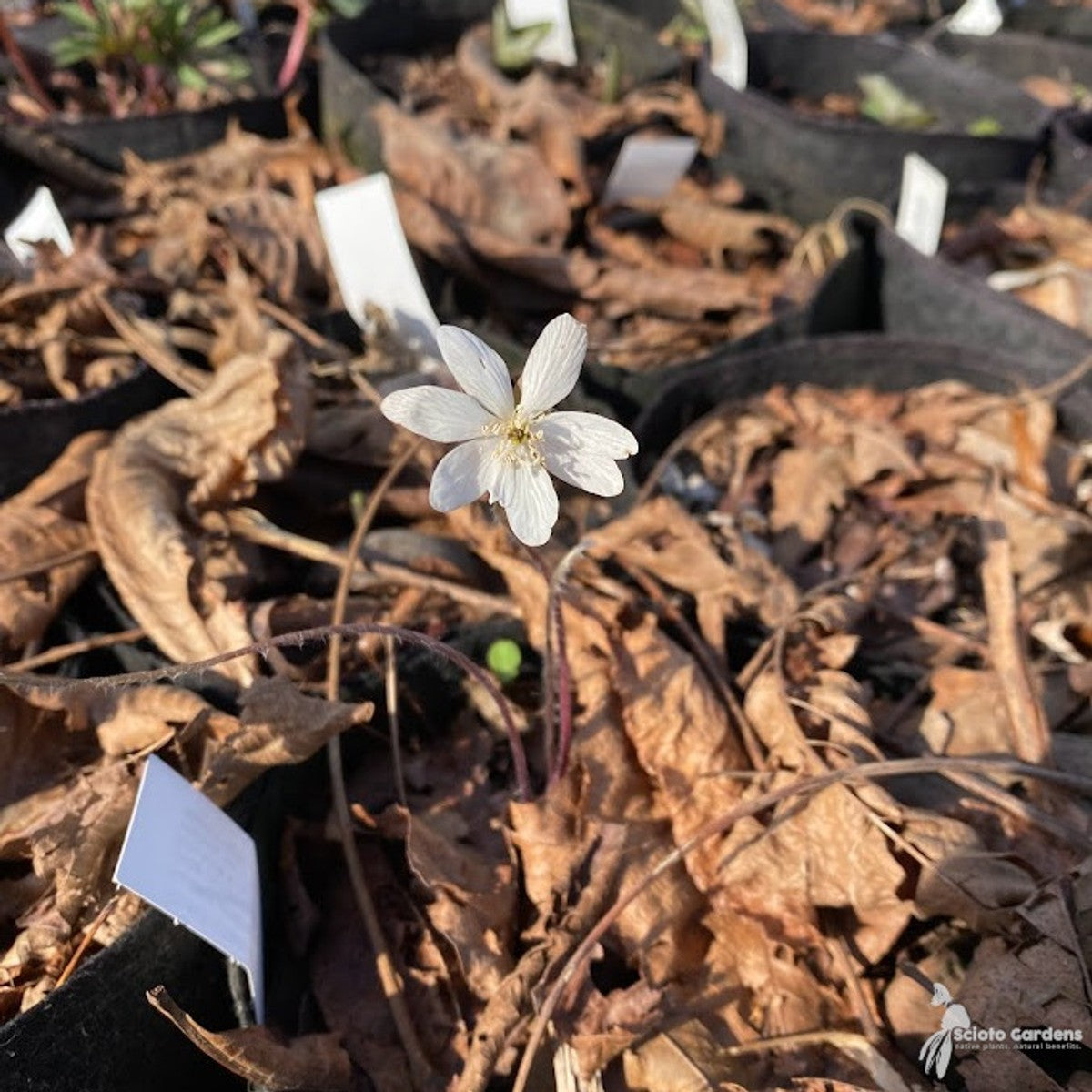
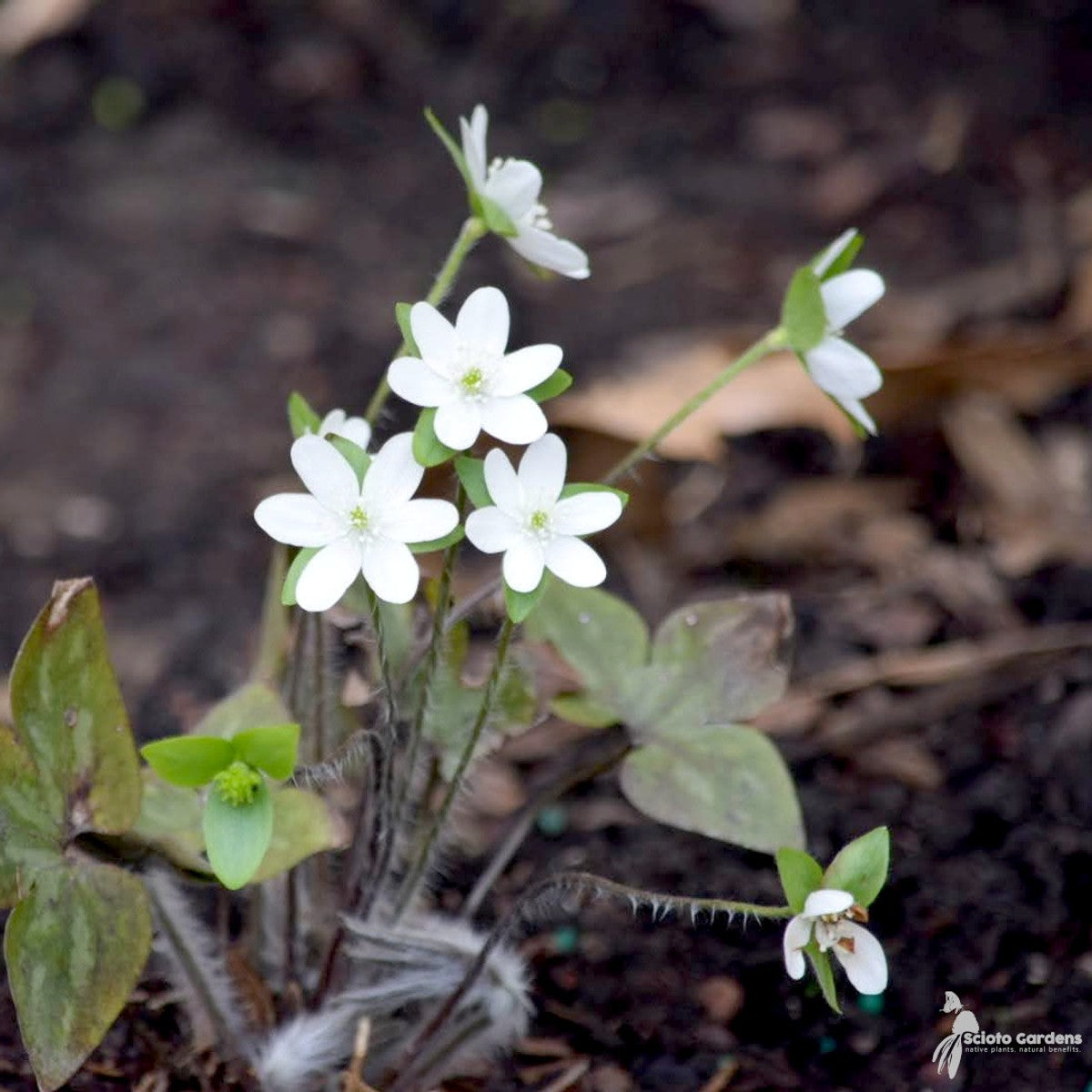
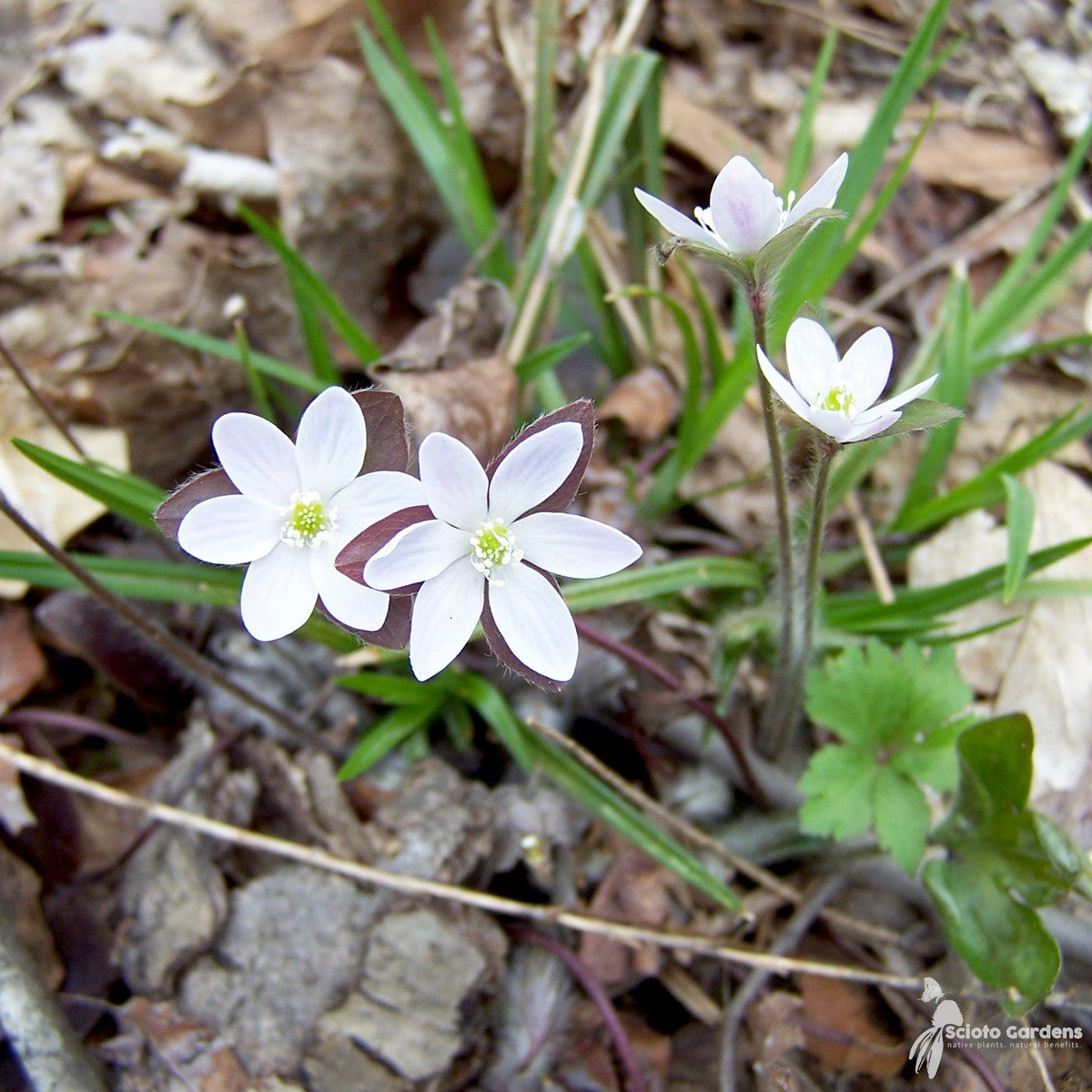
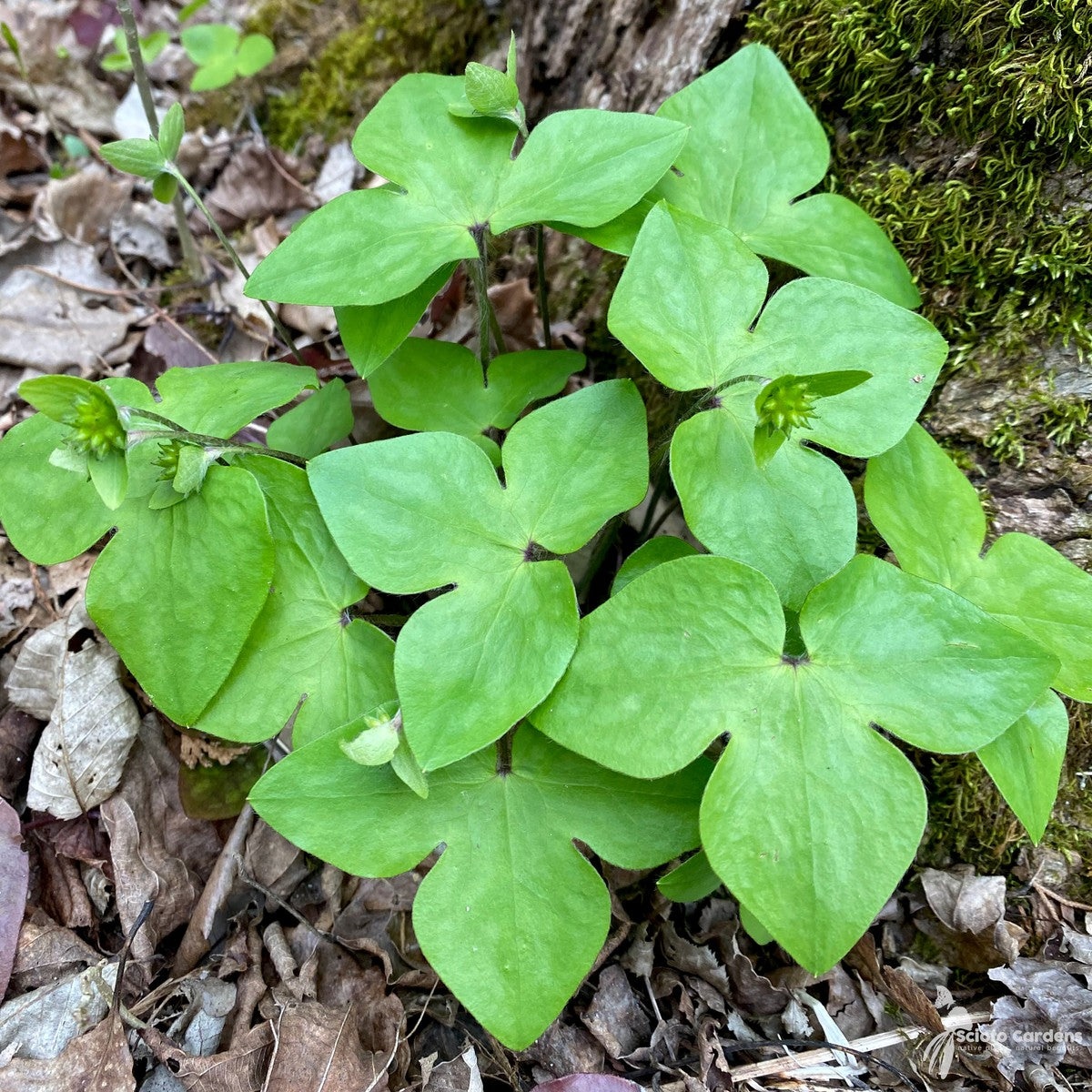
Sharp-lobed Liverleaf is a welcome sight in the early spring with its bright and cheerful white, pink, or violet flowers poking up through the leaves on fuzzy 6-8" tall stems. Last year's leaves are leathery and spent by the time the blossoms emerge, but new leaves fully unfurl by the end of the three-week blooming period. These leaves are mottled and leathery, making them unpalatable to most mammals. They will stick around all season and even through the winter, making this a truly maintenance-free addition to a shady rock garden or in drifts through the woodland garden. In the wild, this unobtrusive little wildflower is found growing in rich woodlands and floodplains, often on limestone. It is easily out-competed by larger plants, so it is best to plant them in an area that they can occupy and be allowed to self-sow and multiply for the best effect. A single old clump can have as many as 40 flowers, looking like a living bouquet! Pollinators are attracted to the blooms, which offer an early source of pollen. Sharp-lobed Liverleaf is thought to have a plethora of medicinal uses. Both its common name and Latin name come from the age-old belief in the Doctrine of Signatures, which states that a plant resembling a condition/body part must be useful in treating the condition/body part. The lobed shape of Hepaticas resemble the human liver, and so it was used to treat liver ailments for much of history. As with any edible or medicinal plant, proper research must be done before use.
Sources:
Growing and Propagating Wildflowers by William Cullina
Herbaceous Perennial Plants by Allan M. Armitage
Eastern/Central Medicinal Plants and Herbs by Steven Foster and James A. Duke
Lady Bird Johnson Wildflower Center
Illinois Wildflowers
