

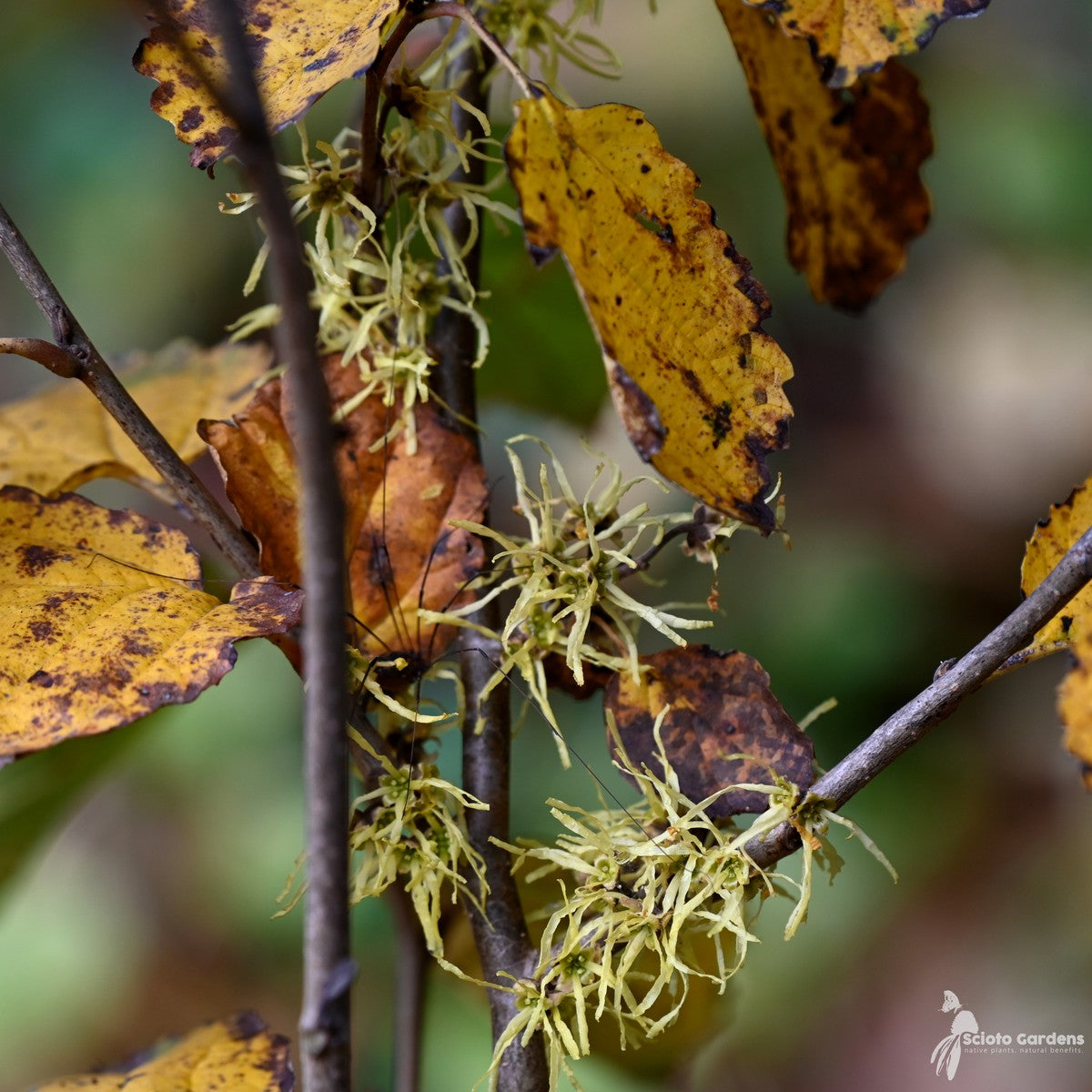
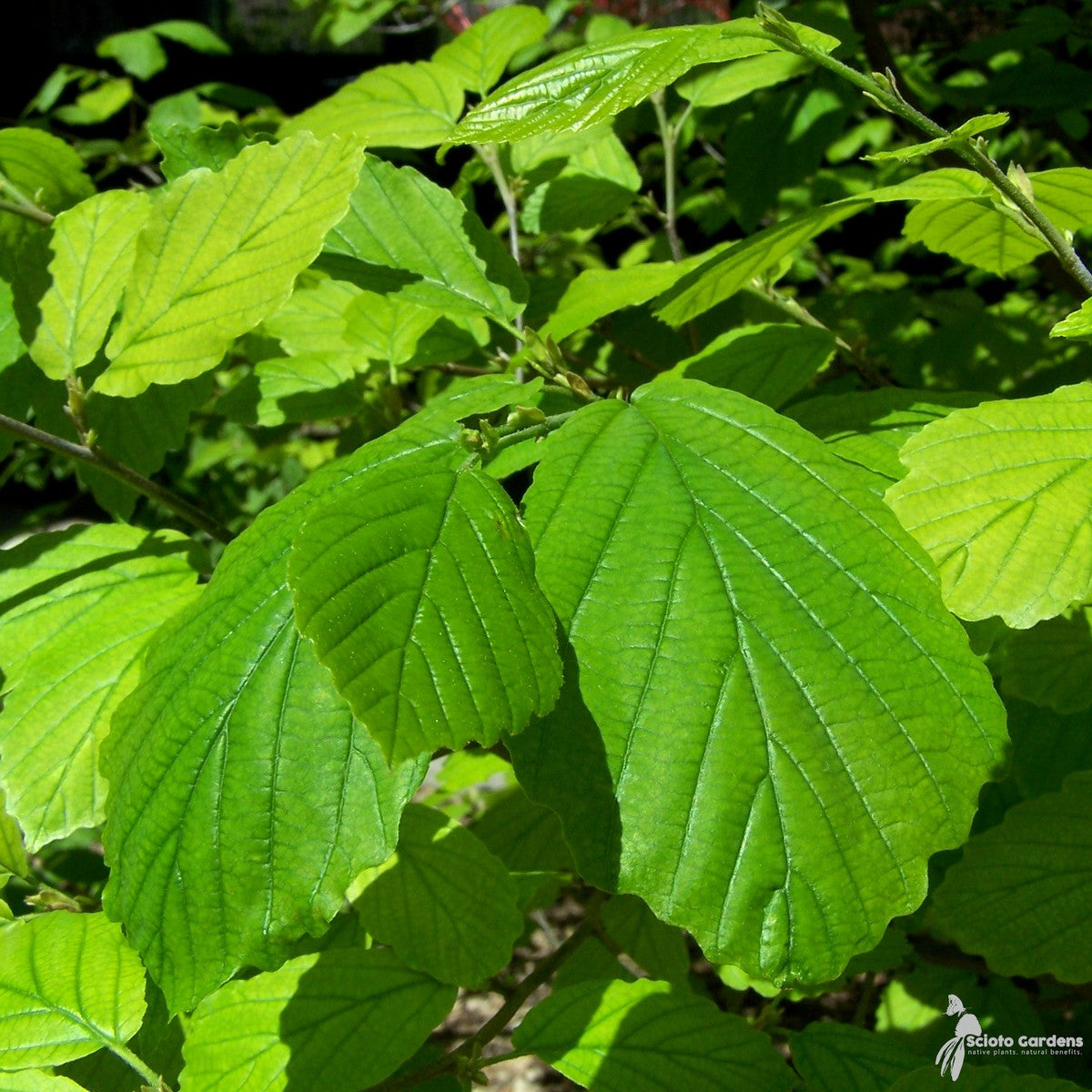
Common Witch Hazel is an architecturally pleasing, large multi-stemmed shrub or small, spreading tree that is native to the eastern half of North America. It has a unique habit with a narrow base and crooked, ascending, spreading branches that form an open crown. The twigs have a zigzagging pattern, to which the fragrant, yellow, strap-like flowers cling to during their fall bloom. The leaves are beautifully golden at this time, and the previous year’s fruit capsules will be brown and mature beside the fresh flowers. This is a distinctive, adaptable plant worthy of any landscape.
Common Witch Hazel prefers a moist site with slightly acidic soil and partial sun. It is able to tolerate drier conditions, or full shade with reduced flowering, or full sun with consistent moisture, which will enhance flowering at the cost of some leaf scorch. It is versatile in its placement in the landscape, offering a long season of interest as a single specimen, in the shrub border or hedge, or in a naturalized area.
The late season flowers provide crucial pollen and nectar to hungry insect visitors, and the seed feeds many bird species throughout fall and winter. It is host to the Witch Hazel Dagger Moth, which perfectly matches the bark, and at least 60 other species of Lepidoptera which provide a buffet of food for insectivorous birds and nestlings throughout the growing season.
Sources:
Native Trees, Shrubs, & Vines by William Cullina
Manual of Woody Landscape Plants by Michael A. Dirr
Midwestern Native Shrubs and Trees by Charlotte Adelman & Bernard L. Schwartz
Missouri Botanical Garden
Lady Bird Johnson Wildflower Center
Illinois Wildflowers
The Morton Arboretum
