


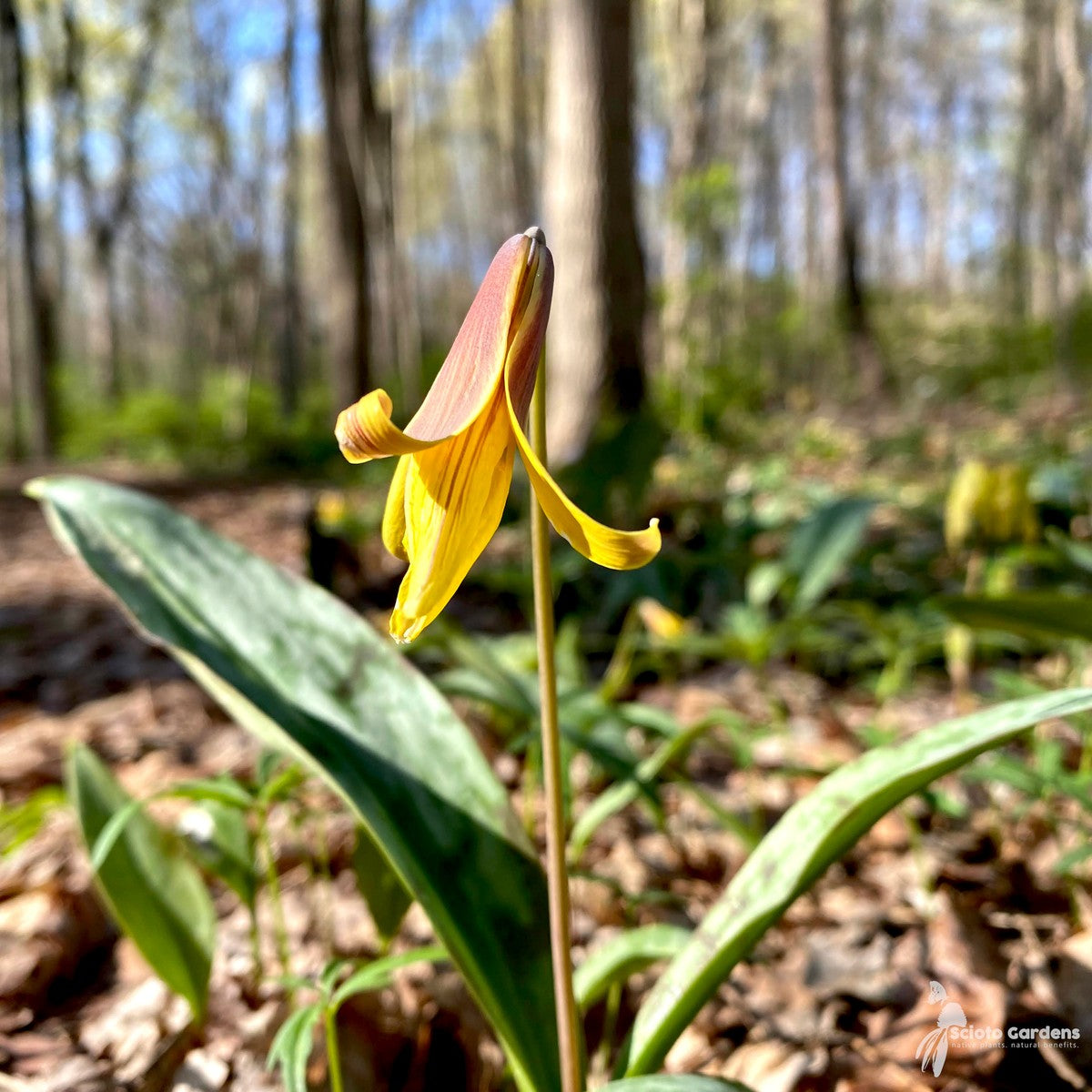
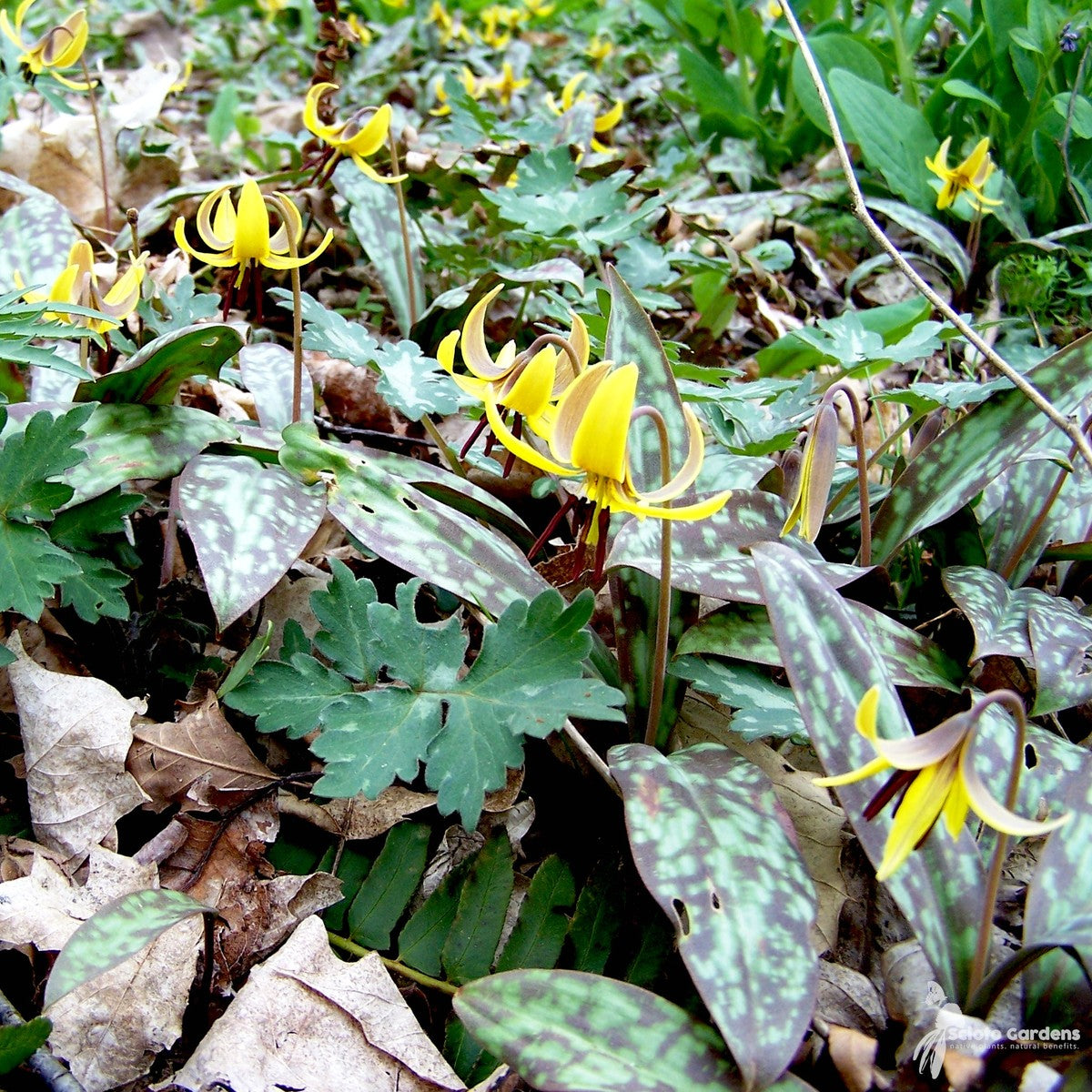
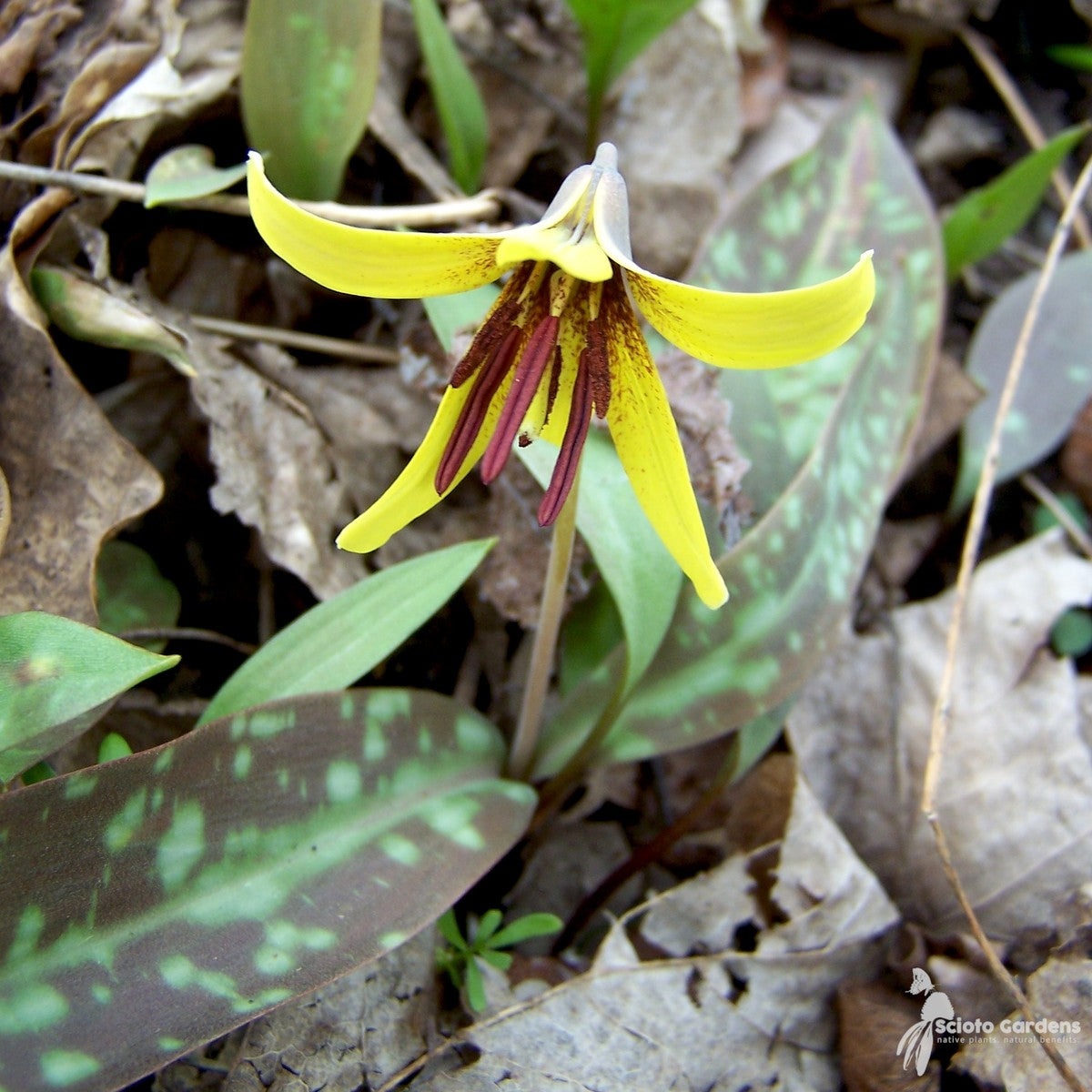
Yellow Trout Lily is an elegant seasonal groundcover for rich, moist soils, commonly seen growing in large colonies along stream banks and in low deciduous woodlands. The common name comes from the mottled coloration of the leaves which resembles the skin of brook trout, and it is thought that it acts as a camouflage against mammalian herbivory. There are two forms: sterile, vegetative plants, which are typically smaller and younger with a single leaf, and blooming plants, which are larger and have paired leaves. The vegetative plants can flower with enough time, and sometimes dividing overcrowded clumps will help promote blooming. These spring ephemerals need consistently moist soil in the spring during their active growth period. They benefit from partial to full sun in early spring for best flowering, with more shade later when the trees leaf out. Yellow Trout Lilies spread rapidly through stoloniferous growths that sprout a new corm at the end, propagating dense colonies.
Sources:
Growing and Propagating Wildflowers by William Cullina
Herbaceous Perennial Plants by Allan M. Armitage
Eastern/Central Medicinal Plants and Herbs by Steven Foster and James A. Duke
Peterson Field Guide to Edible Wild Plants Eastern/Central North America by Lee Allen Peterson
Missouri Botanical Garden
Lady Bird Johnson Wildflower Center
Illinois Wildflowers
The Morton Arboretum-Black Walnut Tolerance
