


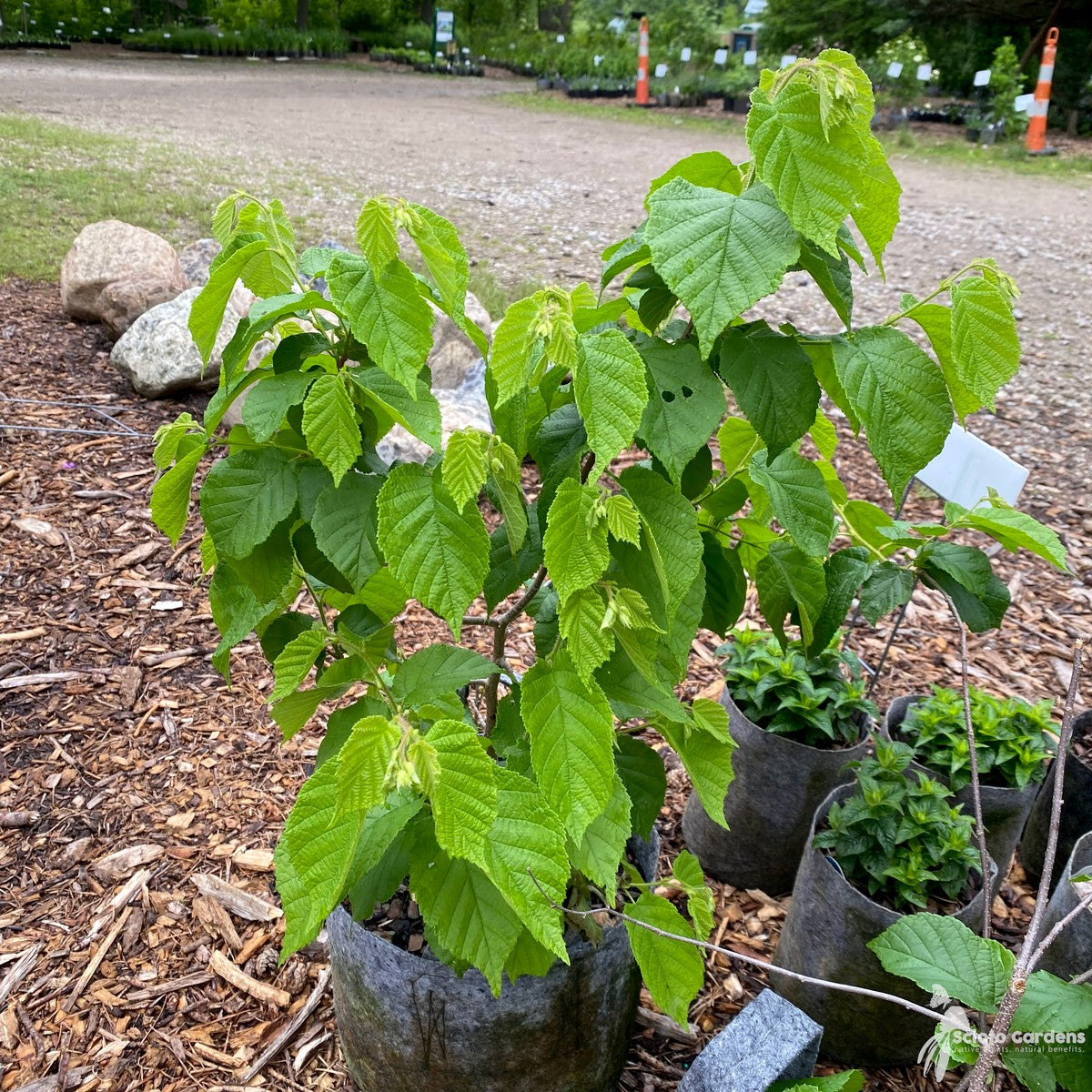
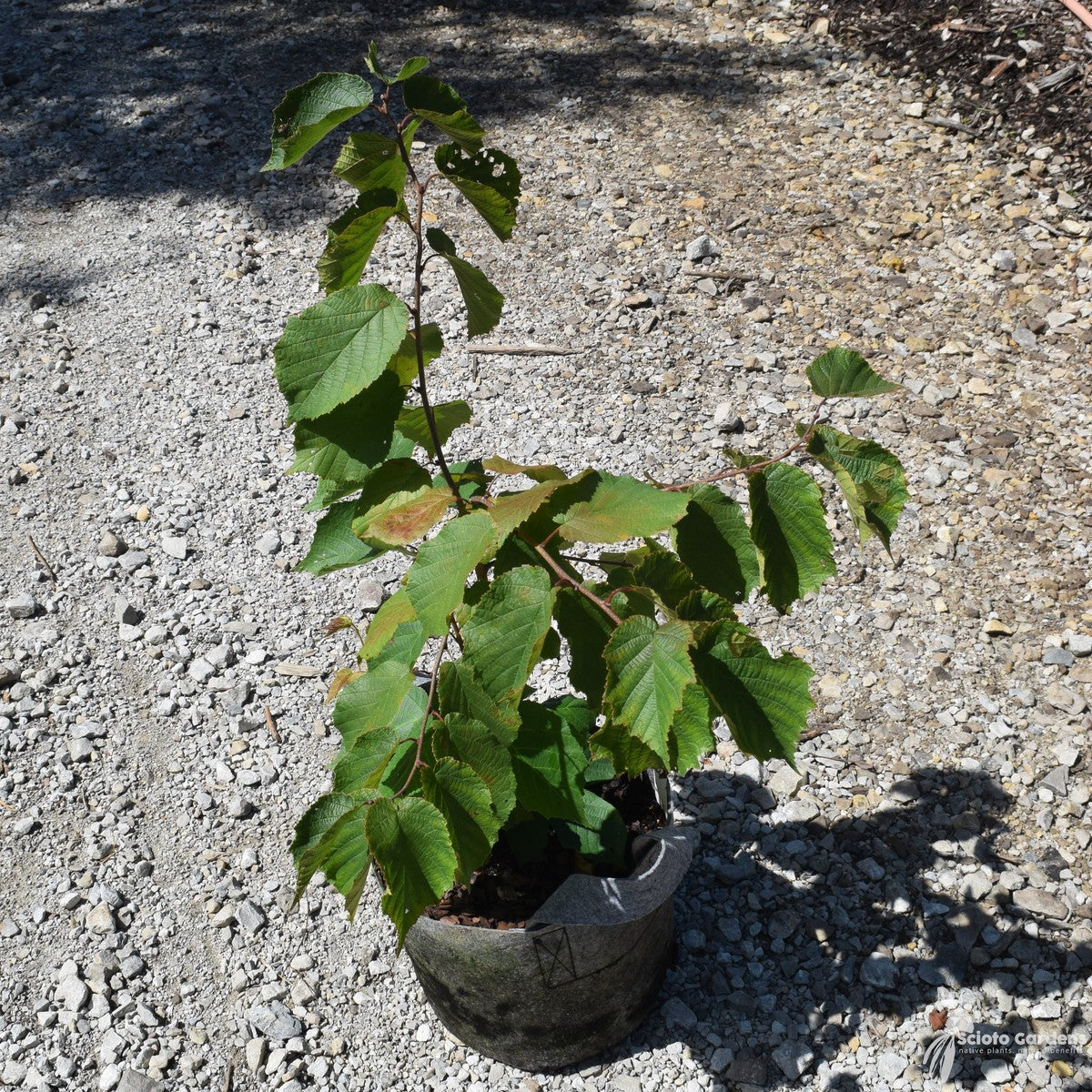
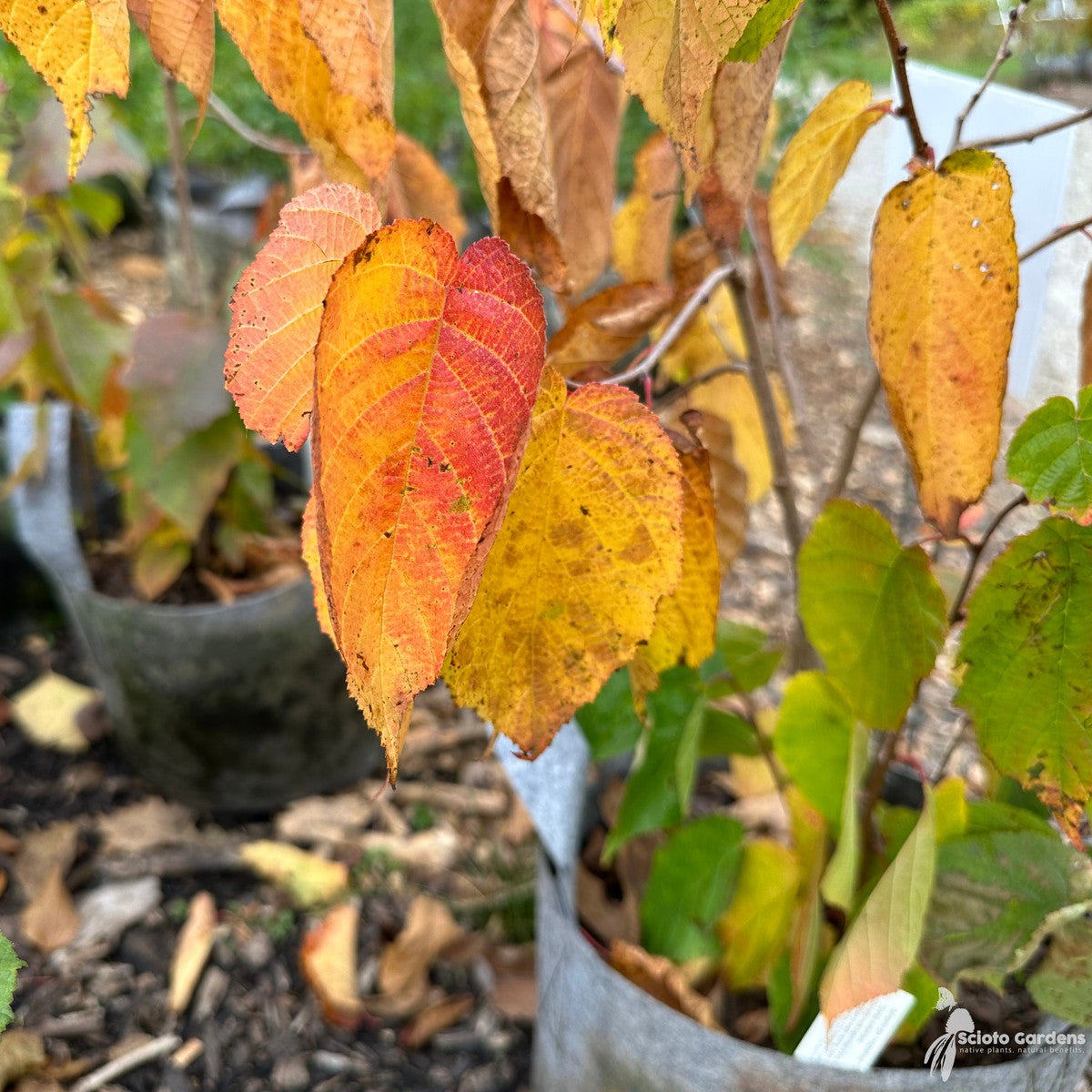
American Hazelnut, also called American Filbert, is a strongly multi-stemmed, suckering, understory shrub native to the eastern half of North America. It has a rhizomatous, colonizing growth habit that is more vigorous in sunnier locations. This shrub is highly shade-tolerant, often growing with Shagbark Hickory, Smooth Sumac, Chokecherry, Arrowwood Viburnum, Hop Hornbeam, and Dogwood species. American Hazelnut heralds the coming of spring with showy, yellow, drooping male catkins, and is among the first woody species to bloom. The plants are monoecious, meaning they have male and female flowers on the same plant. While multiple plants are not required for seed production, it is highly recommended, as the flowers are wind-pollinated and will have a better change at cross-pollination with more than one individual. The nuts are sweet and delicious, though slightly smaller than the European variety offered commercially. They are produced in a very interesting, bright green, papery husk in clusters of 2 or 3. The husk turns brown once the nuts are ripe.
American Hazelnut is highly valuable to wildlife. The nuts are eaten by squirrels, chipmunks, Blue Jays, Bobwhite Quail, Wild Turkeys, and many others. The Turquoise Hairstreak occasionally uses it as a host plant, just one of at least 108 species of Lepidoptera to do so. The dense branching habit and large leaves also offer superb shelter for many nesting songbirds.
This shrub is very adaptable and easy to please, but it does not tolerate wet feet. The suckers can be pruned off anytime to keep a more tidy habit. The entire shrub can also be coppiced as a woodland management strategy, providing a nearly endless supply of sustainably harvested wood for heating or garden stakes, wattle fencing and better nut production.
Sources:
Native Trees, Shrubs, & Vines by William Cullina
Native Plant Agriculture by Indigenous Landscapes
Missouri Botanical Garden
Lady Bird Johnson Wildflower Center
Illinois Wildflowers
USDA FEIS
Nati
