
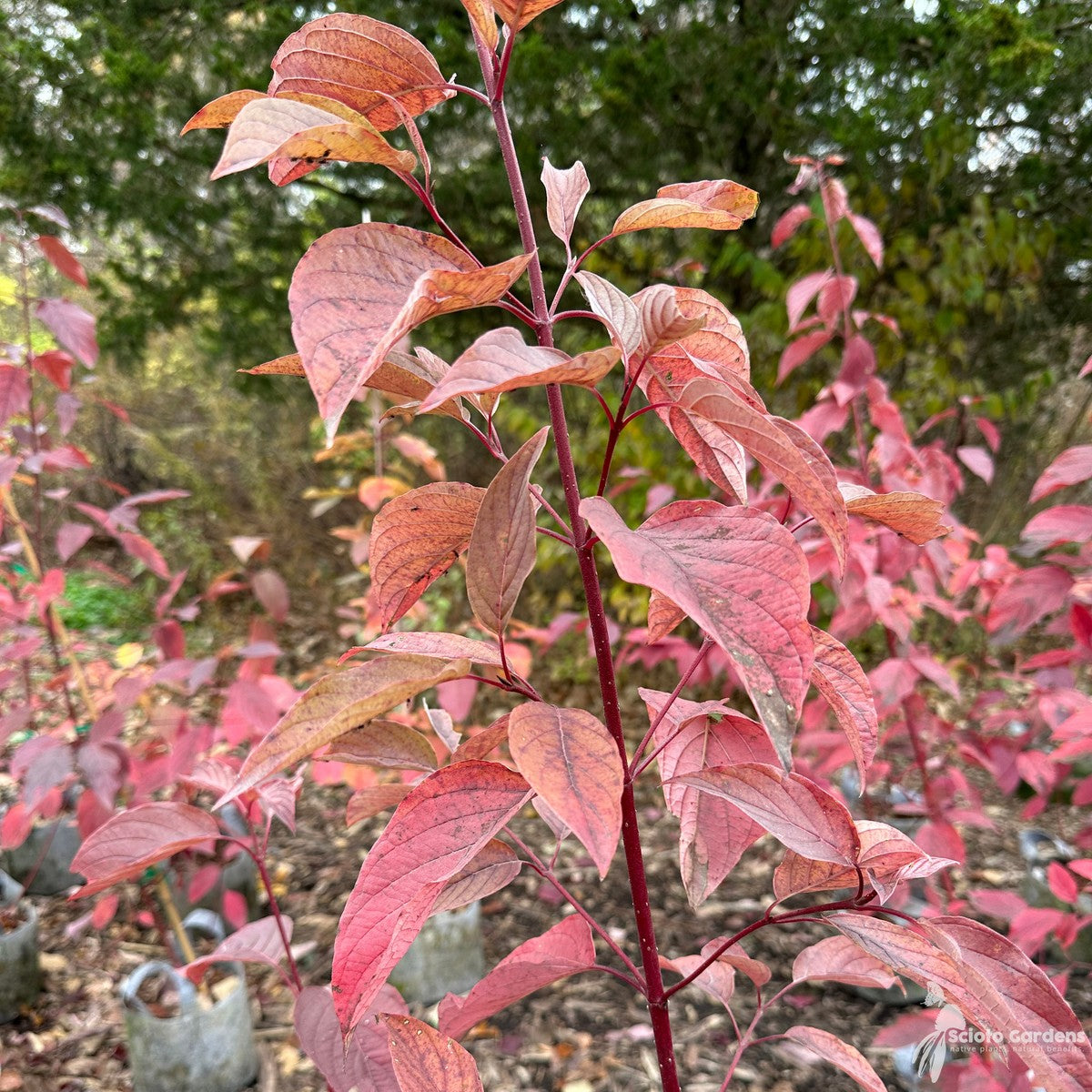
Red-twig Dogwood, also known as the Red-Osier or Redosier Dogwood, is a large, multi-stemmed, native deciduous shrub. It is a sight to behold in the depths of winter when the landscape is mostly void of color, especially with the fiery red stems dusted in snow. This shrub has a wild nature, sprawling and loose in form with horizontal branching at its base. It can tolerate hard pruning, and in fact, it is necessary for the best color and shape. It can be cut nearly to the ground every year for straight, colorful regrowth. The root system is fibrous, shallow, and spreading, allowing this shrub to hold the soil in place effectively where erosion is a problem.
The utter adaptability and versatility of Red-twig Dogwood makes it a plant for many places and purposes. It can be used for naturalizing or for massing in large areas, as a festive winter feature when mixed with contrasting evergreens in a large residential garden, for shrub borders, parks, screening or hedging, and for stabilizing embankments.
Cornus spp. are hosts to at least 98 species of Lepidoptera. This means that Dogwoods are a fantastic addition to any wildlife-friendly garden! The caterpillars provide a bounty of food for insectivorous birds and nestlings throughout the year, and the ones that don’t get eaten become beautiful and beloved butterflies and moths, such as the majestic Cecropia Moth. The summer-blooming Dogwood flowers attract many pollinators, including 4 specialist bee species: Andrena fragilis, Andrena integra, Andrena persimulata, and Andrena platyparia. The milky white fruits (drupes) have a high fat and calorie content and are a preferred food source in late summer and fall for a huge number of songbirds, as well as migratory birds.
Sources:
Native Trees, Shrubs, & Vines by William Cullina
Manual of Woody Landscape Plants by Michael A. Dirr
Midwestern Native Shrubs and Trees by Charlotte Adelman & Bernard L. Schwartz
Missouri Botanical Garden
Lady Bird Johnson Wildflower Center
Illinois Wi
