


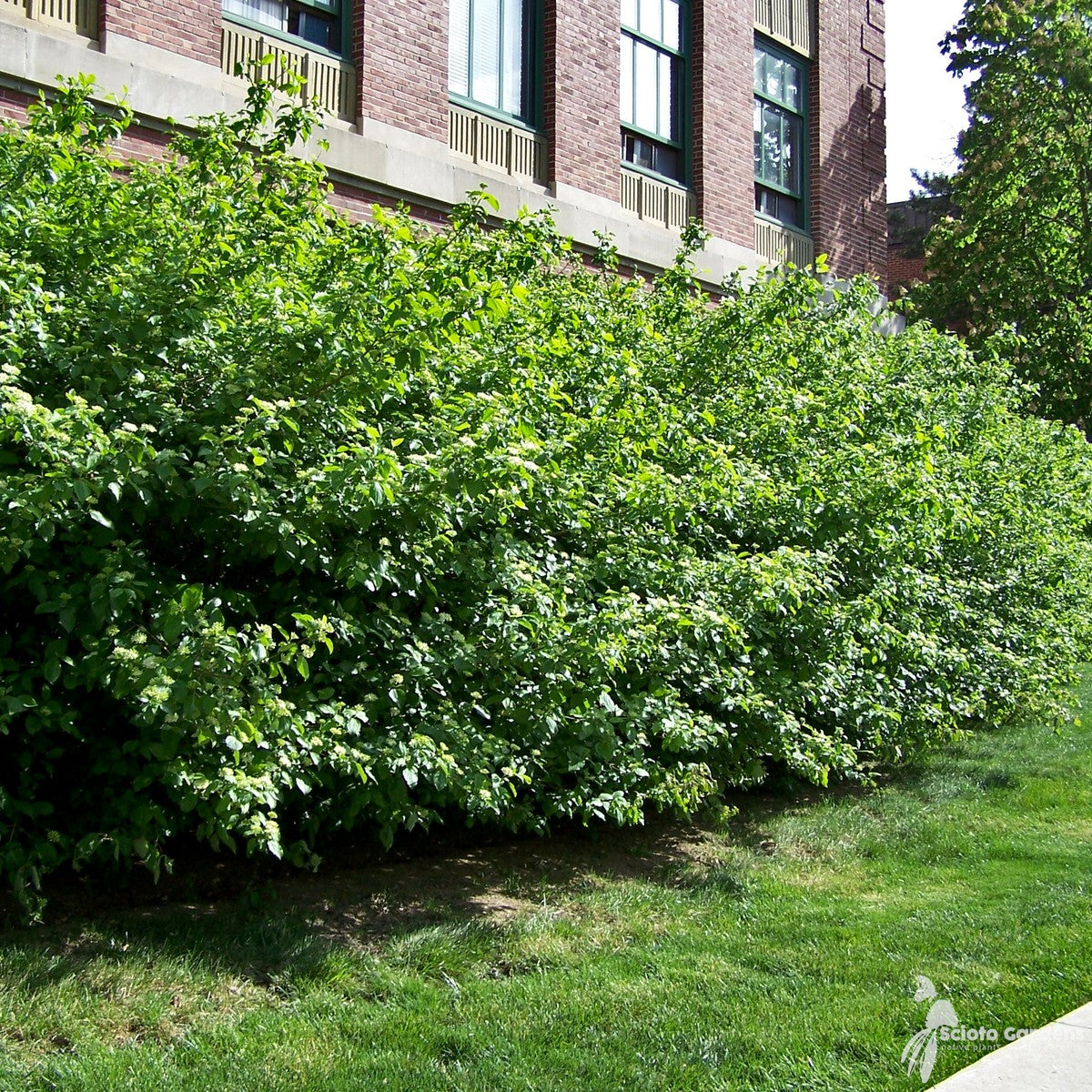
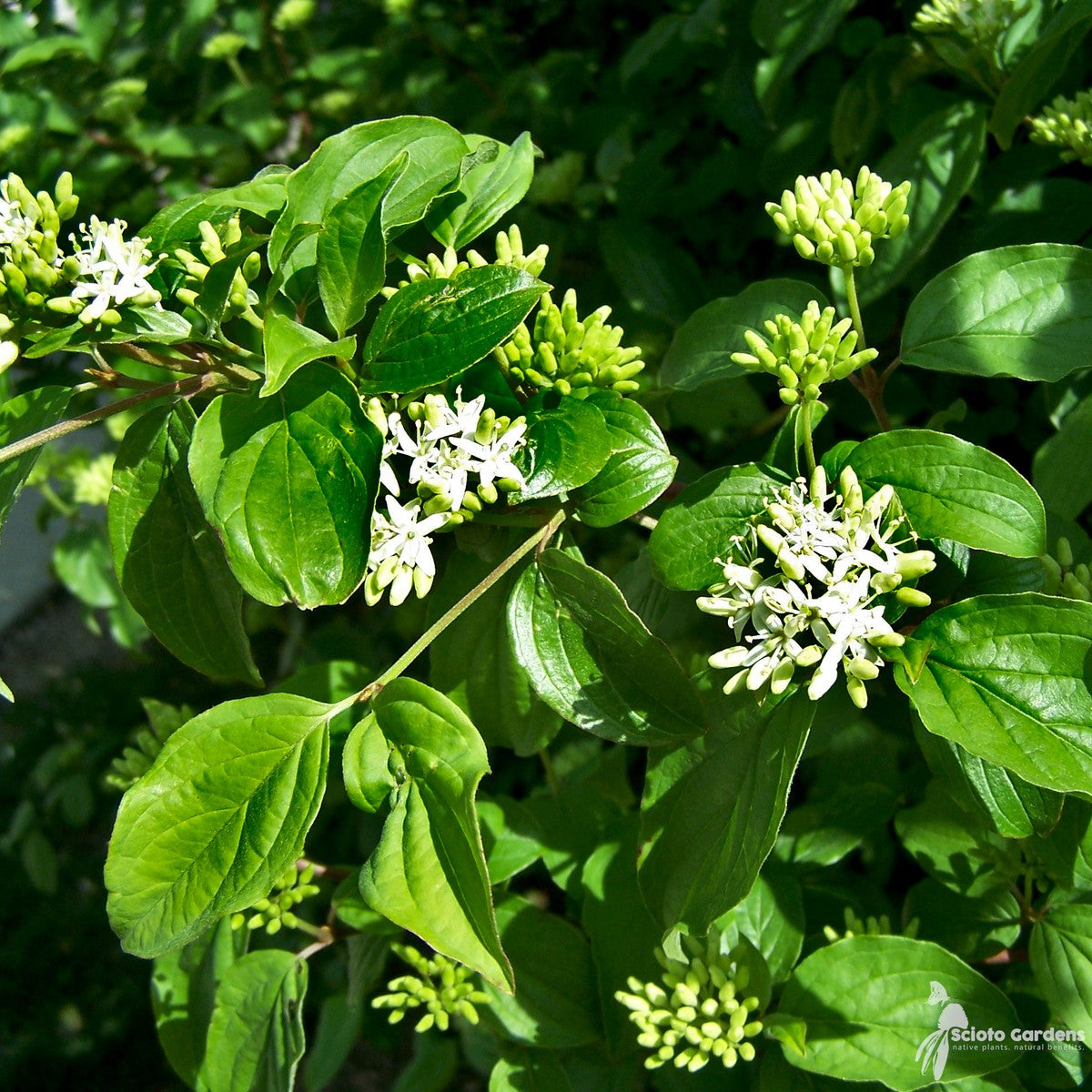
Gray Dogwood is a wild, multi-stemmed, tough, native, deciduous shrub. It has a vigorous suckering tendency that can quickly form colonies, making it an asset for large naturalized areas and especially for competing with non-native, invasive species such as the bush honeysuckles. It is amazingly adaptable to its growing conditions and variable in its height. While 4-5' tall is typical, it is capable of reaching heights of 10-15', particularly if it is located in a moist, fertile, sunny location with little competition. It can tolerate heavy pruning for rejuvenation, tidiness, and size management; however, this is probably not the best choice for a small garden. Gray Dogwoods are a reliably pest and disease free plant that can be grown in such a wide range of situations that it warrants consideration in any sizable landscape that can accommodate it. The root system is fibrous, shallow and spreading, allowing this shrub to hold the soil in place effectively where erosion is a problem.
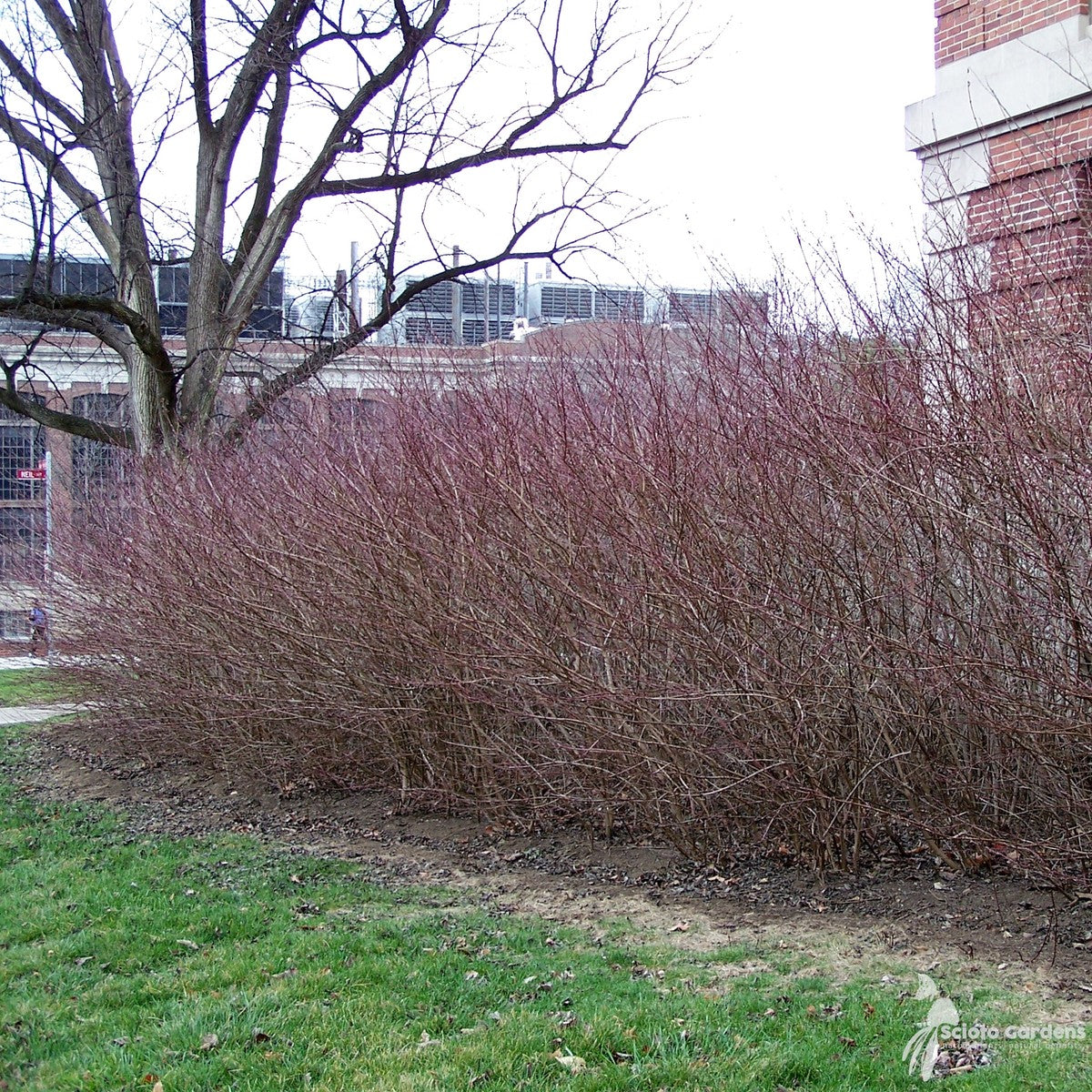
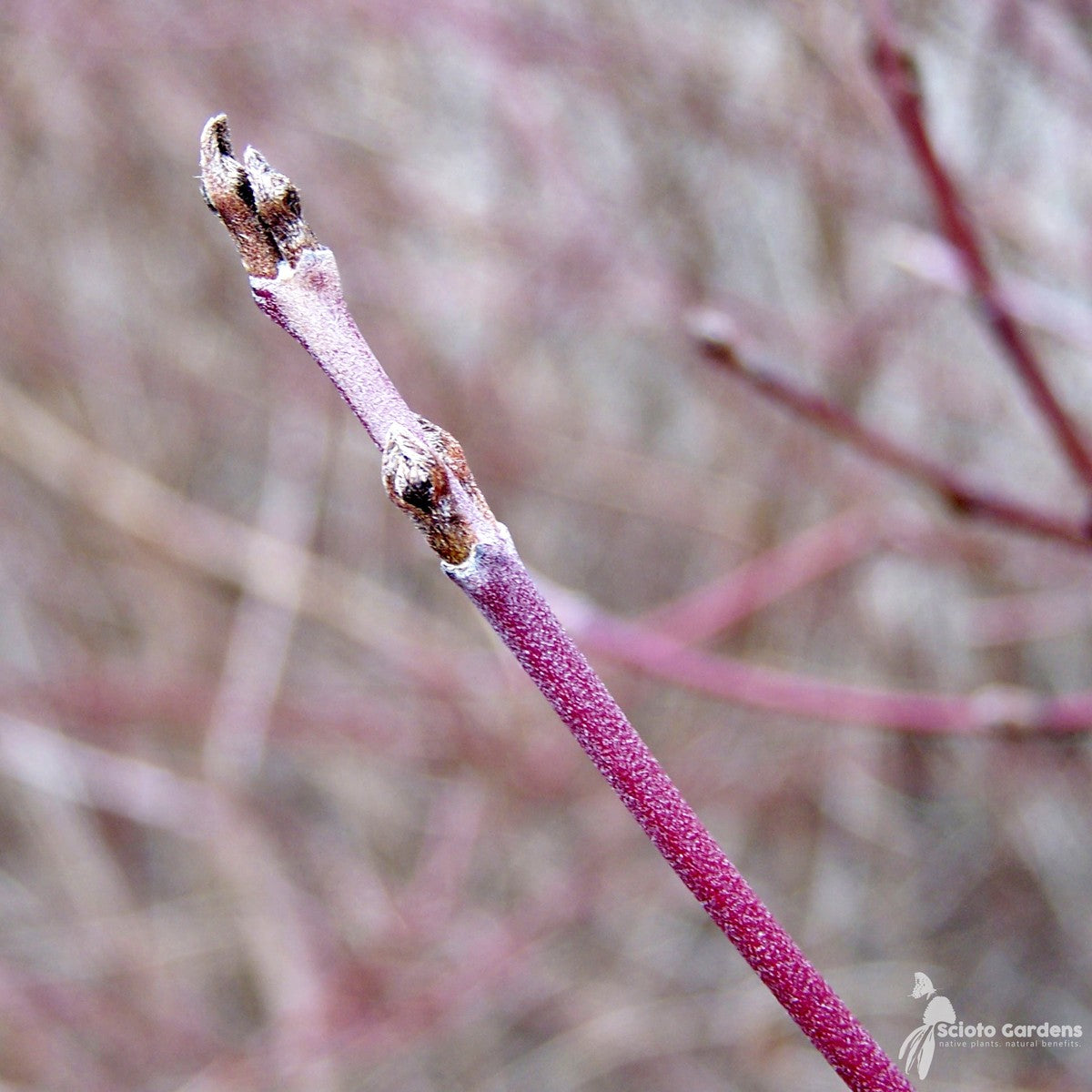
The dense branching structure and thicketing habit of Gray Dogwood provide excellent nesting sites and protective cover for many wild creatures. The milky white fruits (drupes) have a high fat (39.9%) and calorie content and are a preferred food source in late summer and fall for nearly 100 species of songbirds and migratory birds, as well as for small mammals. The pedicels (flower/fruit stalks) on Gray Dogwood shrubs are vivid red and remain throughout the fall and winter, creating a pink hazy look that adds long-lasting appeal to the landscape. The fall color of the foliage before it drops is often a muted mixture of purple, red and gray-green.
Cornus spp. are hosts to at least 98 species of Lepidoptera. This means that Dogwoods are a fantastic addition to any wildlife-friendly garden! The caterpillars provide a bounty of food for insectivorous birds and nestlings throughout the year, and the ones that don’t get eaten become beautiful and beloved butterflies and moths, such as the maje
