
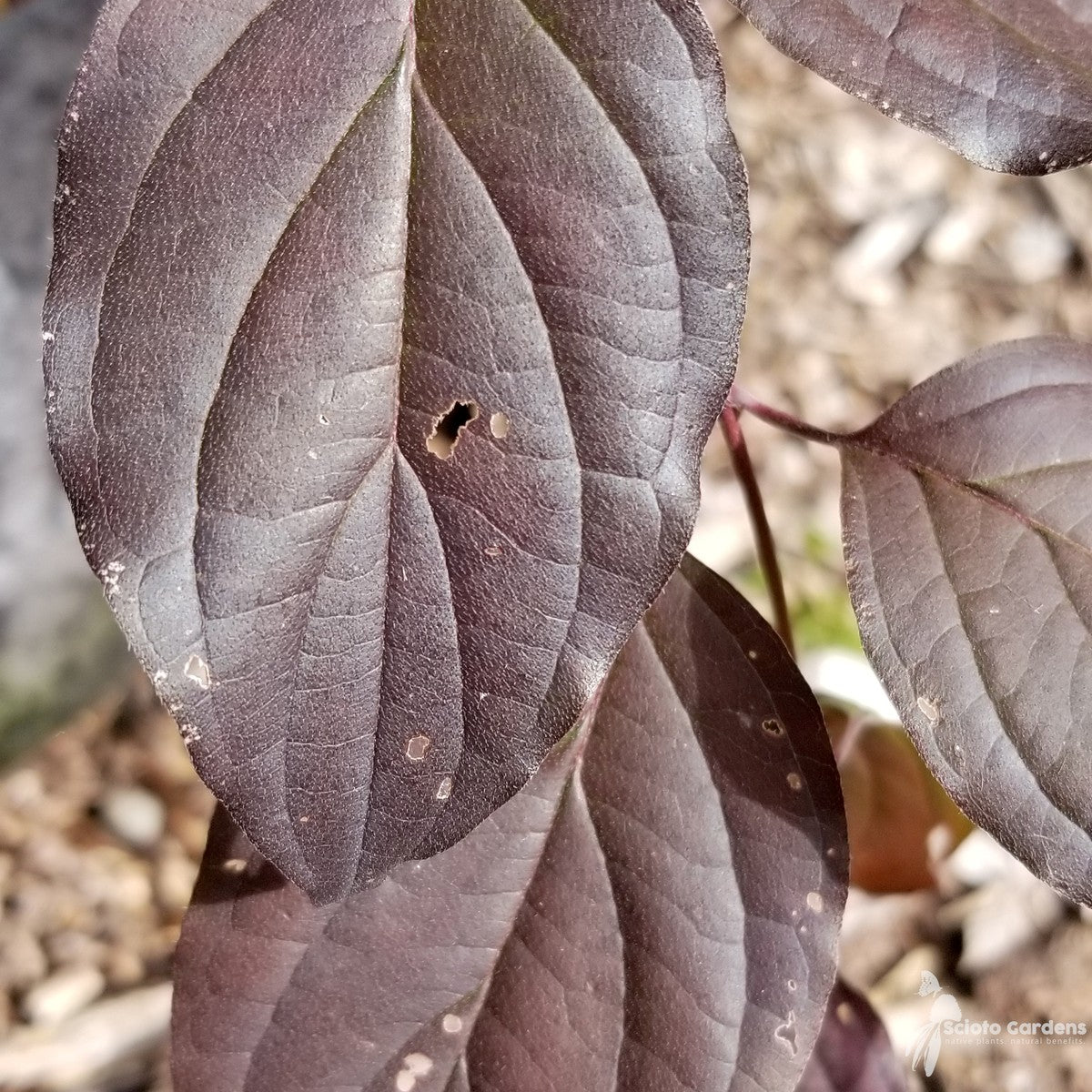
Roughleaf Dogwood is the larger cousin of Gray Dogwood (Cornus racemosa), with very similar looks and behavior, but with wider, distinctly pubescent leaves. It is native to the Midwest, where it thrives in most conditions from moist to dry, full sun to full shade, and everything in between. It is adapted to prairie fires, which would often burn them to the ground. Vigorous regrowth would start over, keeping the shrubs to a more modest size and spread. Without the control of fire, these shrubs can grow to heights of 15' tall and spread indefinitely without management or containment. Luckily for us, they take pruning very well and can even be kept as small trees with the diligent removal of root suckers. Suckering can be kept to a minimum with good garden culture and avoiding soil disturbance around the base of the tree. However, the vigorous suckering habit is an asset for covering large areas, preventing erosion, and for battling with non-native, invasive plants such as the bush honeysuckles. Deer tend to browse the twigs and leaves of Dogwood shrubs, but damage is usually minimal and causes more sprouting, which has a rejuvenating effect.
The dense branching structure and thicketing habit of Roughleaf Dogwood provide excellent nesting sites and protective cover for many wild creatures. The milky white fruits (drupes) have a high fat and calorie content and are a preferred food source in late summer and fall for nearly 100 species of songbirds and migratory birds, as well as for small mammals. The pedicels (flower/fruit stalks) are scarlet red and remain into early winter, creating a pink hazy look that adds long-lasting appeal to the landscape. The fall color of the foliage before it drops is often a muted mixture of purple, red, and gray-green.
Cornus spp. are hosts to at least 98 species of Lepidoptera. This means that Dogwoods are a fantastic addition to any wildlife-friendly garden! The caterpillars provide a bounty of food for insectivorous birds and nestlings
