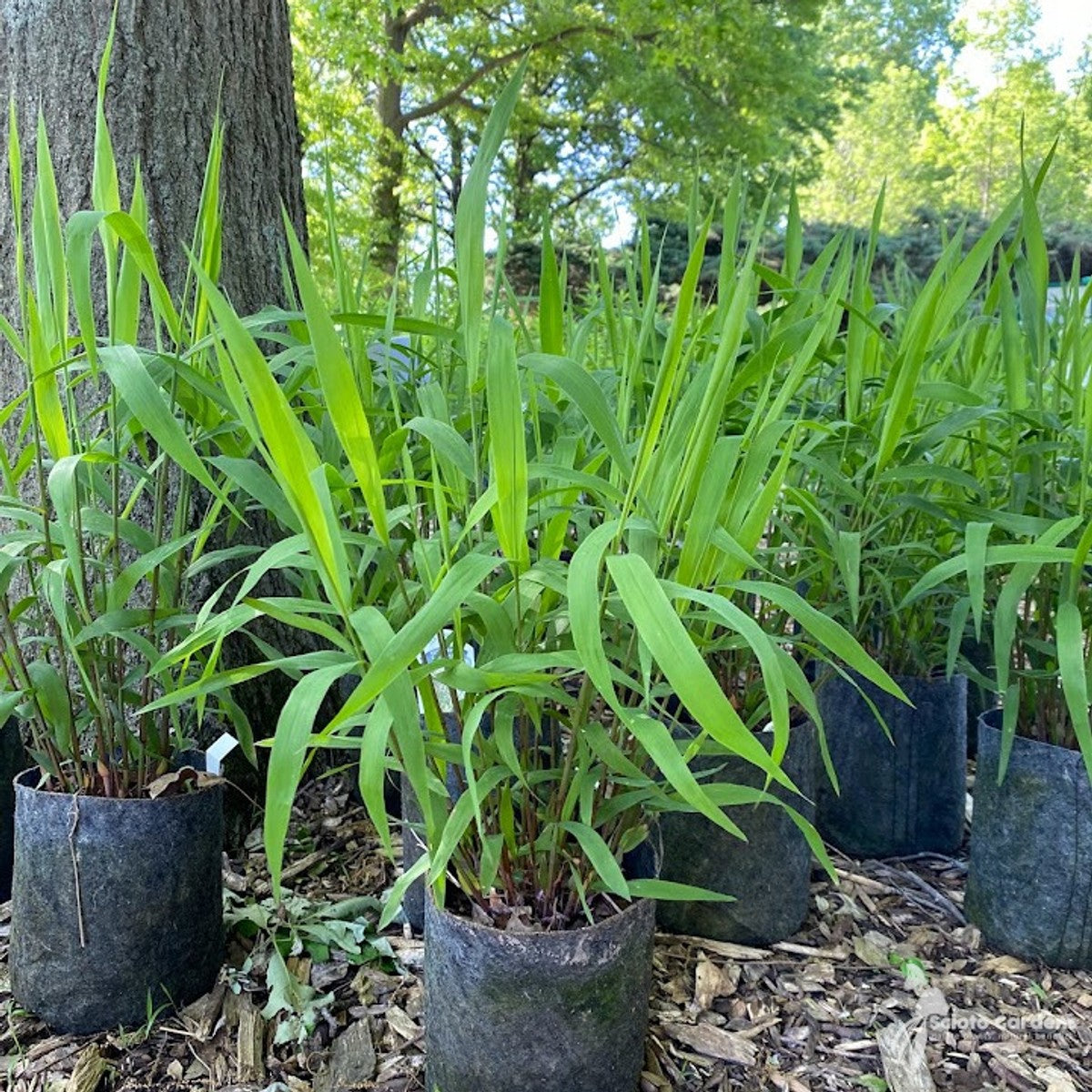
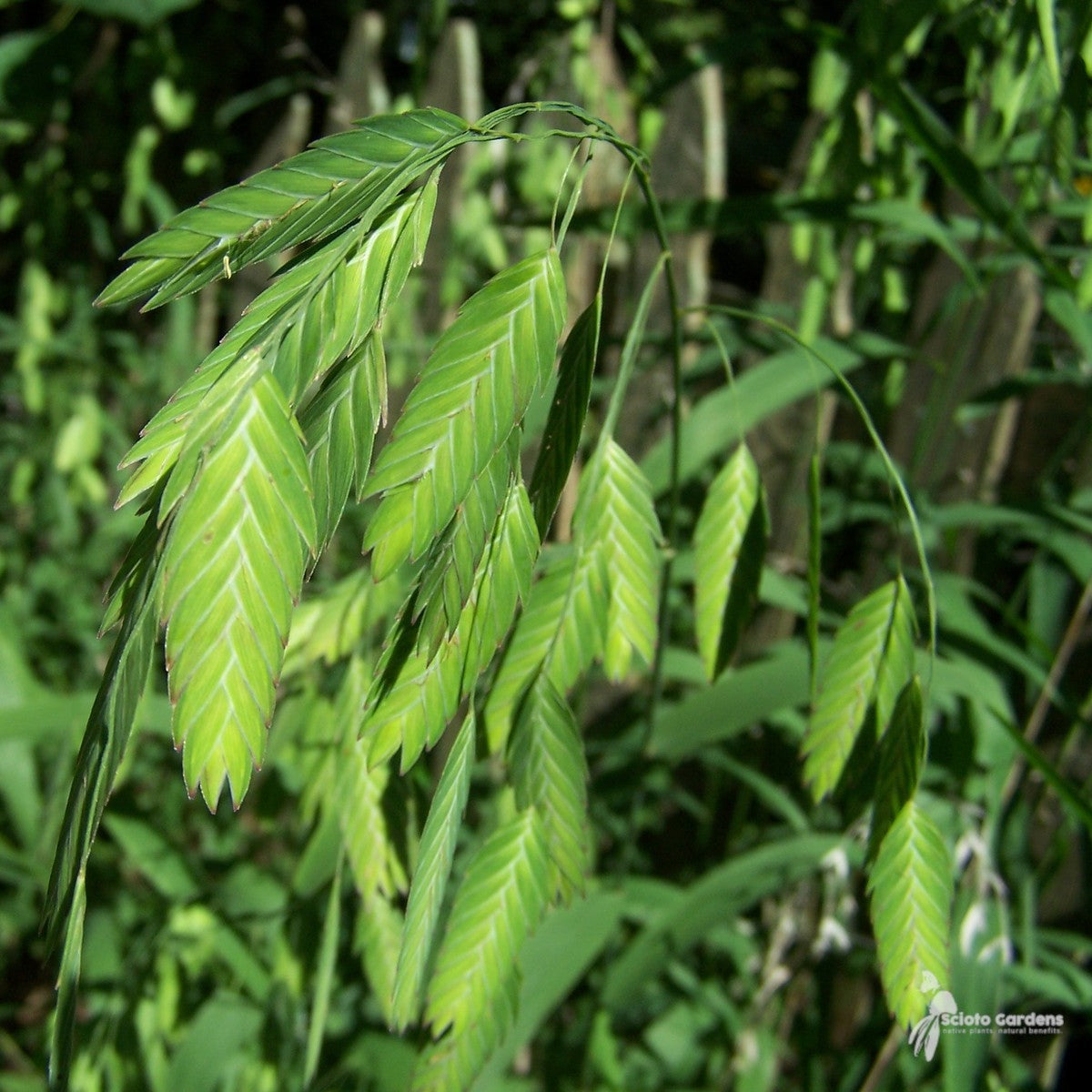
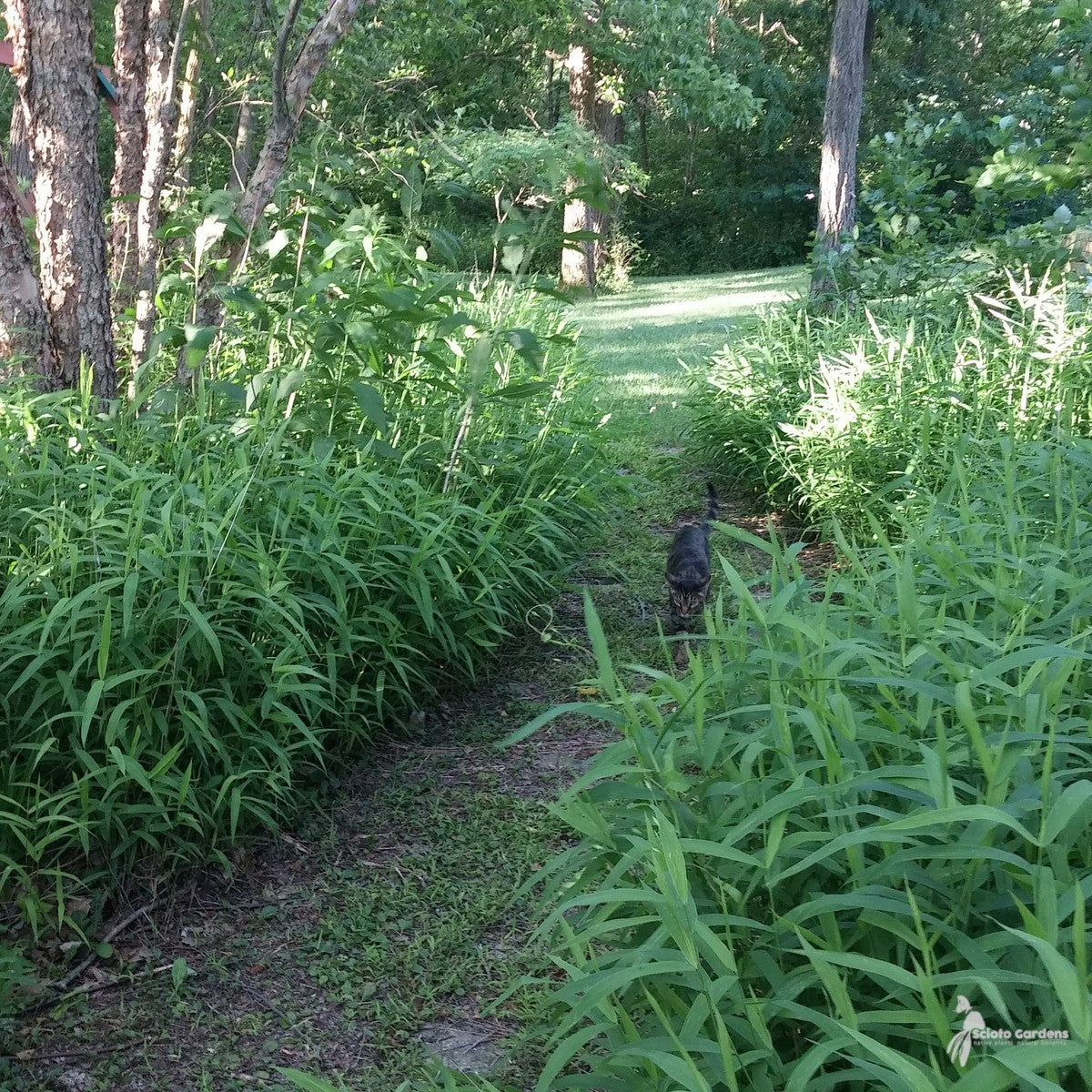
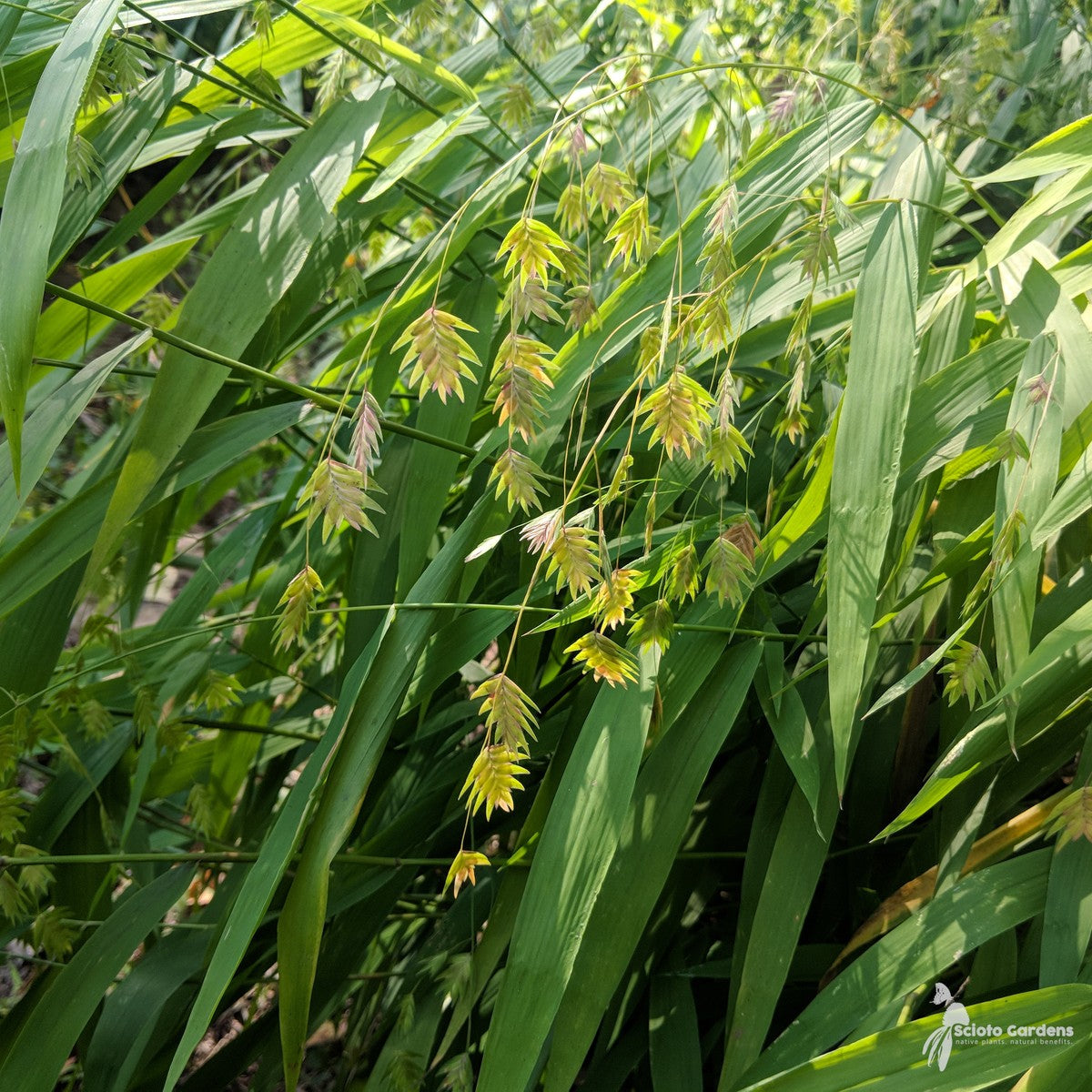
Northern Sea Oats, also called Inland Oats or River Oats, is a great filler of empty space. It prefers to grow along shaded stream and river banks, moist meadows and along woodland edges. It will quickly colonize an area under favorable conditions, with fibrous roots and spreading rhizomes, and by seed. The flattened seed heads that resemble oats will first appear green, then pinkish, then copper towards the end of the growing season where they'll persist until eaten or shattered. Small mammals and birds will eat the seeds, use the woody stems for nesting material, and use the large colonies of foliage for cover. There are several species of Lepidoptera that host on Northern Sea Oats, such as the beautiful Northern Pearly Eye.Northern Sea Oats is tough and adaptable, tolerating deer, salt and Juglone toxicity, making it an excellent choice for problem areas that are hard to find robust and attractive plantings to fill.Sources:
Native Ferns, Moss, & Grasses by William Cullina
Gardening with Grasses by Michael King and Piet Oudolf
Missouri Botanical Garden
Lady Bird Johnson Wildflower Center
Illinois Wildflowers
USDA Plants Database
Grow Native! Salt-Tolerant Native Plants


Limited Time Offer:
0
days
0
hours
0
mins
0
secs
Chasmanthium latifolium (Northern Sea Oats) - 1 gal
Northern Sea Oats

Plant Care & Installation Quick-Guide
Proper acclimation and installation are key to your plant's success. Please cross-reference these tips with your plant's specific ID tags:
·
Pre-Planting: Store plants in a light-appropriate area on soil or grass (avoid hot concrete or asphalt) and water daily until the soil is saturated and the pot feels heavy. If temperatures drop below 30°F, move pots to a garage or cover them to prevent root freeze.
·
Installation: Dig a hole matching the depth of the pot, remove the fabric container, and ensure the plant’s crown or root flare is level with the ground. Fill gaps with soil, water heavily, and apply 2 inches of mulch—keeping it clear of the stem.
·
Ongoing Care: Check moisture daily by feeling 1–2 inches into the soil; water deeply at the base if the soil feels dry or warm. Newly installed plants require frequent watering (up to 3–4 times weekly in heat) until fully established, which can take a few months for perennials and up to two years for trees.