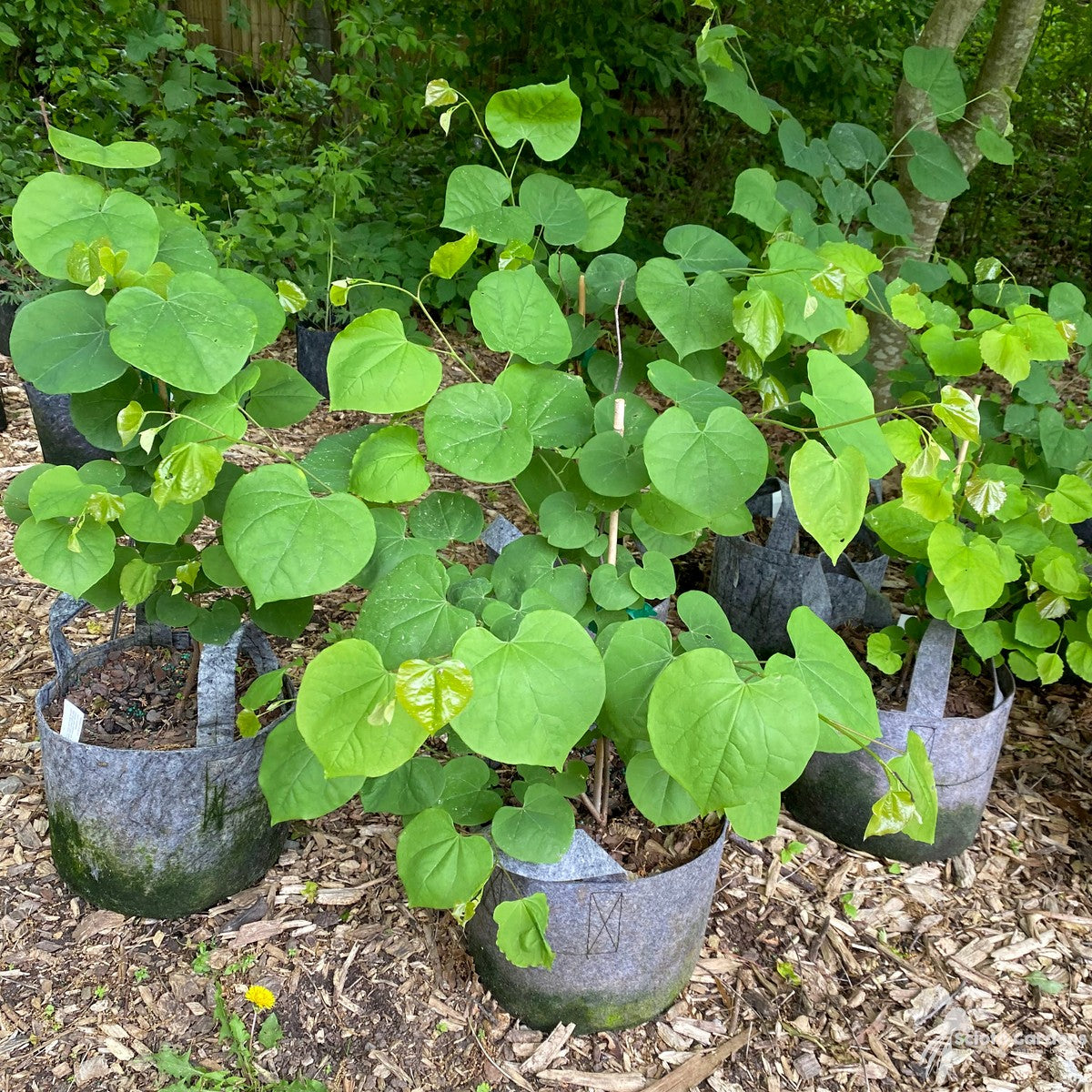
Eastern Redbud is a favorite native understory tree. The branches are lined with rosy pink, pea-like flowers in April, lasting about a month. The flowers offer pollen and nectar to its insect pollinators, primarily native bees. After flowering, the soft, green, heart-shaped leaves emerge in a distinctive zigzag pattern up the branches. They turn an attractive bright yellow color in fall. This little tree offers four seasons of interest, showing off its elegant form in winter and full of dangling papery seedpods which are eaten by Northern Cardinals, Rose-Breasted Grosbeaks and Bobwhite Quail. It is a host to at least 19 species of Lepidoptera including Henry’s Elfin butterfly.
Eastern Redbuds are members of the Fabaceae (Legume) family and fix nitrogen in the soil, making it a useful and beautiful addition to shrub borders, garden settings, naturalized in the woodland and anywhere and everywhere else! It is such a well behaved, useful and ornamental tree, it is no wonder why it is universally beloved. It prefers partial shade in a moist, fertile soil but is remarkably adaptable and easy to please. Redbuds look especially stunning with an evergreen backdrop, or planted with other spring-flowering understory trees or shrubs such as Allegheny Serviceberry, Flowering Dogwood, Pagoda Dogwood, and Wild Plum.
Sources:
Native Trees, Shrubs, & Vines by William Cullina
Manual of Woody Landscape Plants by Michael A. Dirr
Midwestern Native Shrubs and Trees by Charlotte Adelman & Bernard L. Schwartz
Missouri Botanical Garden
Lady Bird Johnson Wildflower Center
Illinois Wildflowers
The Morton Arboretum-Black Walnut Tolerance

Limited Time Offer:
0
days
0
hours
0
mins
0
secs
Cercis canadensis (Eastern Redbud) - 3 gal
Eastern Redbud

Plant Care & Installation Quick-Guide
Proper acclimation and installation are key to your plant's success. Please cross-reference these tips with your plant's specific ID tags:
·
Pre-Planting: Store plants in a light-appropriate area on soil or grass (avoid hot concrete or asphalt) and water daily until the soil is saturated and the pot feels heavy. If temperatures drop below 30°F, move pots to a garage or cover them to prevent root freeze.
·
Installation: Dig a hole matching the depth of the pot, remove the fabric container, and ensure the plant’s crown or root flare is level with the ground. Fill gaps with soil, water heavily, and apply 2 inches of mulch—keeping it clear of the stem.
·
Ongoing Care: Check moisture daily by feeling 1–2 inches into the soil; water deeply at the base if the soil feels dry or warm. Newly installed plants require frequent watering (up to 3–4 times weekly in heat) until fully established, which can take a few months for perennials and up to two years for trees.