


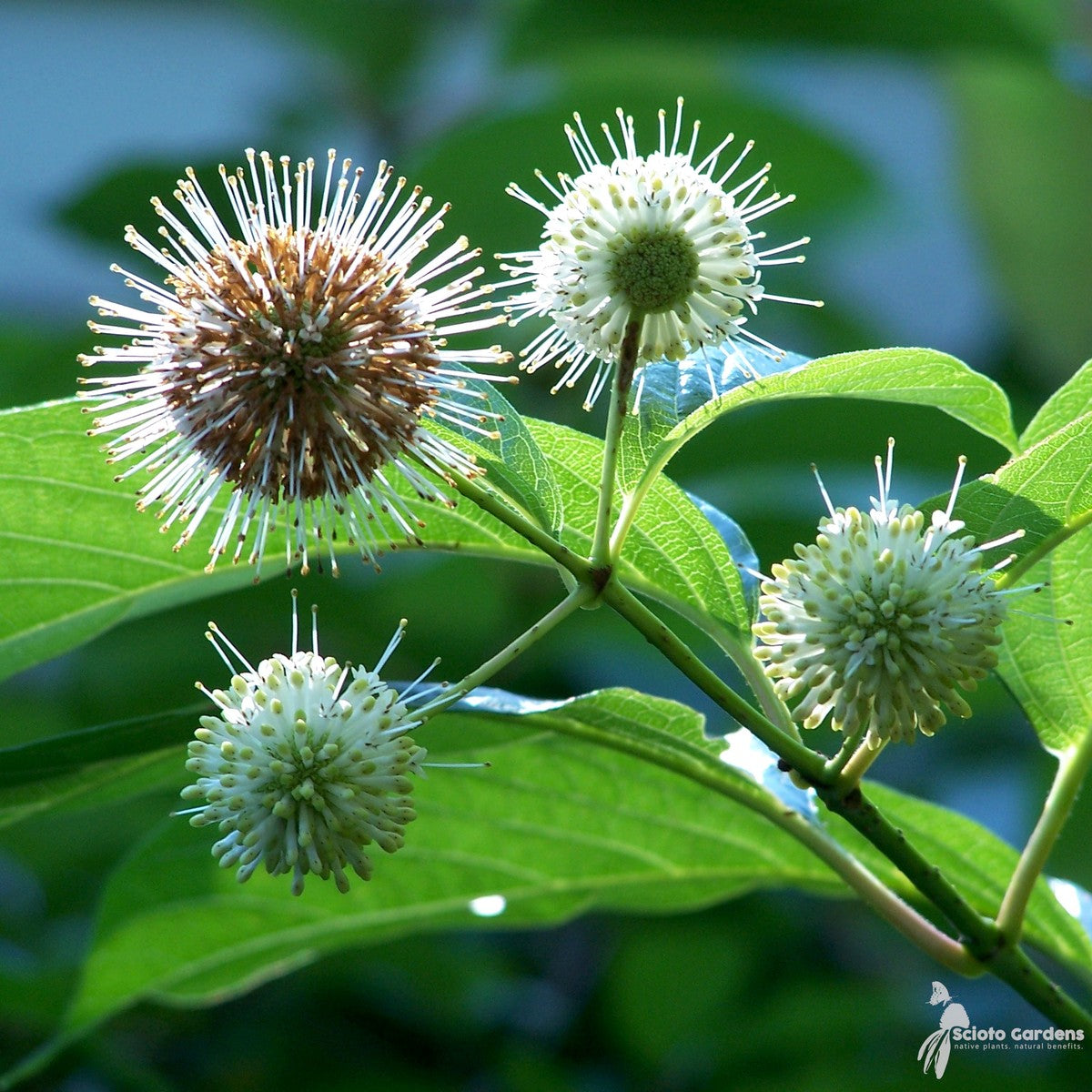
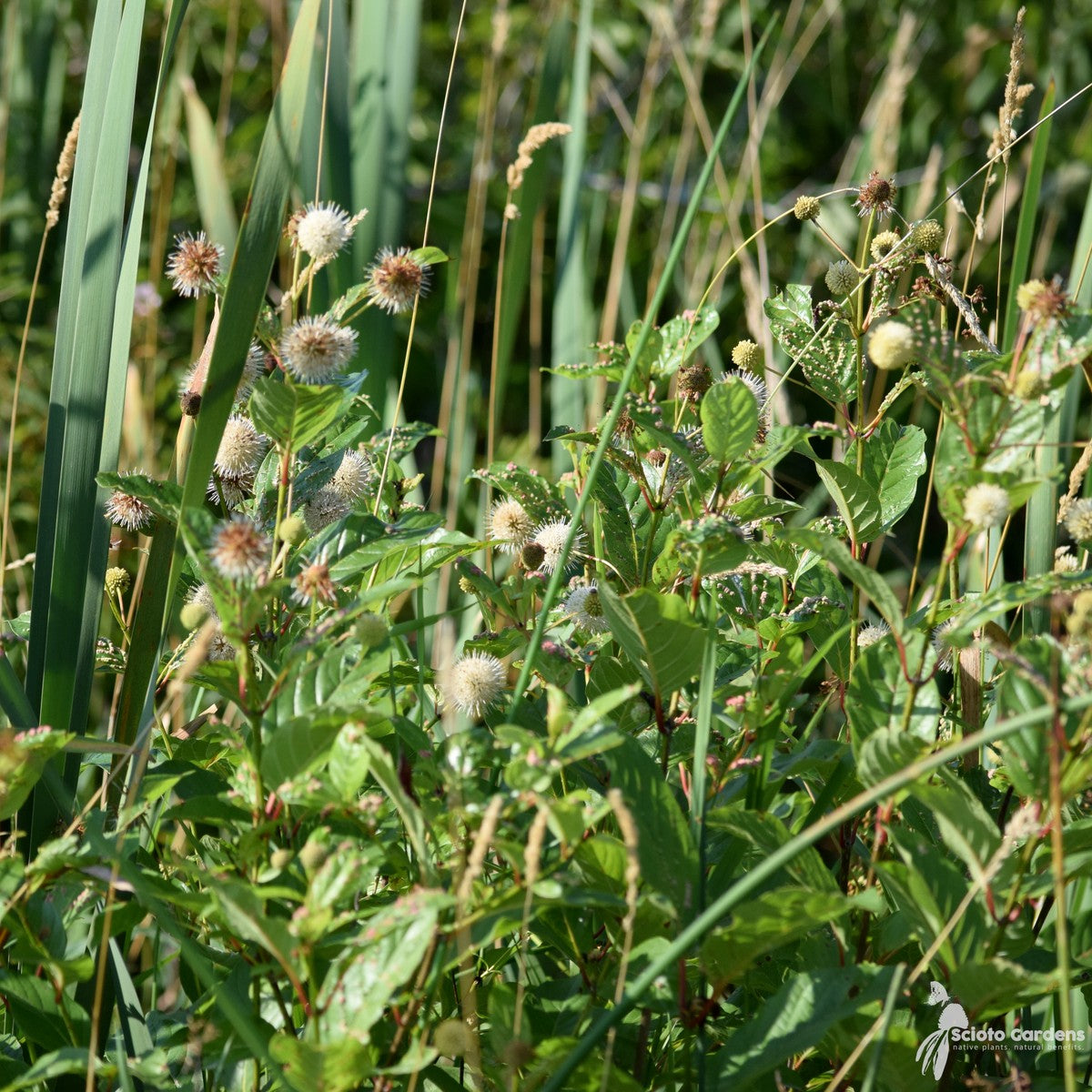
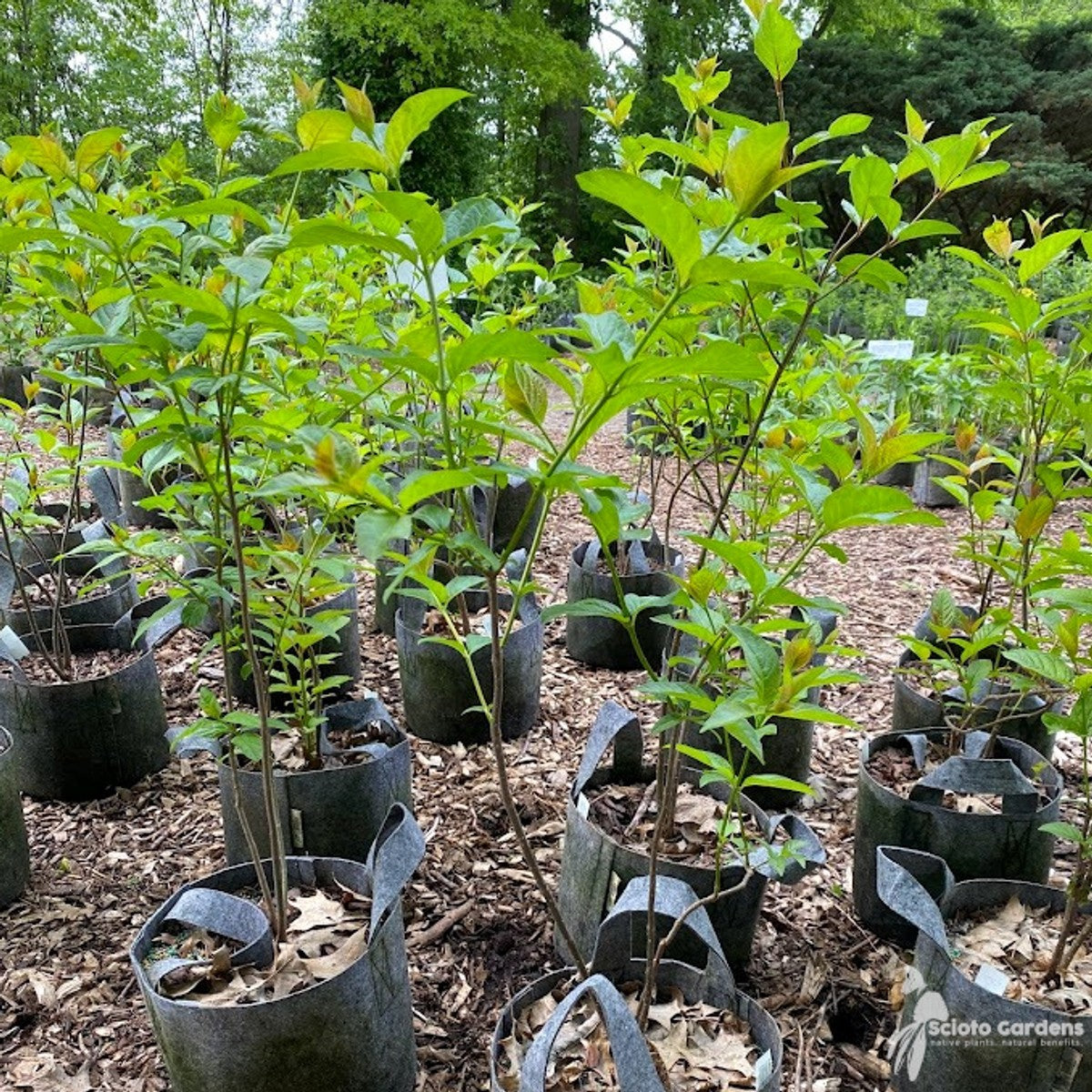
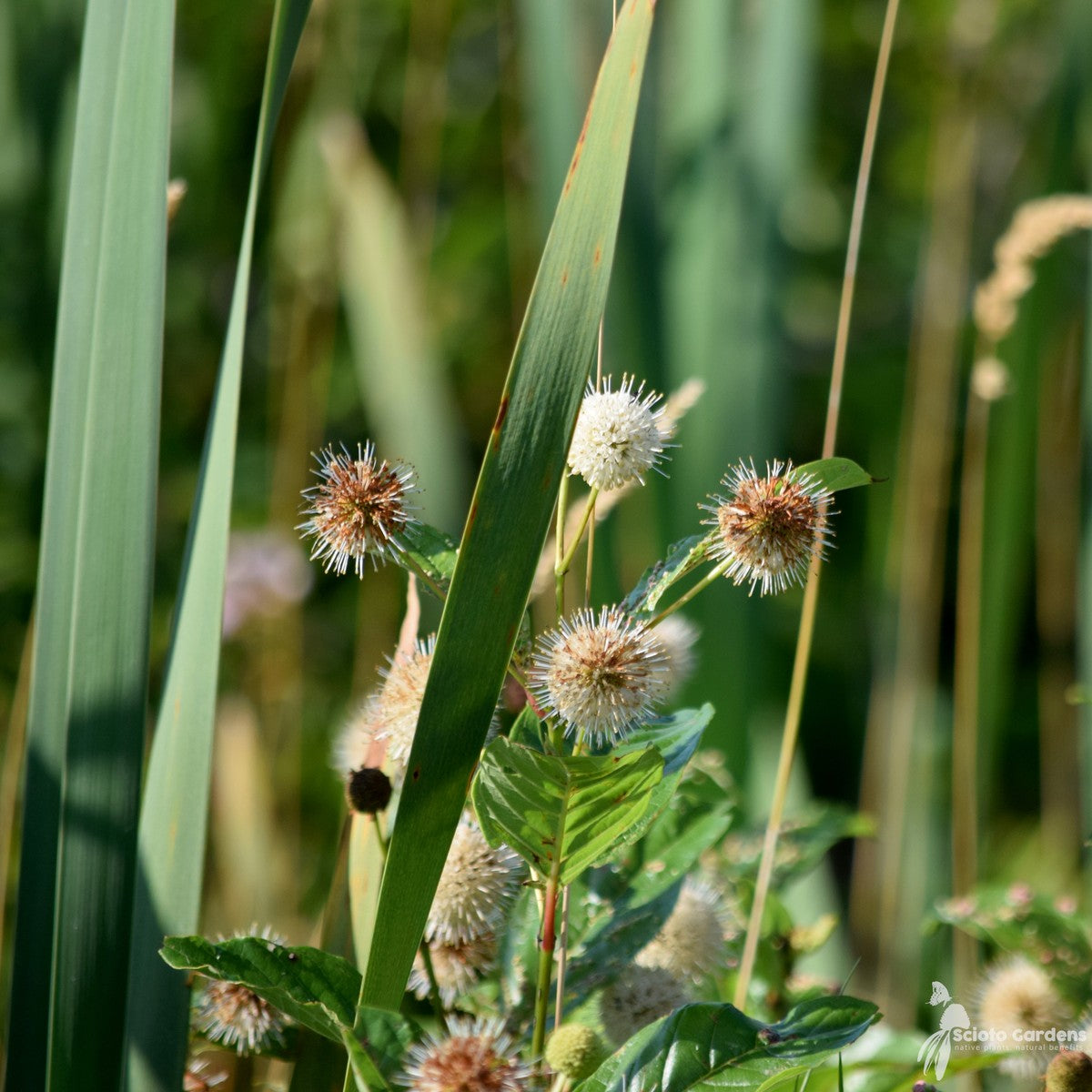
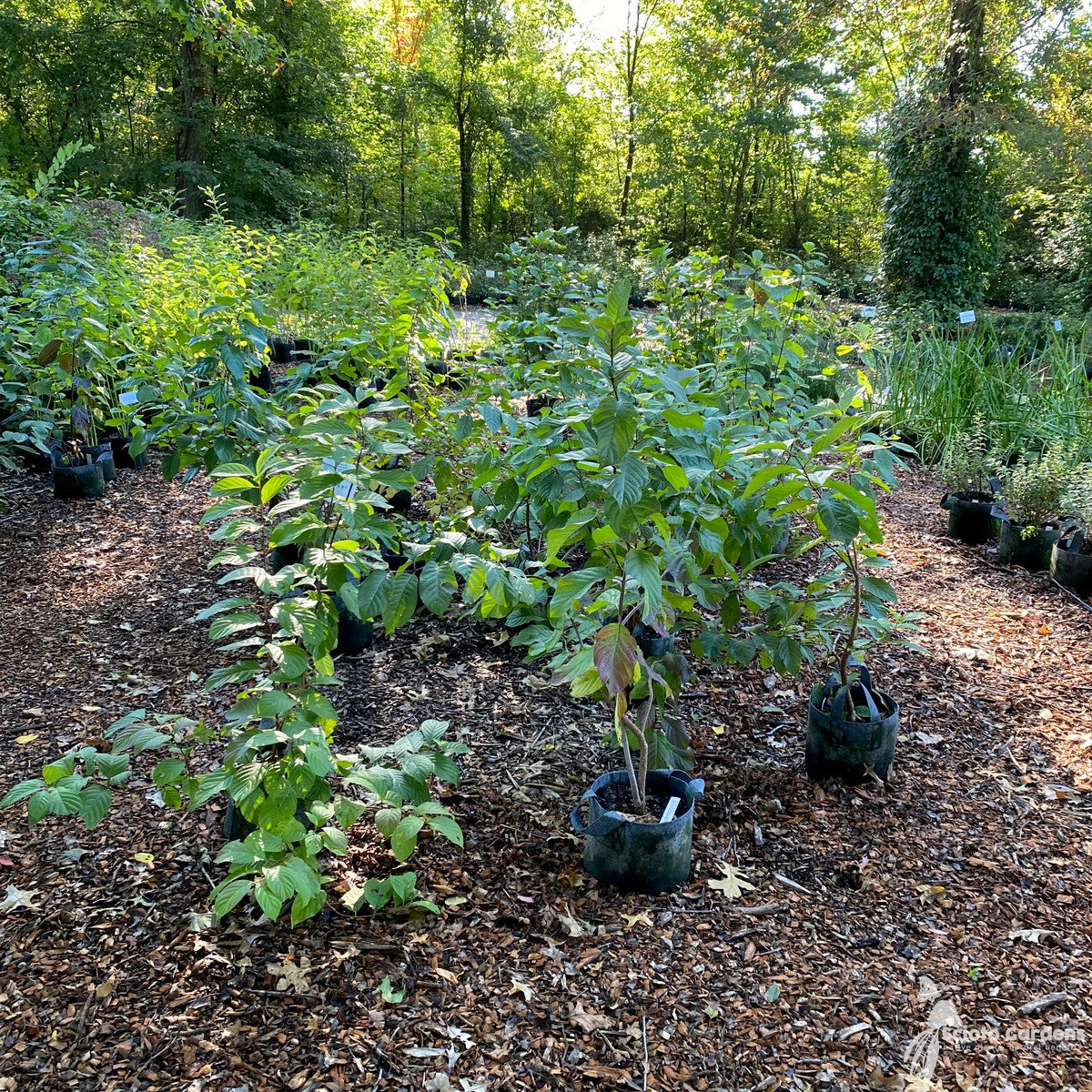
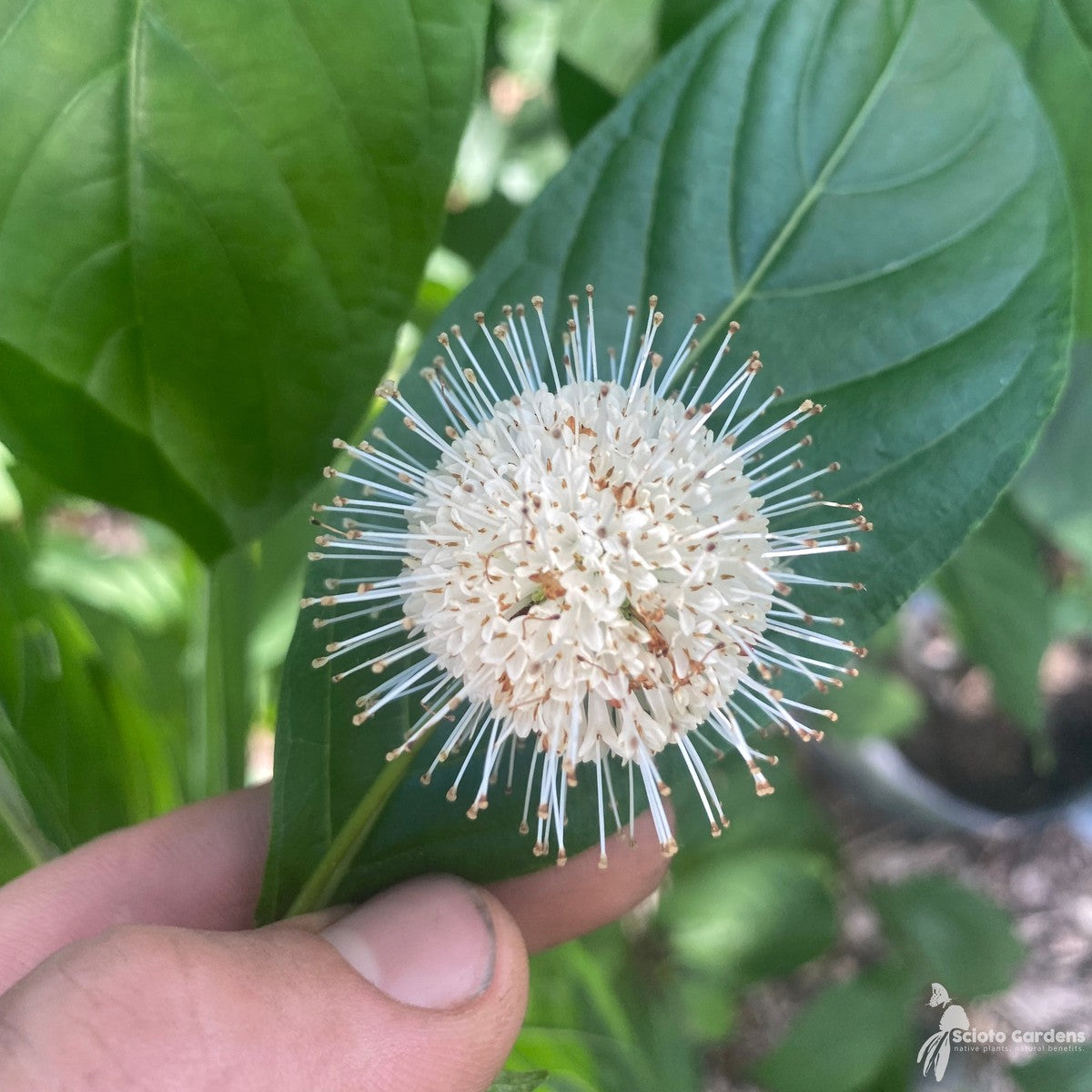
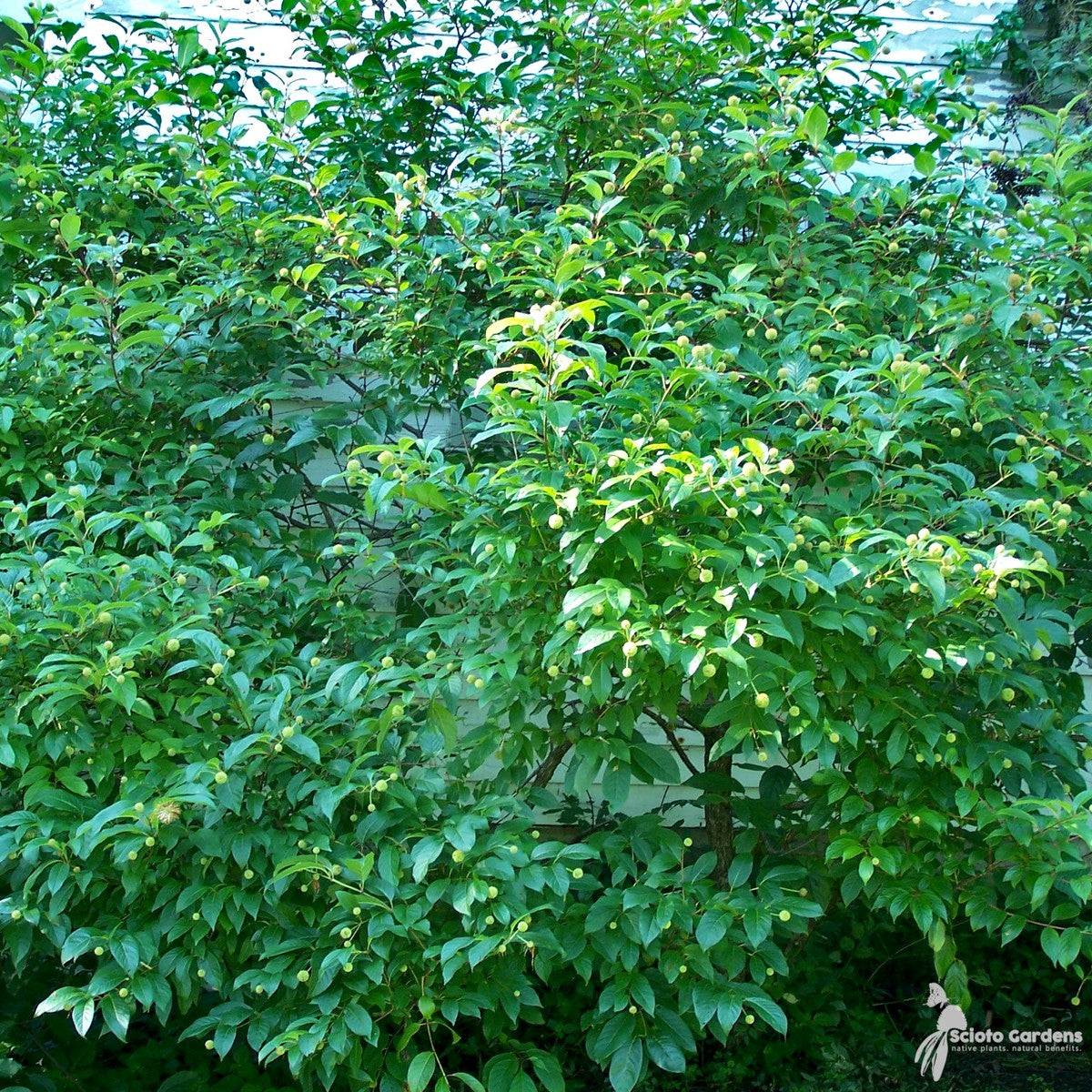
Buttonbush is a large, distinctive, multi-stemmed shrub native to wetlands of the eastern half of North America. It is variable in its size and spread, based on growing conditions, but typically reaches 5-8' tall and wide in moist soil with moderate fertility and sunshine. It can grow much larger in the wild, or in consistently wet, sunny areas with mild winters. It is not a shrub that requires pruning maintenance, but if a smaller, tidier, and more floriferous plant is desired, it can be cut to within 6" or 12" from the ground every winter or three. This will result in a fabulous 3-4' rounded mound covered in the characteristic spherical white flowers by summer! Shrubs managed in this fashion can be grown in smaller gardens than if left to its natural form.
Buttonbushes require adequate moisture to thrive and cannot be grown in dry soils. They are easily grown in low or poorly drained areas of the landscape, at the edge of ponds or streams, and in areas of occasional flooding. It is a great shrub for naturalizing or for large rain gardens.
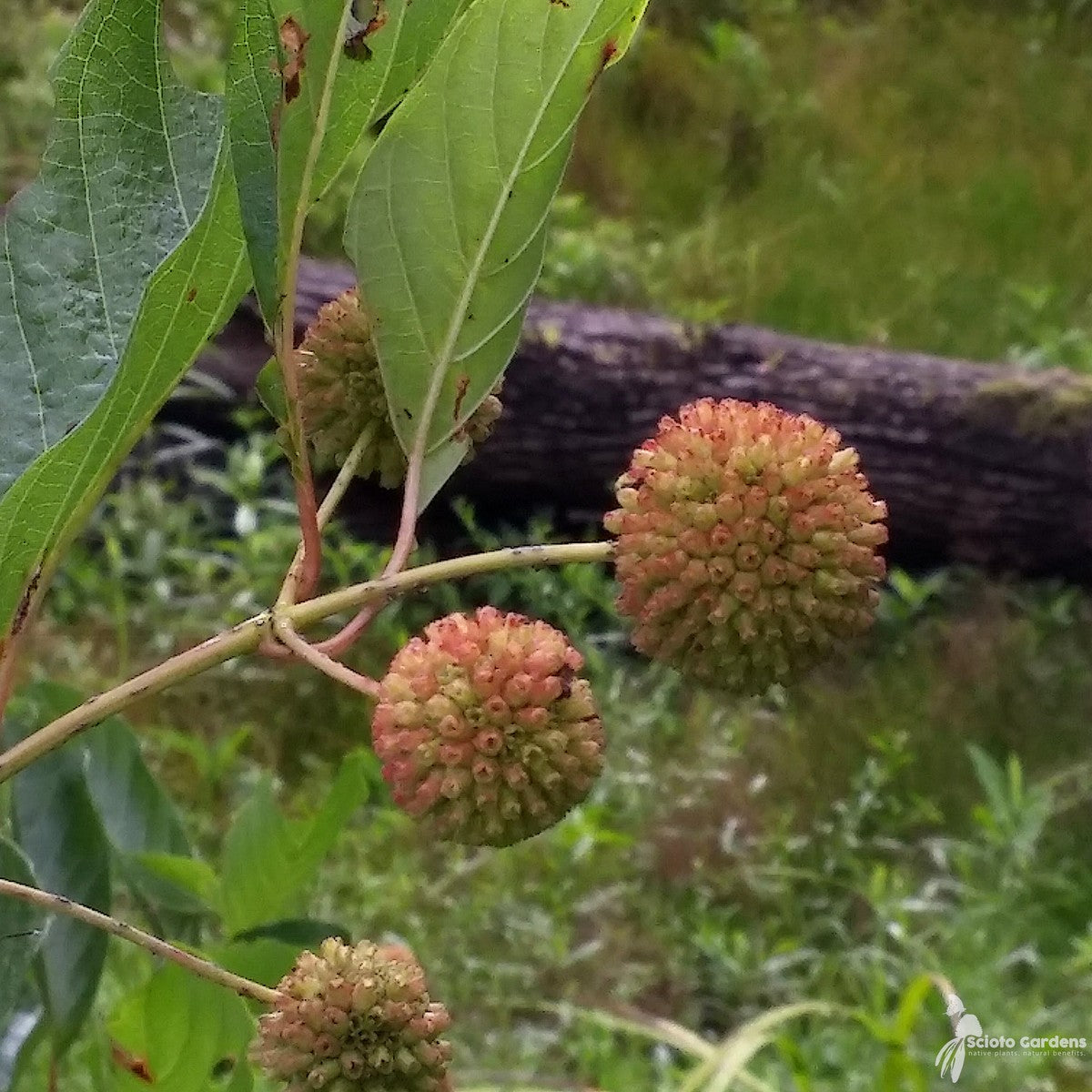
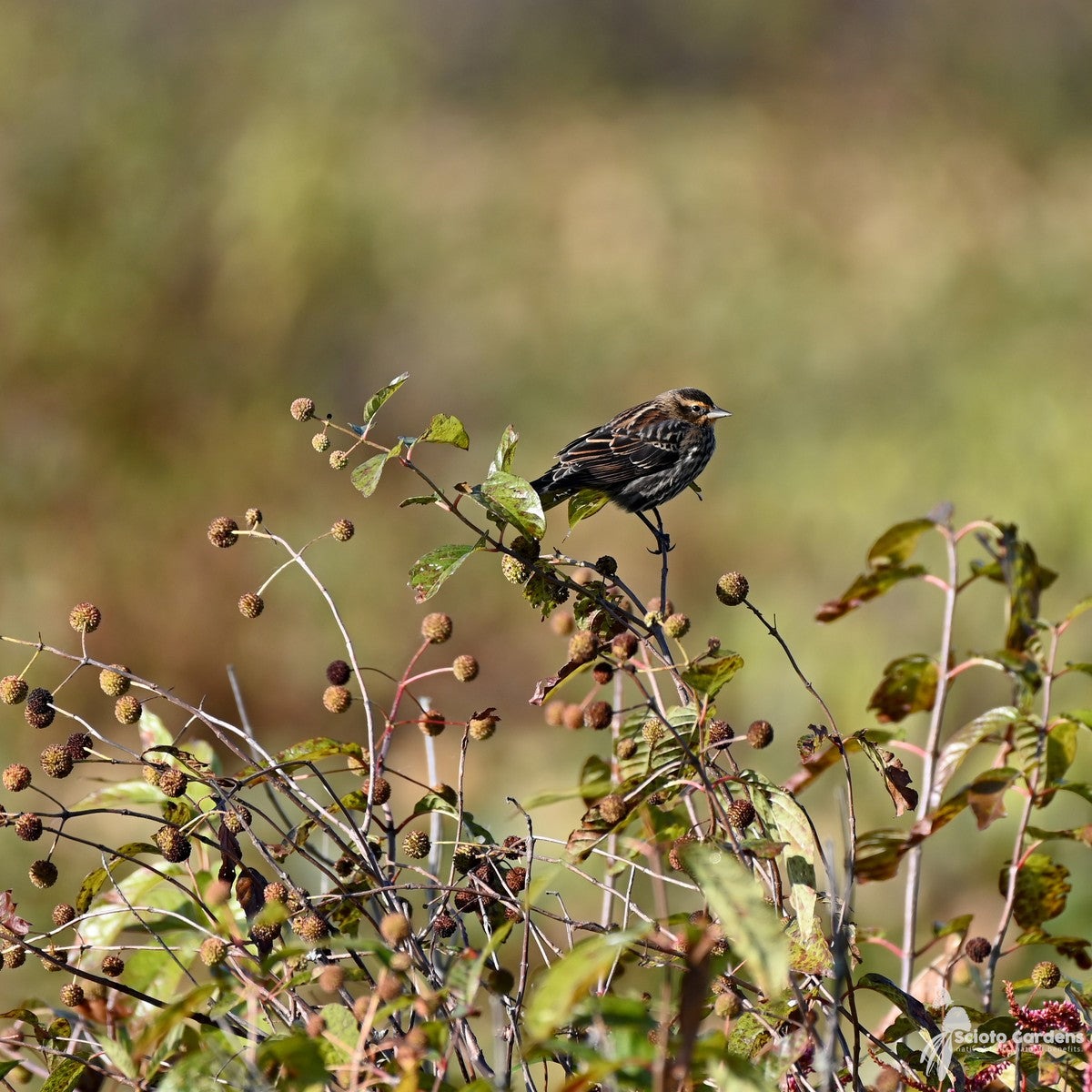
The fragrant, nectar-rich flowers attract an abundance of pollinators. Douglas Tallamy writes in Bringing Nature Home: “Buttonbush is another of my favorites for the butterfly garden. Its ball-shaped flowers capture the eye, it does well in wet areas, butterflies fight to gain access to its nectar, and it serves as a host plant for 18 species of Lepidoptera in my neck of the woods.” (pg. 115) Among the 18 species he mentions are the Smeared Dagger Moth, Promethea Silkmoth, Hydrangea Sphinx Moth, Titan Sphinx Moth and the Saddleback Caterpillar Moth. This is also known as a “honey plant” because of its importance to bees, who visit the flowers for copious amounts of nectar and pollen. At least 24 bird species* are attracted to the mature nutlets in fall and winter. In addition to all of these features, Buttonbushes also provide protective cover and nesting sites to many wild creatures.
Sources:
Native Trees, Shrubs, & Vines by Wi
