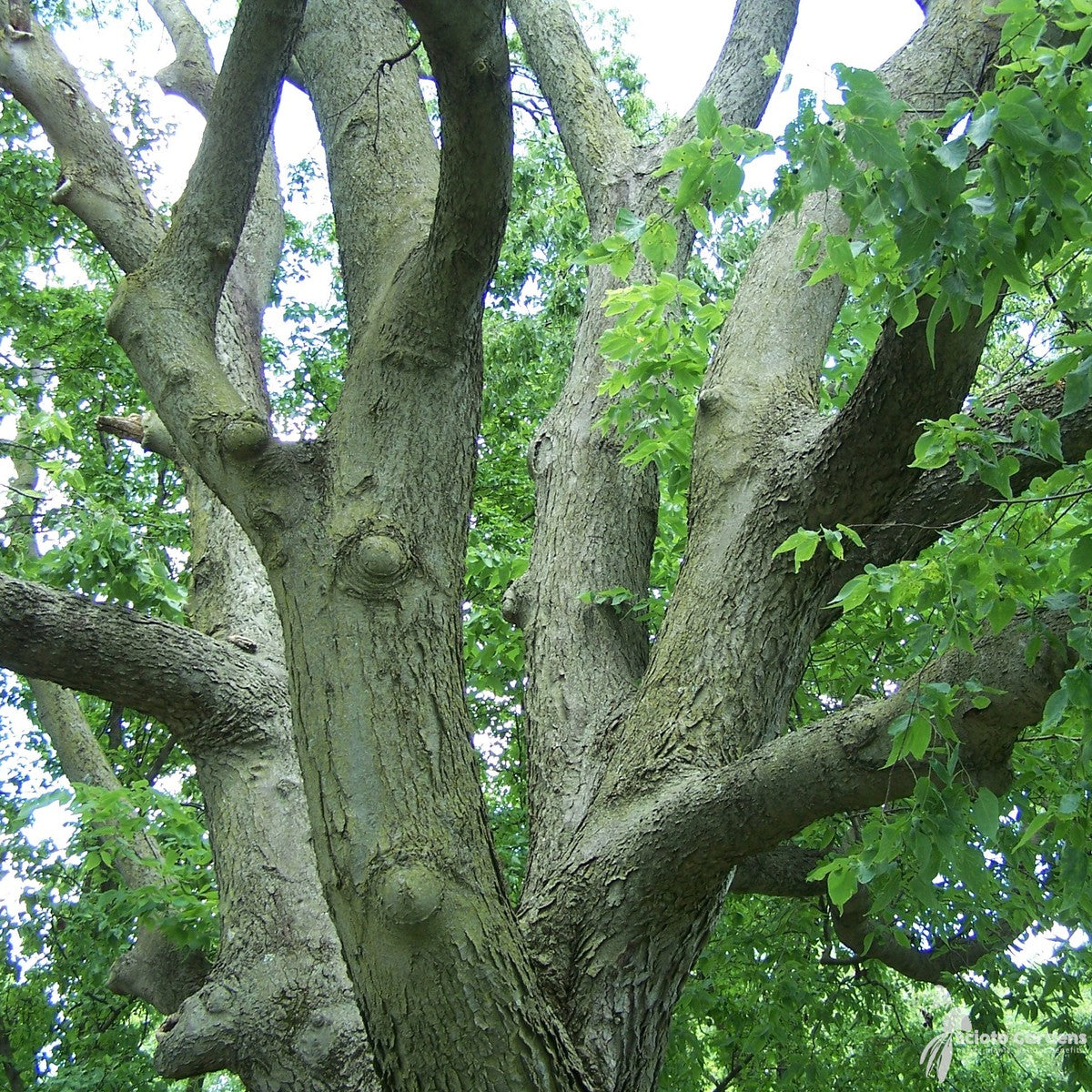
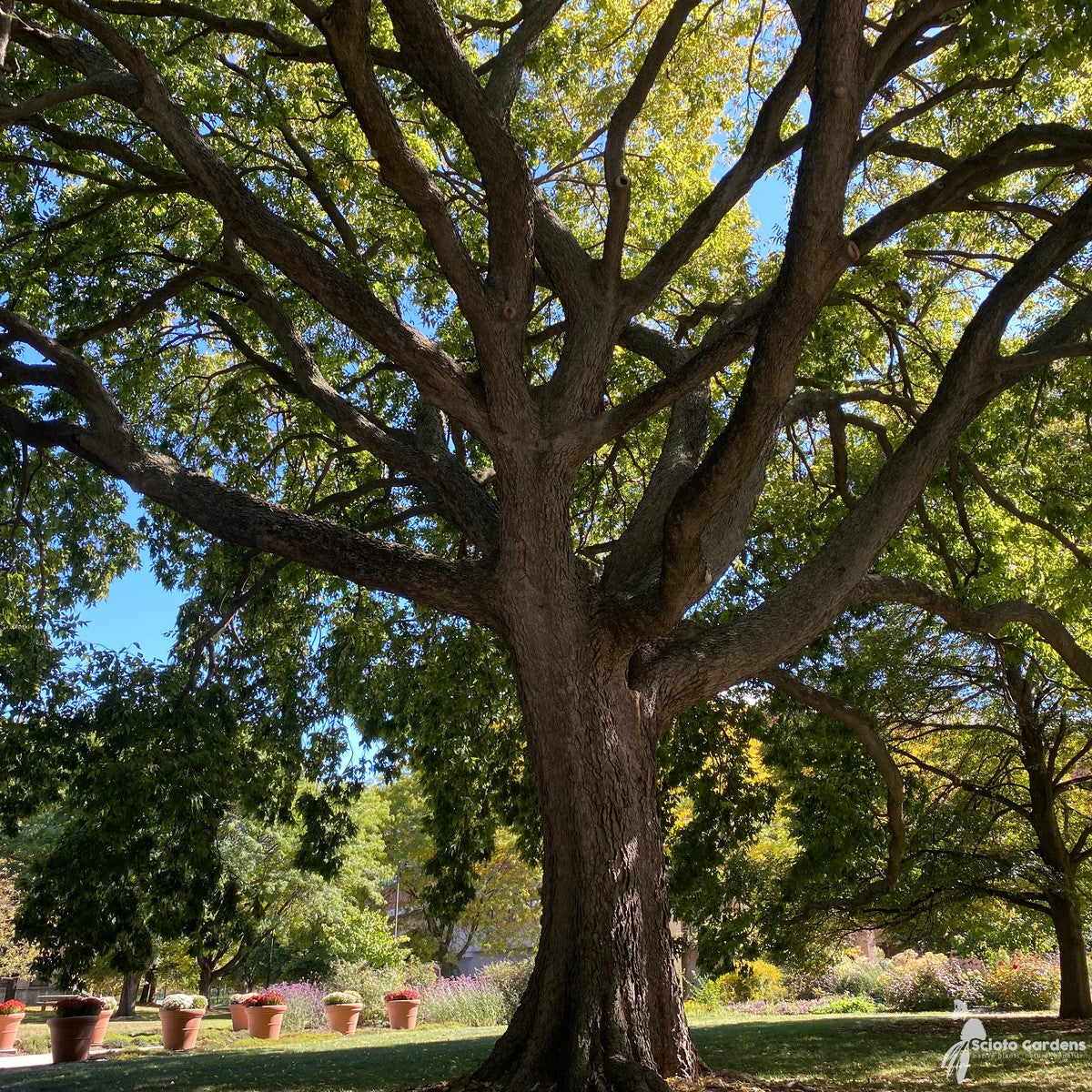
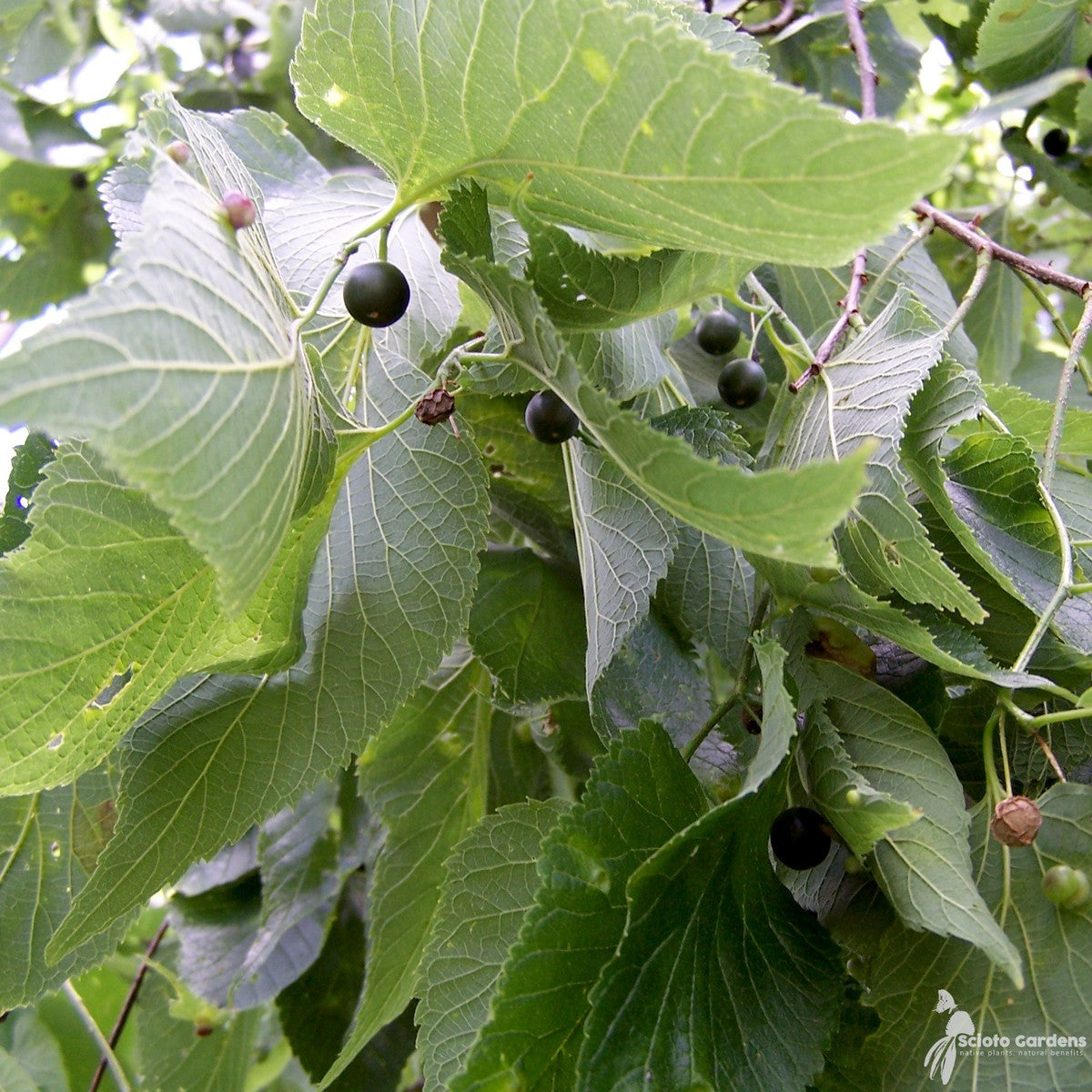
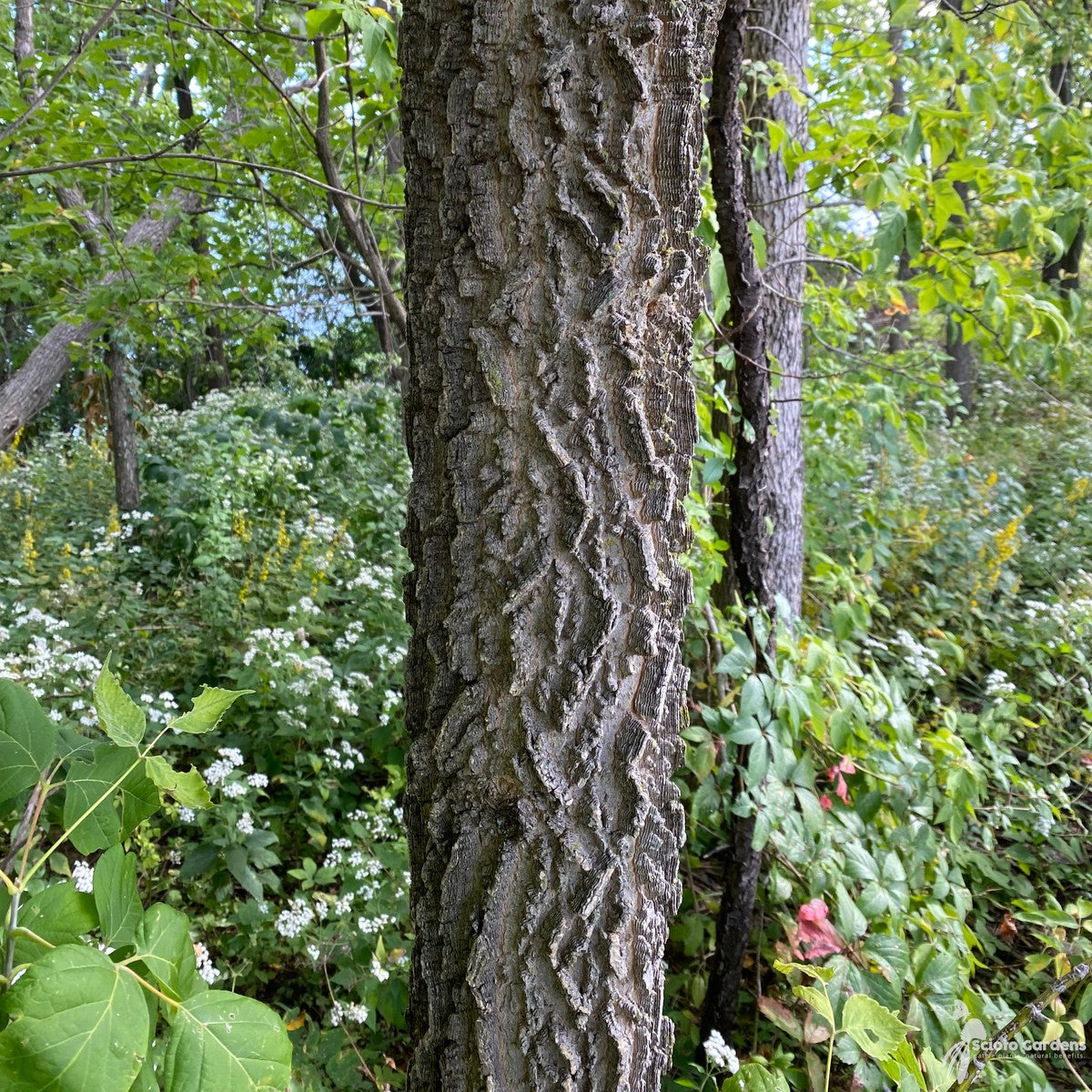
Common Hackberry is a tough and adaptable medium-sized native shade tree. It is tolerant of a wide range of soil conditions from wet to dry and acidic to alkaline pH, or sunny to shady locations, and wind-ravaged sites. It is mildly salt tolerant, drought tolerant and able to withstand urban air pollution. These trees can be a good replacement for deceased Ash and Elm trees in the landscape. They somewhat resemble (and are in the same family as) Elm trees in their growth habit and in leaf but with a very corky, distinctive gray bark. The leaves are often affected by harmless nipple galls, and branches can be infected by a mite which causes “witch’s broom” structures, looking like a tangled ball of twigs. Both of these typical characteristics are merely cosmetic issues and are not detrimental to the plant.
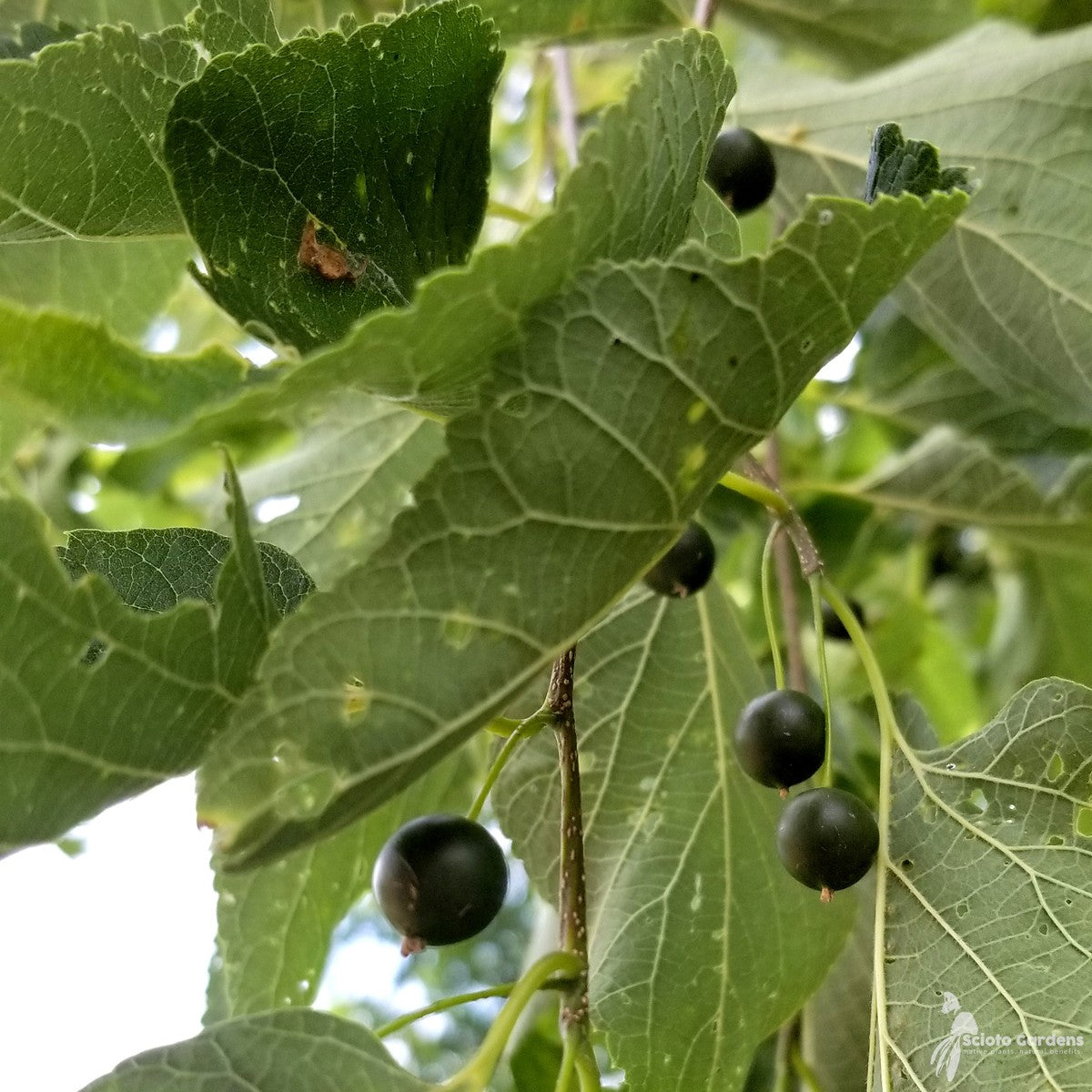
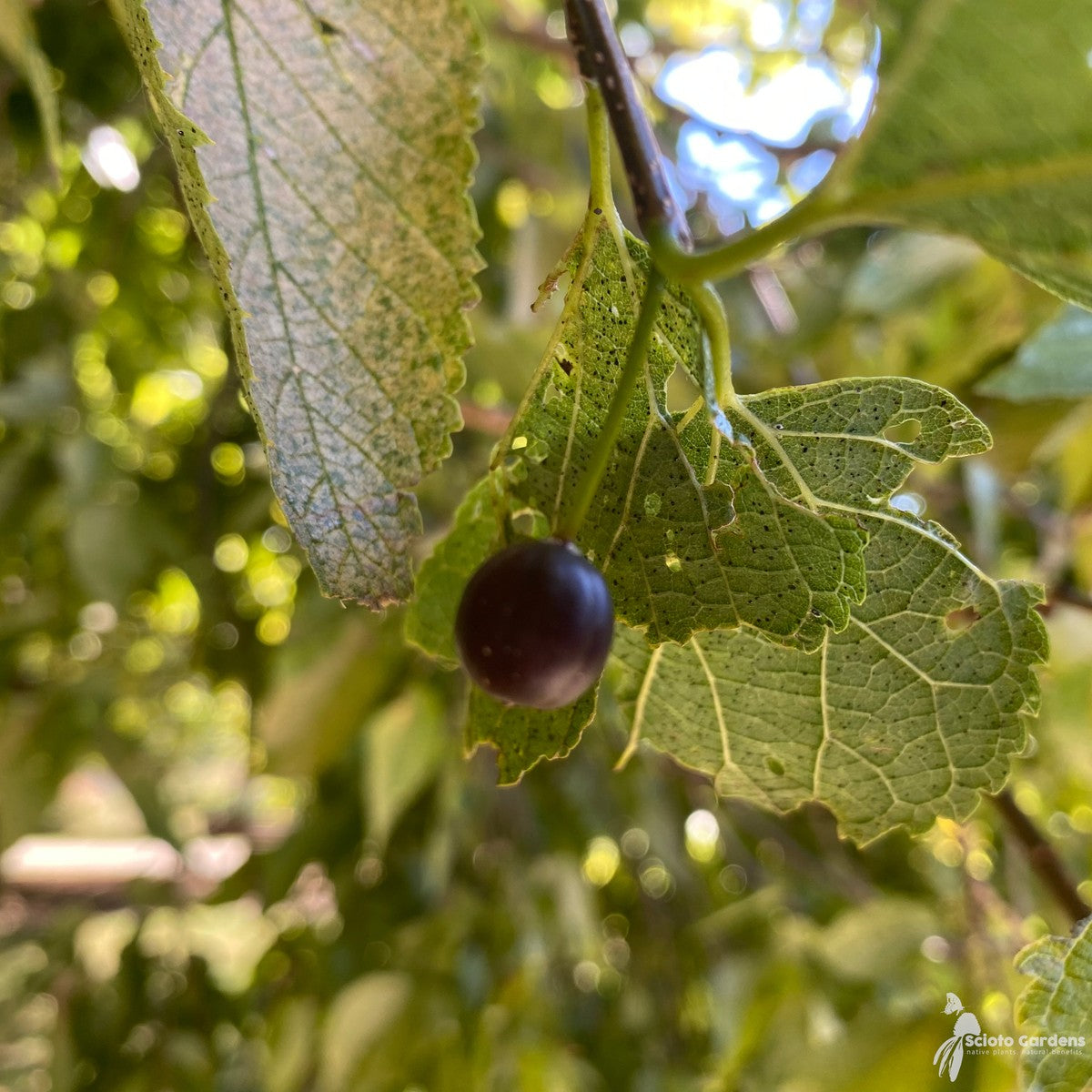
Common Hackberries produce a blueish black, berry-like fruit from their wind-pollinated flowers. The berries mature in summer and can remain on the trees into the winter, offering an increasingly valuable food source for wildlife. They are adored by birds with at least 48 species* seeking them out for a meal. The wildlife value of Celtis occidentalis is extremely high, with many wild creatures using the berries as emergency winter food and using the trees for protective cover and nesting sites. At least 43 species** of Lepidoptera host on these trees, including the Hackberry Emperor, Question Mark, Tawny Emperor, and American Snout.
Sources:
Native Trees, Shrubs, & Vines by William Cullina
Manual of Woody Landscape Plants by Michael A. Dirr
**Midwestern Native Shrubs and Trees by Charlotte Adelman & Bernard L. Schwartz
*Gardening for the Birds by George Adams
Missouri Botanical Garden
Lady Bird Johnson Wildflower Center
Illinois Wildflowers
Grow Native! Salt-Tolerant Native Plants


Limited Time Offer:
0
days
0
hours
0
mins
0
secs
Celtis occidentalis (Common Hackberry) - 3 gal
Common Hackberry

Plant Care & Installation Quick-Guide
Proper acclimation and installation are key to your plant's success. Please cross-reference these tips with your plant's specific ID tags:
·
Pre-Planting: Store plants in a light-appropriate area on soil or grass (avoid hot concrete or asphalt) and water daily until the soil is saturated and the pot feels heavy. If temperatures drop below 30°F, move pots to a garage or cover them to prevent root freeze.
·
Installation: Dig a hole matching the depth of the pot, remove the fabric container, and ensure the plant’s crown or root flare is level with the ground. Fill gaps with soil, water heavily, and apply 2 inches of mulch—keeping it clear of the stem.
·
Ongoing Care: Check moisture daily by feeling 1–2 inches into the soil; water deeply at the base if the soil feels dry or warm. Newly installed plants require frequent watering (up to 3–4 times weekly in heat) until fully established, which can take a few months for perennials and up to two years for trees.