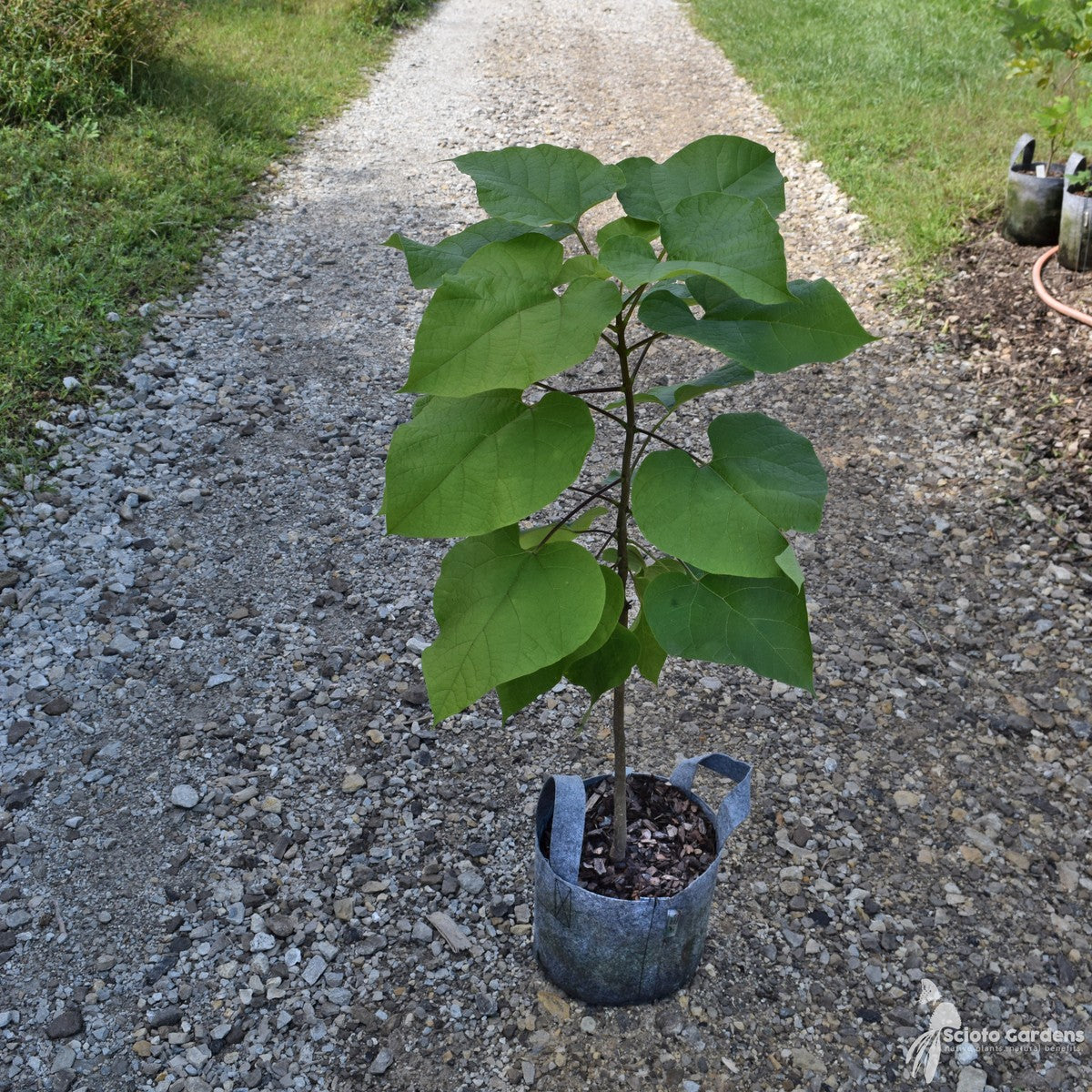
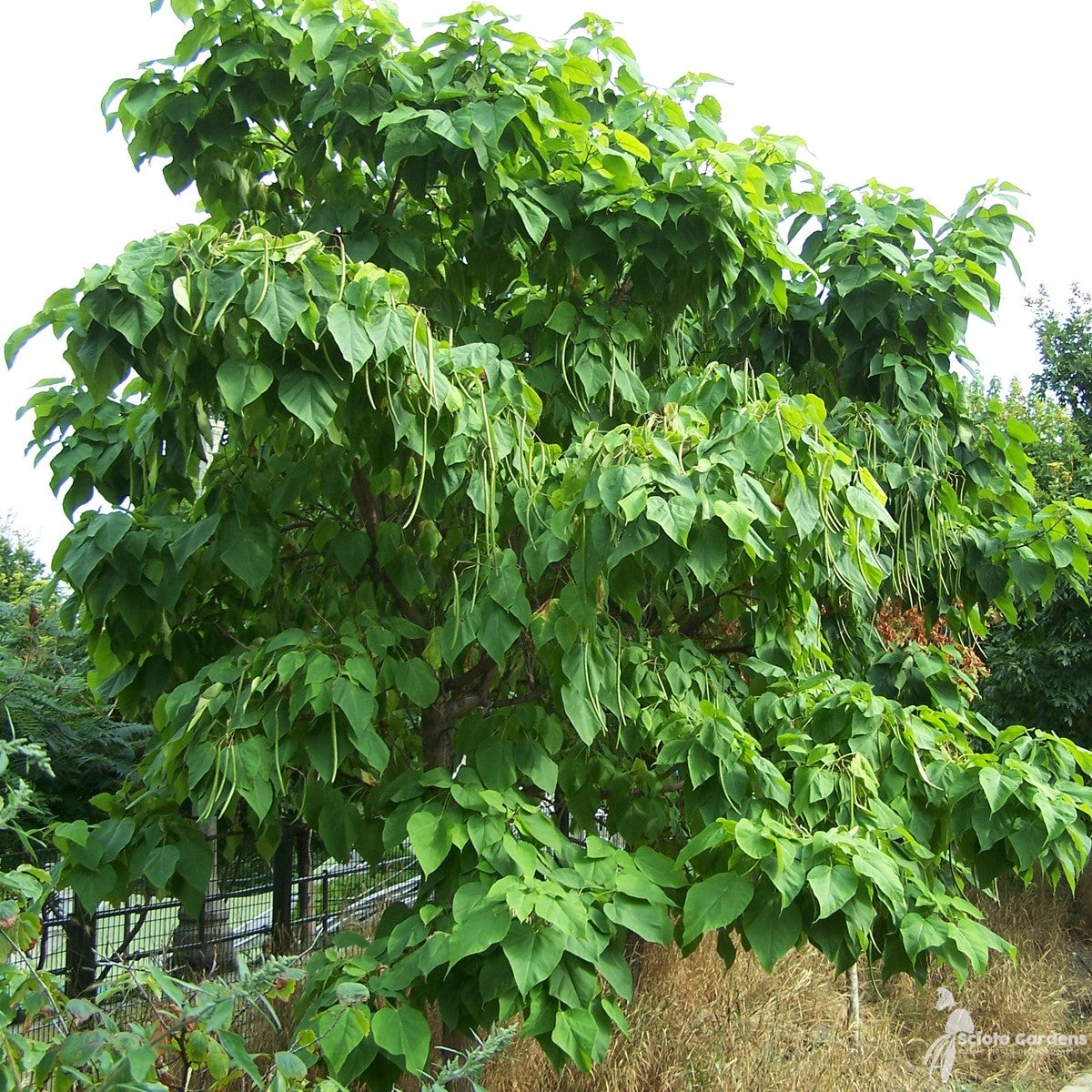
Northern Catalpa is a bold textured, highly adaptable and easy to grow native, medium-sized tree. For two weeks in late spring the trees are covered in showy, upright, white flower clusters that attract Ruby-Throated Hummingbirds, bumblebees and moths as their primary pollinators. Many other insects visit the blooms for nectar, as well as the extra-floral nectaries on the leaves. These function as a part of the tree’s defenses against herbivory by attracting insects such as lady beetles, ants and parasitoid wasps to protect it. Northern Catalpas are host to only 8 species of Lepidoptera, including the Catalpa Sphinx Moth, which have been harvested and used by fisherfolk as bait.
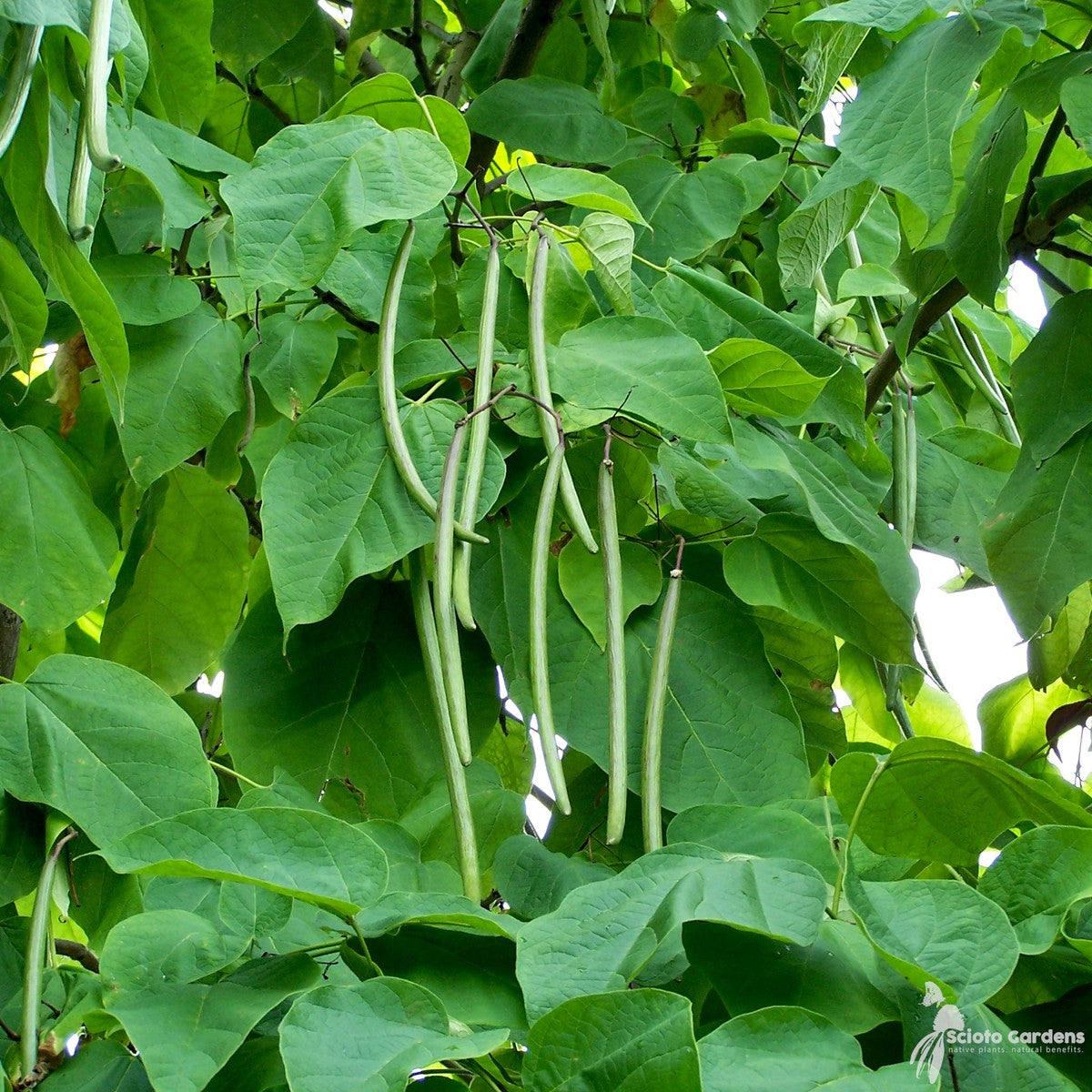
In the landscape, Northern Catalpas are useful for difficult areas of seasonal changes in soil moisture, areas with urban air pollution, deer pressure, or near Black Walnuts and they possess a modest degree of salt tolerance. The wood is relatively brittle and should not be located over structures or parking areas, and the cylindrical seed pods can be quite messy in the fall when they are shed from the tree. It is easier to appreciate the beauty and boldness of these trees if they are well-sited, away from areas that their messy tendencies in fall will be noticed. Their winter habit is also very attractive with a dense and chunky looking branching structure.
There is a non-native, highly invasive look-alike referred to as Princess Tree, Empress Tree, or Royal Paulownia (Paulownia tomentosa) which is native to China and was imported in the late 1800s as an ornamental. It is an extremely fast-growing tree with very similar looking leaves and flowers to our native Northern Catalpa. At 8-10 years of age, a single Princess Tree can produce as many as 20 million windborne seeds that can travel up to 2 miles. See this link to help differentiate between Northern Catalpa and Princess Tree, and this link for more information and images.
Sources:
Native Trees, Shrubs, & Vines by William Cullina
Manual


Limited Time Offer:
0
days
0
hours
0
mins
0
secs
Catalpa speciosa (Northern Catalpa) - 5 gal
Northern Catalpa

Plant Care & Installation Quick-Guide
Proper acclimation and installation are key to your plant's success. Please cross-reference these tips with your plant's specific ID tags:
·
Pre-Planting: Store plants in a light-appropriate area on soil or grass (avoid hot concrete or asphalt) and water daily until the soil is saturated and the pot feels heavy. If temperatures drop below 30°F, move pots to a garage or cover them to prevent root freeze.
·
Installation: Dig a hole matching the depth of the pot, remove the fabric container, and ensure the plant’s crown or root flare is level with the ground. Fill gaps with soil, water heavily, and apply 2 inches of mulch—keeping it clear of the stem.
·
Ongoing Care: Check moisture daily by feeling 1–2 inches into the soil; water deeply at the base if the soil feels dry or warm. Newly installed plants require frequent watering (up to 3–4 times weekly in heat) until fully established, which can take a few months for perennials and up to two years for trees.