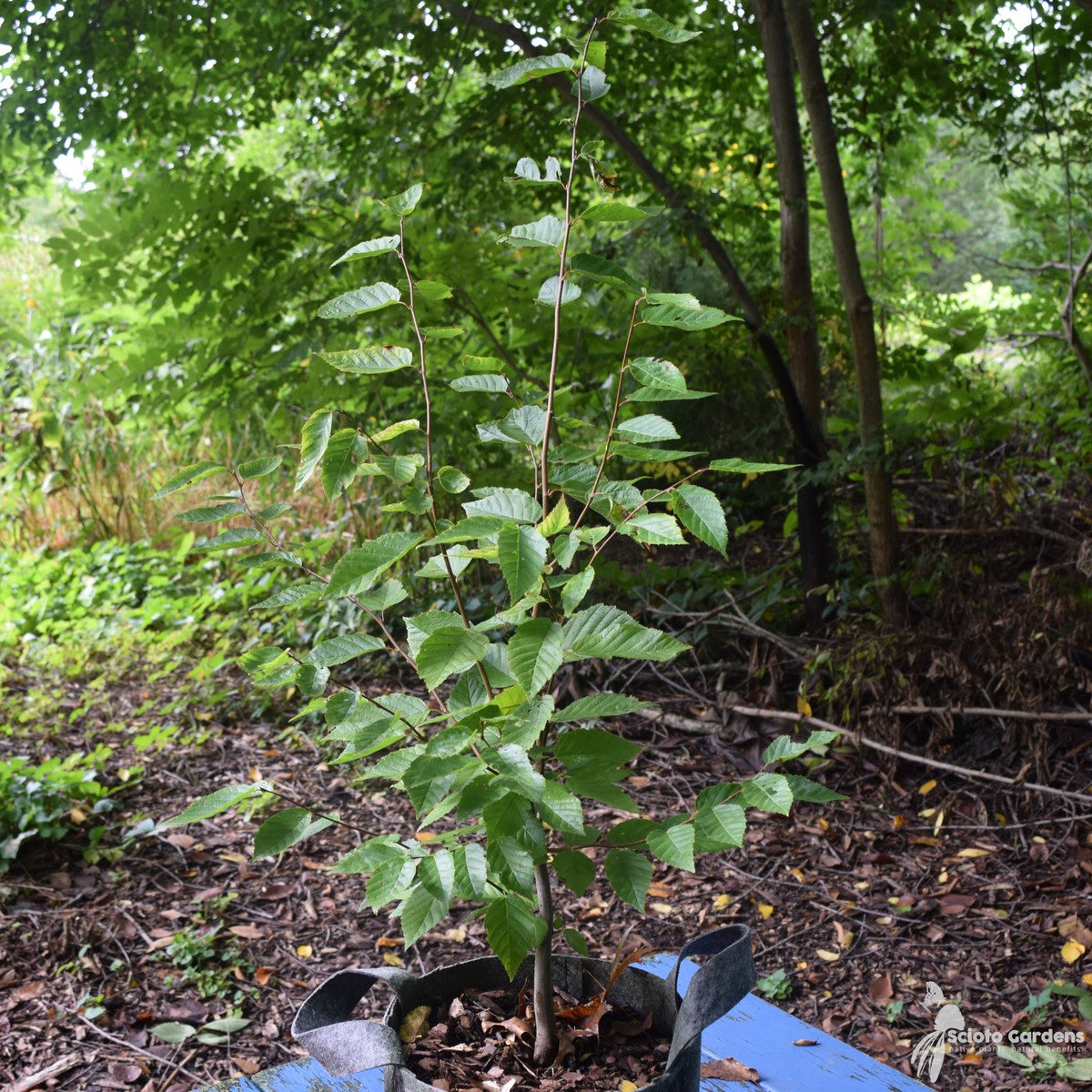
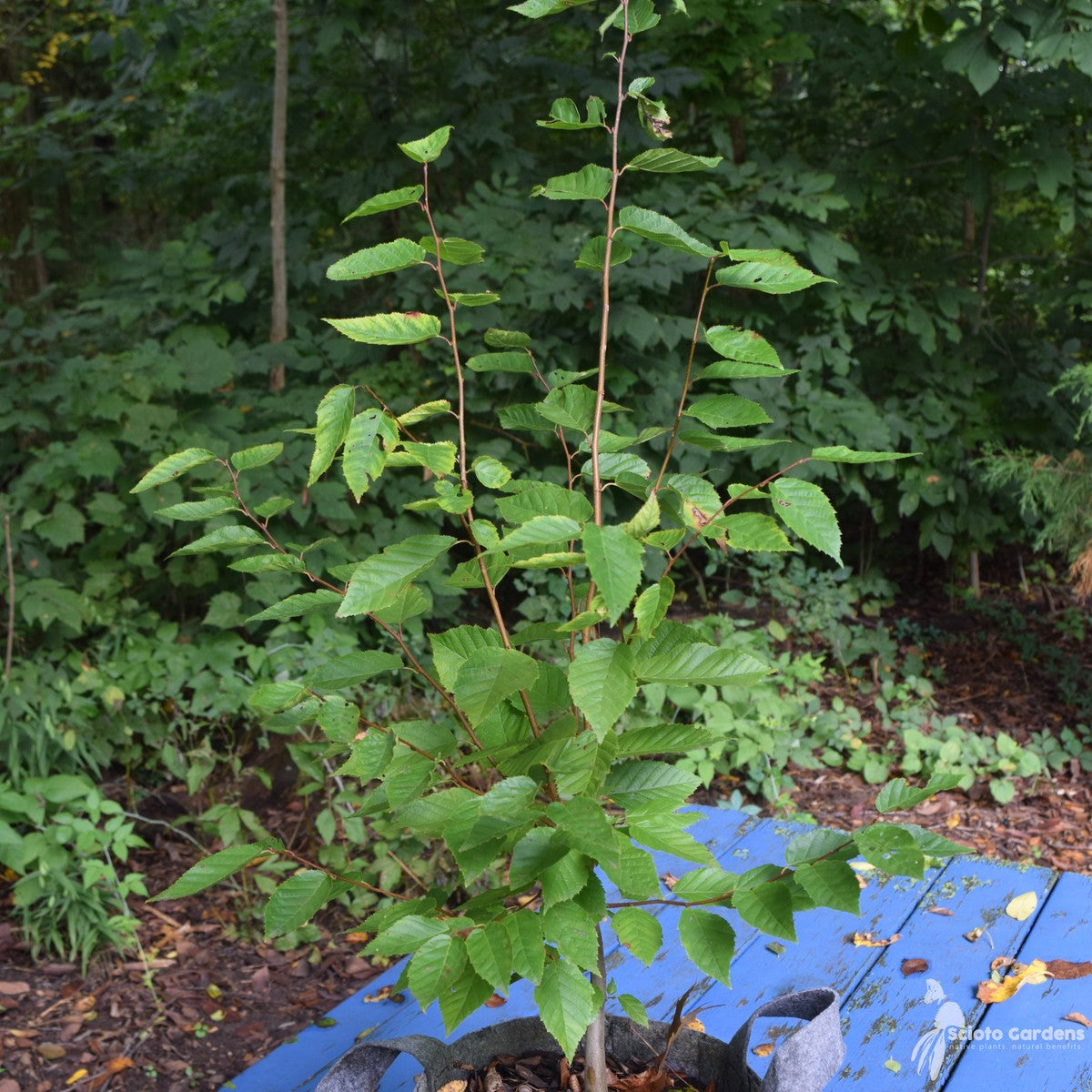
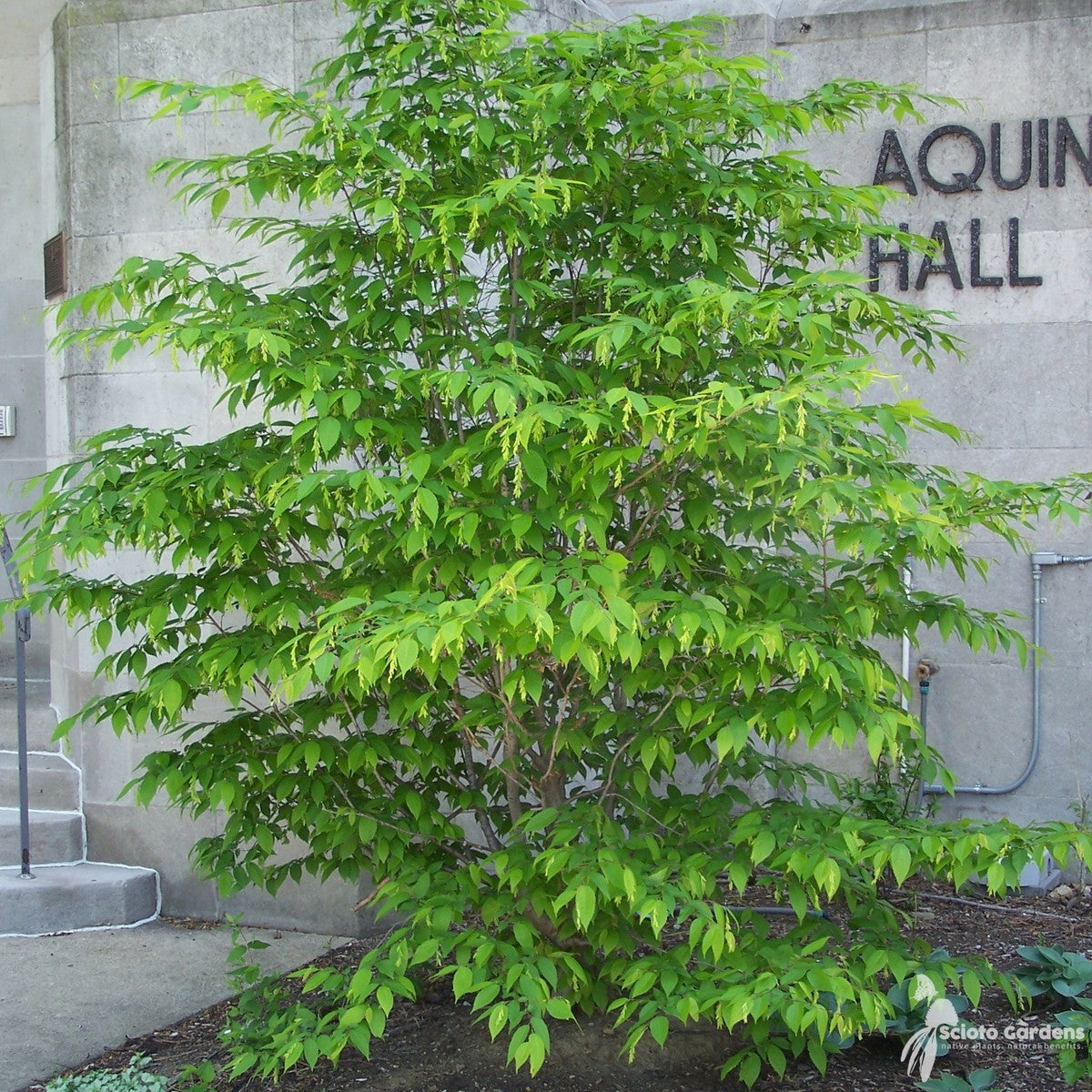
Musclewood, also known as American Hornbeam, is a slow-growing, native understory tree which naturally grows in the shade of floodplain tree species. The growth rate is an average of 8-10' over 10 years, but it is capable of growing faster with consistent moisture and fertile soil. The name Musclewood describes the rippling, muscular appearance of the smooth mature bark, and also the dense strength of the quality of the wood which has been used on a small scale to make durable tool handles.
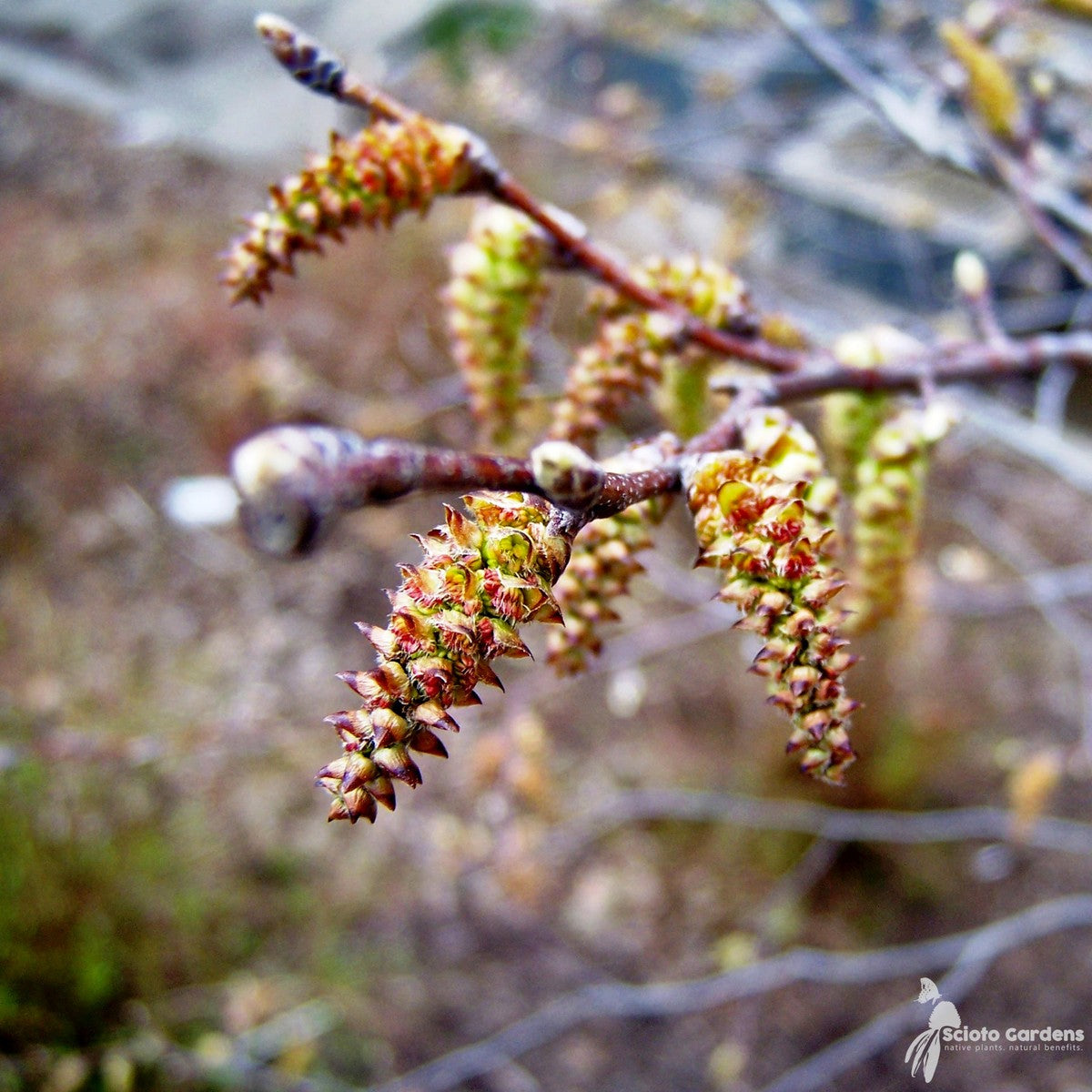
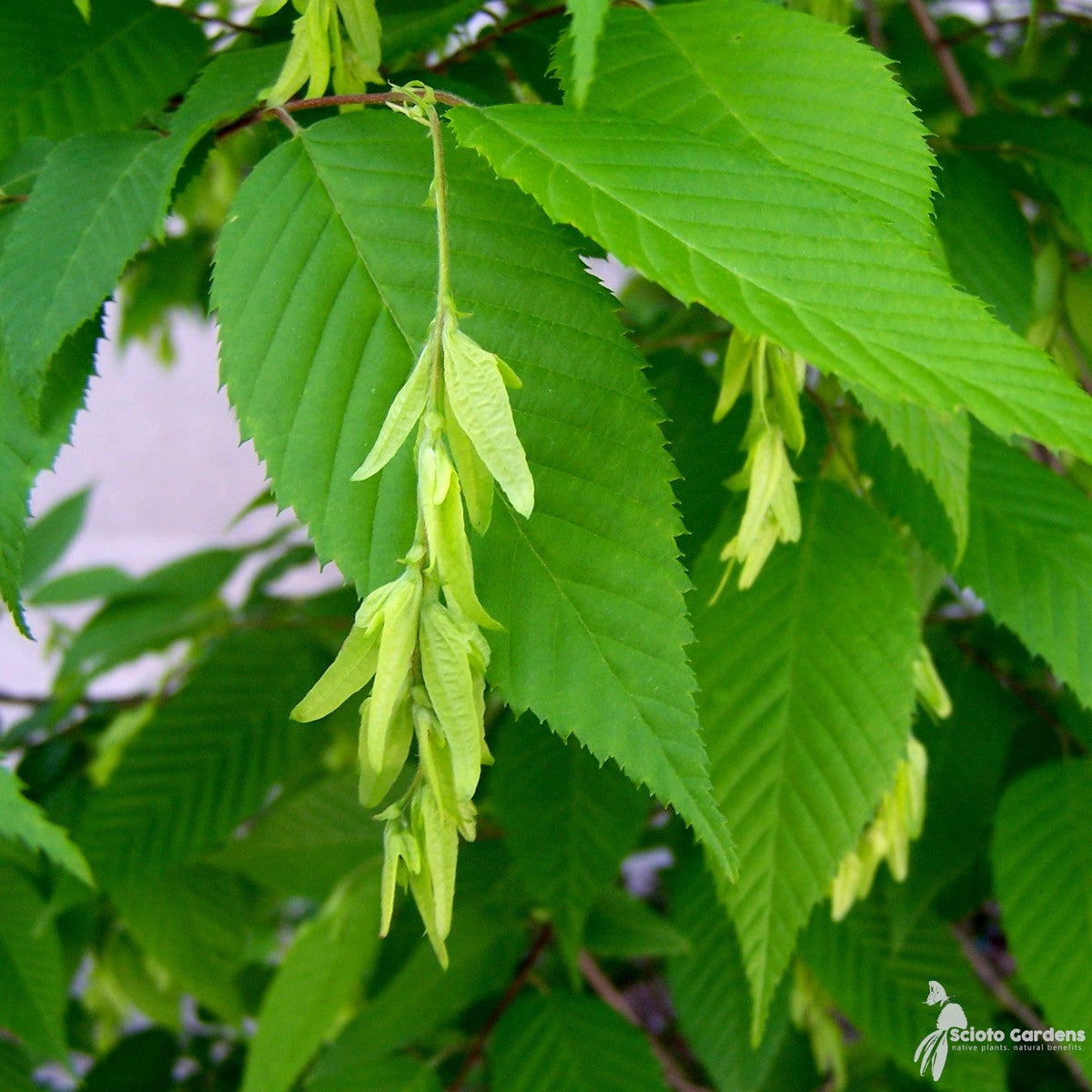
The spring flowers are inconspicuous wind-pollinated catkins with the female catkins later turning into interesting, drooping nutlets enclosed by papery bracts. These nuts are consumed by wildlife including many bird species that facilitate seed dispersal, along with the wind. The foliage is used by at least 68 species* of Lepidoptera including the Striped Hairstreak, Red-Spotted Purple and the Eastern Tiger Swallowtail.
Musclewood trees are fairly adaptable and easy to grow, unbothered by pest and disease issues, and very low-maintenance. They are not messy trees, and make excellent specimen trees for shady areas of the landscape. Their fall color can be spectacular in sunnier conditions, with brilliant yellow, orange, red and purple. They take pruning and shaping well, and even shearing, for hedges and more formal plantings.
Sources:
Native Trees, Shrubs, & Vines by William Cullina
Manual of Woody Landscape Plants by Michael A. Dirr
*Midwestern Native Shrubs and Trees by Charlotte Adelman & Bernard L. Schwartz
Missouri Botanical Garden
Lady Bird Johnson Wildflower Center
The Morton Arboretum-Black Walnut Tolerance


Limited Time Offer:
0
days
0
hours
0
mins
0
secs
Carpinus caroliniana (Musclewood, American Hornbeam) - 3 gal
Musclewood, American Hornbeam

Plant Care & Installation Quick-Guide
Proper acclimation and installation are key to your plant's success. Please cross-reference these tips with your plant's specific ID tags:
·
Pre-Planting: Store plants in a light-appropriate area on soil or grass (avoid hot concrete or asphalt) and water daily until the soil is saturated and the pot feels heavy. If temperatures drop below 30°F, move pots to a garage or cover them to prevent root freeze.
·
Installation: Dig a hole matching the depth of the pot, remove the fabric container, and ensure the plant’s crown or root flare is level with the ground. Fill gaps with soil, water heavily, and apply 2 inches of mulch—keeping it clear of the stem.
·
Ongoing Care: Check moisture daily by feeling 1–2 inches into the soil; water deeply at the base if the soil feels dry or warm. Newly installed plants require frequent watering (up to 3–4 times weekly in heat) until fully established, which can take a few months for perennials and up to two years for trees.