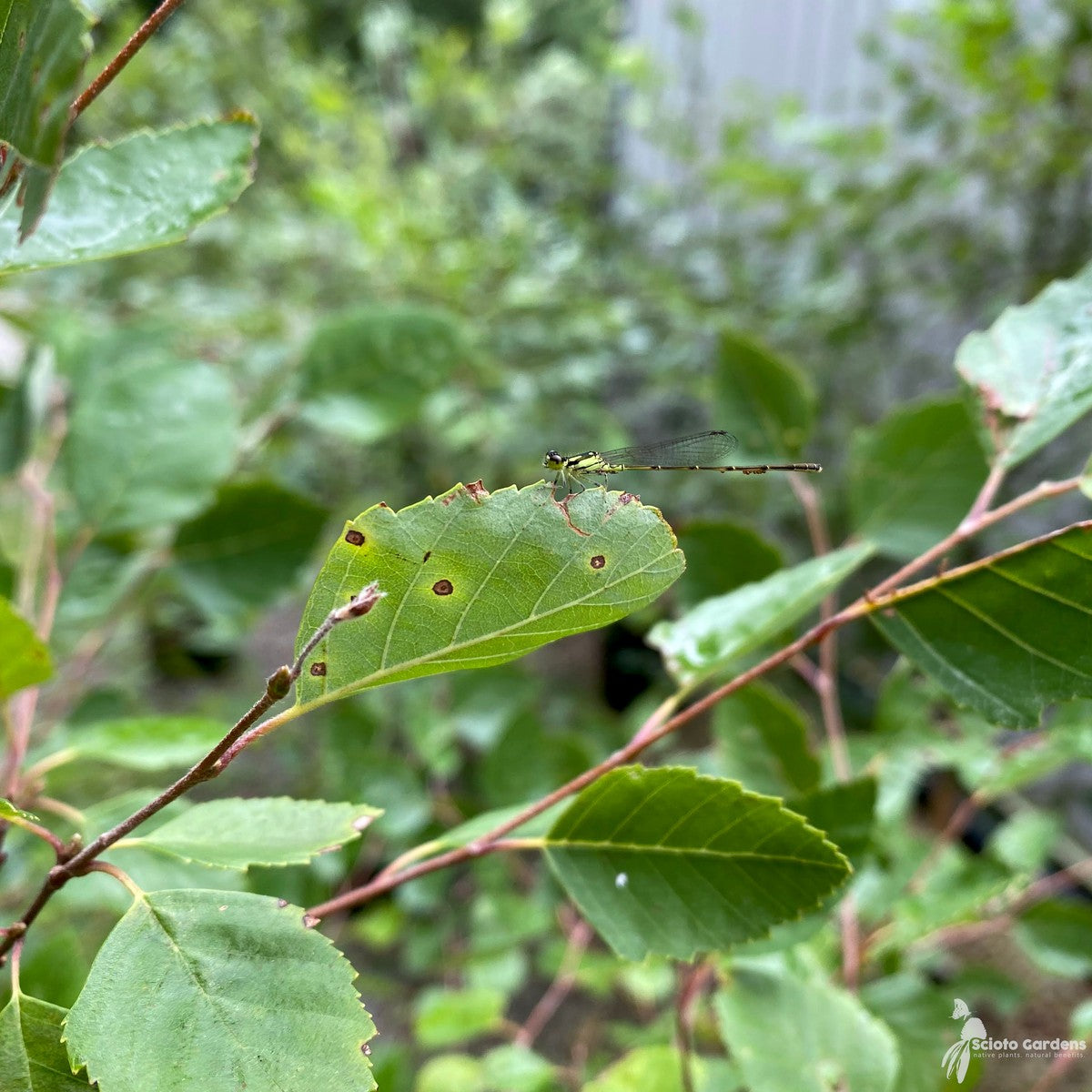
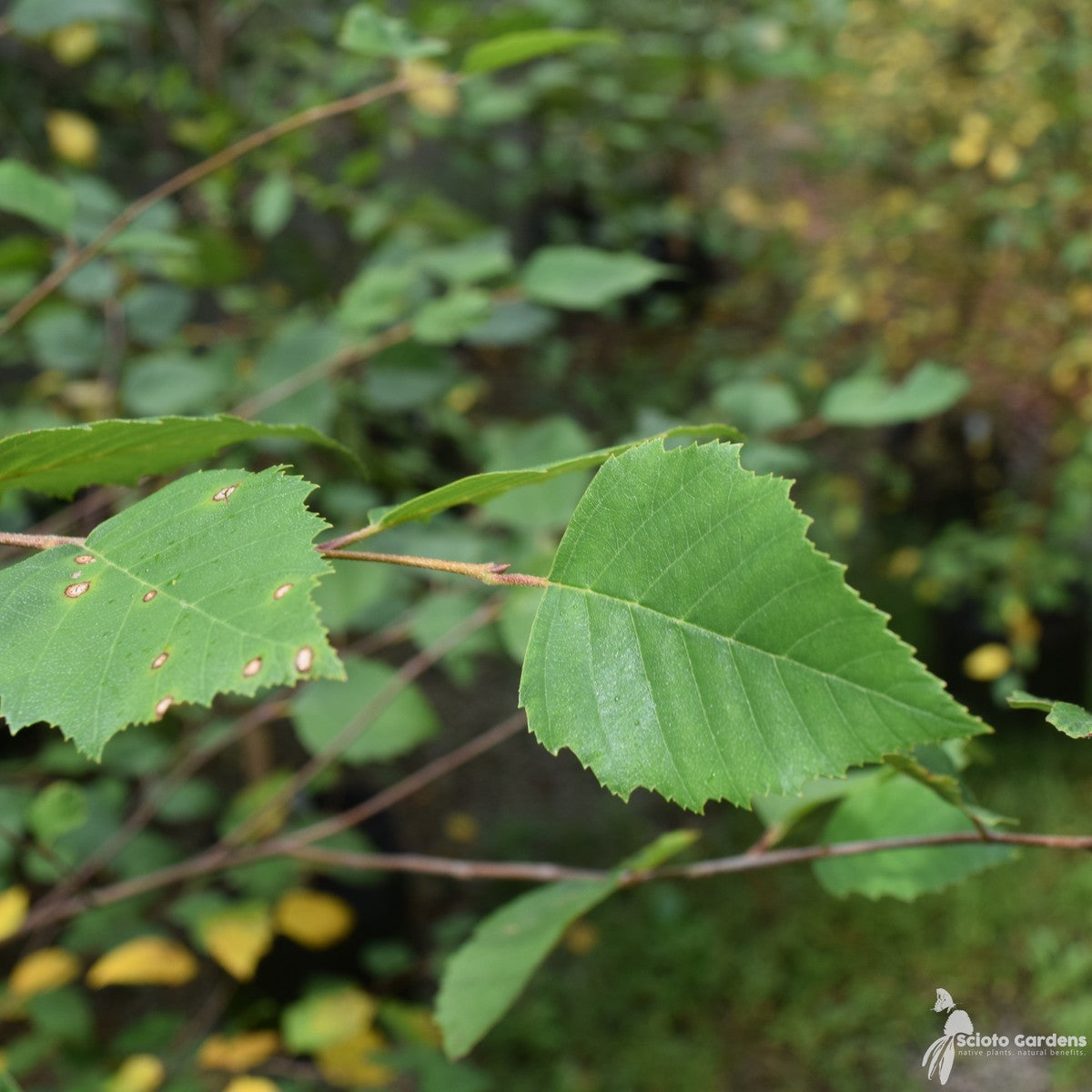
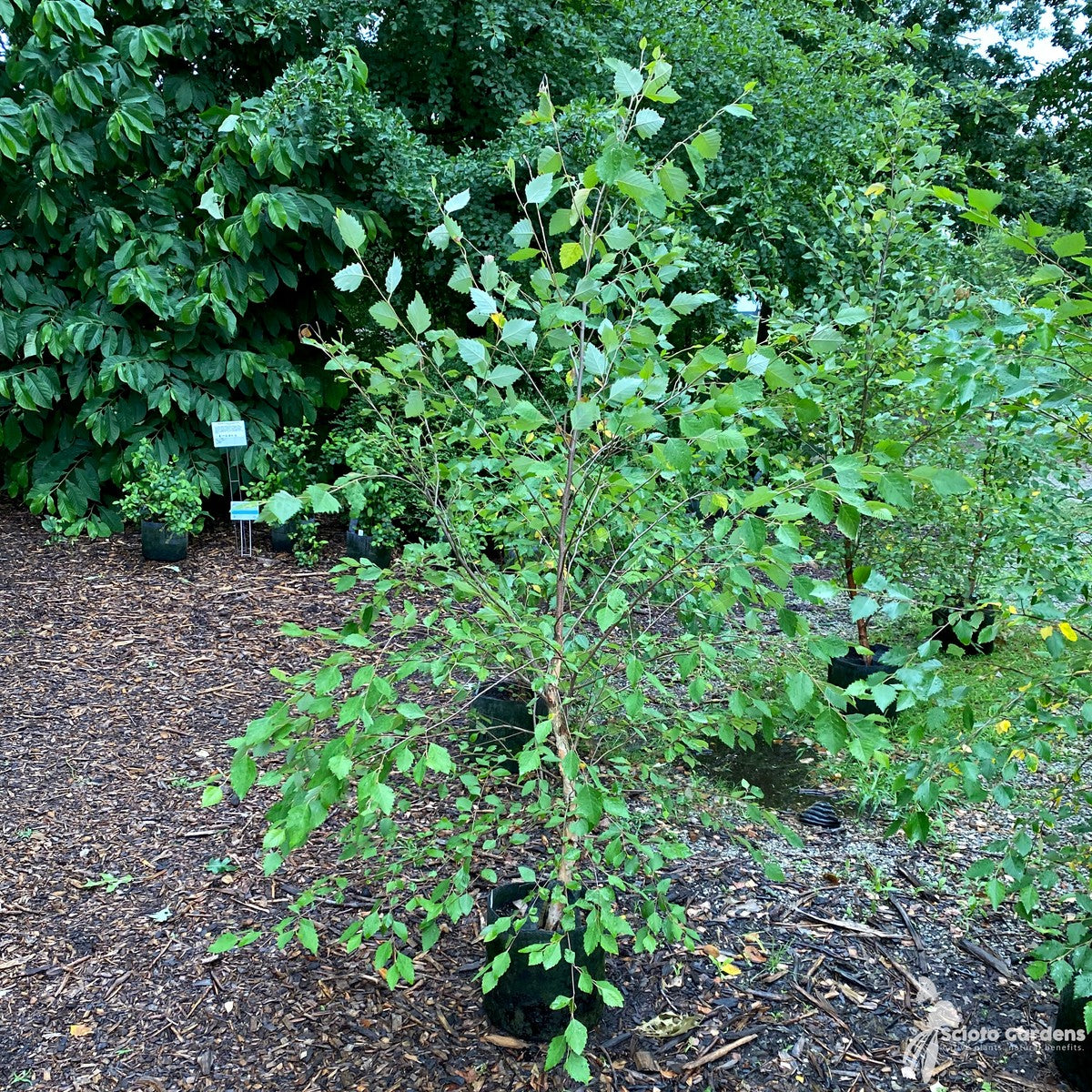
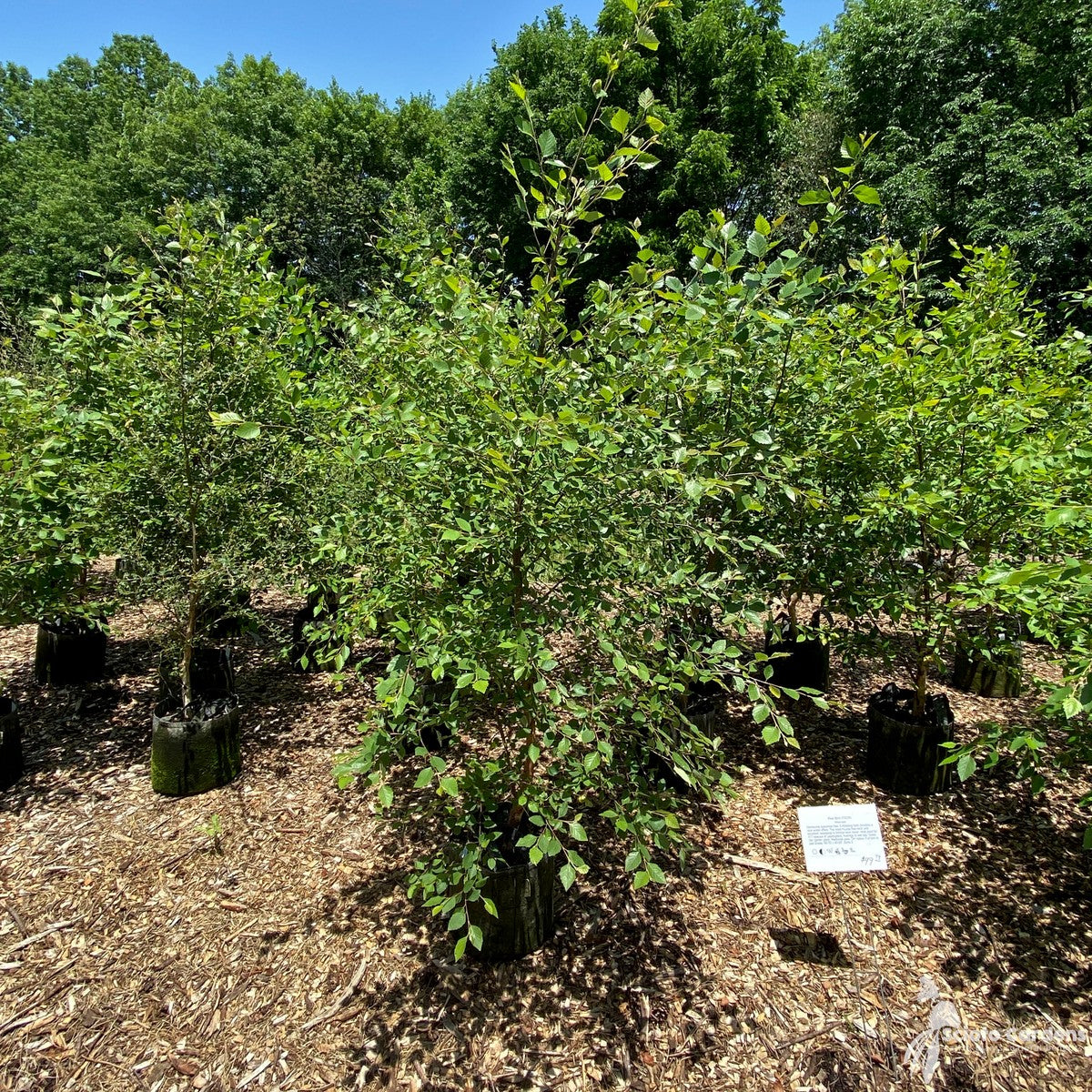
River Birch is a handsome, medium-sized native tree that can withstand the heat of summer, tolerate wet soil as well as occasional dry soil, and has excellent resistance to the Bronze Birch Borer (Agrilus anxius.) It is a fast growing tree, able to reach heights of 30-40' in the first 20 years after planting. River Birches want acidic soil (ideally not higher than 6.5) to avoid chlorosis, so testing the soil prior to planting is recommended. It can make a beautiful specimen tree or plant multiple for a pleasant grove in low areas with intermittent dryness, or near ponds and streams. The adaptability and tidiness of River Birches make them the birch of choice for the home landscape. The muted yellow color of the foliage in fall is attractive before the leaves drop, and the exfoliating bark adds a high degree of winter interest to any garden.
In late spring, River Birches begin blooming with showy, rusty yellow catkins which droop from the arching branches. The flowers are wind-pollinated. Buds, catkins, and seeds are eaten by many species of bird including Black-Capped Chickadee, Purple Finch, and Slate-Colored Junco, as well as Red Squirrels. Betula spp. are host to at least 284 species of Lepidoptera, providing a massive buffet of caterpillars for insectivorous birds and nestlings. Because of this, the ecological value of Birches is very high.
Sources:
Native Trees, Shrubs, & Vines by William Cullina
Manual of Woody Landscape Plants by Michael A. Dirr
Midwestern Native Shrubs and Trees by Charlotte Adelman & Bernard L. Schwartz
Missouri Botanical Garden
Lady Bird Johnson Wildflower Center
The Morton Arboretum-Black Walnut Tolerance
Grow Native! Salt-Tolerant Native Plants


Limited Time Offer:
0
days
0
hours
0
mins
0
secs
Betula nigra (River Birch) - 5 gal
River Birch

Plant Care & Installation Quick-Guide
Proper acclimation and installation are key to your plant's success. Please cross-reference these tips with your plant's specific ID tags:
·
Pre-Planting: Store plants in a light-appropriate area on soil or grass (avoid hot concrete or asphalt) and water daily until the soil is saturated and the pot feels heavy. If temperatures drop below 30°F, move pots to a garage or cover them to prevent root freeze.
·
Installation: Dig a hole matching the depth of the pot, remove the fabric container, and ensure the plant’s crown or root flare is level with the ground. Fill gaps with soil, water heavily, and apply 2 inches of mulch—keeping it clear of the stem.
·
Ongoing Care: Check moisture daily by feeling 1–2 inches into the soil; water deeply at the base if the soil feels dry or warm. Newly installed plants require frequent watering (up to 3–4 times weekly in heat) until fully established, which can take a few months for perennials and up to two years for trees.