
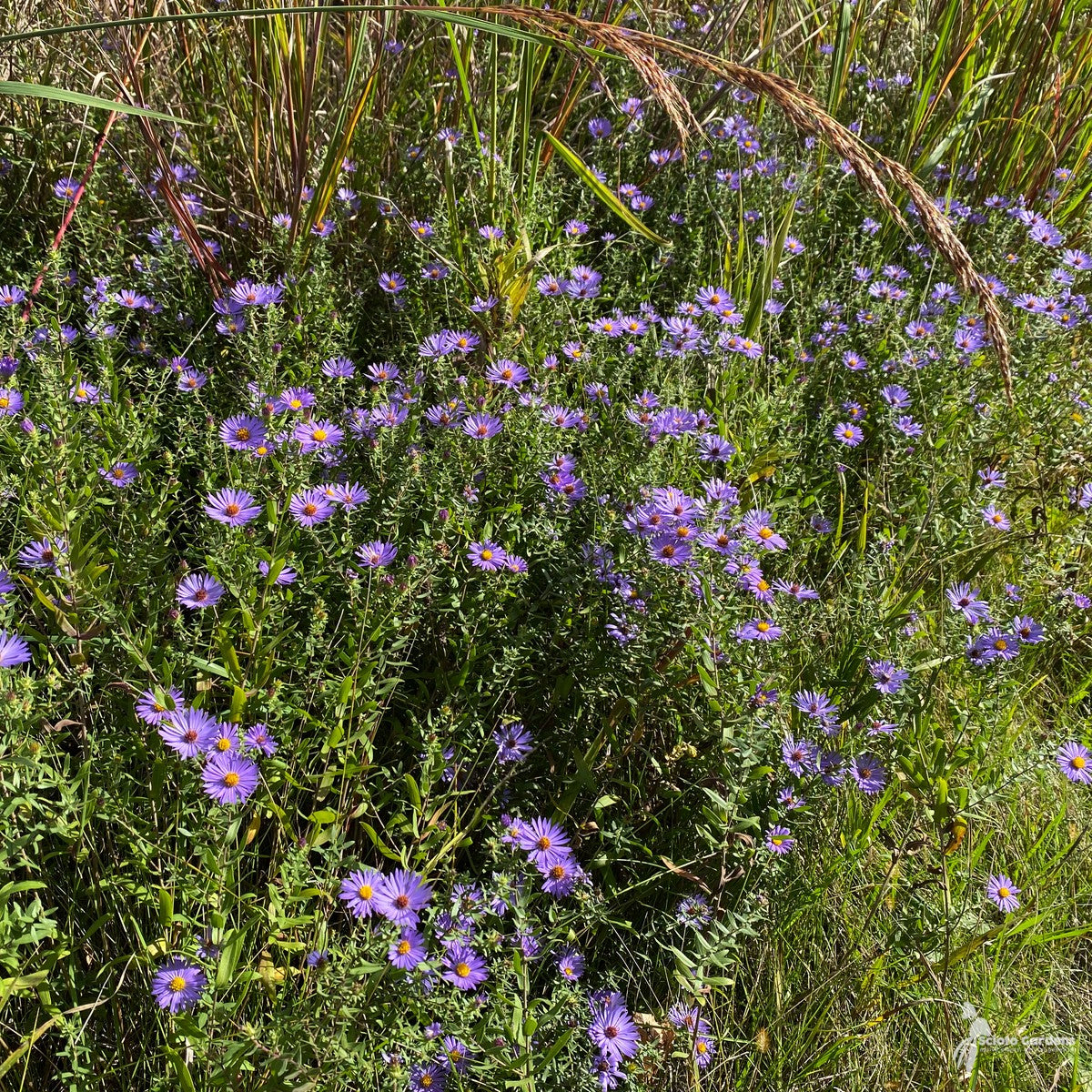
Aromatic Aster is a low, dense, bushy wildflower native to much of central and eastern North America. Its cheerful, lavender-colored blooms are large and eye-catching. This is one of the latest blooming asters, but it will bloom all the way up to and sometimes after light frosts. The foliage maintains an attractive, grey-green pubescence throughout the season. When the foliage is bruised, it releases a potent fragrance somewhere between mint and balsam. This helps to deter herbivory by mammals, making it one of the easier asters to get established in areas with heavy deer populations. This species is tough and adaptable, able to thrive in hot, dry sites. It can withstand drought and high pH soils, and it is tolerant of Black Walnut toxicity and moderately salt tolerant. It is a beautiful addition to naturalistic gardens, meadows, and difficult areas of the landscape that need a late-season dose of beauty. Asters provide an invaluable source of late-season nectar and pollen for a myriad of insect pollinators. Butterflies flock to the flowers, often hanging from them like delicate ornaments. Many granivorous birds, such as juncos and goldfinches, will eat the seeds through the winter months. Asters are also larval host plants of many Lepidoptera, including the cartoonish-looking Saddleback Caterpillar and the familiar and loveable Woolly Bear caterpillar, which turns into the Isabella Tiger Moth. The caterpillars of the tiny Pearl Crescent and the Silvery Checkerspot butterflies overwinter on or near the base of the plants and emerge in the spring. Elusive but captivating Fork-tailed Katydids, Short-Winged Katydids, and Blatchley’s Walkingsticks are also attracted to these Asters.
Sources:
Herbaceous Perennial Plants by Allan M. Armitage
Missouri Botanical Garden
Lady Bird Johnson Wildflower Center
Illinois Wildflowers
NC State Extension
The Morton Arboretum-Black Walnut Tolerance
