

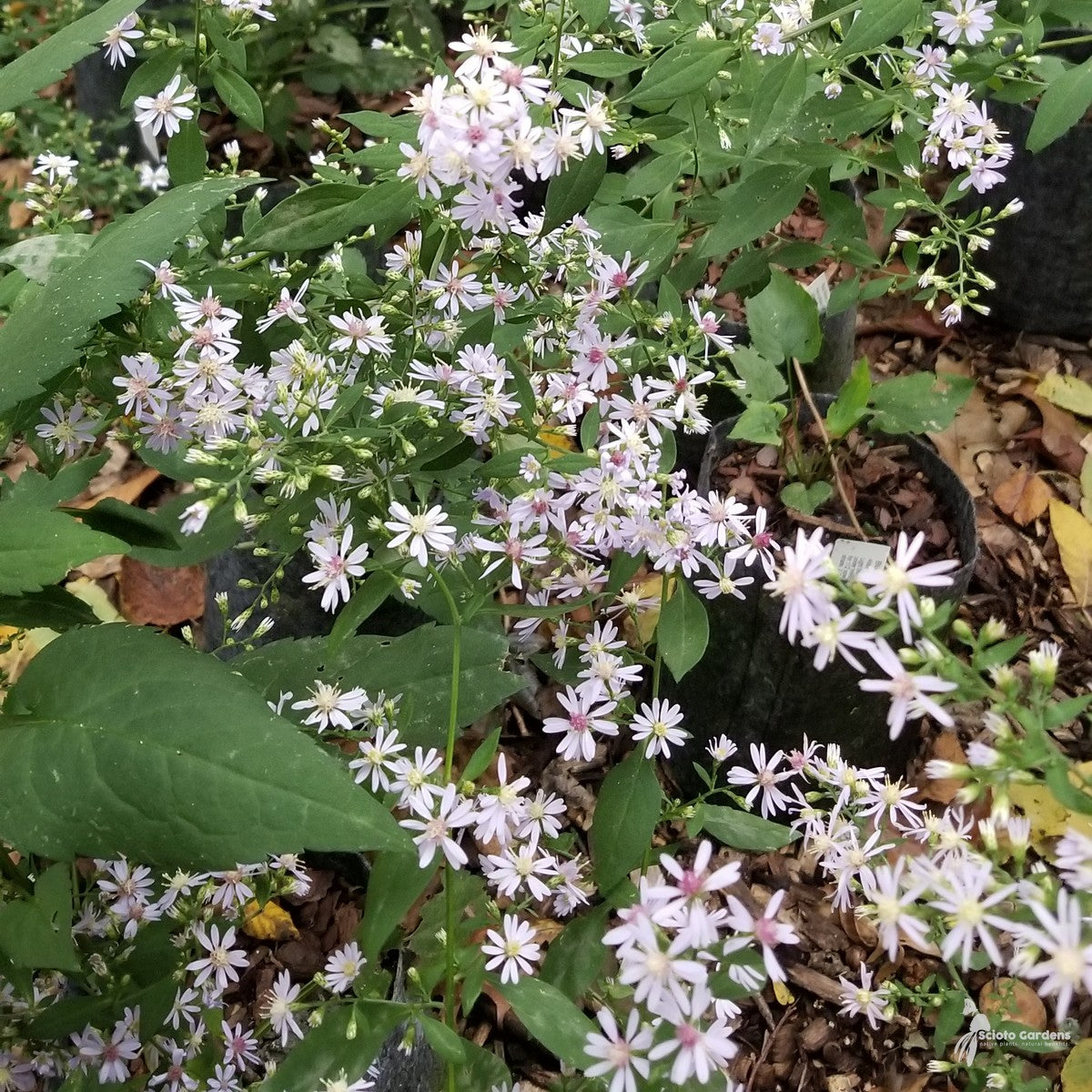
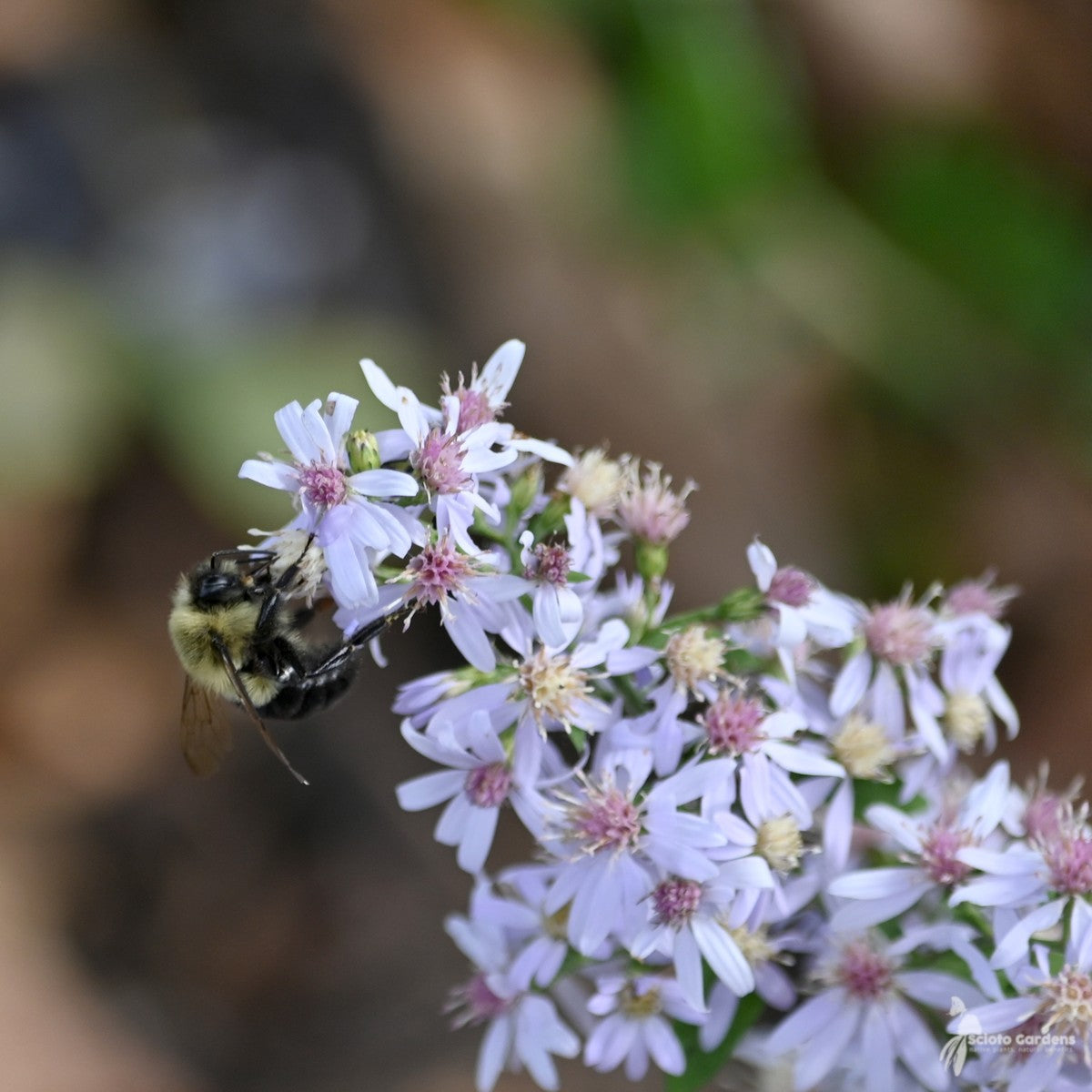
Blue Wood Aster, also known as Heart-leaf Aster, is a lovely native woodland wildflower for late summer and autumn. Its sky blue to pale lavender flower clusters the top of medium-sized, upright plants with attractive, heart-shaped leaves. It is easily grown in full sun to full shade conditions with moist to dry soils, in clay or sand. They will spread out in all directions a short distance from the crown by their short rhizomes, forming clonal clusters of plants, but their main method of increase is by heavily self-sowing. This can be a great asset when trying to naturalize large areas with a sea of beautiful foamy blue flowers, such as in deciduous woodlands, along river banks, or along shady paths. It can be problematic in small gardens, but the spread can be restrained by diligently removing the spent flowerheads in the fall. If more compact, tidier plants are desired, then pinching them back by half in late spring can keep them from getting leggy or too tall. Good air circulation and more sun exposure can help to avoid the foliar issues that are common to asters, namely, powdery mildew.Asters provide an invaluable source of late-season nectar and pollen for a myriad of insect pollinators. Many granivorous birds, such as juncos and goldfinches, will eat the seeds through the winter months. Asters are also larval host plants of many Lepidoptera, including the cartoonish-looking Saddleback Caterpillar and the familiar and loveable Woolly Bear caterpillar, which turns into the Isabella Tiger Moth. The caterpillars of the tiny Pearl Crescent and the Silvery Checkerspot butterflies overwinter on or near the base of the plants and emerge in the spring.
Sources:
Growing and Propagating Wildflowers by William Cullina
Herbaceous Perennial Plants by Allan M. Armitage
Missouri Botanical Garden
Lady Bird Johnson Wildflower Center
Illinois Wildflowers
