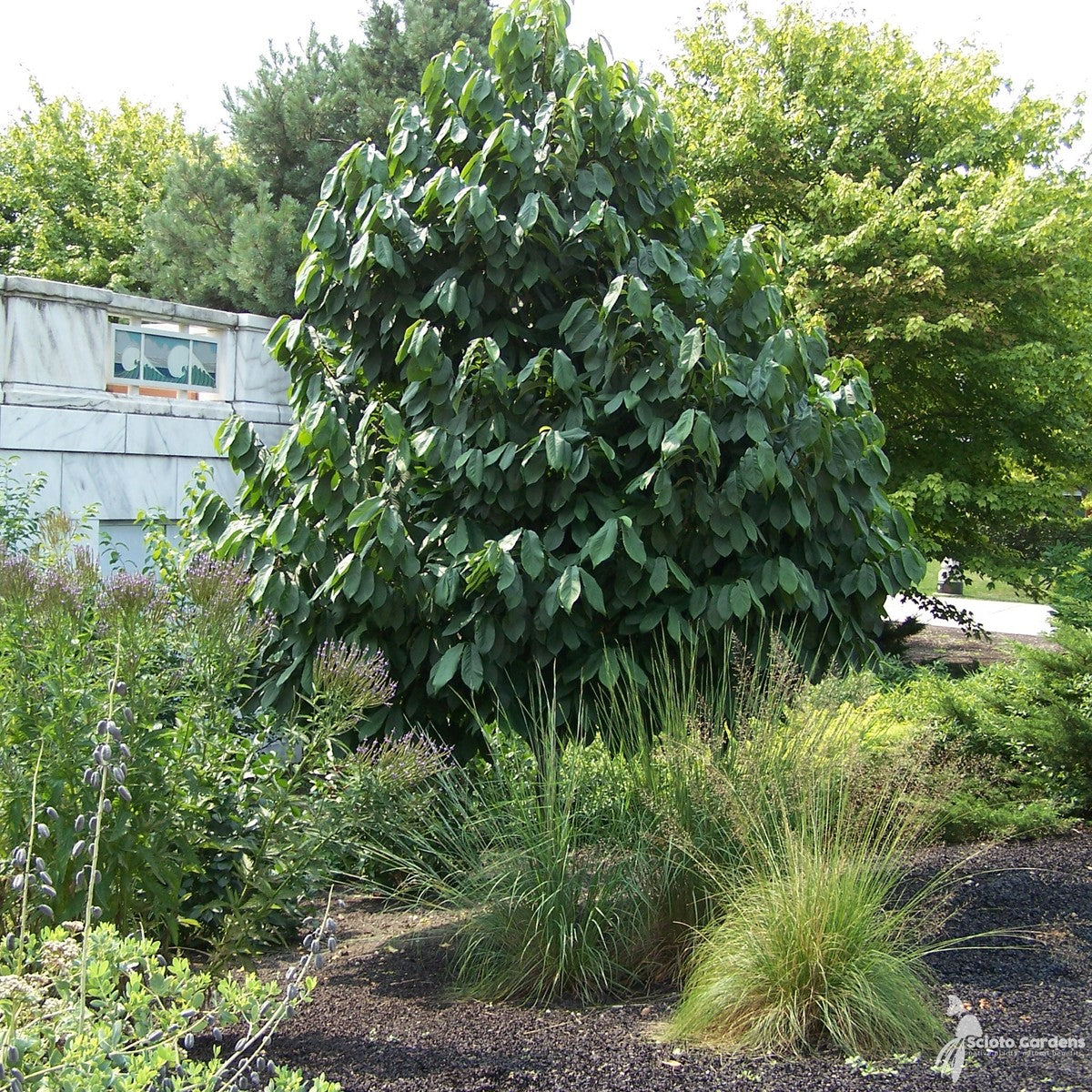
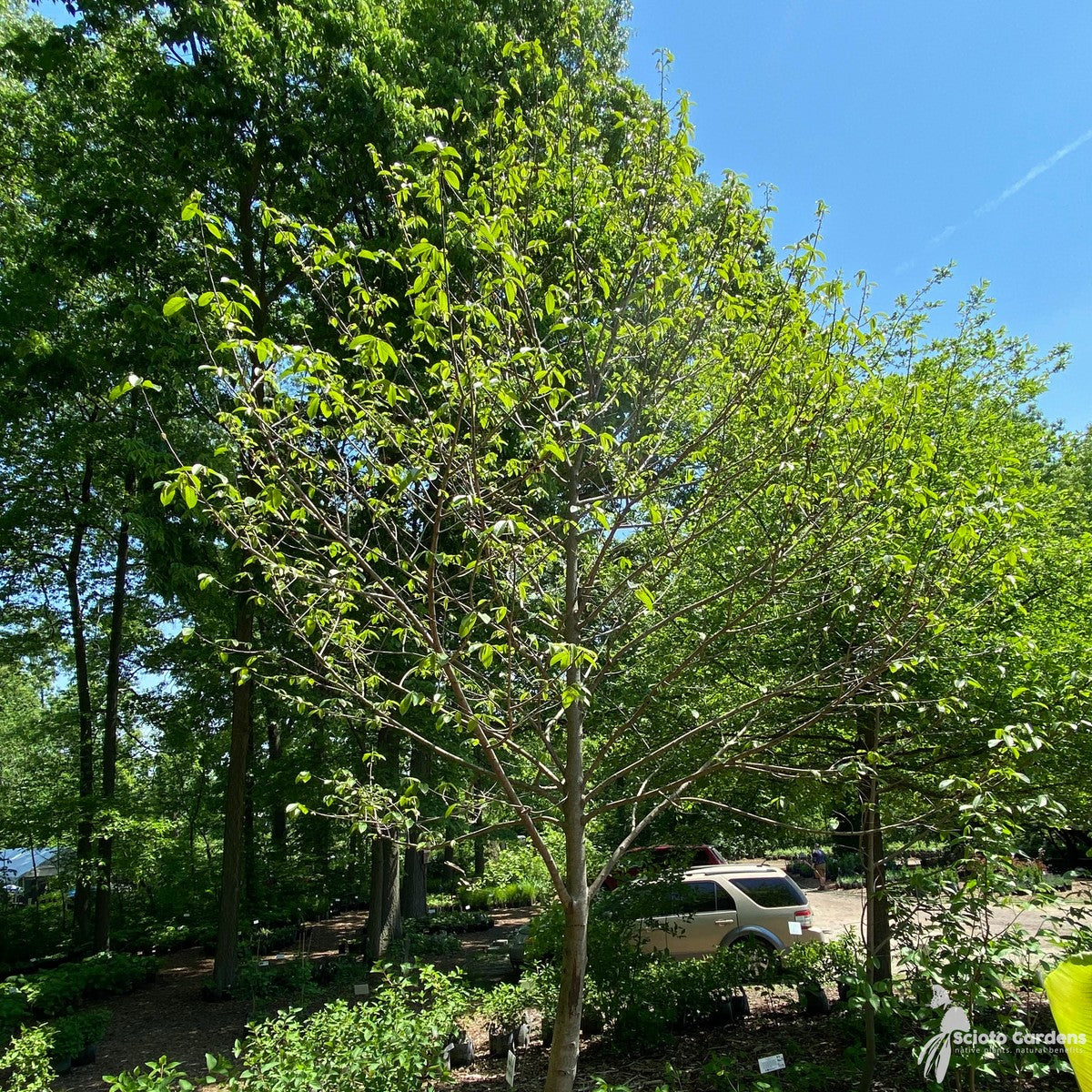
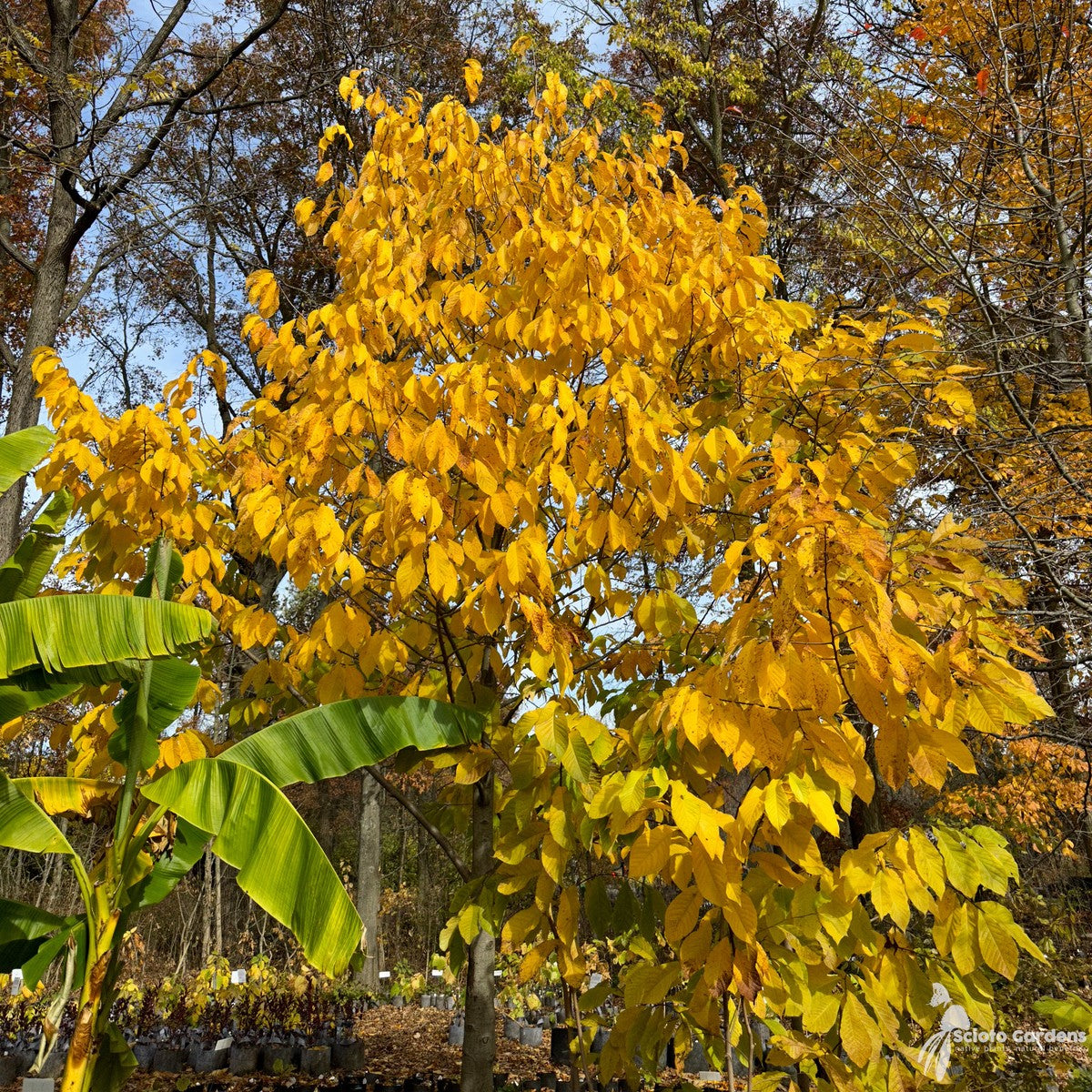
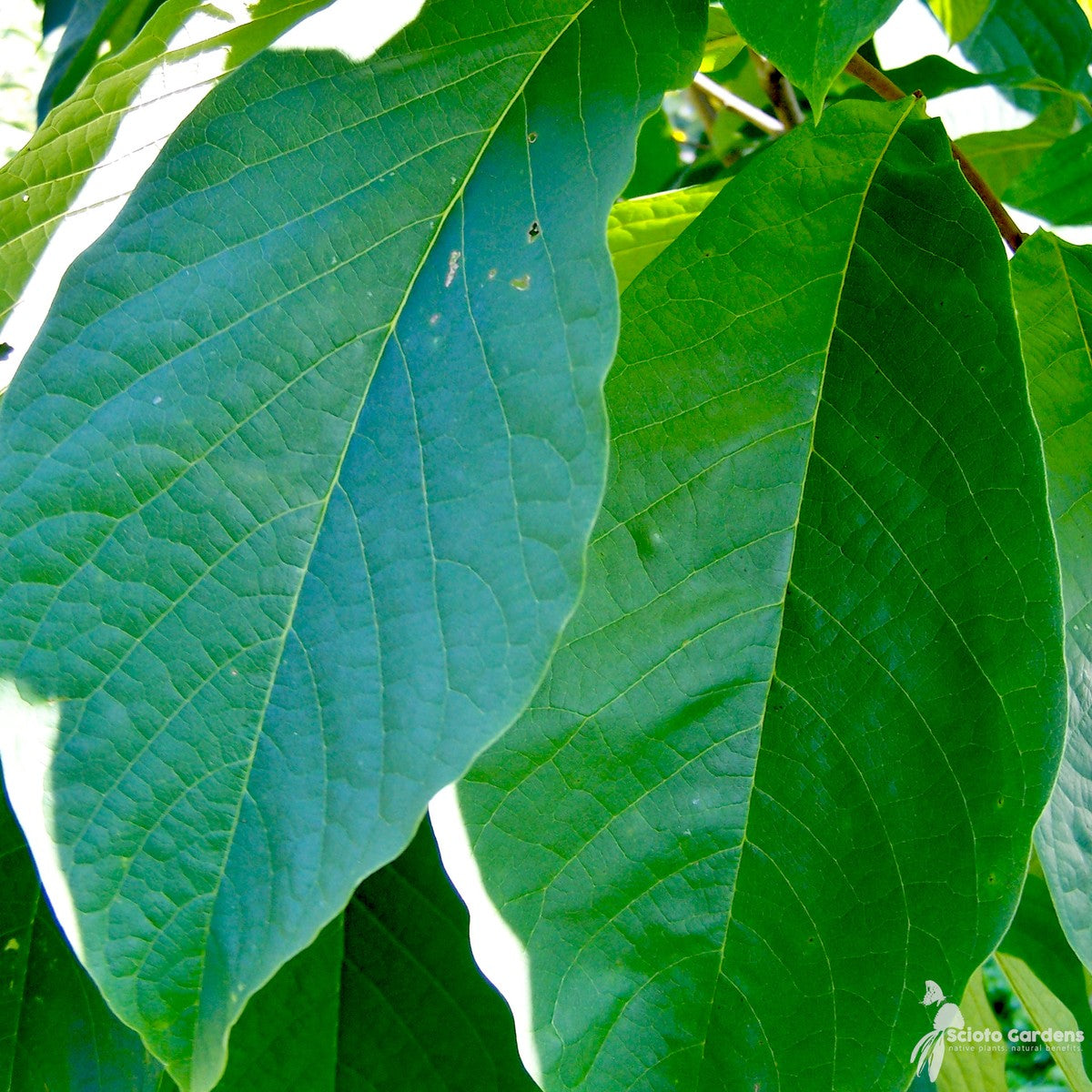
Common Pawpaw is a native, medium-sized understory tree with large, drooping leaves that give it a tropical look. Most of its relatives are tropical plants, with Asimina triloba being the only one hardy here in our climate. It can grow to be a pyramidal tree, typically about 20' tall but able to get 30-40' in ideal conditions. It has a suckering tendency that can lead it to grow loose, clonal groves.
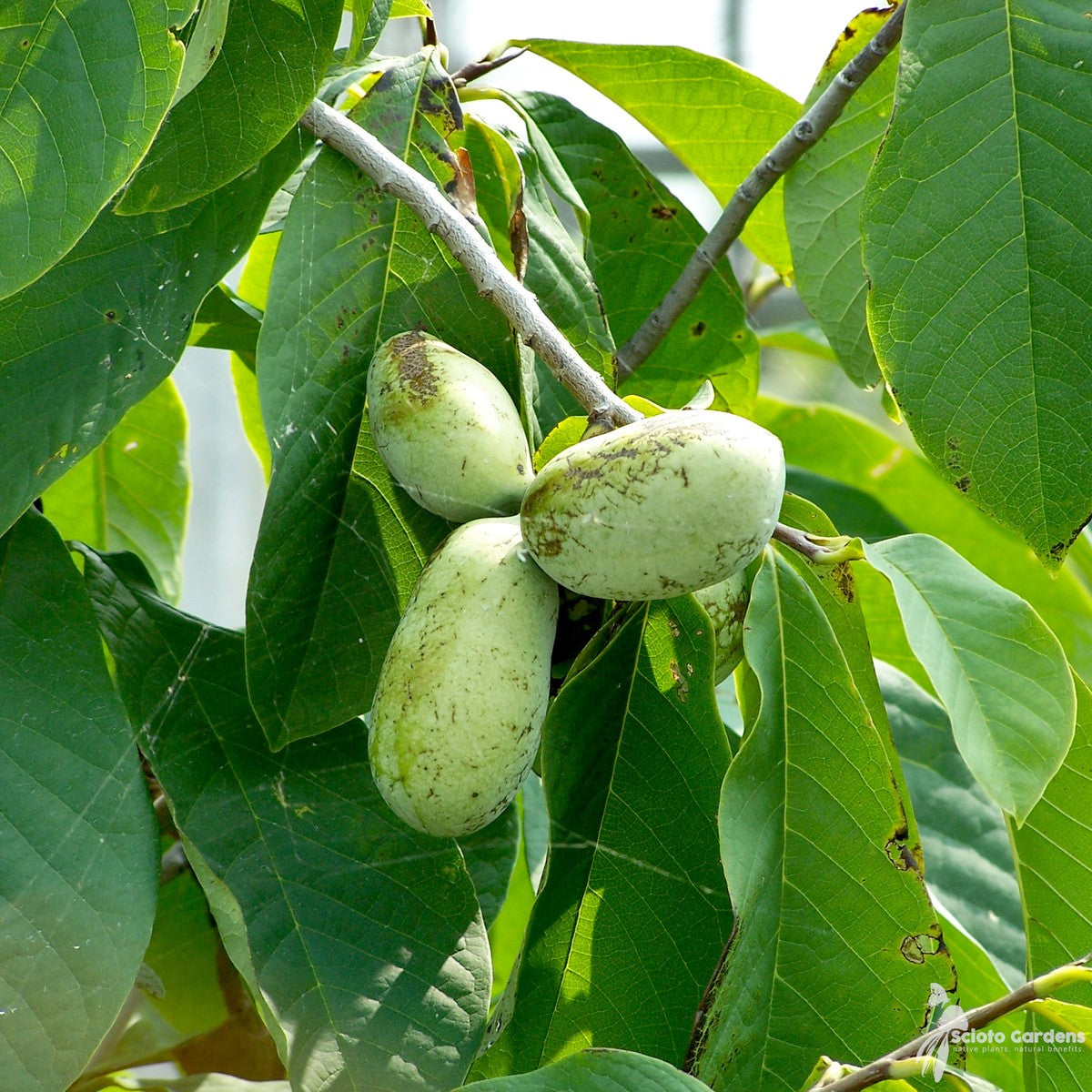
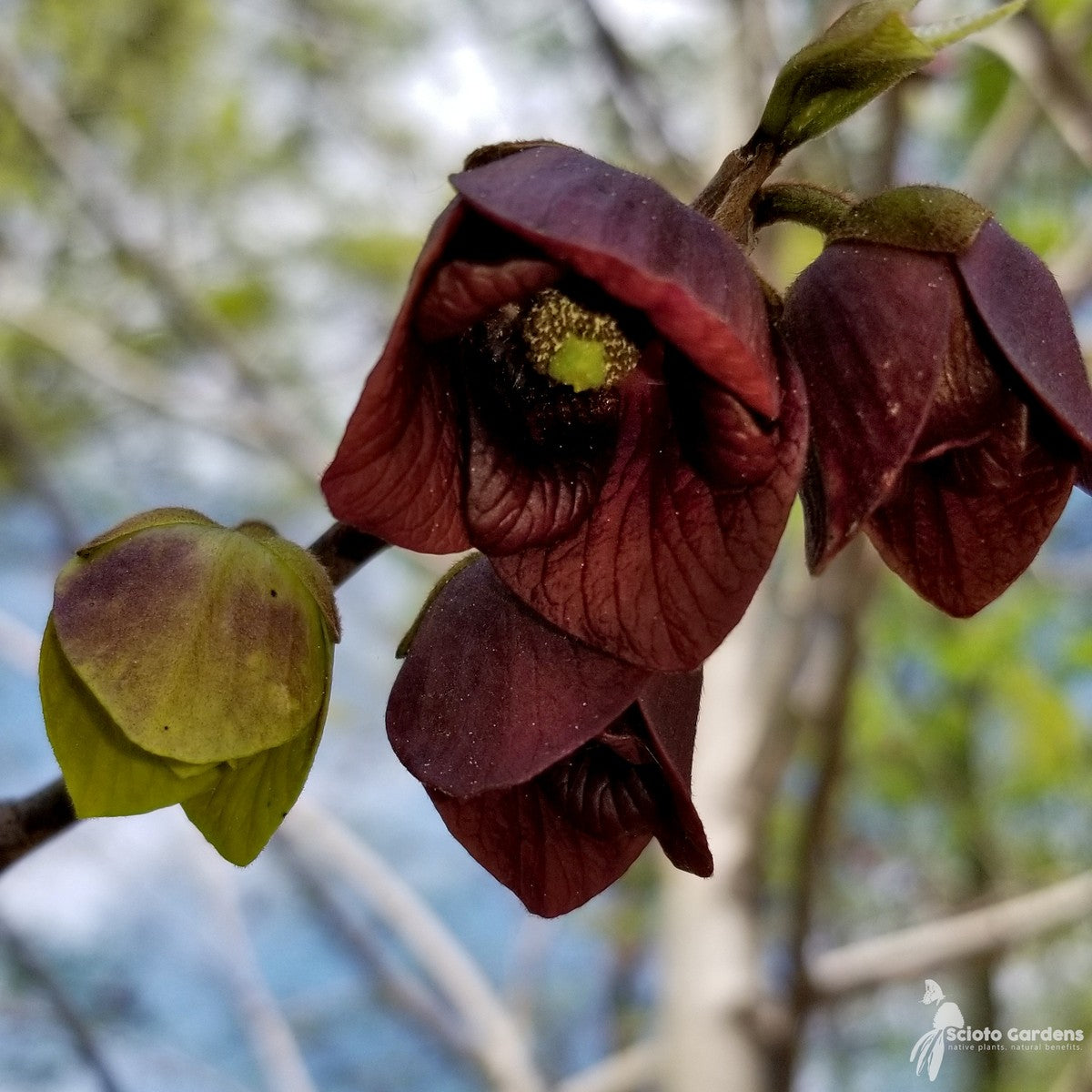
The pawpaw is North America’s largest edible native fruit! For fruit production, there must be two genetically different plants in proximity of the flying insects that pollinate them (mostly flies and beetles.) The fruit is dusky green and kidney shaped, ripening to a blotchy brown. Once ripe, it has a taste somewhat similar to bananas. The annual Ohio Pawpaw Festival celebrates this unique fruit and everything pawpaw!
Aside from us eating the fruits, many mammals relish them and help to spread their seeds around. The stunning, spectacular, black-and-white Zebra Swallowtail butterfly hosts on Pawpaw trees and is a rare but most welcome sight!
Sources:
Native Trees, Shrubs, & Vines by William Cullina
Manual of Woody Landscape Plants by Michael A. Dirr
Eastern/Central Medicinal Plants and Herbs by Steven Foster and James A. Duke
Missouri Botanical Garden
Lady Bird Johnson Wildflower Center
Illinois Wildflowers


Limited Time Offer:
0
days
0
hours
0
mins
0
secs
Asimina triloba (Common Pawpaw) - QT
Common Pawpaw

Plant Care & Installation Quick-Guide
Proper acclimation and installation are key to your plant's success. Please cross-reference these tips with your plant's specific ID tags:
·
Pre-Planting: Store plants in a light-appropriate area on soil or grass (avoid hot concrete or asphalt) and water daily until the soil is saturated and the pot feels heavy. If temperatures drop below 30°F, move pots to a garage or cover them to prevent root freeze.
·
Installation: Dig a hole matching the depth of the pot, remove the fabric container, and ensure the plant’s crown or root flare is level with the ground. Fill gaps with soil, water heavily, and apply 2 inches of mulch—keeping it clear of the stem.
·
Ongoing Care: Check moisture daily by feeling 1–2 inches into the soil; water deeply at the base if the soil feels dry or warm. Newly installed plants require frequent watering (up to 3–4 times weekly in heat) until fully established, which can take a few months for perennials and up to two years for trees.